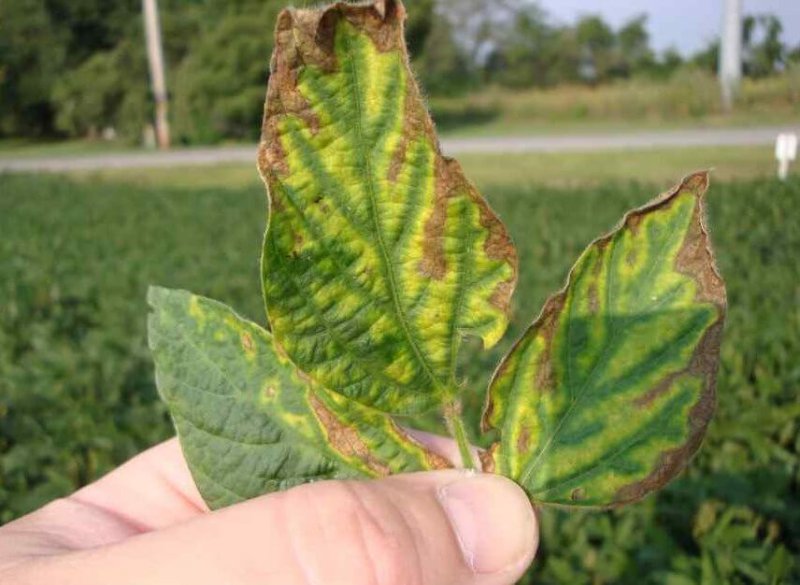
An Iowa State University agronomist is charting mechanisms – gene by gene – that could lead to soybean varieties resistant to sudden death syndrome [SDS].
A paper published recently in the peer-reviewed academic journal Plant Physiology shows a gene found in a model plant called Arabidopsis could confer improved disease resistance in soybeans. Madan Bhattacharyya, a professor of agronomy and lead author of the study, said his current research points toward several Arabidopsis genes that could act in concert to help soybeans fight off sudden death syndrome, a disease that has caused millions of dollars in crop losses for Iowa farmers.
“We’ve started to map many of these genes, and we think there are many different mechanisms that work together to create resistance of Arabidopsis against two soybean pathogens,” Bhattacharyya said. “We’re testing a hypothesis that putting a combination of these Arabidopsis genes into soybeans confers a high level of disease resistance.”
…

The study identifies [an Arabidopsis gene], called PSS1, as a means of improving soybean resistance. The transgenic soybean plants carrying this gene showed enhanced SDS resistance in two consecutive years under field conditions, Bhattacharyya said.
[Editor’s note: Read the full study]
The GLP aggregated and excerpted this article to reflect the diversity of news, opinion and analysis. Read full, original post: Research details genetic resistance to sudden death syndrome in soybeans