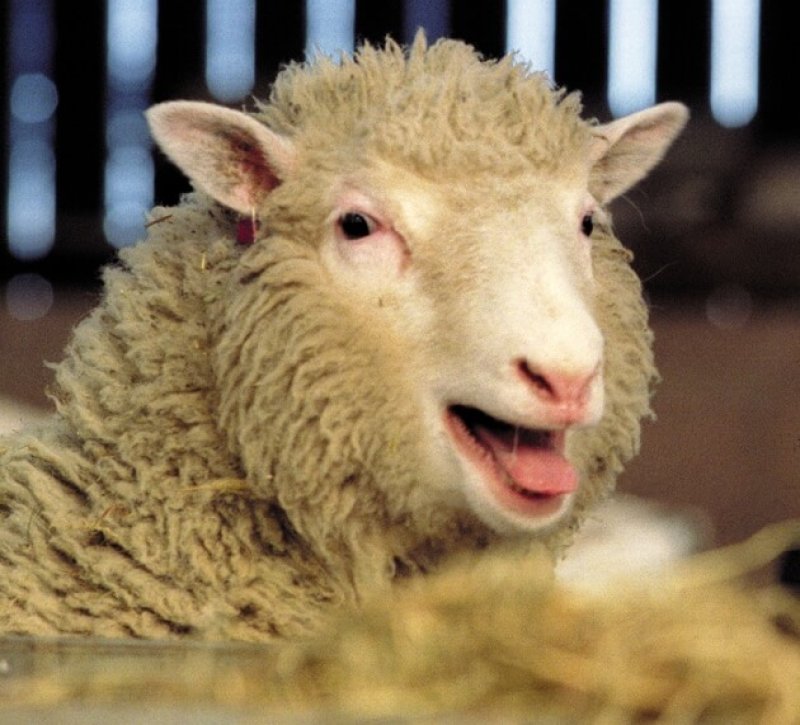
[L]ast year, Kevin Sinclair, a developmental biologist at the University of Nottingham, published a paper about several clones including Dolly’s four “sisters,” who were created from the same cell line as Dolly and lived to the old age of eight (about 70 in human years). They were quite healthy for their age.
…
[A]fter her death in 2003, Dolly’s bones were turned over to the National Museum of Scotland. Sinclair’s team got permission to study them—along with the bones of Megan and Morag, two sheep cloned from non-adult cells who were prototypes for Dolly, and Dolly’s naturally conceived daughter Bonnie.
A team of veterinarians scored X-rays of the bones for signs of arthritis. Megan and Bonnie, who had died at the ripe old ages of 13 and nine, respectively, did indeed have signs of arthritis, which was normal for their age. Megan, who had died at age four in an earlier outbreak of same lung virus that killed Dolly, did not. Even Dolly’s knee did not show signs of arthritis.

…
[T]he overall set of data from Megan, Morag, and Bonnie as well as Dolly’s elderly sister clones suggest arthritis is no more common among clones than ordinary sheep. Fears about prematurely aging clones may be greatly exaggerated.
The GLP aggregated and excerpted this article to reflect the diversity of news, opinion and analysis. Read full, original post: The Truth About Dolly the Cloned Sheep