Climate change fighting plants: Genetically modified crops could trap half of human CO2 emissions in soil

download

The Salk Institute has enlisted a new ally in the effort to address the anticipated dangers of climate change — plants.

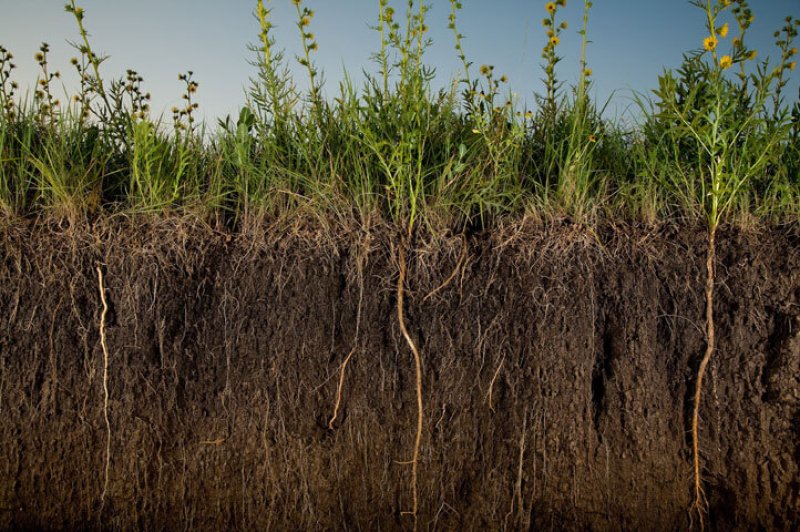
Scientists at the institute propose to breed plants to more efficiently remove carbon dioxide from the atmosphere, sequestering it in the ground for many decades.

By using plants as biological carbon scrubbers, as much as half the human contribution to atmospheric carbon dioxide could be trapped semi-permanently in the soil, said Joanne Chory, one of the plant scientists leading the program.

About six percent of the world’s cultivated land would be needed, and much of that could be in areas of marginal productivity, Chory said. These crops wouldn’t be grown for human consumption, but could include animal feed.

The goal is to make these plants produce more of a carbon-rich substance called suberin, the major component of cork. Suberin is produced in their roots, protecting them from water loss. Suberin resists biodegradation, potentially lasting for many decades.

This can be done either through genetic engineering, or by using knowledge of genetics to find naturally occurring varieties of plants with useful genes, and then cross them with traditional breeding, Chory said.

Genetic engineering to directly insert the desired genes would be quicker, but it faces opposition from some activists, she said.

Read full, original post: Salk Institute unleashes plants on climate issues

{{ reviewsTotal }}{{ options.labels.singularReviewCountLabel }}
{{ reviewsTotal }}{{ options.labels.pluralReviewCountLabel }}
{{ options.labels.newReviewButton }}
{{ userData.canReview.message }}

Related Articles

Infographic: Global regulatory and health research agencies on whether glyphosate causes cancer

Infographic: Global regulatory and health research agencies on whether glyphosate causes cancer

Does glyphosate—the world's most heavily-used herbicide—pose serious harm to humans? Is it carcinogenic? Those issues are of both legal and ...

Most Popular

Screenshot-2026-04-14-at-11.11.06-AM
‘Turbo cancer’ or mRNA cancer cure? Strategies to counter misinformation
Picture1
The Orange Bowl without oranges: Can CRISPR save Florida citrus?
ChatGPT-Image-May-22-2026-10_26_09-AM
Gutting the National Science Board: How the Trump-RFK, Jr. crusade is erasing the separation of science and state
Screenshot 2025-11-12 at 3.28
GLP podcast: Evolutionary biologist debunks the 'sex spectrum'
Screenshot-2026-04-22-at-12.21.32-PM
Viewpoint: Why the retracted Monsanto glyphosate study doesn’t change the science—the world’s most popular herbicide is safe 
ChatGPT-Image-May-26-2026-09_19_32-AM
Viewpoint— “A safe space to chat, flirt, and be intimate without sex”: Are new AI companies exploiting vulnerable asexuals?
ChatGPT-Image-Mar-10-2026-01_39_01-PM
Viewpoint—“Miracle molecule” debunked: Why acemannan supplements don’t work
Screenshot 2026-05-22 at 3.28
Vagus nerve wellness grift: How to build a billion dollar business. Are you listening, Kelly Ripa?
ChatGPT-Image-May-1-2026-11_42_59-AM-2
Viewpoint: NAD is the wellness grifters latest evidence-lite longevity fad. At least the mice are impressed.
Screenshot 2026-05-26 at 11.16
Colossal Bio grows chicks in 3D-printed artificial eggs. Breakthrough or copycat technology?
ChatGPT-Image-Apr-16-2026-02_56_53-PM
Financial incentives, over diagnosis, and weak oversight: Autism claims are driving up Medicare costs
glp menu logo outlined

Get news on human & agricultural genetics and biotechnology delivered to your inbox.