How tricking mosquitos into thinking they’ve already mated could fight disease

ac b

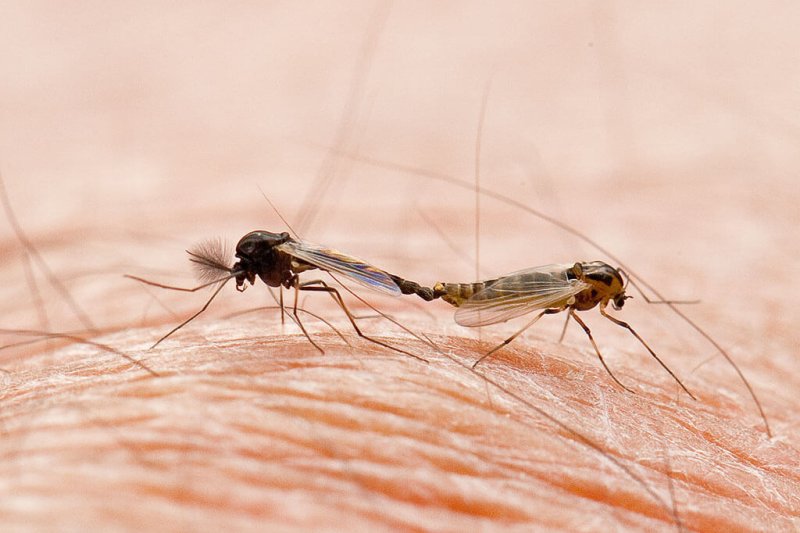
If you thought the sex lives of humans were complicated, consider the case of the female Aedes aegypti mosquito, bringer of Zika, dengue, and yellow fever: She mates but once, in seconds and on the wing, with one lucky male; spurns all further advances from other potential suitors; and stores enough sperm from that single encounter to lay more than 500 eggs, which she nourishes with the blood of human hosts.

Understanding her sexual behavior could help prevent her from transmitting the deadly diseases she carries to millions of people every year. Yet many of the mechanisms governing her mating habits remain a mystery.

Recently, however, researchers … demonstrated that a chemical transferred from the male of the species during sex plays a key role in shaping the female’s sexual proclivities. Their work … could yield new strategies for keeping this pest, and the pestilence it spreads, in check.

[S]cientists now have a much better understanding of what shapes female mating behavior not only within one dangerous mosquito species, but across two of them. And those insights could have far-reaching implications.

For example, scientists might eventually be able to limit the number of disease-carrying mosquitoes by using a substance like HP-I to persuade females to avoid mating in the first place.

[Editor’s note: Read full study (behind paywall)]

Read full, original post: Mosquito sex protein could provide key to controlling disease

{{ reviewsTotal }}{{ options.labels.singularReviewCountLabel }}
{{ reviewsTotal }}{{ options.labels.pluralReviewCountLabel }}
{{ options.labels.newReviewButton }}
{{ userData.canReview.message }}

Related Articles

Infographic: Global regulatory and health research agencies on whether glyphosate causes cancer

Infographic: Global regulatory and health research agencies on whether glyphosate causes cancer

Does glyphosate—the world's most heavily-used herbicide—pose serious harm to humans? Is it carcinogenic? Those issues are of both legal and ...

Most Popular

d-b
Blocked arteries, kidney stones, nausea, constipation, fatigue: Long list of health problems caused by too much vitamin D 
Screenshot-PM-24
Viewpoint: The herbicide glyphosate isn’t perfect. Banning it would be far worse.
79d03212-2508-45d0-b427-8e9743ff6432
Viewpoint: The Casey Means hustle—Wellness woo opportunism dressed up as medical wisdom
ChatGPT-Image-Mar-27-2026-11_27_05-AM
The myths of “process”: What science says about the “dangers’ of synthetic products and ultra-processed foods
ChatGPT-Image-Apr-30-2026-12_21_05-PM-2
The tech billionaires behind the immortality movement
ChatGPT-Image-Apr-30-2026-05_00_48-PM
Wellness grifter physician turned wellness influencer out as surgeon general nominee
ChatGPT-Image-Mar-10-2026-01_39_01-PM
Viewpoint—“Miracle molecule” debunked: Why acemannan supplements don’t work

Sorry. No data so far.

glp menu logo outlined

Get news on human & agricultural genetics and biotechnology delivered to your inbox.