Blacks have been largely excluded from autism studies. Here’s what’s being done to change that

autism african american

[Editor’s note: Daniel Geschwind’s team at the University of California, Los Angeles (UCLA), along with researchers at three other universities, set out in 2013 to increase the number of African-Americans in autism studies.]

How does diversity benefit autism genetics?

Geneticists benefit from having a relatively homogeneous population for studies that identify genes. This ensures that genetic variation isn’t different between cases…But rare variants may crop up only in certain populations, so a study that mostly enrolls people of European descent might miss those variants. Alternatively, variants that are rare and seem harmful in people from one genetic background may not be so rare in another population. Increasing the diversity of genetic databases could show that some of those variants aren’t harmful after all.

Have you learned anything about autism diagnoses in [the African American] population?

This isn’t an epidemiologically representative sample, but we can begin to collect preliminary data to understand how and when children in this population are diagnosed. Our work sets up the key questions that researchers can follow up on in a more representative sample.

So far, we are finding that there are still very significant delays in diagnosis.

How has the community responded to the project?

When we launched the project, there was an outpouring of positive feedback from the African-American community. We were involving families in research that had so far felt ignored.

The GLP aggregated and excerpted this blog/article to reflect the diversity of news, opinion, and analysis. Read full, original post: Questions for Daniel Geschwind: Making autism studies diverse

Astrological medicine: Your birth month can predict your risk for asthma, ADHD and more than 50 other diseases

Screen Shot at AM

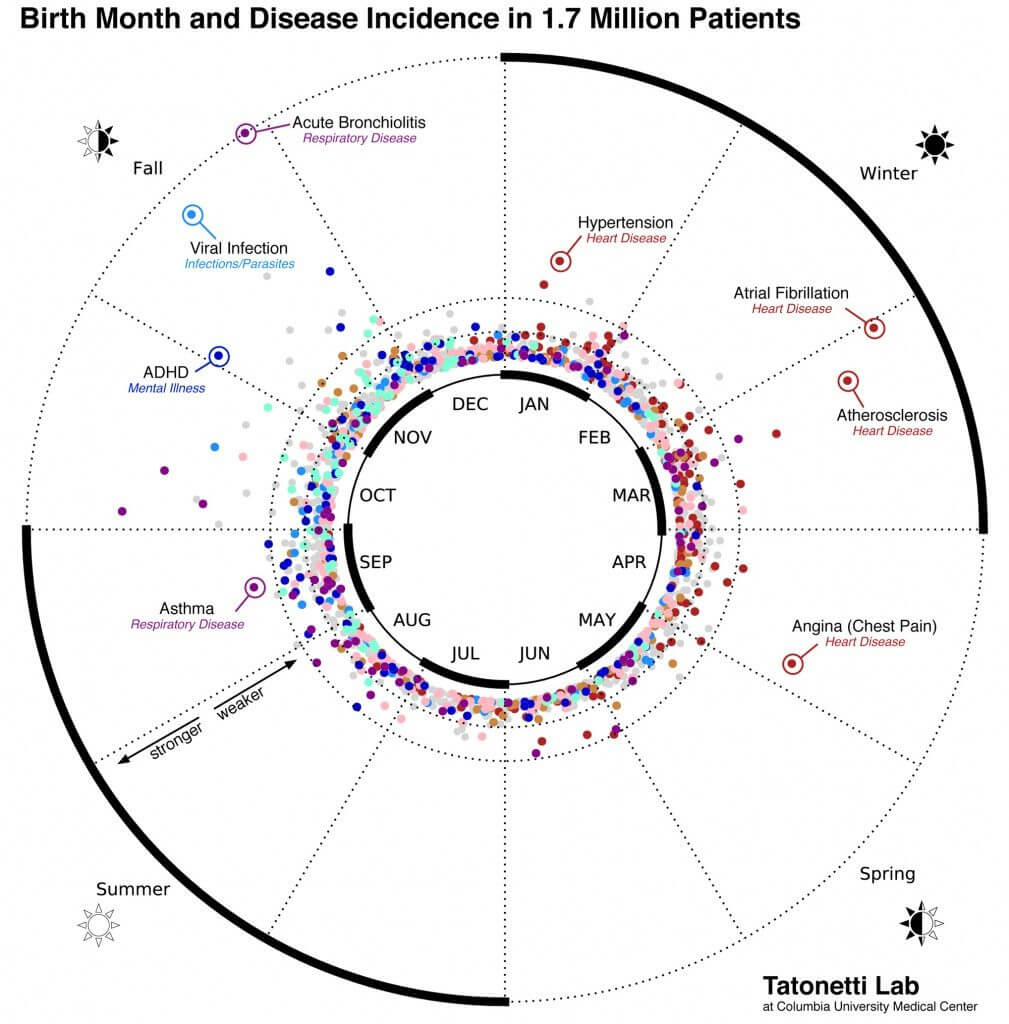
Your Zodiac symbol and birthstone aren’t the only things decided by your birth date: The day you entered this world may also predict your chances of developing ailments like asthma or heart disease.

[Researchers] found that 55 diseases were significantly linked to birth month. Babies born from September to November were at the highest risk to develop the widest variety of diseases. Babies born in fall…have a higher chance of developing ADHD, viral infections, and respiratory diseases like asthma.

On the other hand, winter babies, born in January through March, are far more likely to develop heart disease than babies born in other months. Interestingly, the exact opposite is true for fall babies; the results indicated that babies born in fall were actually protected against heart disease.

Why would this seasonal effect exist? The link between asthma and fall babies…may have something to do with babies’ heightened exposure to indoor dust mites as people retreat indoors for the upcoming winter. Past studies have also shown that heart disease may be more prevalent in winter babies due to an early-life vitamin D deficiency (which our bodies produce with sun exposure).

Disease Map x

The GLP aggregated and excerpted this blog/article to reflect the diversity of news, opinion, and analysis. Read full, original post: Your Birth Month Influences Your Risk for Diseases

Billionaire doctor’s Cancer MoonShot 2020 appears more hype than reality

Screen Shot at PM

Dr. Patrick Soon-Shiong vowed [to vanquish cancer] when he launched his audacious “Cancer MoonShot 2020” a year ago…The supremely self-confident billionaire behind that vision has drawn attention at the highest levels: He’s talked cancer research with Joe Biden, Bill Clinton, even the Pope.

But a STAT investigation of Soon-Shiong’s cancer moonshot has found very little scientific progress.

Dr Patrick Soon Shiong
The bold plan of world’s richest doctor, Patrick Soon-Shiong, to cure cancer is falling behind. Credit: Darren McCollester.

At its core, the initiative appears to be an elaborate marketing tool for Soon-Shiong — a way to promote his pricey new cancer diagnostic tool at a time when he badly needs a business success, as his publicly-traded companies are losing tens of millions per quarter. STAT also found several instances of inflated claims, with the moonshot team taking credit for progress that doesn’t appear to be real.

STAT asked several independent scientists to review Soon-Shiong’s claims. Their conclusion: The data don’t back up the hype.

“The clinical breakthroughs touted by Patrick Soon-Shiong are less than modest — they are the most miniscule and vague findings,” said Dr. Vinay Prasad, a hematologist-oncologist at Oregon Health and Science University. He called them “overblown beyond what is reasonable or fair.”

To be sure, Soon-Shiong’s general idea for a vaccine — to customize it for each patient based on the unique genetic markers of their tumor — is widely seen as a promising approach within the field of immunotherapy.

But the reality is that the science is incredibly hard.

The GLP aggregated and excerpted this blog/article to reflect the diversity of news, opinion, and analysis. Read full, original post: He vowed to cure cancer. But this billionaire’s moonshot is falling far short of the hype

Former UK chief scientist: Europe’s opposition to GMOs ‘dangerously naive’ in the face of climate change

crop drought in tanzania

A former UK chief scientist has warned that politicians around the globe are ignoring science for the sake of short-term political opportunism.

This comes, Sir John Beddington argues, as growing urban populations are demanding more energy, water and food at a time when climate change is creating more natural weather disasters.

“There is a movement in Europe which is just against any genetically-modified plant used for food [and] that is so naive,” he said.

“There’s no doubt in the developing world, plants can be modified to be resistant to drought or insect pests and that is going to be very, very important moving into the future.

Sir John argues that the reality of gene editing in plants was to produce plants that were resistant to droughts, pests and diseases, all while boosting yields.

In an era of so-called ‘anti-science’, Sir John said it was more important than ever that scientist ensured their relevancy within society.

The GLP aggregated and excerpted this blog/article to reflect the diversity of news, opinion, and analysis. Read full, original post: Sir John Beddington warns ‘anti-science’ leads to poor policy decisions on climate change, GM crops

Nigeria faces drought, famine, malnutrition and hunger, but GMOs offer hope

farming e

A report recently published by the United Nations Food and Agriculture Organisation (FAO) says a total of 8.1 million people are currently facing acute food insecurity in Nigeria.

With the current population of over 180 million people, famine, malnutrition and hunger are staring the nation in the face. All these emergency situations are closely linked with the inability to produce enough food to feed the people, which make it obvious that the conventional method of agriculture is not working for us.

Agricultural biotechnology has been suggested as one of the tools that can contribute to solving the food production deficit in the country and has taken concrete steps to entrench biotechnology in agricultural production. This is because Nigeria, like most African countries, may face two daunting challenges in the 21st century: how to feed its growing population and secondly how to adapt to climate change.

[T]he application of modern biotechnology and biosafety regulation of GMOs is one of the most highly debated issues globally, [and] Nigeria has not been left out of this debate.

The GLP aggregated and excerpted this blog/article to reflect the diversity of news, opinion, and analysis. Read full, original post: Why Nigeria Needs To Key Into Biotechnology Global Evolution

More nutritious and tastier vegetables? CRISPR gene editing could dramatically boost consumption

kids and veggies

Spinach. Tomato. Watermelon. Broccoli.

Besides being good for you, these four vegetables are just a few that could benefit — and benefit humans in turn — from gene editing.

“This goes beyond just dealing with disease and pathogens, enhancing nutrition in vegetables is a very exciting prospect,” said Corinne Marshall, intellectual property and licensing manager for Sakata Seed America Inc.

Marshall spoke about the promise of the CRISPR-CAS9 gene editing technology as a way to both boost supplies of vegetables to consumers and to increase the nutrition that diners get from those vegetables.

Marshall said conventional methods, from spraying to breeding plants for resistance, present challenges, from prohibiting growers from selling produce as organic to prohibitive expense.

And so, gene editing could hold the key.

“Compared with traditional backcross methods or mutagenesis, gene editing is more precise and more efficient,” Marshall said.

The technology could enable vegetables to more readily make their nutrients available.

“Lycopine and glucosinolates in broccoli can reduce chronic disease or slow disease such as cancer. Sulforaphane is a glucosinolate in broccoli, and most of us know that when we cook broccoli, we lose the nutrients. So gene editing can actually help us solve that problem and extend the nutrient to the cooked vegetable,” Marshall said.

The GLP aggregated and excerpted this blog/article to reflect the diversity of news, opinion, and analysis. Read full, original post: Gene editing holds promise for vegetable industry

Tough times on the farm: US profit squeeze expected to continue for fourth straight year

Screen Shot at PM

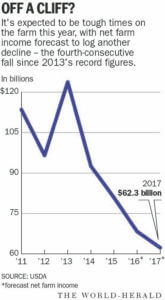
This year, U.S. farmers are expected to net profits of $62.3 billion, or one-half of the record $123 billion they reaped in 2013, according to last week’s USDA report. For many producers facing a fourth consecutive year of declines amid persistently depressed commodities prices, breaking even is a best-case scenario in 2017.

The government forecast for wheat prices pegged a year-over-year decline of $1.4 billion, or 17 percent. Record harvests around the world have led to a global glut, and that in combination with a stronger dollar has crumbled the export market to decades-low levels.

Repayment rates bottomed out at a level not seen since 1999, which means farmers haven’t been this slow in paying back their loans in almost 20 years.
At the end of the third quarter, 1.7 percent of farm loans were classified as nonperforming. That’s up from 1.1 percent a year earlier and is the highest level since 2012.

“After the (farm crisis in the) ’80s, we thought we would have more weekend farmers and see more of them carrying jobs during the week,” [said Tom Jensen, First National’s senior vice president of ag lending.] “I think there will be more of that.”

The GLP aggregated and excerpted this blog/article to reflect the diversity of news, opinion, and analysis. Read full, original post: Farms face steep slide: Net profits this year expected to be half of what they were in 2013

Zhang vs. Doudna patent ruling: Broad Institute holds patents but University of California may appeal

social im

The US patent office ruled [Feb. 15] that hotly disputed patents on the revolutionary genome-editing technology CRISPR-Cas9 belong to the Broad Institute of Harvard and MIT, dealing a blow to the University of California in its efforts to overturn those patents.

The judges’ full 51-page decision explaining their reasoning stated that the Broad had persuaded them “that the parties claim patentably distinct subject matter.”

The patent board said in its decision that the achievement of the Broad’s Feng Zhang in inventing a way to use CRISPR to edit the genomes of mouse and human cells “would not have been obvious” from the invention by [UC biochemist Jennifer Doudna and her chief collaborator Emmanuelle Charpentier] “because one of ordinary skill in the art would not have reasonably expected a CRISPR-Cas9 system to be successful” in those higher-order cells.

[T]he patent decision will likely shape how history views the CRISPR pioneers: now, Zhang will be the scientist who invented the form of CRISPR that has revolutionized humans’ ability to make wholesale changes in an organism’s blueprint of life, for purposes ranging from cancer therapy to turning pigs into organ donors for humans on transplant waiting lists.

UC said it is considering its legal options, including the possibility of an appeal, but it contended that anyone who wants to develop CRISPR-based treatments for human diseases would have to license not only the Broad’s patents but also those that UC expects to be awarded. “Ours,” Doudna told reporters, “is for the use [of CRISPR] in all cells,” including human ones.

The GLP aggregated and excerpted this blog/article to reflect the diversity of news, opinion, and analysis. Read full, original post: Broad Institute prevails in heated dispute over CRISPR patents

GOP Congress could deploy long-standing law to repeal Obama-era FDA GMO animal biotech policies

Screen Shot at PM

A game-changer for regulatory reform, [the Congressional Review Act] could be a significant stimulus to job creation and economic growth.

The CRA enables Congress, with only simple majorities, to overrule regulations and other policy guidances from the executive branch, and congressional leaders are champing at the bit to use the law to bring down some of the most egregious excesses of Executive Branch agencies.

My own prime candidate is an Obama-era Food and Drug Administration policy that has decimated an entire once-promising biotechnology sector–the genetic engineering of animals with novel and valuable traits. After more than a decade of deliberation (read: dithering), the FDA’s Center for Veterinary Medicine finalized a policy that makes every animal crafted with the most precise genetic engineering techniques subject to the onerous procedures and regulations for new drugs used to treat animal diseases, such as pain relievers or flea medicines.

What kinds of animals? One that endured a 22-year review is an Atlantic salmon that contains a newly introduced Chinook salmon growth hormone gene that remains turned on all year round (instead of during only the warmer months, as in nature)…. (As a former FDA medical reviewer of biopharmaceuticals, I believe that that review was grotesquely incompetent; it should have taken much closer to 22 weeks than 22 years.)

The GLP aggregated and excerpted this blog/article to reflect the diversity of news, opinion, and analysis. Read full, original post: Will Genetically Engineered Animals Finally Bring Home The Bacon?

Will you lose your hair? Baldness algorithm of 287 gene regions can predict your chances

hair fall baldness x
[A] recent study…has become the first to detail exactly which genes are involved [in male pattern baldness].

[A] team of researchers from the University of Edinburgh…have pinpointed 287 genetic regions associated with this form of baldness. Many of these genes…are associated with hair structure and development…while other genes associated with more hair loss were linked to shorter stature, fewer offspring, and a lower risk of bipolar disorder.

The top gene-based hit was the gene on the X chromosome encoding the androgen receptor, a DNA-binding receptor that regulates gene expression…This adds further and substantial evidence that baldness is, at least in part, influenced by the genetics of a man’s mother.

With the data on the genetic variants that led to different forms of hair loss, the scientists created a prediction algorithm to determine to what degree men would go bald. As of now, the scientists can’t confidently predict results for individuals, but they can “identify subgroups of the population for which the risk of hair loss is much higher”, lending to the belief that the algorithm will continue to improve.

[The study can be found here.]

The GLP aggregated and excerpted this blog/article to reflect the diversity of news, opinion, and analysis. Read full, original post: Gene-Based Baldness Predictor Offers Hope for the Hairless

Is there a metabolic on-off switch that could prevent chronic fatigue syndrome?

chronic fatigue syndrome s four defining cfs symptoms

Evidence is mounting that chronic fatigue syndrome (CFS) is caused by the body swapping to less efficient ways of generating energy.

CFS affects some 250,000 people in the UK. The main symptom is persistent physical and mental exhaustion that doesn’t improve with sleep or rest…Some have argued that CFS is a psychological condition, and that it is best treated through strategies like cognitive behavioral therapy.

But several lines of investigation are now suggesting that the…lack of energy…[could] be due to people losing their ability to burn carbohydrate sugars in the normal way to generate cellular energy.

Instead, the cells of people with CFS stop making as much energy from sugar as usual, and start relying more on lower-yielding fuels, such as amino acids and fats. This kind of metabolic switch produces lactate, which can cause pain when it accumulates in muscles.

The result is not unlike starvation, says [Chris Armstrong at the University of Melbourne in Australia]. “When people are facing starvation, the body uses amino acids and fatty acids to fuel energy for most cells in the body, to keep glucose levels vital for the brain and muscles as high as possible.”

[The study can be found here.]

The GLP aggregated and excerpted this blog/article to reflect the diversity of news, opinion, and analysis. Read full, original post: Metabolic switch may bring on chronic fatigue syndrome

Viewpoint: Will genetically engineered animals finally bring home the bacon?

pexels photo

This article originally ran at Forbes and has been republished here with permission of the author.

It’s unusual for an obscure procedural federal law to attract much attention, especially if it’s 20 years old, but the Congressional Review Act is creating buzz. A game-changer for regulatory reform, it could be a significant stimulus to job creation and economic growth.

The CRA enables Congress, with only simple majorities, to overrule regulations and other policy guidances from the executive branch, and congressional leaders are champing at the bit to use the law to bring down some of the most egregious excesses of Executive Branch agencies. House Majority Leader Kevin McCarthy has disclosed the first five Obama-era rules that his chamber intends to reverse. Before I get to those–and my own nomination for reform–here’s how it works, as described by Wall Street Journal columnist Kim Strassel:

. . .the CRA requires any federal agency promulgating a rule to submit a “report” on it to the House and Senate. The 60-day clock starts either when the rule is published or when Congress receives the report—whichever comes later.

“There was always intended to be consequences if agencies didn’t deliver these reports,” [Todd Gaziano, a congressional staffer who helped to draft the bill] tells me. “And while some Obama agencies may have been better at sending reports, others, through incompetence or spite, likely didn’t.” Bottom line: There are rules for which there are no reports. And if the Trump administration were now to submit those reports—for rules implemented long ago—Congress would be free to vote the regulations down.

According to Gaziano, the CRA also applies to the numerous “guidance” documents issued by federal agencies, a kind of bureaucratic shortcut around formal rulemaking. According to Ms. Strassel’s sources, “It is highly unlikely agencies submitted reports to lawmakers on these actions,” and if that’s the case, they, too, can now be challenged. Moreover, the ability of Congress to issue challenges extends back to regulations and guidance documents dating all the way back to 1996, when the CRA was passed.

This will be a bonanza for members of Congress who want to revisit regulations that are wrong-headed, inappropriate or just not cost-effective. House Majority Leader McCarthy’s hit-list includes:

  • the Interior Department’s Stream Protection Rule, which could eliminate tens of thousands of mining jobs and prohibit the mining of much of the country’s coal reserves.
  • an Obama administration eleventh-hour methane regulation intended to punish the oil and gas industry even though it has already employed new technologies to drastically reduce methane emissions.
  • a Securities and Exchange Commission disclosure rule for resource extraction, which “adds an unreasonable compliance burden on American energy companies that isn’t applied to their foreign competitors.”
  • a Social Security Administration rule that would increase scrutiny on up to 4.2 million disabled Americans if they attempt to purchase firearms, making the SSA what McCarthy calls “an illegitimate arbiter of the Second Amendment.”
  • An attempt by the bureaucracy “to blacklist from federal contracts any business accused of violating labor laws—before the company even has a chance to defend itself in court—which McCarthy calls a preemption of due process.

My own prime candidate is an Obama-era Food and Drug Administration policy that has decimated an entire once-promising biotechnology sector–the genetic engineering of animals with novel and valuable traits. After more than a decade of deliberation (read: dithering), the FDA’s Center for Veterinary Medicine finalized a policy that makes every animal crafted with the most precise genetic engineering techniques subject to the onerous procedures and regulations for new drugs used to treat animal diseases, such as pain relievers or flea medicines.

What kinds of animals? One that endured a 22-year review is an Atlantic salmon that contains a newly introduced Chinook salmon growth hormone gene that remains turned on all year round (instead of during only the warmer months, as in nature) thanks to a new regulatory sequence from the ocean pout. This cuts the time to marketable adult weight from 30 months to 18. The extra gene confers no detectable differences in the salmon’s appearance, taste, nutritional value or ultimate size; it just grows faster. (As a former FDA medical reviewer of biopharmaceuticals, I believe that that review was grotesquely incompetent; it should have taken much closer to 22 weeks than 22 years.)

At one time, there were numerous other food animals in various stages of R&D, including livestock with leaner muscle mass, enhanced resistance to disease or improved use of dietary phosphorous to lessen the environmental impacts of animal manure, but the FDA’s “new animal drug” policy and incompetent, endless salmon review discouraged commercialization of any of them. Until that policy–which was promulgated only as a clarification or “guidance” to industry, not as a rule, or regulation–the FDA had not chosen to regulate new lines of pets, farm animals or animals used for what might be termed “medical purposes.” For example, they have never required review of Australian shepherds bred by conventional techniques to enhance (DNA-mediated) traits that make them better herders, cats that are better mousers, or animals that have been genetically engineered for scientific research, which includes thousands of lines of rodents.

The “new drug” paradigm is a stretch. A more apposite model is the approach taken by another FDA component, the Center for Food Safety and Nutrition, which does not perform case-by-case-every-case reviews but places the burden of ensuring the safety of foods and food ingredients on those who produce them. The regulations prohibit the adulteration (contamination) or misbranding (mislabeling) of food, but the agency does not inspect or evaluate food prior to its sale on farms or in shops, supermarkets or restaurants. Rather, federal oversight relies on market surveillance, or post-marketing regulation, and the FDA takes action if there is an apparent problem. This approach has worked quite well over many years.

The law does require a pre-marketing safety review for certain food-related products. These include most food additives — a class of ingredients that includes preservatives, emulsifiers, spices, sweeteners and natural and synthetic flavors or colors, among others. In general, a food additive must be pre-approved if it becomes a component of or otherwise affects the characteristics of a food and if it is “not generally recognized as safe (GRAS) by qualified experts for its intended use.”

GRAS is an important concept: Before a new food additive is marketed, it is the responsibility of the producer to determine whether or not the substance is GRAS. The agency routinely reviews food additive applications for safety only when the substance in question has been determined not to be GRAS by the producer. If the producer determines that a substance is GRAS, only a notification of that decision to the FDA is necessary (which is then subject to agency review).

The FDA’s existing approach to biotechnology and to foods in general could be adapted easily to transgenic animals (those that contain DNA from more than one species). Traditionally, the combination of two GRAS substances is still GRAS. Similarly, because adding a GRAS gene to a GRAS organism is likely to yield a GRAS outcome, an FDA pre-marketing review would not be necessary for genetic constructions like the faster-growing salmon, or for an animal that has had a gene substitution–for example, to make a horned cow hornless, or “polled.” But the FDA treats every new genetically engineered animal as though it contains a “new drug,” the evaluation of which can take many years even if there is negligible likelihood of harm to the animal or risk to the food supply.

The FDA’s approach to “novel” foods, published in 1992, is compatible with the GRAS/food additive paradigm. It emphasizes that the Center for Food Safety and Nutrition does not impose discriminatory regulation based on the use of one technique or another, but that greater scrutiny is applied only when certain safety issues are raised. These include the presence of a completely new substance in the food supply, increase in levels of a natural toxin, or the presence of an allergen where a consumer would not expect it.

Officials at the FDA’s Center for Veterinary Medicine say a newly introduced gene from a different species expressed in an animal is analogous to the injection of a new drug because the genetic modification mediates the introduction of the substance synthesized under the direction of the new gene–a hormone or enzyme, for example. But this view ignores that neither the FDA nor any other government agency routinely conducts pre-market review of new genetic constructions that occur “naturally.” (We call these “mutants.”) An example is the Zucker rat, a naturally occurring mutant more than four times the size of its normal siblings, and which is available from commercial breeders for research. Another more familiar example is the mule, a horse-donkey genetic hybrid which, by any reasonable definition, is certainly transgenic, although it doesn’t involve the use of molecular techniques. There is also the beefalo, a cross between the bison (buffalo) and the domestic cow, animals which are classified in different genera.

To make matters worse, hours before the end of the Obama administration, FDA doubled down on its flawed “new animal drug” policy. A newly-published guidance document for producers and developers of genetically engineered animals and their products defined all intentional DNA alterations in animals as drugs, irrespective of their end product consequence – even if they’re not “transgenic.” University of California-Davis animal geneticist Alison van Eenennaam, one of the nation’s most eminent experts on animal genetic engineering, characterized the new guidance as “nonsensical.”

Why would the FDA adopt such dubious, disingenuous policies? Bureaucrats thrive by arrogating new responsibilities and expanding their empires. “Dogs bark, cows moo, and regulators regulate,” FDA Commissioner Frank E. Young used to quip. Well, the dogs and cows can continue to do their thing, but the Congressional Review Act or the actions of the new FDA commissioner can rein in regulators’ expansionist, anti-social tendencies.

Henry I. Miller, a physician, is the Robert Wesson Fellow in Scientific Philosophy & Public Policy at Stanford University’s Hoover Institution.  He was the founding director of the FDA’s Office of Biotechnology. Follow him on Twitter @henryimiller.

 

Cholesterol and heart disease risk could be lowered with a single injection

injection

A one-off injection could one day lower your cholesterol levels for the rest of your life.

People born with natural mutations that disable a specific gene have a lower risk of heart disease, with no apparent side effects. Now a single injection has successfully disabled this same gene in animal tests for the first time.

This potential treatment would involve permanently altering the DNA inside some of the cells of a person’s body [with CRISPR], so doctors will have to be sure it is safe before trying it in people. But the benefits could be enormous. In theory, it could help millions live longer and healthier lives.

In 2005, it was discovered that a few people naturally have very low cholesterol levels, thanks to mutations that prevent their livers from making a protein called PCSK9…To mimic this effect, two companies have developed approved antibodies that remove the PCSK9 protein from the blood.

The big worry about using gene editing to alter DNA inside the body is that it could also cause unintended “off-target” mutations. In the worst case, these could turn cells cancerous.

The GLP aggregated and excerpted this blog/article to reflect the diversity of news, opinion, and analysis. Read full, original post: Injection could permanently lower cholesterol by changing DNA

Brain implants might soon restore vision to the blind, improve digestion, relieve PTSD symptoms

memory chip brain implant
[Brain implant experiments] like those that let a paralyzed person swig coffee using a robotic arm, or that let blind people “see” spots of light, have proven the huge potential of computers that interface with the brain. But the implanted electrodes used in such trials eventually become useless, as scar tissue forms that degrades their electrical connection to brain cells.

[However,] tests will begin in monkeys of a new implant for piping data into the brain that is designed to avoid that problem. [Led by Harvard researchers,] the project is intended to lead to devices that can restore vision to blind people long-term…[The device will] go beneath the skull but can rest on the surface of an animal’s brain, instead of penetrating inside the organ.

“There could be very nice applications in other parts of the body,” says Todd Coleman, an associate professor at the University of California, San Diego. He suggests the tiny coils [in the brain implant] could be used to modulate activity in…the human digestive system…to help people with conditions in which the gut doesn’t move food along as it should.

Bernard Casse, a researcher at the PARC research institute, owned by Xerox, where the new implant design was invented…says he is interested in exploring use of the technology on the vagus nerve in the chest to control symptoms of PTSD.

The GLP aggregated and excerpted this blog/article to reflect the diversity of news, opinion, and analysis. Read full, original post: This Technology Could Finally Make Brain Implants Practical

Happy DNA? Yes, but there are likely thousands of gene variants

happy customer testimonials e

A human’s level of happiness is linked to their genetic makeup, according to a researcher who carried out groundbreaking work in the area—but it’s nearly impossible to modify genes to boost your contentment.

In a first ever study, [Meike Bartels, the university research chair at Vrije Universiteit Amsterdam,] and a group of researchers studied nearly 300,000 people, sampling DNA material as well as measures of well-being. Looking at human genomes, the study found links between genes and feelings. There were three genetic variants for happiness, two that account for differences in symptoms of depression, and eleven locations on the human genome that may account for varying degrees of neurotic behavior…[So far, r]esearchers have found 20 areas on the genome linked to happiness.

However, Bartels said that even though genes are linked to your levels of happiness, external environmental factors can actually influence how those genes exhibit themselves.

If you know what to change to be happier, why wouldn’t somebody in the people in the future make sure they are full of happiness genes?

Because it’ll be nearly impossible, Bartels said. She added that there’ll be a “couple thousand” genetic variants linked to happiness so it’ll be “too complex” to start altering that much DNA….

[The study can be found here.]

The GLP aggregated and excerpted this blog/article to reflect the diversity of news, opinion, and analysis. Read full, original post: A scientist has discovered why happiness might very well be genetic

Shareholders reject proposal to curb antibiotic use at third largest US chicken producer–Sanderson Farms

poultry

A Sanderson Farms Inc shareholder proposal requesting the third-largest U.S. poultry producer phase out the use of medically important antibiotics for growth promotion and disease prevention failed to pass on February 9, the company said.

The non-binding proposal submitted by activist group As You Sow on behalf of the Gun Denhart Living Trust and other investors received the support of 30 percent of votes cast….

Sanderson says … that its customers are not demanding antibiotic-free chicken.

The company, which recommended a vote against the proposal, said it does not use antibiotics for growth promotion but that it does use them to prevent disease in its chickens.

Some 70 percent of antibiotics vital for fighting infections in humans are sold for use in meat and dairy production.

Scientists have warned that the routine use of antibiotics to promote growth and prevent illness in healthy farm animals contributes to the rise of dangerous human superbug infections, which kill at least 23,000 Americans each year and pose a significant threat to global health.

The GLP aggregated and excerpted this blog/article to reflect the diversity of news, opinion, and analysis. Read full, original post: Sanderson Farms shareholder proposal on antibiotics fails

10 photos that capture how humans have genetically modified food for centuries

Screen Shot at PM e

Just about everyone these days has someone in their life –a friend, a relative, a co-worker– who subscribes to the asinine notion that food was better back when people lived in caves. Most of those people are simply misinformed and misguided, but a handful of them are dangerously vocal in spreading their famine-inducing nonsense on the rest of the planet.

So when it comes to those people, show them these pictures to shut them up:

gmo carrot before

Mmm, look at that delicious dirt stick. Our ancestors could easily see how tasty that would be, right? (Wrong, they were probably starving to death and putting anything they could find into their mouths to stave off hunger.)

This is what Dirt-Stick Plant looks like after pesky humans modified it through the dastardly process of genetic manipulation:

gmo carrot after

Before Human beings started manipulating this weird sort of pizza-looking fruit, ye olde backyard barbecues must have involved a lot of spitting.

gmo watermelon before

And here’s a Watermelon today:

gmo watermelon after

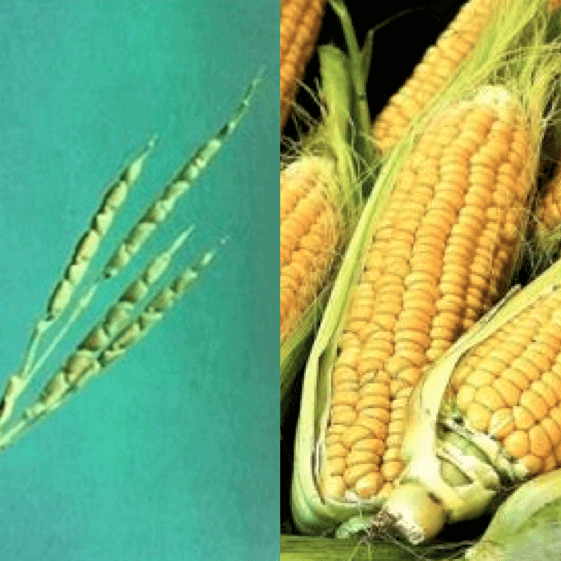
I don’t know about you, but if I were living in prehistoric times, after I came home from a long day of trying not to die from sepsis or being turned into bear feces –you know, a “natural” lifestyle– I’d just love sink my four teeth into these delicious nubbins:

gmo corn before

No, I’d just rather have a freaking proper ear of corn, or as I like to think of it, “The Iriquois’ Revenge”. And while it may be difficult these days to find any food that doesn’t have obesity-inducing corn syrup added to it, that’s not the fault of Science, it’s the fault of science-illiterate people who allow bureaucrats and lobbyists to determine what subsidies we should be giving to farmers.

gmo corn after

Everyone loves Cherry Tomatoes in their salads, right?

gmo eggplant before

Sure, but that’s what a freaking Eggplant looked like before we donned our lab coats, twirled our mustaches, and violated nature started selectively breeding so the damn thing would feed more people.

gmo eggplant after

Now check out this weird, exotic fruit. How the hell would you even eat that?

Would you believe there’s a former child TV star who’s trying to make the argument against Evolution based on how “intelligently designed” this fruit is?

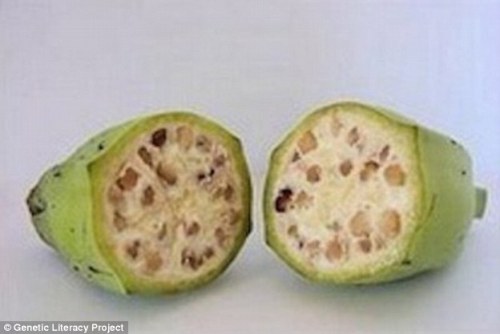
gmo banana before

Wrongo Mike Seaver, you curly-mulleted, homework hating rascal. People modified bananas so they didn’t look like a pulpy beehive of buttholes.

gmo banana after

The GLP aggregated and excerpted this blog/article to reflect the diversity of news, opinion, and analysis. Read full, original post: 10 Pictures That Will Shut Up Your Anti-GMO Friends

Armyworms ravaging African staple crops: GM insect resistant crops offer a solution

p c f a aad f a a eb a abb s

[Editor’s note: The following is an interview with Kenneth Wilson, professor at the Lancaster Environment Centre, Lancaster University.]

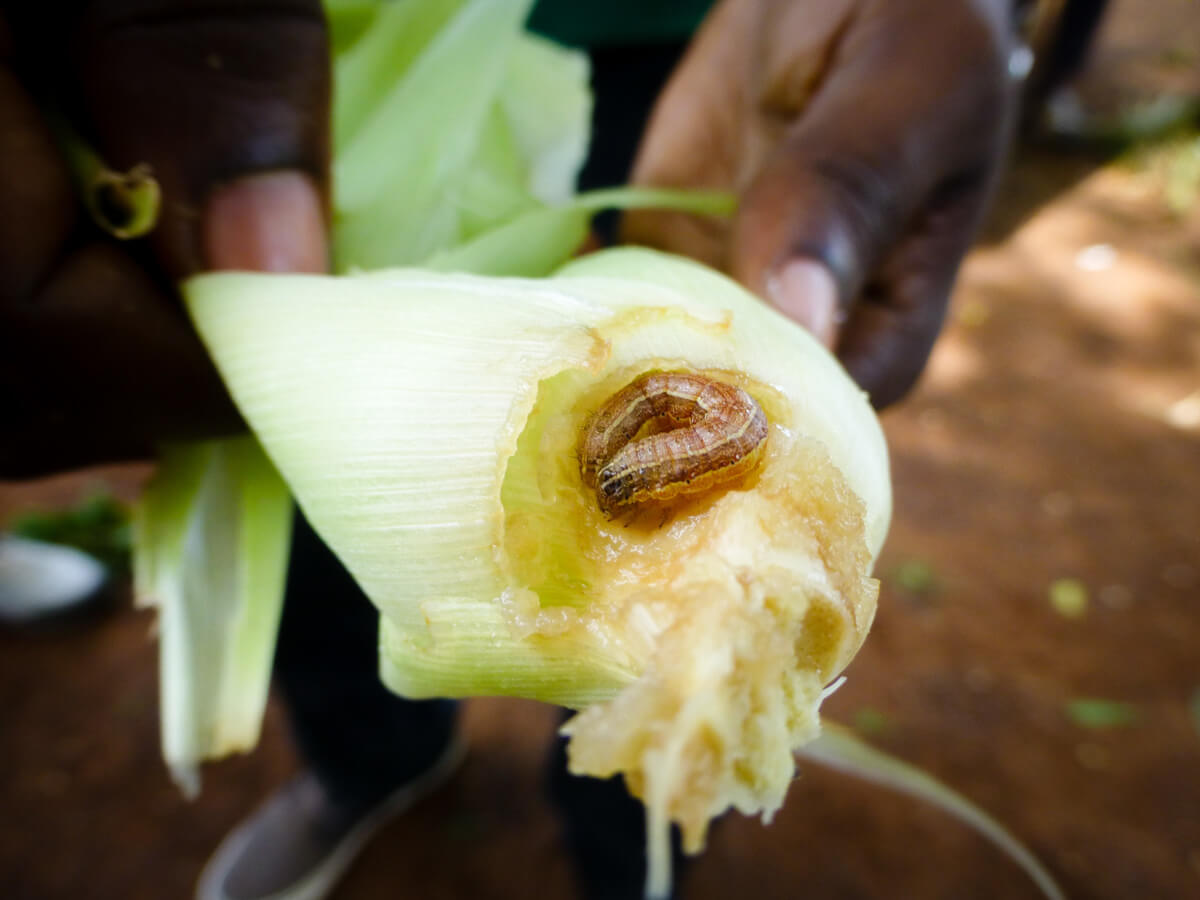
A combination of native African armyworms and Fall armyworms from the Americas are ravaging staple crops across southern Africa. If uncontrolled, they have the potential to cause major food shortages.

Chemical pesticides can be effective against both armyworm species. But resistance to many chemicals is an issue for the Fall armyworm throughout its native range. It’s not known whether there is pesticide resistance in the Fall armyworms blighting southern Africa.

Research is needed to work out which chemical is the best to control the strain of Fall armyworm in southern Africa.

The top photo shows a mature maize field before pests arrive. The bottom photo shows a similar field following an armyworm attack. Top: Ken Wilson; Bottom: FAO Lesotho

But there are alternative approaches.

In parts of their native range in the Americas, genetically-modified Bt maize is grown to combat the Fall armyworm. This may also be an option for South Africa and some other countries where GM crops are already grown. But many parts of Africa do not allow or welcome GM varieties. And Fall armyworm has also evolved resistance to some Bt toxins, with some evidence for cross resistance.

There are non-chemical, biological pesticides that could also be effective.

Only time will tell what the full impact of this armyworm invasion will have.

The GLP aggregated and excerpted this blog/article to reflect the diversity of news, opinion, and analysis. Read full, original post: Armyworms are wreaking havoc in southern Africa. Why it’s a big deal

Disease-resistant GMO banana field trial approved in Australia

Screen Shot at PM

A trial of genetically modified bananas will begin south of Darwin [Australia] in a few months after a five-year trial received approval from the gene technology regulator.

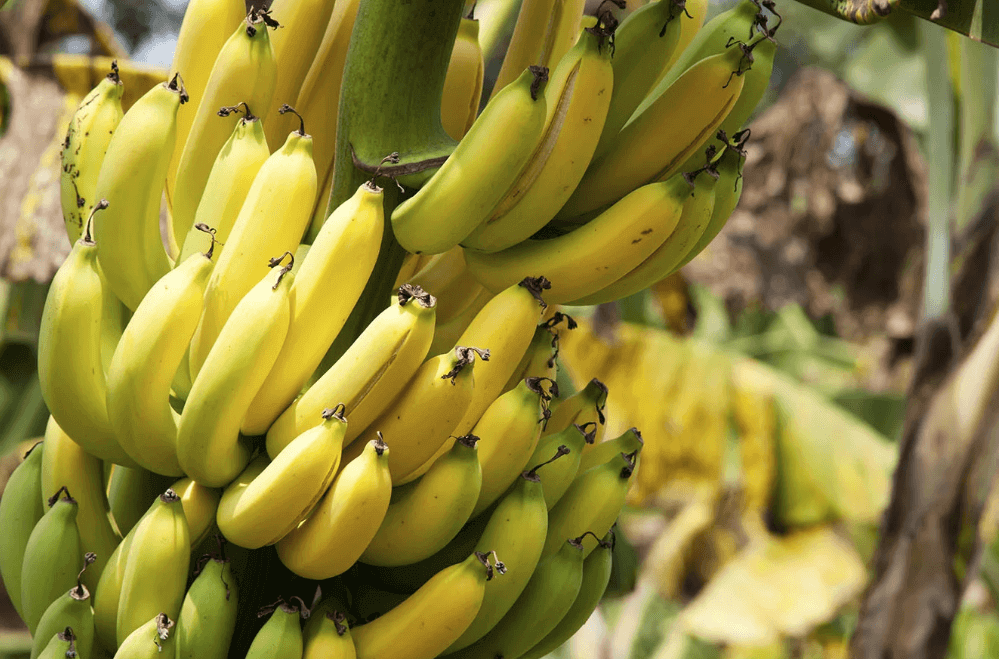
Two hundred modified lines of Cavendish bananas will be grown over 6 hectares in the Litchfield region in the hope of developing a variety resistant to Panama Tropical Race 4.

The destructive fungal disease is now commonplace in the Northern Territory after being found in Darwin’s rural area in 1997.

“The outcome of [a similar previous] trial was that we found four lines of Cavendish Grand Nain which had either complete or very high levels of resistance,” [said professor James Dale, from the Centre for Tropical Crops and Biocommodities at Queensland University of Technology (QUT), who is leading the banana research program.]

While there are no genetically modified bananas being grown commercially in Australia, Professor Dale said that may change if Panama disease became widespread.

“If the disease becomes really serious in Queensland then there would be a real possibility to take our bananas through to deregulation in Australia,” he said.

The GLP aggregated and excerpted this blog/article to reflect the diversity of news, opinion, and analysis. Read full, original post: Genetically modified banana trial to return to Northern Territory in hope of finding variety resistant to Panama TR4