Happy DNA? Yes, but there are likely thousands of gene variants

happy customer testimonials e

A human’s level of happiness is linked to their genetic makeup, according to a researcher who carried out groundbreaking work in the area—but it’s nearly impossible to modify genes to boost your contentment.

In a first ever study, [Meike Bartels, the university research chair at Vrije Universiteit Amsterdam,] and a group of researchers studied nearly 300,000 people, sampling DNA material as well as measures of well-being. Looking at human genomes, the study found links between genes and feelings. There were three genetic variants for happiness, two that account for differences in symptoms of depression, and eleven locations on the human genome that may account for varying degrees of neurotic behavior…[So far, r]esearchers have found 20 areas on the genome linked to happiness.

However, Bartels said that even though genes are linked to your levels of happiness, external environmental factors can actually influence how those genes exhibit themselves.

If you know what to change to be happier, why wouldn’t somebody in the people in the future make sure they are full of happiness genes?

Because it’ll be nearly impossible, Bartels said. She added that there’ll be a “couple thousand” genetic variants linked to happiness so it’ll be “too complex” to start altering that much DNA….

[The study can be found here.]

The GLP aggregated and excerpted this blog/article to reflect the diversity of news, opinion, and analysis. Read full, original post: A scientist has discovered why happiness might very well be genetic

Shareholders reject proposal to curb antibiotic use at third largest US chicken producer–Sanderson Farms

poultry

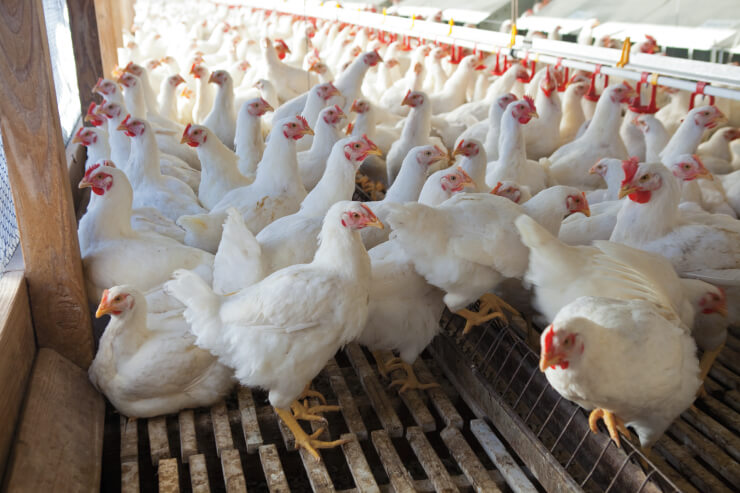
A Sanderson Farms Inc shareholder proposal requesting the third-largest U.S. poultry producer phase out the use of medically important antibiotics for growth promotion and disease prevention failed to pass on February 9, the company said.

The non-binding proposal submitted by activist group As You Sow on behalf of the Gun Denhart Living Trust and other investors received the support of 30 percent of votes cast….

Sanderson says … that its customers are not demanding antibiotic-free chicken.

The company, which recommended a vote against the proposal, said it does not use antibiotics for growth promotion but that it does use them to prevent disease in its chickens.

Some 70 percent of antibiotics vital for fighting infections in humans are sold for use in meat and dairy production.

Scientists have warned that the routine use of antibiotics to promote growth and prevent illness in healthy farm animals contributes to the rise of dangerous human superbug infections, which kill at least 23,000 Americans each year and pose a significant threat to global health.

The GLP aggregated and excerpted this blog/article to reflect the diversity of news, opinion, and analysis. Read full, original post: Sanderson Farms shareholder proposal on antibiotics fails

10 photos that capture how humans have genetically modified food for centuries

Screen Shot at PM e

Just about everyone these days has someone in their life –a friend, a relative, a co-worker– who subscribes to the asinine notion that food was better back when people lived in caves. Most of those people are simply misinformed and misguided, but a handful of them are dangerously vocal in spreading their famine-inducing nonsense on the rest of the planet.

So when it comes to those people, show them these pictures to shut them up:

gmo carrot before

Mmm, look at that delicious dirt stick. Our ancestors could easily see how tasty that would be, right? (Wrong, they were probably starving to death and putting anything they could find into their mouths to stave off hunger.)

This is what Dirt-Stick Plant looks like after pesky humans modified it through the dastardly process of genetic manipulation:

gmo carrot after

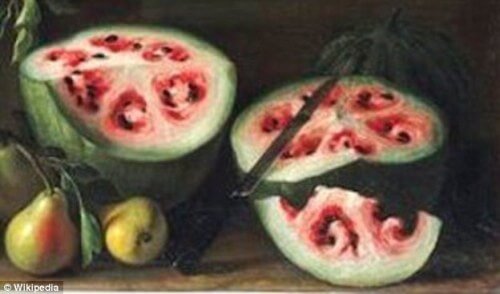
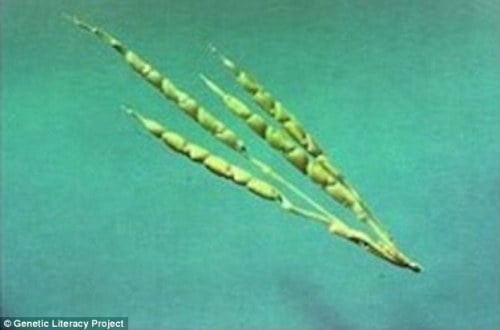
Before Human beings started manipulating this weird sort of pizza-looking fruit, ye olde backyard barbecues must have involved a lot of spitting.

gmo watermelon before

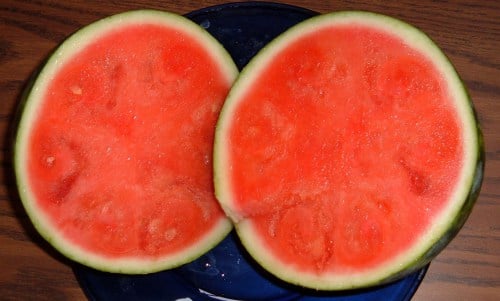
And here’s a Watermelon today:

gmo watermelon after

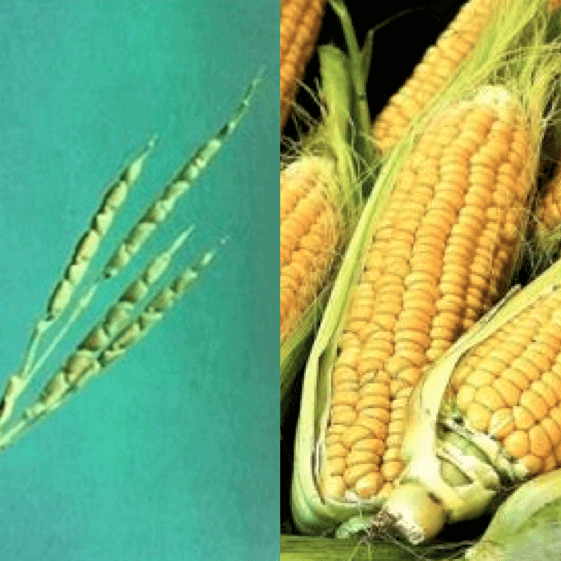
I don’t know about you, but if I were living in prehistoric times, after I came home from a long day of trying not to die from sepsis or being turned into bear feces –you know, a “natural” lifestyle– I’d just love sink my four teeth into these delicious nubbins:

gmo corn before

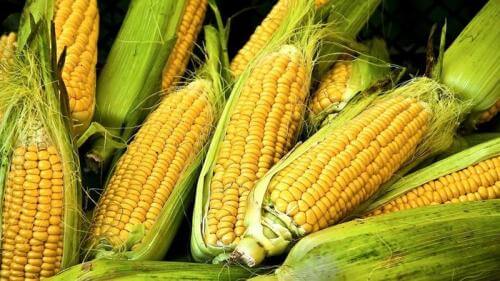
No, I’d just rather have a freaking proper ear of corn, or as I like to think of it, “The Iriquois’ Revenge”. And while it may be difficult these days to find any food that doesn’t have obesity-inducing corn syrup added to it, that’s not the fault of Science, it’s the fault of science-illiterate people who allow bureaucrats and lobbyists to determine what subsidies we should be giving to farmers.

gmo corn after

Everyone loves Cherry Tomatoes in their salads, right?

gmo eggplant before

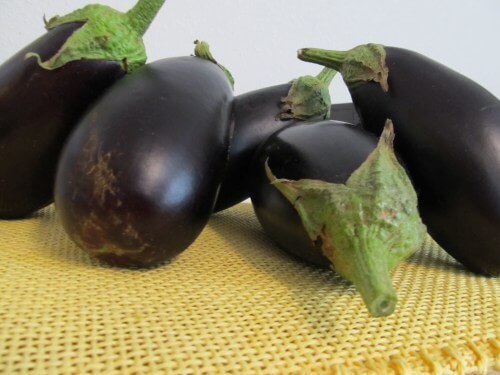
Sure, but that’s what a freaking Eggplant looked like before we donned our lab coats, twirled our mustaches, and violated nature started selectively breeding so the damn thing would feed more people.

gmo eggplant after

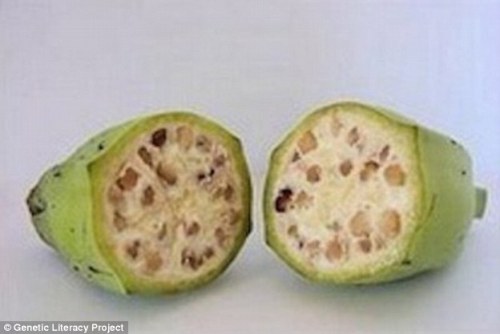
Now check out this weird, exotic fruit. How the hell would you even eat that?

Would you believe there’s a former child TV star who’s trying to make the argument against Evolution based on how “intelligently designed” this fruit is?

gmo banana before

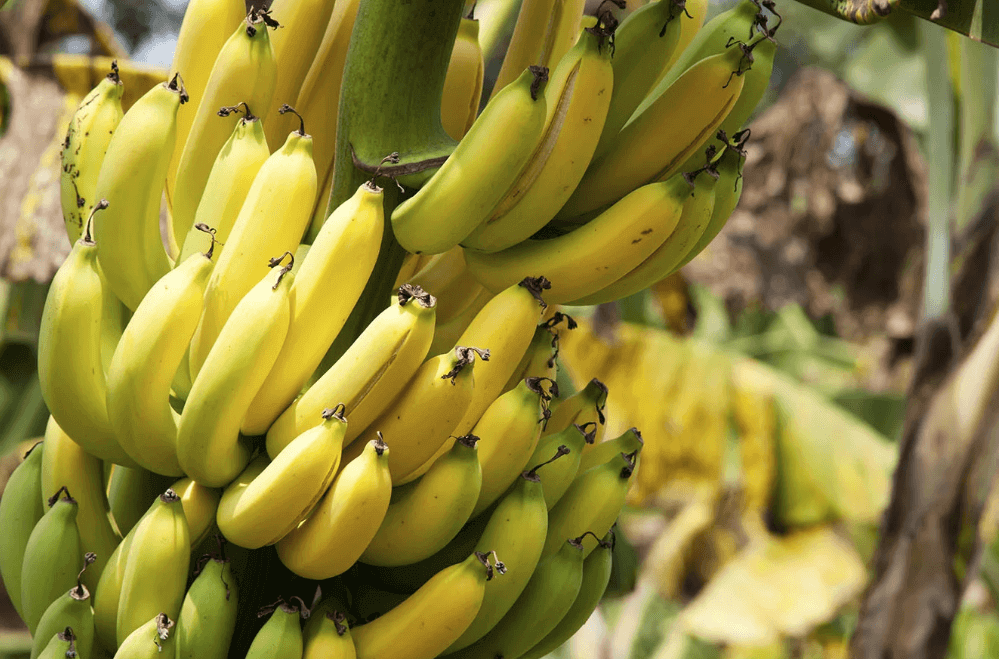
Wrongo Mike Seaver, you curly-mulleted, homework hating rascal. People modified bananas so they didn’t look like a pulpy beehive of buttholes.

gmo banana after

The GLP aggregated and excerpted this blog/article to reflect the diversity of news, opinion, and analysis. Read full, original post: 10 Pictures That Will Shut Up Your Anti-GMO Friends

Armyworms ravaging African staple crops: GM insect resistant crops offer a solution

p c f a aad f a a eb a abb s

[Editor’s note: The following is an interview with Kenneth Wilson, professor at the Lancaster Environment Centre, Lancaster University.]

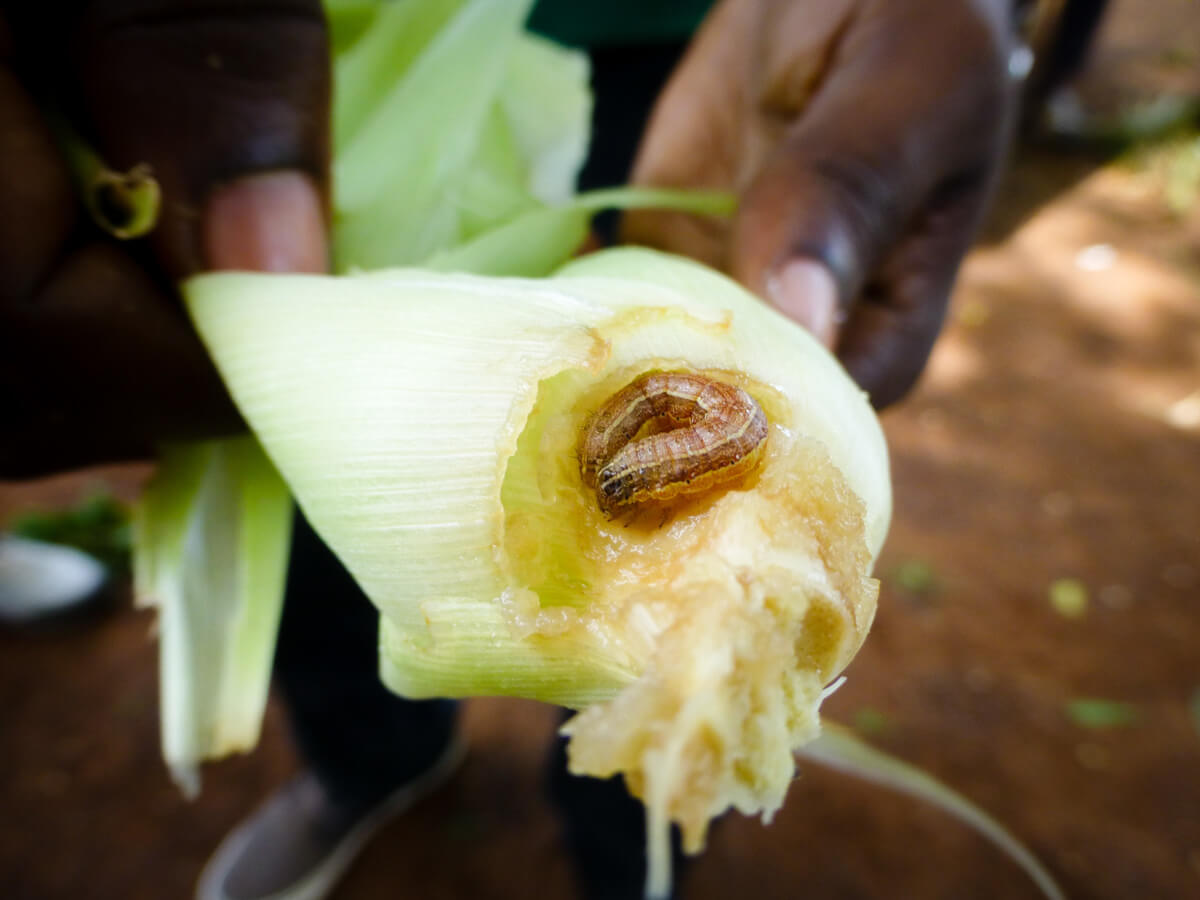
A combination of native African armyworms and Fall armyworms from the Americas are ravaging staple crops across southern Africa. If uncontrolled, they have the potential to cause major food shortages.

Chemical pesticides can be effective against both armyworm species. But resistance to many chemicals is an issue for the Fall armyworm throughout its native range. It’s not known whether there is pesticide resistance in the Fall armyworms blighting southern Africa.

Research is needed to work out which chemical is the best to control the strain of Fall armyworm in southern Africa.

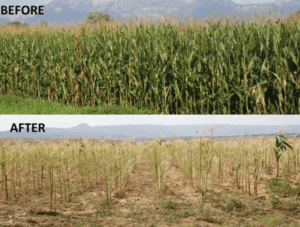
The top photo shows a mature maize field before pests arrive. The bottom photo shows a similar field following an armyworm attack. Top: Ken Wilson; Bottom: FAO Lesotho

But there are alternative approaches.

In parts of their native range in the Americas, genetically-modified Bt maize is grown to combat the Fall armyworm. This may also be an option for South Africa and some other countries where GM crops are already grown. But many parts of Africa do not allow or welcome GM varieties. And Fall armyworm has also evolved resistance to some Bt toxins, with some evidence for cross resistance.

There are non-chemical, biological pesticides that could also be effective.

Only time will tell what the full impact of this armyworm invasion will have.

The GLP aggregated and excerpted this blog/article to reflect the diversity of news, opinion, and analysis. Read full, original post: Armyworms are wreaking havoc in southern Africa. Why it’s a big deal

Disease-resistant GMO banana field trial approved in Australia

Screen Shot at PM

A trial of genetically modified bananas will begin south of Darwin [Australia] in a few months after a five-year trial received approval from the gene technology regulator.

Two hundred modified lines of Cavendish bananas will be grown over 6 hectares in the Litchfield region in the hope of developing a variety resistant to Panama Tropical Race 4.

The destructive fungal disease is now commonplace in the Northern Territory after being found in Darwin’s rural area in 1997.

“The outcome of [a similar previous] trial was that we found four lines of Cavendish Grand Nain which had either complete or very high levels of resistance,” [said professor James Dale, from the Centre for Tropical Crops and Biocommodities at Queensland University of Technology (QUT), who is leading the banana research program.]

While there are no genetically modified bananas being grown commercially in Australia, Professor Dale said that may change if Panama disease became widespread.

“If the disease becomes really serious in Queensland then there would be a real possibility to take our bananas through to deregulation in Australia,” he said.

The GLP aggregated and excerpted this blog/article to reflect the diversity of news, opinion, and analysis. Read full, original post: Genetically modified banana trial to return to Northern Territory in hope of finding variety resistant to Panama TR4

Proceed with caution: National Academies offers ‘qualified support’ for gene editing ‘abnormal’ embryos

Screen Shot at AM

Are so-called ‘designer babies’ one step closer to reality?

A joint National Academy of Sciences and National Academy of Medicine advisory panel issued a 250-page report on February 14 opening the door a crack to gene-edited embryos and permanently altering the human germline–a controversial issue among scientists and bioethicists.

The panel supported the modification of human embryos in instances in which there’s no other way to keep babies from acquiring genetic diseases that cause serious health complications or disabilities. Gene editing “for purposes other than treatment or prevention of disease and disability should not proceed at this time,” it concluded. The recommended safeguards would limit gene editing to addressing rare genetic disorders, such as Huntington’s disease, which occur when both members of a couple carry a Mendelian (single gene) disease-causing mutation.

Outlined in a presentation at the National Academy of Sciences in Washington, D.C., the report addressed safety, ethical and social considerations, and provided a platform for what it believed are responsible development and use of genome-editing technologies. Public discussions must “precede any decisions about whether or how to pursue clinical trials of such applications,” it recommended.

Mixed reaction

The panel specifically rejected germline changes that could make children smarter, stronger or more attractive, rather than just healthier–though everyone acknowledges that such a line is scientifically fuzzy. The focus of germline, or heritable genome editing, must be on “healthy babies, not designer babies,” said Alta Charo, committee co-chair and a professor of law and bioethics at the University of Wisconsin—Madison. For some populations, Charo said, heritable genome editing would allow parents to have genetically related children without passing on their known risk for genetic diseases.

The authors acknowledged that every nation has its own stance on genome modification, and that cultural and religious beliefs will affect how gene editing technologies are received by certain populations. Caution is needed, the committee warned, but caution does not necessarily mean prohibition.The orange-light recommendations were an attempt to encourage research in a field littered with ethical landmines. “They have closed the door to the vast majority of germline applications and left it open for a very small, well-defined subset. That’s not unreasonable in my opinion,” said Eric Lander, a genome researcher of the Broad Institute in Cambridge, Massachusetts known as encouraging of the research. But critics quickly emerged. “It changes the tone to an affirmative position in the absence of the broad public debate this report calls for,” said Edward Lanphier, CEO Sangamo Therapeutics in Richmond, California. He co-authored a Nature commentary in 2015 that called for a moratorium on clinical embryo editing, claiming that heritable human genetic modifications pose “serious risks” while the therapeutic benefits are “tenuous.”

Marcy Darnovsky, a philosopher and executive director of the Center for Genetics and Society in Berkeley, California, which is known for its hardline rejection of gene editing and many modern biotechnologies, was uncompromisingly critical of the panel’s recommendations. “We’re very disappointed with the report,” she said. “It’s really a pretty dramatic shift from the existing and widespread agreement globally that human germline editing should be prohibited.”

CRISPR consequences

Fears concerning the inappropriate or abusive uses of gene editing have escalated since the development of the CRISPR/Cas9 technology in 2012.  Some ethicists worry that only affluent members of society would have access to this technology, while others are concerned about unexpected health and social consequences that could result from cosmetic genetic tampering. Critics warn that human gene editing could result in off-target effects—accidental edits elsewhere in the genome—potentially resulting in irreversible disability or even death, although most scientists believe such effects would be rare and could be anticipated.

Committee co-chair Richard Hynes, a cancer researcher at the Massachusetts Institute of Technology, reminded the audience at the press conference that gene editing is not a new concept. Enormous advances in the field, especially the development of CRISPR, are responsible for making genome editing procedures cheaper, more precise, and much easier than in the past. These factors, in turn, have caused an explosion of interest in applications in three main areas: basic research, somatic cell edits and germline edits.

Where the research stands now

Clinical trials using edits on human somatic, or body cells, are already underway. It is now possible to “insert or delete single nucleotides, interrupt a gene or genetic element, make a single-stranded break in DNA … or make epigenetic changes to gene expression,” according to the report. These types of edits only affect the patient being treated, whereas germline edits—on human sperm, eggs, or embryos—would be passed on to subsequent generations.

There are alternatives to germline gene editing, but for some groups these alternatives—such as selective abortion and destruction of affected embryos—are unacceptable. Another possibility is providing somatic cell treatment to children once they are born, but this comes with its own set of risks and ethical considerations. In certain situations, such as when a parent is homozygous for a harmful disease variant, there are no alternatives. This makes heritable genome editing the only option for some parents seeking genetically related offspring.

Currently in the United States, research trials using germline cells are unable to be considered due to Food and Drug Administration regulations on “research in which a human embryo is intentionally created or modified to include a heritable genetic modification.”

General principles to guide the governance of human genome editing, given in detail in the full report, include the promotion of well-being; transparency and accessibility of information to all stakeholders; due care; responsible science and adherence to the highest standards of research “from bench to bedside”; and respect for persons and the personal dignity of all individuals.

Given the accessibility of CRISPR, one could conceive of a future in which a form of genome editing black market could emerge to service those who would disregard such principles for profit or out of medical desperation. Genome editing laws are either lax or nonexistent in many countries. These legal disparities could potentially inspire the rise of a new kind of medical tourism. But for now, legally editing human germline cells remains in the distant future.

Kristen Hovet is an American-Canadian journalist and writer who specializes in the areas of psychology, health, science, and the intersection of sociology and culture. Follow her on Facebook or Twitter at @kristenhovet

Seed catalogues for dummies: Everything gardeners need to know about hybrids, heirlooms and GMOs

e

Nurseries, home improvement stores and even grocery stores may have racks of seeds available when it’s time to start gardening, but there’s nothing like looking through seed catalogs, especially when it comes to choosing edibles.

These catalogs can also be filled with abbreviations and jargon. If you’re new to this, don’t despair. This information is pretty straightforward.

Type of seed.

  • Hybrids. The term “hybrid” can often scare people away, but hybrids are simply seeds from plants whose pollen has been deliberately crossed when growing to produce specific characteristics
  • Genetically Modified Organisms. Hybrids are not the same as genetically modified organisms, or GMOs. Those are produced in labs by manipulating the DNA of the plants. They aren’t necessarily creating a separate category of types of characteristics as much as enhancing certain characteristics for agricultural advantages. Critics of GMOs object to the altering of the plants’ DNA. GMO seeds are not generally available to the home gardening market and would likely be prohibitively expensive if they were.
  • Heirlooms. There isn’t an official date for when a plant is old enough to be designated an heirloom, but most people consider anything that was grown before World War II….

The GLP aggregated and excerpted this blog/article to reflect the diversity of news, opinion, and analysis. Read full, original post: How to Navigate a Seed Catalog

Environmentally friendly farm chemicals? Bio-insecticides edge closer to reality

fungus beauveria bassiana entomopathogenic fungi x e

A ‘new generation’ of environmentally friendly pesticides is a step closer as researchers make an important breakthrough in pest control efficiency thanks to an insect-killing fungus.

Molecular virologists Dr Robert Coutts from the University of Hertfordshire and Dr Ioly Kotta-Loizou from Imperial College London are investigating the potential of Beauveria bassiana (B. bassiana) as an environmentally friendly pesticide, or bio-insecticide.

B. bassiana is an insect-pathogenic fungus found naturally in soil and on some plants. The fungus can kill a wide range of bugs by infecting them with its spores. These include notorious crop-killing and household pests such as whiteflies, aphids, grasshoppers and termites.

‘This discovery is potentially transformational for the sector and could elevate the profile of B. bassiana as one of the most environmentally friendly pest control agents for farmers today. This would safeguard ecosystems internationally, especially where the use of chemical insecticides is particularly prevalent,’ [said Dr Coutts.]

‘It is an extremely important breakthrough. By using viruses as enhancers we will create a new generation of improved mycoinsecticides, increasing the quality of global food production and reducing the environmental impact.’

Without [insecticides] it has been estimated that global food production could fall by as much as 35-40%, increasing the cost of food and threatening food security.


The GLP aggregated and excerpted this blog/article to reflect the diversity of news, opinion, and analysis. Read full, original post: Major breakthrough in search for environmentally friendly pesticide

Bee crisis? How intelligent sticky drones could buzz alongside nature’s pollinators

Tiny drones dressed in horsehair and coated with a sticky goo have been attempting to pollinate lilies in a Japanese lab. The $100 quadcopters [measure] just 42mm-wide [1.65 inches] and [weigh] 14.8g [0.52 ounces]…

“I believe that a form of AI, GPS and high-resolution cameras would be very useful for the development of automatic machines in the future. In particular, AI will help provide the intelligence in a robotic drone. They will [autonomously consider] something such as exploring the shortest path and the highest efficiency for pollination. That must be helpful and useful for farmers, right?” [said Eijiro Miyako, a chemist from the National Institute of Advanced Industrial Science and Technology (AIST) Nanomaterials Research Institute (NMRI).]

A 2016 study looking at 18 years of data on bee populations in England found that insecticides were linked to a longterm decline in the pollinators. Another paper out the same year identified 57 pesticides licensed for use in the European Union that are poisonous to honeybees. Meanwhile, an estimated $235 billion to $577 billion worth of global crops depend on pollinators, a report by the Intergovernmental Science-Policy Platform on Biodiversity and Ecosystem Services (IPBES) revealed in 2016.

Miyako believes the project could help counter this enormous problem, by automating manual crop pollination. “We hope the robotic pollinators might replace bees [to counter] the problem of honeybee decline – but more importantly, we should use both together. They might cause good synergistic effects.”

The GLP aggregated and excerpted this blog/article to reflect the diversity of news, opinion, and analysis. Read full, original post: Robo-bees covered in sticky horsehair could one day help pollinate crops

Progression of HIV triggered by each patient’s genes

Screen Shot at AM

Scientists have long observed important differences in the rate of disease progression among individuals infected with HIV. It is now well established that the disease progresses faster in people with a higher viral load – the amount of genetic material from the virus found in their blood.

[This study] is the first to investigate the relative impacts of human and viral genetics on viral load, within one group of patients.

[The researchers] found that genetic differences between HIV strains accounted for 29% of the contrasts in viral load between patients. Human genetic variation on the other hand, explains 8.4%. Together, human and viral genetics explained a third of viral load variation.

These findings suggest that the patients’ genetics trigger genetic mutations in the HIV virus as it multiplies inside them, thus influencing the clinical course of HIV infection.

“Our study improves our understanding of HIV pathogenesis. This is an important step – the better you know your enemy, the more equipped you are to fight it and fight against the disease”, said [Jacques Fellay, director of the study by École Polytechnique Fédérale de Lausanne in Switzerland.] [The study can be found here.]

The GLP aggregated and excerpted this blog/article to reflect the diversity of news, opinion, and analysis. Read full, original post: Patients and virus genetics account for a third of HIV viral load

Growing embryos from skin cells: Could it replace in vitro fertilization?

maxresdefault
[In the process called in vitro gametogenesis,] adult cells, such as skin cells, can be reprogrammed to behave like embryonic stem cells and…can be stimulated to grow into eggs or sperm, which in turn are used to form an embryo for implantation into an adult womb.

Though most scientists agree we’re still a long way off from doing it clinically, it’s a promising technology that has the potential to replace traditional in vitro fertilization to treat infertility.

[A] potential benefit with IVG is that there is no need for a woman to receive high doses of fertility drugs to retrieve her eggs, as with traditional IVF.

In addition, same-sex couples would be able to have biological children, and people who lost their gametes through cancer treatments…would have a chance at having biological children.

There are growing calls among researchers for regulators to revisit the “14-day rule,” an international agreement…that says an embryo can’t be maintained in culture longer than two weeks…Some see the rule as essentially a moral compromise between researchers and those who believe that destroying embryos is murder.

We may be more likely to see the first human IVG experiments performed in Asia, because laws are generally less restrictive there, according to George Daley, [a professor of Pediatrics at Harvard Medical School].


The GLP aggregated and excerpted this blog/article to reflect the diversity of news, opinion, and analysis. Read full, original post: Could we one day make babies from only skin cells?

Biohacker crackdown? Germany threatens gene-editing hobbyists with fines, jail

DIY gene engineering

The German government…is none too pleased with [how easily people can conduct gene editing experiments outside of labs thanks to advances in science]…[Its] consumer protection office [recently] issued a statement: Any science enthusiast doing genetic engineering outside of a licensed facility, it wrote, might face a fine of €50,000 or up to three years in prison.

The statement sent a wave of shock through the DIY bio community.

The law behind the German DIY bio crackdown isn’t new. The government was simply reminding so-called biohackers of a long-existing law that forbids genetic engineering experiments outside of laboratories supervised and licensed by the state.

“I’m pretty sure that laws will prohibit me from continuing my research at a later state,” said Bruno Lederer, a German biohacker who hopes that loopholes in the law will allow his work to continue for now. “I think it’s a shame that I’d have to do illegal things in order to do independent research.”

Community biology labs…shouldn’t have an issue getting licensed. But not every DIY scientist lives near or has the resources to join a community lab. If the DIY bio movement is about making science accessible to those outside the Ivory Tower of academia, the German government’s statement represents a serious roadblock.

The GLP aggregated and excerpted this blog/article to reflect the diversity of news, opinion, and analysis. Read full, original post: Germany Is Threatening Biohackers With Prison

Seeking to reduce genetic disorders, Iran orders mandatory premarital DNA screens

iran

Every day, 80 infants with some form of disability are born in [Iran]. That equals to over 30,000 new disabilities per year.

Genetic testing before marriage has been made mandatory [in Iran] in the next economic, social and cultural development plan (2016-2021) which will come into effect in March (one year late), reports [the Islamic Republic News Agency].

The aim is to reduce the risk of parents passing on illnesses or genetic disorders to their children. Getting screened before pregnancy can give prospective couples reassurance that they are not a carrier, or can help them make an informed choice for pregnancy.

One of the most important causes of disorders in newborns is marriage within families or cousins. Studies shows marriage between first cousins more than doubles the chance of having a baby with potentially life-threatening birth defects…Currently, the rate of marriage within families is 12.6% in Iran….

“Additionally, families with a child suffering from a disability must undergo genetic testing before having their second child,” said [Anoushiravan Mohseni Bandpei, head of the State Welfare Organization]. The costs of genetic testing will be paid by the SWO if the family cannot afford it.

The GLP aggregated and excerpted this blog/article to reflect the diversity of news, opinion, and analysis. Read full, original post: Premarital Genetic Testing Mandatory

Synthetic conservation: Gene drives could revive extinct animals, protect endangered species, knock out pests

Screen Shot at AM

Scientists working in coördination with a U.S. conservation group say they’ve established an evolution-warping technology called a “gene drive” in mammals for the first time and could use it to stamp out invasive rodents ravaging seabirds on islands.

Gene-drive technology, so far demonstrated only in insects and yeast, is a powerful way of biasing the inheritance of DNA such that wild animals can be genetically altered as they reproduce, including to cause a population crash.

 … 

The mice are an early glimpse of an idea being called “synthetic conservation,” in which genetic engineering is viewed as a means to revive extinct animals, offer genetic refills for endangered species with shallow gene pools, or knock out invasive pests ravaging native plants and animals.

The group’s plans have divided ecologists, however, some of whom see a devil’s bargain in the dizzying new power to modify nature. “Conservation means caring for the natural world, not re-engineering it,” says Claire Hope Cummings, an environmental lawyer who says she dropped her support for Island Conservation over its gene-drive work.

The GLP aggregated and excerpted this blog/article to reflect the diversity of news, opinion, and analysis. Read full, original post: First Gene Drive in Mammals Could Aid Vast New Zealand Eradication Plan

Chinese parents embrace dubious DNA tests to uncover their child’s ‘natural talents’

talent
[Due to a widely popular trend among anxious parent,] thousands of children in China have undergone genetic testing which purportedly “reveal” what talents they will develop in later life.

“My two baby boys were…tested, and I was told they’d be good at painting,” said [one mother]. “So I’m just going to focus on art lessons for them.”

The trend in lab testing, which is prompted by pushy parents seeking to give their offspring an advantage, has seen the emergence of a growing number of “health institutes” that claim to predict if children as young as a year old will be the next Mo Farah, Lady Gaga, or Stephen Hawking.

The institutes charge hundreds of pounds to perform the tests, which involve taking a saliva swab that is then sent to laboratories. About two weeks later, parents are told whether their child is gifted in areas such as dancing, mathematics or painting.

For Chang Zisong, an expert in genealogy at the Tianjin International Joint Academy of Biomedicine, such predictions are “meaningless”.

“The primary reason that China doesn’t outlaw these institutes is because by doing so would suggest that they have scientific value,” he stated.

The GLP aggregated and excerpted this blog/article to reflect the diversity of news, opinion, and analysis. Read full, original post: Anxious Chinese parents cause gene testing boom as they try to discover young children’s talents 

Without Glyphosate, What Would Farming Look Like?

Revised Without Glyphosate What would Farming Look Like Featured Image

Dave Walton, full-time Iowa farmer growing GM and non-GM corn, soybeans, alfalfa and hay and Director, Iowa Soybean Association | February 14, 2017

HIGHLIGHTS:

• On our farm we use what amounts to large soda-sized cup of glyphosate per acre
• GE crops and glyphosate allowed us to switch to more sustainable no-till farming
• “Superweed” problem no worse using glyphosate than other pest chemicals
• Our use of most toxic chemicals has gone down, as it has for most conventional farmers
• Banning glyphosate would result in using more toxic chemicals, abandoning no-till


The news earlier this year that the European Union stepped to the brink of banning the herbicide glyphosate got me thinking — what would our farming operation look like if we had this herbicide tolerant crop system taken away? It’s a question I’ve pondered for no other reason than to determine what my alternatives would be if the use of this chemical becomes a political football in the United States as it’s become elsewhere.

How would the loss of glyphosate change what we do now? Are the alternatives better or worse than the current production model? To be sure, thinking this through was not a pleasant exercise, but it’s a critical one considering how overheated the global discussion has become on this chemical.
UnknownMost people reading this are probably familiar with glyphosate. It goes by the trade name Roundup. It does a great job at killing weeds. If you do any gardening, you’ve probably bought it at your local hardware store and used it on your lawn safely for decades. We use glyphosate with crops, like soybeans, that are herbicide resistant. That means we can spray it after the weeds and/or the crop has emerged and it will kill the weeds but not harm the crops. For farmers and consumers, that’s a good thing, I believe.

But if you’re an anti-GMO activist, glyphosate is the root of all evil. They say that farmers, like me, drench our crops in this herbicide; turns farmers into chemical junkies; hurts beneficial insects; destroys the vitality of the soil; leads to a massive infestation of monstrous weeds; and worst of all that it will kill me of cancer. Science says none of these are true, and that’s confirmed by my personal experience. But advocacy organizations are all over the Internet promoting these scare stories, and many of their claims are circulated by the mainstream news as if they are true. It hurts my brain to read that stuff.

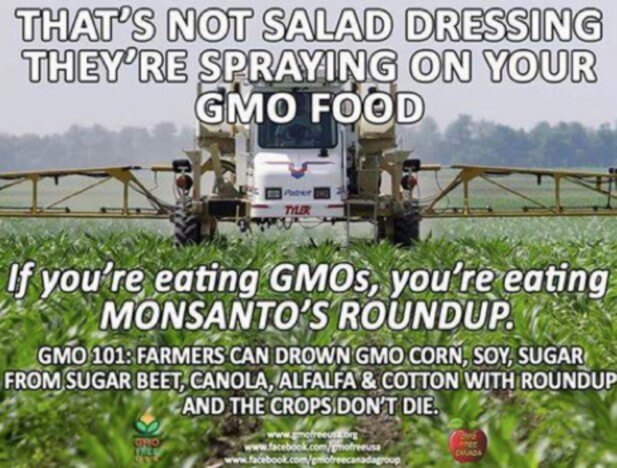
There are people out there who truly believe that we farmers douse, drown, drench or saturate our crops in chemicals. Anti-GMO campaigners, organic activists and irresponsible news reports use those phrases all the time (see here, here, here, here). In graphic form it often looks something like this meme from GMOFreeUSA pictured here:
Really?

Does GMOFreeUSA actually think we load up big tankers of herbicide and drown our crops with the stuff? First, they don’t understand the meaning of the word drown; second, to really drench a crop we would have to use one of those big tanker airplanes they use to fight forest fires. The video in this link, for example, would qualify as a drenching, probably not a drowning. Sorry, that simply is not what we do on a modern farm.

Nothing could be further from the truth.
On our farm, we grow both GMO and non-GMO crops. When planting season arrives in Iowa, I begin applying herbicides to prepare for planting. On our no-till ground — the most sustainable form of agriculture, and it’s been made possible by the use of GM crops — we use a combination of glyphosate, 2,4-D and metalachlor for corn. Forsoybeans we add a pre-packaged mix of chlorimuron, flumioxazin and thifensulfuron. On our tilled ground, we leave out the glyphosate and 2,4-D, as it’s not needed because tillage kills the weeds that are present.

So, what about this drowning of our fields with glyphosate that we’ve been reading so much about? On our corn ground, before planting we apply 16 ounces of glyphosate along with a small amount of these other chemicals. To put that in perspective, it’s a little more than half a gallon of total herbicide spread out over an acre, or roughly the size of a football field.

In other words, per square foot, on the corn ground we apply what amounts to 1/3 of a drop per square foot. On soybean ground it’s approximately 1/12 of a drop per square foot. What we do is a misting and not a “dousing.” We’re not “drowning” plants in pesticides; we’re using what amounts to an eyedropper.

That’s what we do now. But as a farmer, I have to be sober about this. What happens if the activists scare enough people, or members of Congress, and a ban is put in place, like what may very well happen in Europe after the 18-month temporary renewal ends. What’s the worst case scenario?

Here’s How I Used to Farm

I’m not saying it would be a full-on nuclear winter here, but it would be a regression to an earlier time, and I know a far less sustainable time, before glyphosate came into wider use in the late 1980s. To take a phrase from a show from a while back — “Imagine if you will… a time not long ago…”

One of the biggest issues for all farmers, conventional and organic, is how to prepare the soil for seeding by clearing away, and preventing weed competition. Let’s start at the beginning of the crop cycle and work through this. As a farmer, the first thing I need to decide before the season even begins, is what type of production model should I use: conventional tillage; conservation tillage; or no-till?

We used to rely a lot on conventional tillage (and many organic farmers still do). Conventional tillage is a system in which the ground is tilled either in the fall after the previous crop is harvested or early in the spring before planting. A plow rolls the ground, which doesn’t do much good for the soil structure — it speeds up the decomposition of crop residue and soil organic matter. That leads to increases in carbon release from the soil via CO2. Not good, and a practice that we’ve eliminated in our operation. In fact, we have not used a moldboard plow (like the one seen below) in probably 25 years.

Next, we used a disk to level the ground and remove any weeds that may have germinated after the primary tillage was complete. The secondary tillage step was always done in the spring, and the timing could be anywhere from a few days to a few weeks prior to planting. If weeds were present, we would perform yet another tillage pass. Then we would plant.

After planting, but before the crop emerged, we would make a herbicide application to prevent weeds from germinating and competing with the crop. Weeds are a bitch. They really are. They steal water and nutrients from the crop, and can out-compete them because of their aggressive growth. Organic farmers say that they are their number one headache; they use a combination of soil management techniques, some of which we use as well, and natural chemicals (some of which are quite toxic, like copper sulfate).

Depending on the crop, we would usually use a wide variety of pre-emergent herbicides. These products were efficient in reducing broadleaf weeds and relatively good at preventing grass type weeds but they weren’t 100 percent effective. Yep, it meant that we had to do one or two more tillage passes, this time with what we called a row-crop cultivator. So in total we made at times up to five tillage passes for each crop season. And once weeds emerged, we didn’t have many crop-safe herbicide options. Weedy fields were common, and resulted in loss of yield, and another increase in weed pressure the next season.

As we farmers became more aware of the damage tillage could do, we added conservation tillage to the mix, which resulted in less turning of the soil. Herbicides improved but they still weren’t 100 percent effective. However, we were able to cut the number of tillage steps down from five to as few as two.

In the late 1970’s, the production system called no-till was being developed. It was interesting to me as it solved a few of the soil issues, but as a complete system it didn’t seem workable when first introduced. It was heavily dependent on intense management. Even with all its ecological advantages, most conventional (and organic farmers, then and now) did not adopt it because it just didn’t control weeds very well — unless you used a lot of chemical applications, and few farmers, organic or conventional, want to do that.

Everything began to change in 1996, when herbicide tolerant (Ht) crops were introduced. The first to market were soybeans tweaked to have a tolerance to glyphosate, known as Roundup Ready. You could spray a field with glyphosate to prevent weeds from growing, and if you had to spray after the soybeans emerged, the crop was unharmed. This started to get interesting. Suddenly, as the chart below makes clear, the various systems started to come together in a great ecological package. I was able to cut down drastically on the use of far more toxic chemicals and substitute glyphosate, which was also more effective, and that enabled us to move to more no-till farming, a huge boost to our commitment to sustainability. Everything was coming together, as you can see here:
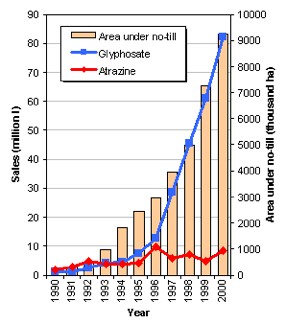
How Herbicide Resistant Farming Has Changed Farming, and Me

The older generation of farmers loved to see fields that were flat and free of surface residue prior to planting. They took great pride in the ability to plow and not have a single corn stalk on the surface. I get that, however I’m not as OCD as those old guys were. They liked things neat and orderly. That tendency went back for generations. You see, we have traced our farming lineage back to colonial days, and we’ve always been farmers in the New World. We worked our way through what is now known as Long Island, through New Jersey, then Ohio and Indiana, landing in East Central Iowa. When I say I had to fight some history, I really had to fight some history. Many farm families in the Midwest followed a similar path, and they equally hated disorder. No-till was first seen by many Midwest farmers as nearly sacrilegious; residue everywhere, and weeds were sometimes allowed to emerge. Scandalous!

I had to fight that perspective in our own operation. I’m not a traditional guy. I love to make hamburger out of sacred cows, and I try to do it nearly every day in my farming operation. Other farmers around us had begun to use no-till for planting soybeans into corn residue, but they still mostly tilled using conservation tillage prior to planting corn. For them, the traditional process was hard to break. But we jumped into the no-till production system with both feet.

Let’s look for a second at the herbicides we used in the past, compared to what we use now — what we would have to go back to if glyphosate were banned. We still use a range of older chemicals, primarily, acetachlor, metalachlor, pendimethalin, atrazine, dicamba, 2,4-D and glyphosate They’ve all been around since I started farming in the early 1980’s, and most were produced much earlier — including glyphosate. No, glyphosate is not new, despite what the activists say and it wasn’t invented for use on herbicide tolerant crops. It’s been on the market since 1974, and quickly became the best-selling herbicide in the world. Why? Because it is so effective, and allowed us to cut down on the use of far more toxic chemicals. For example, I’ve reduced my use of paraquat — which, although safe for farming, is 1500 times more toxic than glyphosate — to almost nothing.

What about claims that since the introduction of herbicide resistant GMO crops we use even more chemicals than we did before? That’s not my experience, as I will explain, despite what you may read on some websites. Sure, it’s use has gone up. How could it not! It’s paired with GMO crops whose use has boomed.

But that’s kind of a silly statistic. If critics were genuinely interested in sustainability, they’d ask, “Has the overall use of the chemicals and in particular the most toxic chemicals gone up?” Those are questions that really matter to the soil and humans. The answers are clear, according to independent government statistics. According to the USDA, in a 2014 report, pesticide use in the US peaked in 1981, and has trended downward since then. Here are two graphs they used to illustrate the trend. Note the drop off beginning in 1996 when GMO crops were introduced.
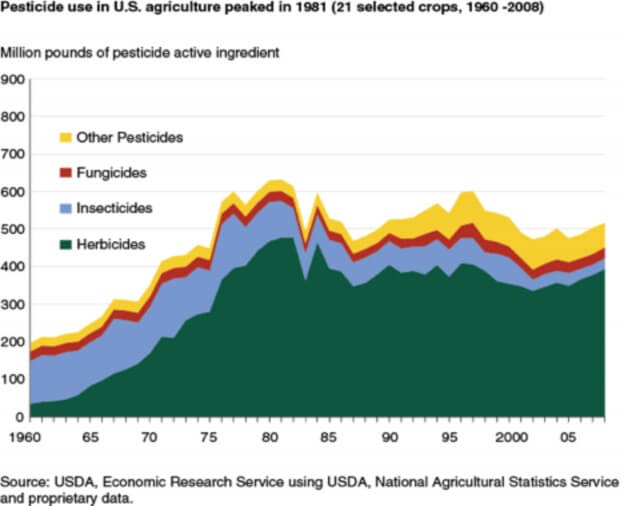
While glyphosate use has, of course, grown, it has not increased the use of chemicals, as some claim.
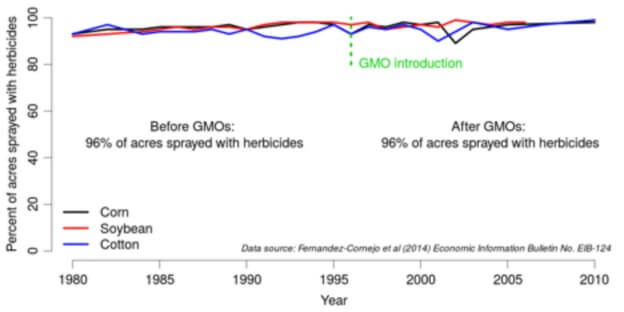
Glyphosate, a very mild toxicant, has replaced far harsher ones, as this chart of the usage of chemicals on corn in the US, though 2015, illustrates.
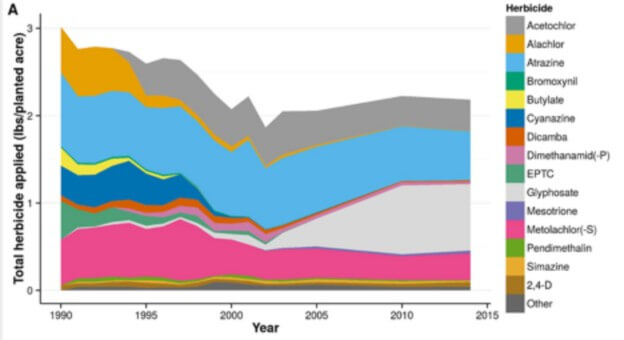

Source: Wyoming Weed Sciences

What about the claim, made as an accusation, that glyphosate causes “superweeds”? I hear it mentioned quite a bit. It’s a genuine issue for farmers, but the reality is weed resistance is nothing new. Pests, whether they are weeds or insects, evolve. It’s what they do. According to the Weed Science Society of America, weed resistance predates herbicide tolerant crops by at least 40 years. Our job as farmers is to be stewards of not only the land, but of the herbicide tolerant technology and herbicides themselves, it is also our responsibility to minimize the chance of resistance. Banning glyphosate won’t solve the superweed problem. Soybean farmers who have switched away from glyphosate to other conventionally bred non-GMO herbicides such as ALS inhibitors have it even worse — their superweed problem is far worse than with glyphosate. Beware of what you wish for.

Sustainability

That brings me to my last, and likely most important, point. Let’s look forward instead of back. I dislike the term ‘sustainability’ because it’s such an ill-defined buzzword. Sustainable farming is a nebulous term, because everything we do involves environmental trade-offs. Our operation attempts to embrace the three pillars of ecological farming: It has to be economically stable, environmentally sound and socially acceptable. The concept we’ve handed down for generations isn’t unique to us; it’s ingrained in our family to leave the land in a better condition than we found it. That means lots of things. I must take care of the soil so it remains fertile for my lifetime and for my children, and for all generations to come.

So then, what happens if herbicide tolerant crops, or specifically glyphosate, is taken away? Simply said, we can only use what’s on the shelf already. We’d have to regress to a prior production model that includes one of several distasteful options. including more tillage and less environmentally smart chemicals.

That’s simply not acting as a steward to our land and our children.

Dave Walton is a full-time Farmer in Cedar County Iowa, 6th Generation, growing GM and non-GM corn, soybeans, alfalfa and hay on 500 acres. Iowa State University, studied Animal Science. Director, Iowa Soybean Association and licensed Commercial Pesticide Applicator and former Certified Crop Advisor.

The Genetic Literacy Project is a 501(c)(3) non profit dedicated to helping the public, journalists, policy makers and scientists better communicate the advances and ethical and technological challenges ushered in by the biotechnology and genetics revolution, addressing both human genetics and food and farming. We are one of two websites overseen by the Science Literacy Project; our sister site, the Epigenetics Literacy Project, addresses the challenges surrounding emerging data-rich technologies.

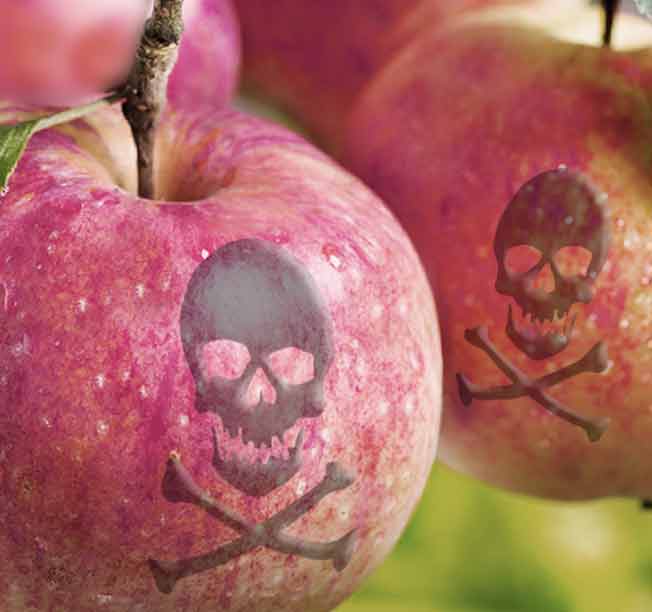
Harvard School of Public Health accused of scare mongering about conventional food, promoting organics

apples deadly pesticides

[Editor’s note: Kevin Folta is a molecular geneticist and chair of the horticultural sciences department at the University of Florida.]

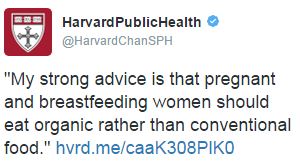
Apparently an Adjunct Professor in Denmark associated with the Harvard School of Public Health is exploiting the reputation and name of this prestigious institution to promote an agenda, and using a EU Parliament document as the vehicle.

This is the familiar vilification of conventional agriculture.

harvard pseudo

As always, I’m fine with organic production methods and am very happy that farmers can make a buck using them. I’m excited to see people thinking about minimizing inputs and producing using alternative methods. That’s awesome. But don’t tell me that the food is more nutritious or safer. The data do not support that conclusion. Minor differences are seen for different nutrients in either direction, under different conditions, and with different plant lines.
The main claim is that “Three long-term birth cohort studies in the U.S. suggest that pesticides are harming children’s brains.”

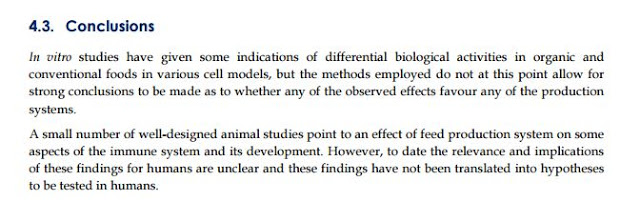
The associated report is from the EU Parliament. I breezed through it, mostly focusing on major syntheses. The conclusions are rather telling.

and

So apparently this was evidence enough to satisfy Harvard Public Health of the glaring dangers of conventional agriculture. I’m crossing them off of my liver transplant list.

The Harvard School of Public Health would be well guided to vet the claims made in such articles on their behalf. These soft-science claims end up affecting a reputation. Ask [the] Cleveland Clinic.

The GLP aggregated and excerpted this blog/article to reflect the diversity of news, opinion, and analysis. Read full, original post: Harvard Public Health-The Sadly Vilifying Conventional Ag?

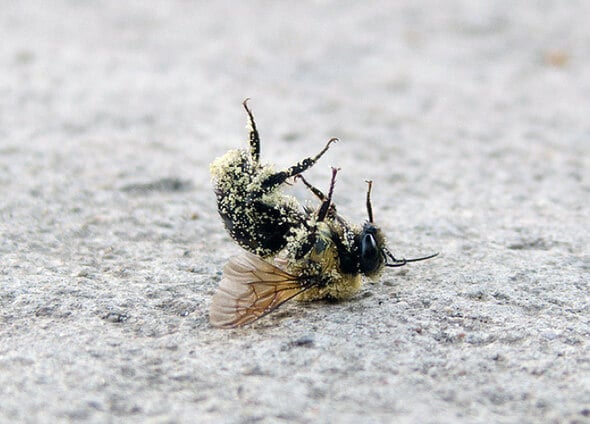
To help bees and farmers, EU should roll back ‘fear-based’ ban on neonicotinoid pesticides

bee

[Editor’s note: The following is a letter by David Zaruk, Belgian-based environmental-health journalist specializing in science and public policy, to Vytenis Andriukaitis, EU commissioner in charge of Health and Food Safety.]

I understand that you belong to a Commission whose chief strategy seems to be expedience (the art of making issues go away). That is not leadership and in the case of the previous Commission’s

Eric Poudelet, former director responsible for Bee Health.

decision to ban three essential and benign insecticides (known as neonicotinoids or neonics), this problem will not go away.

You have clear grounds to [retract the 2013 draft Bee Guidance Document] It was never approved by the European Council (for good reason); [the European Food Safety Authority] has learnt that their expert advisory working group had conflicts of interest which they had hidden from the authority; and the previous DG Sanco had several directors that had been found to be too close to anti-pesticide activist campaigners.

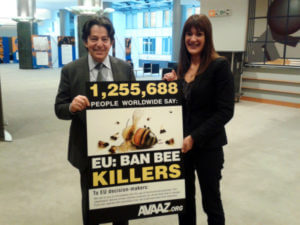
On neonicotinoids, the activist Save-the-Bees campaigns have been full-frontal-fraudulent. They continue to claim that the bees are dying out due to pesticides (with no evidence), they are presenting an alternative to farming that will have serious consequences on food security and they are quite simply extorting donations with open lies at your expense.

If you retract the draft Bee Guidance Document, you can give the NGOs six months to provide scientific evidence to prove that neonics are responsible for the decline in bee populations (which they’ll also have to provide evidence that bee declines are taking place). At the same time, the farmers need an immediate derogation as you sort out the regulatory mess – farmers have suffered far too much from the games of your predecessors.

The GLP aggregated and excerpted this blog/article to reflect the diversity of news, opinion, and analysis. Read full, original post: Time to Decide on Neonicotinoids: A Letter to European Commissioner Andriukaitis

Technology In Farming And Food: Farmers And Producers Need To Build Trust

REVISED Technology in Farming and Food Featured Image

Charlie Arnot, CEO, Center for Food Integrity | February 15, 2017
ALSO READ:

Without Glyphosate, What Would Farming Look Like?
Dave Walton


TThe benefits of technology improvements in the food system have been enormous and herbicide tolerant crops are only the tip of the iceberg. Only around one percent of the US population is involved in food and farming, so the confusion and concern about the massive changes that have occurred in food production over the last 60 years is understandable. But, embracing technology in order to improve efficiency, protect and preserve our natural resources, feed a rapidly growing global population and many more positive impacts is ethically and morally appropriate.

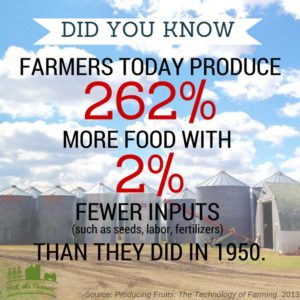
df c a e efd ef fIn 1950, the US population was 154-million and one farmer produced enough in a year to feed 30 people. We’ve more than doubled the population and one farmer today produces enough to feed 160 people. Today’s farmers produce an amazing 262 percent more food with two percent fewer inputs such as labor, seed, animal feed and fertilizer.

The “Green Revolution” refers to technological advances 50 or 60 years ago that paved the way for global agricultural productivity increases. Things such as high-yielding varieties of seed, chemical fertilizers, irrigation and new methods of cultivation are credited with saving the lives of a billion people. Something similar needs to happen again.

The herbicide-tolerant crops that led to widespread adoption of no-till farming discussed by Mr. Walton is only one of many advances in agriculture that have taken place in the last half-century. Improved animal health products and housing systems help keep animals that produce food healthier and more productive. In addition to herbicide-tolerant crops, genetic engineering has produced non-browning apples that could encourage healthier eating and bruise-resistant potatoes that could lead to reduced food waste. New gene-editing technology holds the potential for life-changing applications in plants, animals, people and essentially any kind of organism.

Global estimates point to the need for 100 percent more food by mid-century. Agriculture must produce more, using less through innovation and the responsible use of technology, which America’s farmers have been doing for decades. It is in humanity’s best interest to use technology in food production because it allows us to feed a rapidly growing global population.

But, that message won’t generate public support for today’s agriculture technology.

Research by the Center for Food Integrity shows only one-fourth of consumers feel the US has a responsibility to provide food for the rest of the world. What consumers care about most, according to CFI’s research, is having access to healthy, affordable food. Farmers are more likely to build support for today’s farming by talking about what they do on the farm today that helps keep food healthy and affordable.

Many people are uncomfortable with modern food production systems and the size and scale of today’s farming operations. That’s understandable. With a predominant “big is bad” mindset, many Americans believe today’s food producers place profit ahead of public interest.

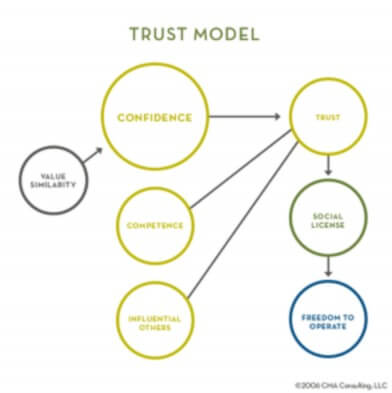
Building trusting relationships with consumers is about making what farmers are doing relevant to them and helping them understand that farmers share their values when it comes to important issues like protecting soil and water and providing healthy, affordable food. CFI’s peer-reviewed and published trust model shows that communicating with shared values is three-to-five times more important to building consumer trust than simply providing information.

Food and agriculture must change the conversation and transparency is the key. CFI’s research proves that as those in the food and agriculture increase transparency, they also increase consumer trust. The link between transparency and trust is real, direct and powerful.

The new reality is that consumers expect more than quality and safety. They also expect the supply chain to be transparent. Farmers and food companies who believe these are not their issues do so at their own risk. They can no longer assume that the public knows they care about the food they produce. This makes them susceptible to the belief that they’re no longer worthy of public trust. Food recalls, environmental accidents, undercover videos and other incidents further reinforce that distrust.

As a result, those in food production must commit to transparency, be willing to engage in a dialogue with consumers and answer their questions in an honest, open manner. Effectively demonstrating transparency will help increase trust in their processes and products, while supporting consumers in making informed decisions. Some farms and food companies have embraced this reality and pulled back the curtain.

As consumers are bombarded with conflicting information it is understandable that new technology is being met with skepticism and society’s increased demand for transparency must be satisfied. While the demand for more information is accompanied by an obligation for consumers to objectively examine the data and to focus on the need for safe, healthy, affordable, responsibly-produced food, it’s the food system’s responsibility to embrace the skepticism and communicate in a transparent manner.

Charlie Arnot is the CEO of the Center for Food Integrity. The Center for Food Integrity is a not-for-profit organization that helps today’s food system earn consumer trust. Our members and project partners, who represent the diversity of the food system, are committed to providing accurate information and working together to address important issues in food and agriculture. The Center does not lobby or advocate for individual companies or brands. For more information, visit www.foodintegrity.org.

The Genetic Literacy Project is a 501(c)(3) non profit dedicated to helping the public, journalists, policy makers and scientists better communicate the advances and ethical and technological challenges ushered in by the biotechnology and genetics revolution, addressing both human genetics and food and farming. We are one of two websites overseen by the Science Literacy Project; our sister site, the Epigenetics Literacy Project, addresses the challenges surrounding emerging data-rich technologies.