Bee crisis? How intelligent sticky drones could buzz alongside nature’s pollinators

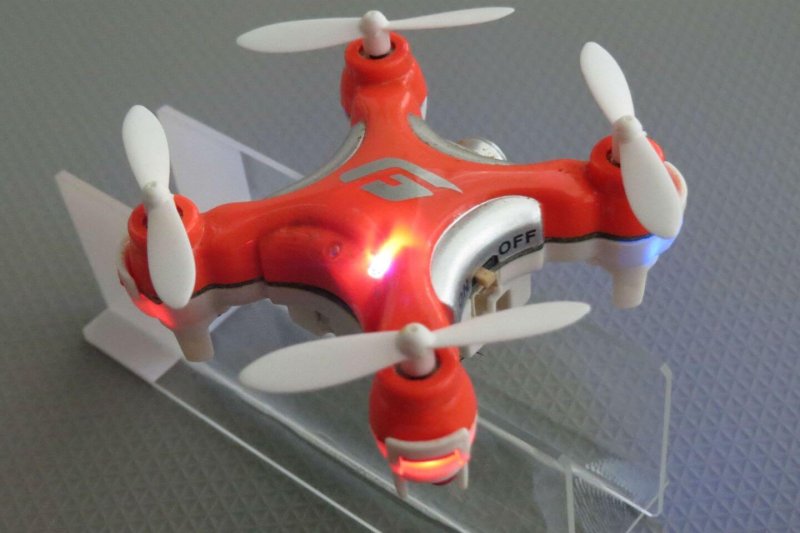
Credit: Eijiro Miyako via Wired

Tiny drones dressed in horsehair and coated with a sticky goo have been attempting to pollinate lilies in a Japanese lab. The $100 quadcopters [measure] just 42mm-wide [1.65 inches] and [weigh] 14.8g [0.52 ounces]…

“I believe that a form of AI, GPS and high-resolution cameras would be very useful for the development of automatic machines in the future. In particular, AI will help provide the intelligence in a robotic drone. They will [autonomously consider] something such as exploring the shortest path and the highest efficiency for pollination. That must be helpful and useful for farmers, right?” [said Eijiro Miyako, a chemist from the National Institute of Advanced Industrial Science and Technology (AIST) Nanomaterials Research Institute (NMRI).]

A 2016 study looking at 18 years of data on bee populations in England found that insecticides were linked to a longterm decline in the pollinators. Another paper out the same year identified 57 pesticides licensed for use in the European Union that are poisonous to honeybees. Meanwhile, an estimated $235 billion to $577 billion worth of global crops depend on pollinators, a report by the Intergovernmental Science-Policy Platform on Biodiversity and Ecosystem Services (IPBES) revealed in 2016.
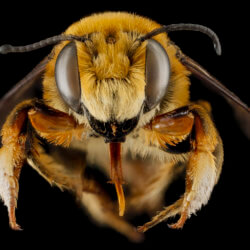
Miyako believes the project could help counter this enormous problem, by automating manual crop pollination. “We hope the robotic pollinators might replace bees [to counter] the problem of honeybee decline – but more importantly, we should use both together. They might cause good synergistic effects.”

The GLP aggregated and excerpted this blog/article to reflect the diversity of news, opinion, and analysis. Read full, original post: Robo-bees covered in sticky horsehair could one day help pollinate crops

{{ reviewsTotal }}{{ options.labels.singularReviewCountLabel }}
{{ reviewsTotal }}{{ options.labels.pluralReviewCountLabel }}
{{ options.labels.newReviewButton }}
{{ userData.canReview.message }}

Related Articles

Infographic: Global regulatory and health research agencies on whether glyphosate causes cancer

Infographic: Global regulatory and health research agencies on whether glyphosate causes cancer

Does glyphosate—the world's most heavily-used herbicide—pose serious harm to humans? Is it carcinogenic? Those issues are of both legal and ...

Most Popular

Screenshot 2026-05-26 at 10.15
Viewpoint: Double standard—Why does the wellness industry get a free pass while Big Healthcare is treated as morally suspect?
ChatGPT-Image-Jun-4-2026-01_27_58-PM
Viewpoint—N.A.D.+: Why Gwenyth Paltrow’s heralded anti-aging supplement doesn’t work
ChatGPT-Image-Jun-4-2026-11_49_36-AM-2
‘You don’t understand Tolkien’: Skeptic Pope trolls tech giants about the exaggerated, risk-less benefits of AI
Screenshot 2025-07-30 at 10.48
Can gene editing eliminate Down syndrome? Scientists have done it in lab-grown cells
tick-DNA
GLP podcast: Spread meat allergy with gene-edited ticks? Bioethicists pose vile ‘thought experiment’
downsyndrome_compilation_MID_1
CRISPR breakthrough that can remove the chromosome responsible for Down syndrome raises ethical questions
ChatGPT-Image-Mar-10-2026-01_39_01-PM
Viewpoint—“Miracle molecule” debunked: Why acemannan supplements don’t work
Screenshot-2026-06-03-at-1.24.46-PM
Challenging anti-GMO disinformation: Why genetically-tweaked crops offer bushels of benefits
Screenshot-2026-06-04-at-12.05.08-PM
Cases of brain inflammation surge as U.S. measles pandemic approaches 2000
ChatGPT Image May 26, 2026, 08_42_17 AM (1)
Viewpoint: Greenpeace and poison: How environmental advocacy groups rely on compliant (and often ignorant) journalists to spread disinformation and spark litigation

Sorry. No data so far.

glp menu logo outlined

Get news on human & agricultural genetics and biotechnology delivered to your inbox.