Enhancing humans: Becoming a cyborg could end up as a privilege of the wealthy

Screen Shot at AM

What is the greatest achievement of evolution? Here are some popular choices: the development of the genetic code in primitive microorganisms; the ability to thrive on oxygen (which previously had been toxic to most of Earth’s life forms); the emergence of eukaryotic cells; multicellular organisms; or, very recently, the development of the human brain, which more than tripped in size over the last 5 million years. But several future-minded thinkers believe that the biggest advances are yet to come.

For billions of years, all of the beneficial innovations of life on Earth came from changes in the genes, imparted to future generations by the sieve of natural selection and other evolutionary forces. In our ancestors, intelligence was a survival advantage, so the brain got bigger and soon we were using it to invent technologies, which improved life by altering the environment outside of the body.

Now, with our knowledge of biology at the cellular and molecular level growing by leaps and bounds, and with our computer and electronics technology exponentiating, great thinkers are considering the emergence of high scale artificial intelligence (AI) and what it could mean for humanity. Intelligent, sentient robots could be coming and people like Bill Gates and Elon Musk want to make sure that AI develops in a way that’s not harmful to humans. We want machines to replace us in certain functions–particularly dangerous tasks like pulling people out of fires–but with safeguards built in so that even when AI exceeds that of humans it won’t replace our species, or seek to enslave us.

As AI advances, machine technology is expected to merge with humans, as it has already begun to do. Today, it’s routine for people to have implanted drug infusion pumps, cardiac pacemakers, and other devices, and the day is coming when artificial organs–machine hearts, livers, and kidneys–will not only be available, but preferable to a donor organ. Along with that will come true, fully-functinal and cosmetically appealing bionic limbs, eyes, and ears, and brain implants and interfaces could be possible to give people a boost in memory capacity and even information. Imagine having the Internet connected directly to your brain.

The options for human enhancement seem endless and Hebrew University’s Professor Yuval Noah Harari believes that many humans will eventually take on new forms.

I think it is likely in the next 200 years or so Homo sapiens will upgrade themselves into some idea of a divine being, either through biological manipulation or genetic engineering of by the creation of cyborgs, part organic part non-organic. It will be the greatest evolution in biology since the appearance of life. Nothing really has changed in four billion years biologically speaking. But we will be as different from today’s humans as chimps are now from us.

Regarding “nothing has really changed in four billion years biologically speaking”, on this point Harari is completely wrong. In the last four billion years, life emerged on Earth, learned how to thrive in oxygen instead of dying from it, and through biological evolution the cosmos learned to taste, smell, see, hear, and speak. In our corner of space, the cosmos started thinking about itself in the form of sentient human beings. Since human divergence with apes a few million years ago, brain size has more than tripled and independently of size the brain has become far more complex. Only a million years ago, though boasting brains 2/3 the size of ours, our ancestors still could not speak, because the spinal canal was too narrow for the needed control of breathing and other muscles. The changes enabling speech, writing, and a plethora of other physical and mental skills were anatomical. They developed as a result of Darwinian evolution, and so, “biologically speaking”, in four billion years, everything has changed.
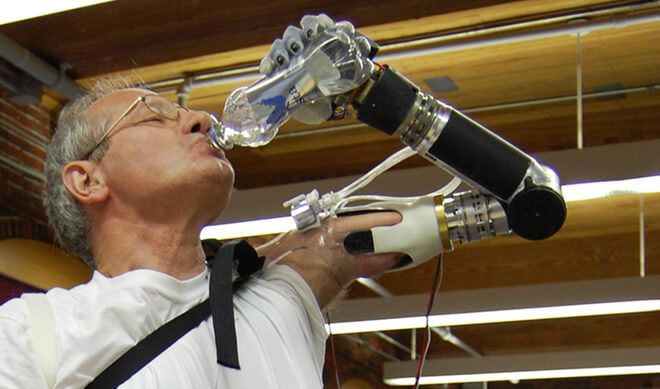
cyborgBut Harari is right that we’re moving into an age of human enhancement, and he’s fairly hopeful that there will be positive consequences. In particular, he expects the cyborgazation of humans to end religion. That may be a tall order at Hebrew University, located in Jerusalem, where people still come from all over the planet to pray to a stone wall, but Harari is thinking in terms of centuries. In Western Europe, North America, and other developed countries, people are dropping organized religion. The new religion, Harari observes, is technology and a blind belief in the infinite power of innovation.

As long as humans believed they relied more and more on these gods they were controllable. But what we see in the last few centuries is humans becoming more powerful and they no longer need the crutches of the gods. Now we are saying we do not need God, just technology. The most interesting place in the world from a religious perspective is not the Middle East, it’s Silicon Valley where they are developing a techno-religion. They believe even death is just a technological problem to be solved.

The challenge is that the technology will cost money. Harari warns that the future–the bionic body parts and all the enhancements to prolong human life–could end up as a privilege of only the wealthiest segment of society.

David Warmflash is an astrobiologist, physician and science writer. Follow @CosmicEvolution to read what he is saying on Twitter.


Trump Administration has opportunity to base biotech regulations on science, not fears

CornSoyWheat

At least when it comes to biotechnology, President Trump’s Executive Order of 20 January freezing recent regulations provides a chance to get industry regulations right.

As currently practiced, the regulatory system is functionally locked into the grossly overestimated potential for hazardous impacts perceived when the regulatory framework, titled “The CoordinatedFramework (CF) for the Regulation of Biotechnology,” was first implemented 30 years ago.

Fedoroff e
Dr. Nina Fedoroff (Doug Mills, New York Times

The CF was developed by the White House Office of Science and Technology Policy (OSTP). OSTP brought together representatives of the three federal agencies seeking to regulate commercial applications of biotechnology to develop this guidance document.

These were the Animal and Plant Health Inspection Service (APHIS) at the U.S. Department of Agriculture (USDA), the Environmental Protection Agency (EPA) and the Food and Drug Administration (FDA).Logos FDA EPA APHIS

The CF was written before we knew much about how organisms modified by the modern molecular methods (aka biotechnology) would be different from those modified by traditional methods when they came into use outside of laboratories. People worried a lot about unforeseen hazards, so the main objective of the CF was to find ways the new products could be captured for regulatory evaluation under existing statutes.

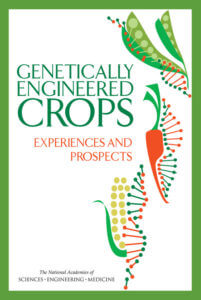
We now have had many decades of experience with biotechnology and the resulting genetically NASGMOreportmodified organisms (GMOs). We can say with confidence that no hazards have emerged that can be attributed to using biotechnology methods. Crops modified by such molecular methods have been in commercial production for two decades with no evidence of harm to either human health or the environment, according to a last year’s report from the National Academies of Sciences, Engineering and Medicine. Older overviews, including a 2010 report on a decade of EU-funded GMO research, have likewise failed to identify hazards unique to the use of the modern molecular modification techniques. By contrast, the economic and environmental benefits have been substantial.

So a restructuring of the regulations to reflect growing scientific evidence and experience was overdue. What makes this challenge especially urgent is recent rapid development of new genome editing techniques based on the CRISPR/Cas9 system and various composite enzymes, such as TALENS, that cleave double-stranded DNA at specific sequences. These can be used to create the same kinds of genetic changes (mutations) that underlie all of plant and animal domestication, blurring the distinction between natural mutations (not regulated), mutations induced by chemicals and radiation (not regulated) and mutations created by the new enzyme systems.

In 2015, President Obama requested a reexamination of the CF. The OSTP issued a memorandum to the heads of the Food and Drug Administration, the Environmental Protection Agency and the United States Department of Agriculture titled “Modernizing the Regulatory System for Biotechnology Products.” This initiated an interagency effort that was to include the objectives of “….reducing regulatory burdens and avoiding unjustifiably inhibiting innovation, stigmatizing new technologies, or creating trade barriers.”

But that didn’t happen – and therein lies the opportunity. In late 2016, the interagency working group produced an update of the CF that – in many, many words – says which agency is responsible for which type of biotechnology product. It didn’t say anything about easing the regulatory burden in the light of evidence and experience.

And neither did the second document they produced, titled “National Strategy for Modernizing the Regulatory System for Biotechnology Products.” This one outlines ways the responsible agencies can learn about new technologies and how they can better inform the public – and potential product developers – what they need to do to comply with the regulations.

The devil, of course, is in the details – the rules – published in draft form in the Federal Register on January 19, 2017. In the new proposed rules, APHIS (the USDA’s Animal and Plant Health Inspection Service) acknowledged that experience had taught the agency that biotechnology methods do not produce plant pests, the fear of which was their original regulatory rationale. So they have come up with a new rationale, proposing to focus on the possibility that molecular genetic modification (GM) might produce noxious weeds.

That seems reasonable for plants that start out as noxious weeds, but makes no sense at all for plants that have long been domesticated and have lost their weediness. The proposed rules apply to all plants that have been modified by any of the modern molecular methods.

So what the USDA seems to be saying is that even though biotechnology hasn’t turned a crop plant into a plant pest, we now have to worry that any kind of genetic change might turn a non-weed into a weed. No evidence. Just concerns. What they give with one hand, they propose to take away with the other.

Then there is the FDA’s draft guidance for genetically modified animals. The FDA proposes to regulate all animals with “intentionally altered genomic DNA” as new animal drugs! That is, except certain GM mosquitoes, which they’re turning over to the EPA to regulate as pesticides.

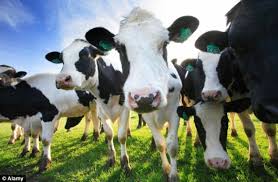
imgresSo even if the genetic change produced by a modern method is exactly like one that occurs in
nature, the animal must be regulated. Take hornless cattle. There are hornless beef cattle, but not hornless dairy cattle. Since horns are dangerous, dairy cattle are physically dehorned, a painful process. Scientists have produced hornless dairy cows by using genome-editing technology to disrupting the same gene in dairy cattle that a spontaneous mutation disrupted in beef cattle. FDA’s proposed rules would make the gene-edited dairy cattle a new animal drug. How much sense does this make? What’s the likelihood of an animal-calssified-as-a-drug making its way through the approval process?

These rules were just published or are just being published as draft guidance, so they’re subject to President Trump’s Executive order titled “Regulatory Freeze Pending Review.  Might it be possible to go a step further and revamp the entire existing regulatory framework for agricultural and environmental biotechnology using the CRA (Congressional Review Act) and the new executive order mandating the revocation of two regulations for every new one adopted?

The scientific evidence of safety is in. Genetic modification by modern methods is as safe or safer than the still unregulated older methods, such as chemical and radiation mutagenesis, used for most of the last century. Existing regulations have protected us from nothing but our fears. Those fears may have been justifiable thirty years ago, but we now know them to be unjustified. Yet the original CF remains in place and is still applied only to organisms modified by biotechnology methods. This continues to cost millions of dollars, jobs, and opportunities to innovate.x DPI

The multi-million dollar cost of regulatory compliance is out-of-reach for public sector researchers and a crushing burden to private sector companies. And the time required to gain regulatory approval is outrageous. The FDA, for example, took more than a decade to approve the AquaBounty’s GM salmon and more than 7 years to approve the first trials of Oxitec’s GM mosquito (both companies are now subsidiaries of Intrexon).

Regulation must focus on the product, not the process by which it was created. And it’s time to regulate only real hazards, of which there is a small number. The vast majority of agricultural applications represent minor tweeks of well-known organisms, from grains, fruits and vegetables, to chickens, pigs and cows. These can easily be classified as GRAS (generally regarded at safe) and don’t need regulation.

Real regulatory reduction can substantially decrease the cost and time it takes to improve an agricultural organism through biotechnology. If done properly, it will unleash innovation and create jobs.  GM crops, animals and microorganisms can make – and already have made – critical contributions to expanding the world’s food supply. Best of all, they can do this biologically, decreasing agriculture’s environmental footprint and making it more sustainable.

This opinion piece was first published in shortened form on AgriPulse on February 6, 2017.

Dr. Nina Fedoroff,  Senior Science Advisor, OFW Law, Washington, DC and Evan Pugh Professor Emerita, Penn State University

American farm bust: Global competition, low prices, high seed costs push farmers to the edge

BN RZ FA P

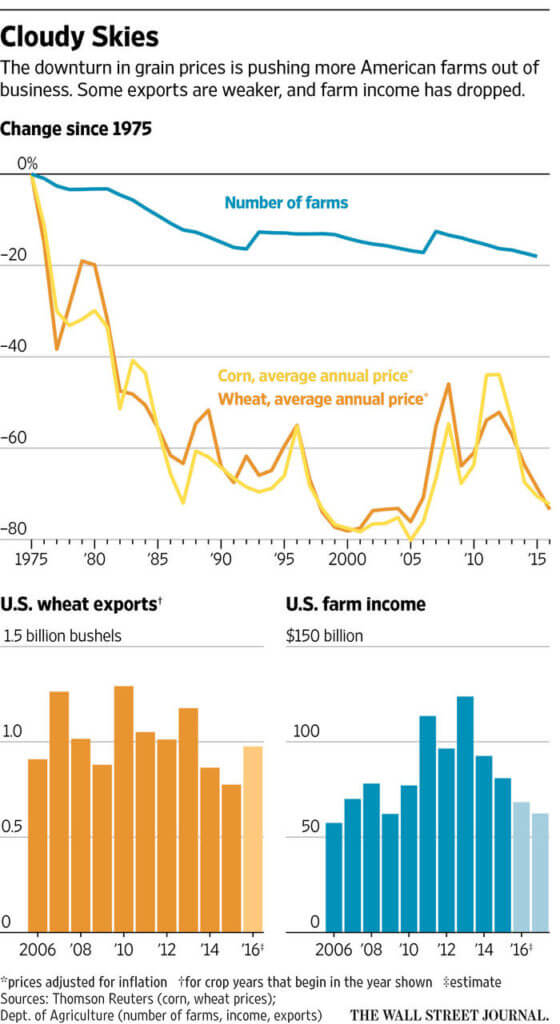
Across the heartland, a multiyear slump in prices for corn, wheat and other farm commodities brought on by a glut of grain world-wide is pushing many farmers further into debt. Some are shutting down, raising concerns that the next few years could bring the biggest wave of farm closures since the 1980s.

From the early 1800s until the Great Depression, the number of U.S. farms grew steadily as pioneers spread west of the Mississippi River. Families typically raised a mix of crops and livestock on a few hundred acres of land at most. After World War II, high-horsepower tractors and combines enabled farmers to cover more ground. Two decades ago, genetically engineered seeds helped farmers grow more.

Farms grew bigger and more specialized. Large-scale operations now account for half of U.S. agricultural production. Most farms, even some of the biggest, are still run by families.

As farm sizes jumped, their numbers fell, from six million in 1945 to just over two million in 2015, nearing a threshold last seen in the mid-1800s. Total acres farmed in the U.S. have dropped 24% to 912 million acres.

Bankers say many farmers are burning through savings to stay in business. They expect some to retire rather than lose more money. Young farmers without much savings are vulnerable, as are large growers who racked up debt to expand operations. Some locked into multiyear land leases at high rents.

The GLP aggregated and excerpted this blog/article to reflect the diversity of news, opinion, and analysis. Read full, original post: The Next American Farm Bust Is Upon Us

Biotech critics in Oregon look to overturn state’s block of local GMO bans

standard

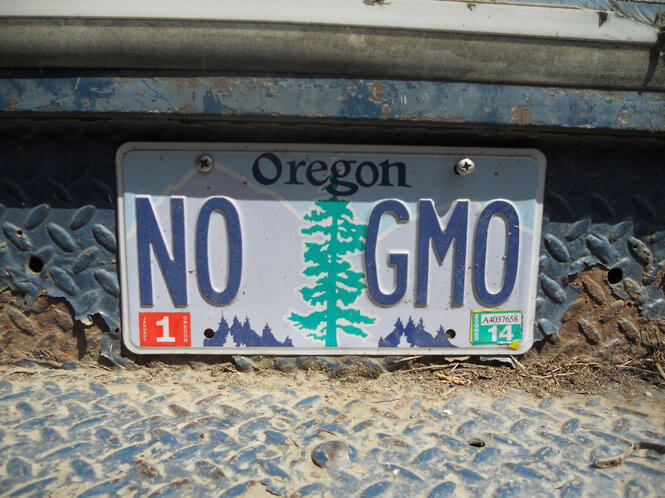
Biotech critics are calling on Oregon lawmakers to overturn a prohibition against local government restrictions on genetically engineered crops because statewide regulations haven’t been enacted.

In 2013, the Oregon Legislature passed a law that preempted cities and counties from setting their own rules over seeds, which blocked most local ordinances banning genetically modified organisms, or GMOs.

Groups that opposed the preemption bill say state inaction since then has justified the passage of House Bill 2469, which would carve out an exemption allowing local GMO regulations.

Supporters of HB 2469 haven’t given up on statewide GMO regulations but they hope the bill will provide local control over biotech crops until the Oregon Department of Agriculture or lawmakers decide to take action…

Oregonians for Food and Shelter, an agribusiness group that supported the preemption bill, is disappointed that biotech critics are still trying to regulate what crops farmers are allowed to plant, said Scott Dahlman, its policy director.

Cities and counties aren’t equipped to regulate crop production, which is the province of the Oregon Department of Agriculture, he said.

The ODA hasn’t determined specific rules are necessary for GMOs, which the federal government deregulates after determining they pose no greater risk than conventional crops, Dahlman said.

The GLP aggregated and excerpted this blog/article to reflect the diversity of news, opinion, and analysis. Read full, original post: Bill seeks reversal of preemption of local GMO regulations

Scotland’s first minister: GMO ban will remain post-Brexit

article CA FB x e

First Minister Nicola Sturgeon extolled the importance of scientific advice in policy-making yet insisted her Government had no plans to overturn its ban on the growing of genetically modified (GM) crops.

Ms Sturgeon argued that the decision to ban the growing of GM crops – despite scientists advising the technology is safe – was not a contradiction.

Nicola Sturgeon

“There will be times when Government policy and scientific views don’t coincide, but it’s important to be informed and advised on scientific input,” she said.

“One of the key attributes of our food and drink sector is its quality, and part of that quality comes from our environmental attributes. Cultivating GM crops would compromise and threaten the quality our produce is seen for.

“Since we took that decision there have been in the region of 19 other countries who have also taken advantage of that opt-out.”

The GLP aggregated and excerpted this blog/article to reflect the diversity of news, opinion, and analysis. Read full, original post: Nicola Sturgeon confirms GM crops ban will remain in place

Kenyan farmer: We’ve been waiting for too long —government needs to let us grow GMO crops

DN Eld Maize a JPG JPG e

[Editor’s note: Gilbert Arap Bor grows maize, vegetables and dairy cows on a small farm in Kenya. Mr. Bor, a lecturer at the Catholic University of Eastern Africa, is a member of the Global Farmer Network and was honored as the 2011 Kleckner Trade & Technology Advancement Award recipient.]

Many Kenyan farmers, like me, had hoped that 2016 finally would be the year that the National Environment Management Authority (NEMA) allows open field trials of Bt maize…

On November 30 [2016], the Kenyan National Assembly slowed us down even more when they “upheld the ban imposed on importation of GMO food by the then Minister for Public Health, Beth Mugo in 2012”.

My hope is that we’ll turn this around – and that within five years, Kenya will become a leader among African nations in the adoption of biotechnology. The planting of GM maize and cotton should become commonplace, leading to increased production, more economic activity, and better food security.

On GMOs, we’re poised to show the way. We know the science. We’ve issued the basic regulatory approvals through our National Biosafety Authority. We’ve set up collaborative partnerships with the Africa Agricultural Technology Foundation and the Kenya Agricultural and Livestock Research Organization. Our population now numbers 46 million and it’s growing. We can barely feed ourselves,

Our population now numbers 46 million and it’s growing. We can barely feed ourselves…

The GLP aggregated and excerpted this blog/article to reflect the diversity of news, opinion, and analysis. Read full, original post: Opinion: Agricultural technology can’t be ignored

Soybeans resistant to herbicide dicamba will improve weed control but may not meet expectations

herbicide spraying early Georgia e

A barrier to weed control on soybean farms has been lifted after the [EPA] approved a label allowing use of the herbicide dicamba in dicamba-resistant soybean, although only one commercial product received that label.

Many Illinois farmers anticipate this technology will provide a much-needed method to control weeds that are resistant to multiple herbicides, as well as other difficult-to-control species.

“Without question, there are instances and scenarios in which dicamba will improve control of certain weed species, but dicamba will not bring back the ‘good ol’ days’ of post-only weed control programs in soybean. Current expectations of what this technology can accomplish tend to be a bit more optimistic than what the technology actually will be able to deliver,” said University of Illinois weed scientist Aaron Hager.

Hager expects the technology will work well in a handful of scenarios. For example, dicamba should be effective for glyphosate-resistant horseweed (i.e., marestail) that does not respond to the traditional burn-down tank mix of glyphosate and 2,4-D.

The GLP aggregated and excerpted this blog/article to reflect the diversity of news, opinion, and analysis. Read full, original post: Dicamba and soybean: What to expect in 2017

India may further cut Monsanto GMO cotton royalty, eventually to zero

e a f z e

Regardless of technology companies like Monsanto crying foul, the Modi government is likely to follow a plan to reduce the trait value (royalty) for [insect resistant] Bt cotton seeds year after year, and in a few years, to zero.

According to official sources, an agriculture ministry-anchored committee meeting, [Monsanto faces] another 10% reduction in trait value, which was slashed a steep 70% a year ago.

After last year’s cut in the fees to Mahyco Monsanto Biotech (MMBL), a joint venture between the US-based biotech major Monsanto and Maharashtra-based Mahyco, the trait value has been just 6% of the pan-India ceiling price of R800 [about $12] per packet for the seed.

MMBL had moved the Delhi High Court against the reduction in trait value and the capping of the seed price, arguing that the December 2015 price control order was “illegal and unconstitutional”. The court is yet to decide on the matter.

About 83% of the country’s cotton area of 10.2 million hectares (in the 2016-17 season) was under Bt variety. The country’s cotton production has risen manifold since the introduction of Bt seeds — from 13.6 million bales in 2002-03 to a projected 32.12 million bales in 2016-17.

The GLP aggregated and excerpted this blog/article to reflect the diversity of news, opinion, and analysis. Read full, original post: Modi-government likely to reduce the trait value for Bt cotton seeds year after year

Nanoparticles: Parkinson’s, cancer, heart disease treatments boosted by DNA ‘barcodes’

dnabarcoding

Using tiny snippets of DNA as “barcodes,” researchers have developed a new technique for rapidly screening the ability of nanoparticles to selectively deliver therapeutic genes to specific organs of the body. The technique could accelerate the development and use of gene therapies for such killers as heart disease, cancer and Parkinson’s disease.

Genetic therapies…are hard to deliver into the right cells in the body. For the past 20 years, scientists have been developing nanoparticles made from a broad range of materials…[but with] millions of possible combinations, identifying the optimal nanoparticle to target each organ was highly inefficient.

[R]esearchers from the University of Florida, Georgia Institute of Technology and Massachusetts Institute of Technology have developed a new testing technique that skips the cell culture testing altogether—and could allow hundreds of different types of nanoparticles to be tested simultaneously in just a handful of animals.

“We hope this technique will be used widely in the field, and that it will ultimately bring more clarity to how these drugs affect cells,” said [James Dahlman, an assistant professor in the Wallace H. Coulter Department of Biomedical Engineering at Georgia Tech and Emory University].

dnabarcoding
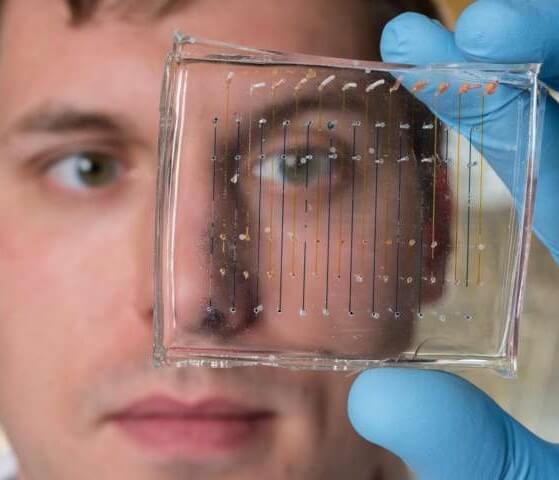
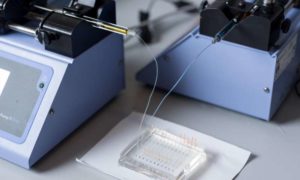
A microfluidic chip used to fabricate nanoparticles that could be used to deliver therapeutic genes to specific organs of the body. Credit: Rob Felt, Georgia Tech
[The study can be found here.]

The GLP aggregated and excerpted this blog/article to reflect the diversity of news, opinion, and analysis. Read full, original post: DNA ‘barcoding’ allows rapid testing of nanoparticles for therapeutic delivery

Genetics of height: It may be too complex for scientists to crack the code

dna sequencing genes
[W]hen the human genome was sequenced, scientists like [Joel Hirschhorn, a geneticist at Boston Children’s Hospital and the Broad Institute] thought they could plumb that data to track all the height genes….

That effort started slowly. But now, Hirschhorn says, “For height there are about 700 variants known to affect height, each of them usually with a pretty small effect on height, usually like a millimeter or less.”

Even so, the traits [Hirschhorn] found only explain about a quarter of the inherited height factors. And, frustratingly, for most of those variants scientists have no idea what they actually do.

Hirschhorn and his colleagues are expanding their already massive study of 700,000 subjects. That approach has drawn skepticism from some scientists, who think it’s a waste of effort.

David Goldstein, a professor of genetics at Columbia University, says an expanded effort could ultimately implicate every gene in existence, and that hardly helps scientists narrow down the biological factors that contribute to height.

It’s likely scientists will never be able to figure out what these hundreds of common variants do to influence height, Goldstein says. Instead, a much better strategy is [to look] for rare variants that pack a big punch.

[The study can be found here.]

The GLP aggregated and excerpted this blog/article to reflect the diversity of news, opinion, and analysis. Read full, original post: Genetics of Height is Way Complex, It Turns Out

Evolution of the mind: How termite colonies are models of the human brain

Screen Shot at PM

[Editor’s note: Excerpts from an interview with Daniel Dennettcognitive scientist and philosopher at Tufts University, who recently wrote From Bacteria to Bach and Back: The Evolution of Minds.]

[E]volution by natural selection is a process that’s breathtakingly competent, but has no understanding at all. Yet it has given humans the ability to reason, to understand…[W]e are using [these tools] to achieve kinds of comprehension that no other species has.

Contrast a termite castle with Antoni Gaudí’s wonderful church in Barcelona, La Sagrada Familia. They look similar, but Gaudí’s church is a product of intelligent design; it’s top-down, with a charismatic boss who thought it out in advance. [The question is: How did humans go from termite-style building to Gaudí-style building?]

TermitesVsGaudi
On the left is a termite mound, and on the right is La Sagrada Familia. Unlike the termite mound, the church was built with a plan in mind. The evolution of how we think is like moving from the mound to the church.
[I]t’s particularly thorny when you recognize that what we have between our ears is more like a termite colony…The latest count is 86 billion neurons, each more clueless than a termite, with no boss. How on earth do you organize 86 billion neurons into Gaudí’s mind? That’s the puzzle.

The GLP aggregated and excerpted this blog/article to reflect the diversity of news, opinion, and analysis. Read full, original post: Why your brain is like a conscious termite colony

Genetically modified humans? CRISPR edges us toward ‘revolutionizing life’

Screen Shot at AM


The [CRISPR] technique is significant because it gives genetic biologists a powerful tool for gene editing. More importantly, it’s cheap. “The major impact of CRISPR has been in developing new model systems, cells and animals, that are more rapid to develop and much more accurate than previous genetic models,” [said]  Dr Ed Wild, from the University College-London Institute of Neurology.

It gives rise to a huge range of opportunities. Plans are underway to edit allergens in peanuts, create mushrooms that don’t brown and breed genetically-engineered mosquitoes that cannot transmit malaria. There is even a project to bring back the woolly mammothfrom extinction.

But it doesn’t stop there. CRISPR is already being used to edit pig DNA so their organs can be transplanted into humans; China is using CRISPR-edited cells in living humans, to inject cancer-fighting white blood cells into a patient. The technique could also be used to target illnesses such as system fibrosis, sickle-cell anaemia and Huntington’s disease.

However, there is a long road ahead. “Editing the genomes of embryos is much easier in principle, but many genetic conditions don’t require it because a proportion of embryos are ‘naturally’ free from the mutation already,” Dr Wild added.

The GLP aggregated and excerpted this blog/article to reflect the diversity of news, opinion, and analysis. Read full, original post: Genetically-modified humans: what is CRISPR and how does it work?

Autism risk higher for females with ‘male-like brains’

c e c c d cbadc e

One feature of brain anatomy that is characteristic of males is associated with an increased risk of autism, according to a [recent study].

Women with male characteristic brains are three times more likely to have autism than women with more “female” brains, the researchers say. Yet the reverse was not been proven true; no evidence indicates that men with more female-trait brains are less at risk for autism than men with typical brains.

Autism spectrum disorder is two to five times more common in males than in females, according to Christine Ecker, a professor at Goethe University in Frankfurt, Germany…[Some researchers] hypothesize that sex-related variations in brain anatomy may contribute to the higher risk among males.

“For example, it is known from previous studies that females tend to have a thicker cortex than males in various regions of the brain,” Ecker [stated]. Previous studies have also shown thickness to be significantly altered in people with autism.

According to Dr. Tuong-Vi Nguyen, an assistant professor at McGill University in Montreal, the new study is “provocative” with “good methodology.”

“Given that the authors’ predominant theory is that a male-typic brain represents a predisposition to autism, their results only partially confirm this,” she said.

[The study can be found here.]

The GLP aggregated and excerpted this blog/article to reflect the diversity of news, opinion, and analysis. Read full, original post: ‘Male brains’ linked to higher autism risk in women, study says

‘Trump ban on immigrants and foreign workers endangers US biotech industry’

Screen Shot at PM

[Editor’s note: 166 founders and leaders of biotech companies sent this letter to Nature Biotechnology.]

To the Editor:

We the undersigned, founders and leaders of biotech companies, write to express our deep concern and opposition to the executive order signed by President Donald Trump on January 27, 2017, barring the entry of citizens from seven countries into the United States.

The United States is the world’s greatest developer of medicines and new inventions to ameliorate and cure intractable diseases, a status achieved through massive investment in private and public companies, academia and R&D. Most importantly, our success has been founded on the creativity and dedication of our most precious resource—our people.

Our people include researchers, clinicians, entrepreneurs and business executives from all over the world. They are colleagues in our laboratories, management teams and boardrooms. They discover and develop therapies that drive US biomedical innovation and deliver new medicines to patients, not only in America, but also across the globe. And they start companies that drive the economic growth and employment provided by biotech. Many of our colleagues from abroad ultimately become Americans, all to the great benefit of the United States. Indeed, a study found that in 2014, 52% of the 69,000 biomedical researchers in the United States were foreign-born2.

At a stroke, the new administration has compromised years of investment in this national treasure. Our colleagues who are here on visas or are in global outposts are now fearful and uncertain of their status.


The GLP aggregated and excerpted this blog/article to reflect the diversity of news, opinion, and analysis. Read full, original post: US immigration order strikes against biotech

Talking Biotech: Clay nanoparticles deliver plants gene-silencing virus-protecting RNA spray

CropDuster iStock BrianBrownImages e

A team of researchers at the University of Queensland in Australia published a study in Nature Plants last month that outlines what could be a cost-effective, environmentally-friendly, non-GM method of protecting plants from viruses. The scientists used a gene-silencing spray consisting of virus-specific RNA and clay nanoparticles to protect tobacco plants from a virus. The plants’ virus-resistance lasted for 20 days after just one application. They call it “BioClay.”

Stepping in for host Kevin Folta, plant pathologist Paul Vincelli speaks with the lead author of the study, agricultural biotechnologist Neena Mitter, in this week’s Talking Biotech podcast.

Dr. Mitter’s website is here: https://qaafi.uq.edu.au/profile/279/neena-mitter

Follow Dr. Paul Vincelli @pvincell

Follow the Talking Biotech Podcast at @TalkingBiotech

Follow Kevin Folta on Twitter @kevinfolta | Facebook: Facebook.com/kmfolta/ | Lab website: Arabidopsisthaliana.com | All funding: Kevinfolta.com/transparency

Stitcher | iTunes | Player FM | TuneIn

Visit Kevin Folta’s Talking Biotech

Genetic Literacy Project’s Top 6 Stories for the Week, February 13, 2017

t web

From this past week, here are the #GLPTop6 among many great stories on human and agriculture genetics around the world. Please share and help spread the news!

  1. Will Biotechnology Regulations Squelch Food and Farming Innovation? by Jon Entine
  2. Will–And Should–Gene Edited Animals Be Regulated? by Alison Van Eenennaam
  3. Transparency Is Key To Consumer Acceptance Of New Technology by Charlie Arnot
  4. Resurgence in ‘mad cow disease’? Recent death sparks focus on mystery prion protein by Roxanne Porozinski
  5. Battle over America’s waistline: How obesity affects having children and their health by Kristen Hovet
  6. Will pig-human chimeras solve our organ transplant shortage? by Meredith Knight

All this and more! Be sure to sign up for the newsletters and follow us on Social Media. We are on FacebookGoogle+TwitterPinterest! Please feel free to share all the news about human and agricultural genetic literacy!

‘Alphabet of life’ expanded by 2 synthetic letters, may help make organisms ‘Earth has never seen’

genetic

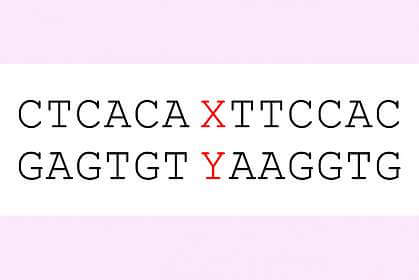
Until very recently, life on Earth was dictated by strings of just four letters: G, A, T, and C…Deciphering nature’s secret language gave scientists unprecedented insight into the ways DNA encodes life.

But as they became fluent in DNA, scientists realized how much its limited vocabulary restricted its potential. They wanted to expand nature’s abilities to fit the needs of humankind. So they did the natural next step: added more letters.

Floyd Romesberg and his team [at the Scripps Research Institute] created two new bases — X and Y — and successfully incorporated them permanently into the DNA of the bacteria E. coli. This achievement…took Romesberg one step closer toward his goal of manipulating the DNA of organisms to make them create proteins the Earth has never seen.

As far as we know, there are only 20 amino acids that can lock together in different patterns to form proteins, and to chemists, many of them are “redundant” and “really not interesting,” according to Romesberg. Rewriting the code of life will allow scientists to produce “unnatural” amino acids, which can join together to form proteins with unprecedented functions.

“We could develop proteins that have whole new properties — whole new abilities to treat different types of diseases better — by virtue of having these unnatural amino acids in them,” Romesberg says.

[The study can be found here.]

The GLP aggregated and excerpted this blog/article to reflect the diversity of news, opinion, and analysis. Read full, original post: The New, Expanded Genetic Alphabet Rewrites Life

Why high-risk breast cancer patients are foregoing genetic testing and counseling

imrs

Doctors often fail to recommend genetic testing for breast-cancer patients, even those who are at high risk for mutations linked to ovarian and other cancers, according to a study.

Researchers said the findings…are troubling because genetic tests can help guide women’s choice of treatments for existing disease, as well as point to ways to reduce the risk of future cancer.

“Genetic testing can be a powerful tool for certain women,” said study author Reshma Jagsi, a radiation oncologist at the University of Michigan Health System. “It is worrisome to see so many of these women at highest risk for mutations failing even to have a visit focused on genetic counseling.”

Although two-thirds of the women reported wanting genetic testing, less than a third actually got it, the study found. About 8 in 10 women at highest risk for BRCA mutations — because of family history or ancestry — said they had wanted testing, but only a little more than half received it.

Many of the women said they didn’t get tested because their doctors never recommended it. A smaller number said the testing was too expensive.

[The study can be found here.]

The GLP aggregated and excerpted this blog/article to reflect the diversity of news, opinion, and analysis. Read full, original post: Many high-risk patients with breast cancer aren’t getting genetic testing. Here’s why.

Generating tissue to repair knee cartilage and hearts more likely in wake of stem cell study

osteoarthritis of the knee

A new study from the National Institutes of Health, or NIH, has found that induced pluripotent stem cells would be safe to use in genetic engineering.

Induced pluripotent stem cells, or IPSCs, are the result of a breakthrough technique developed by Dr. Shinya Yamanaka, Ph.D., and Kazutoshi Takahashi, Ph.D., to return adult human cells to their earliest stage of development, and then change it into different types of cells in the body.

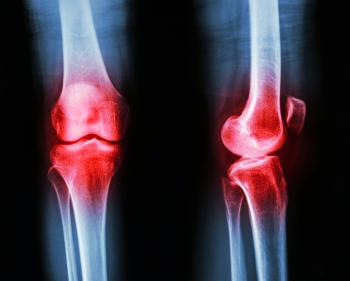
The practice of using IPSCs in medical advancements such as generating cartilage cell tissue to repair knees or cardiac cells to restore damaged heart tissue has been slowed by concerns from the medical community that the cells could be more susceptible to genetic mutations.

But the new study from the National Human Genome Research Institute, or NHGRI, part of the NIH, has found that IPSCs are no more likely to develop genetic mutations than cells duplicated by subcloning, a process where single cells are cultured individually and then grown into a cell line.

“These findings suggest that the question of safety shouldn’t impede research using IPSC,” said Dr. Pu Paul Llu, senior investigator in NHGRI’s Translational and Functional Genomics Branch….

[The study can be found here.]

The GLP aggregated and excerpted this blog/article to reflect the diversity of news, opinion, and analysis. Read full, original post: Induced pluripotent stem cells don’t increase mutations: Study