Brief oasis of oxygen could have supported complex life 2.3 billion years ago

gettyimages x

Earth is thought to have begun to develop its modern, oxygen-rich atmosphere as recently as 800 million years ago. This is roughly when biologically complex, oxygen-breathing animals first appear in the fossil record, leading many to suggest that animal life was made possible by the rise in atmospheric oxygen.

Before 800 million years ago, there may have been little gaseous oxygen around…The Lomagundi Event – between 2.3 and 2.1 billion years ago – is an exception to this early oxygen-poor world. Chemical analysis of “Lomagundi” rocks hints that the amount of organic carbon buried in the deep ocean suddenly spiked.

There is no consensus on why our planet briefly gained and then lost an oxygen-rich atmosphere.

“The take-home message is that the oxygen level was high enough to support eukaryotic life and, by some arguments, maybe even animal life,” says Timothy Lyons at the University of California Riverside….

This confirms that the Lomagundi Event was what Lyons calls an “oxygen oasis in time”. It has implications for our understanding of how, or if, animal evolution was influenced by available oxygen.

The GLP aggregated and excerpted this blog/article to reflect the diversity of news, opinion, and analysis. Read full, original post: Complex life may have had a false start 2.3 billion years ago

Curiosity about ideas, experiences may be related to higher cognitive ability

dffcc c fa ed d b f
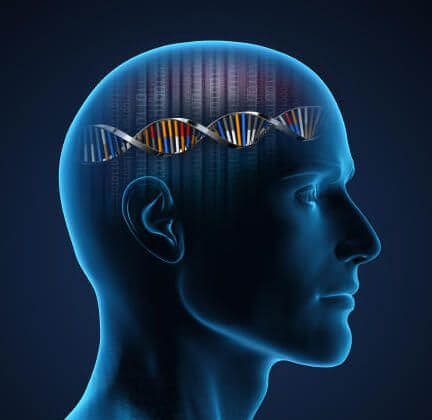
[An international team of 60 researchers], led by Todd Lencz from the Feinstein Institute for Medical Research, studied the genes of 35,000 people – measuring the brain function of these participants through tests of learning, memory, and other cognitive function components. They were able to discover new genetic variations related to cognitive ability. “This research provides new clues into how the brain works at the molecular level,” Lencz said.

Interestingly, and for the first time, the COGENT researchers also discovered a molecular genetic overlap between cognitive ability and personality. They found that genetic predispositions towards higher cognitive ability were linked to greater “openness to experience.” In order words, some of the genes that make people more likely to be curious about new ideas and experiences are the same as those that enhance cognitive ability.

The researchers hope that their findings pave the way for new and better treatments. “Our long-term goal is to identify potential new targets for treatments of cognitive disorders of the brain, such as schizophrenia and attention deficit hyperactivity disorder (ADHD),” said Lencz.

The GLP aggregated and excerpted this blog/article to reflect the diversity of news, opinion, and analysis. Read full, original post: This Genetic Discovery Could Change the Way We Treat Mental Illness

‘Three parent IVF’ produced a baby girl — that’s a problem according to critics

Screen Shot at PM

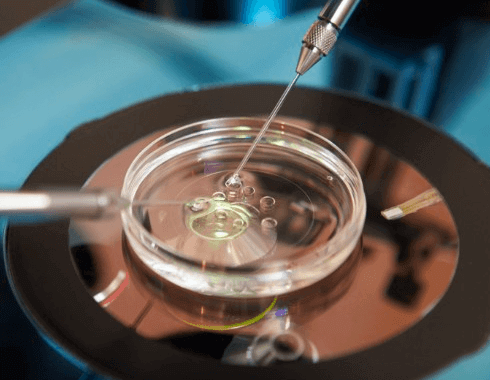
It was a first for the entire world: Using a controversial in vitro fertilization technique, doctors in Kiev, Ukraine, helped a previously infertile couple conceive and deliver a baby girl. Some critics say, for genetic reasons, the use of this IVF method should have been restricted to producing a baby boy.

The baby was born on January 5, the result of an experimental technique known as “pronuclear transfer” and sometimes referred to as three-parent IVF.

The reason this experimental method is a cause for concern — and was vigorously debated in the UK before approval — is the genetic modifications produced in a girl baby could be passed onto her children, according to Lori P. Knowles, adjunct assistant professor at the University of Alberta School of Public Health.

“It doesn’t really matter whether [future children] will inherit it in the future, since it is all normal mitochondrial DNA so theoretically there won’t be any issues,” said [Dr. John Zhang, founder of the New Hope Fertility Center in New York.]

The GLP aggregated and excerpted this blog/article to reflect the diversity of news, opinion, and analysis. Read full, original post: Controversial IVF technique produces a baby girl — and for some, that’s a problem

Birth language is retained, even if we never learned to speak it

x

Babies build knowledge about the language they hear even in the first few months of life, research shows. If you move countries and forget your birth language, you retain this hidden ability….

Dutch-speaking adults adopted from South Korea exceeded expectations at Korean pronunciation when retrained after losing their birth language.

Scientists say parents should talk to babies as much as possible in early life.

The study is the first to show that the early experience of adopted children in their birth language gives them an advantage decades later even if they think it is forgotten….

”This finding indicates that useful language knowledge is laid down in [the] very early months of life, which can be retained without further input of the language and revealed via re-learning,” said [Dr Jiyoun Choi of Hanyang University in Seoul].

It has long been known that the foundations for speaking and listening to a native language are laid down very early in life.

But it was not known until now that very early language acquisition is an abstract process.

The GLP aggregated and excerpted this blog/article to reflect the diversity of news, opinion, and analysis. Read full, original post: Babies remember their birth language – scientists

Does Environmental Working Group’s “Dirty Dozen” list discourage Americans from eating fresh produce?

Screen Shot at PM

Editor’s note: This article examines the potential influence of the Environmental Working Group’s annual Dirty Dozen list of foods with the highest pesticide residue. Read the GLP profile of EWG here.

It’s vital to eat your veggies. … Yet, most Americans aren’t getting enough. Could the [Environmental Working Group’s] “Dirty Dozen” list be part of the problem?

… Researchers at the Illinois Institute of Technology … surveyed more than 500 low-income shoppers about their thoughts on organic and conventional vegetables and fruit, and published results in the journal Nutrition Today.

They found that specifically naming the “Dirty Dozen” resulted in shoppers being less likely to buy any vegetables and fruit. … Misinformation about pesticides breeds fear and confusion, and many find it easier to skip fresh produce altogether.

…61 percent of participants said they felt the media encouraged them to buy organic foods. The problem is that they are often unaffordable.

So, does it really make sense to pay up to 47 percent more for organic vegetables and fruit? Food toxicologist Carl K. Winter doesn’t think so.

Winter is … one of the researchers who did a deep dive into the Dirty Dozen list. The results, published in the Journal of Toxicology, found that the list lacks scientific credibility.

“Foods on the Dirty Dozen list pose no risks to consumers due to the extremely low levels of pesticides actually detected on those foods,” says Winter.

The GLP aggregated and excerpted this blog/article to reflect the diversity of news, opinion and analysis. Read full, original post: A diet rich in fruits and vegetables outweighs the risks of pesticides

Epigenetics Around the Web: Alzheimer’s drug moves closer to patients

Screen Shot at AM

“Today, when we don’t know what causes a disease, we say it’s likely epigenetic. With this point of view, we get things wrong sometimes, which leads to some misconceptions. In a sense, I think this epigenetic viewpoint is right, but we need much more evidence to get a defined picture.”

Howard Cedar researcher at Hebrew University on current state of epigenetics

Epigenetics Around the Web is a weekly roundup of the latest studies and news in the field of epigenetics presented by GLP sister site the Epigenetics Literacy Project. This week features an interview with the scientist who discovered methylation’s job and an epigenetics-based Alzheimer’s disease drug.

Alzheimer’s drug

In 2016, ORY-2001, the first epigenetics-based drug for any neurodegenerative disease, began and successfully completed a Phase 1 clinical trial in Spain. The drug is a highly selective molecule that targets a histone demethylating enzyme called LSD1 and inhibits its activity. In mouse studies, treated subjects had marked improvements in cognition. In 2017, according to the Alzheimer’s Drug Discovery Foundation, the drug will begin a Phase 2 clinical trial. The drug also is being investigated as a possible treatment for multiple sclerosis and is in the early stages of a clinical trial for acute myeloid leukemia.

Methylation Maestro

Howard Cedar

Writer Anna Azvolinsky over at The Scientist has a great profile of Howard Cedar, one of the scientists who is credited with discovering that DNA methylation represses transcription. The story follows Cedar from a physics major at MIT to his current post as a faculty member at Hebrew University in Jerusalem, Israel. His early work at the National Institutes of Health was on chromatin structure and how it interacts with RNA polymerase. In the late 1970s, Cedar teamed up with fellow professor Aharon Razin and the two began uncovering the how and why of methylation. Methylation is the process by which a methyl group (a small molecule) is added directly to the DNA and it has a really interesting story. It’s presence throughout the genome was well established since the 1940s but what it was doing wouldn’t be uncovered by Cedar three decades later. Even after it’s role in gene repression was uncovered, it would take another three decades for scientists to take a strong interest in the process’s role in human health. Today many of the epigenetic studies investigate changes in methylation patterns on specific genes or areas of the genome. Today, Cedar is doing some of that work too — his lab investigates the role of methylation in B cells. The Scientist lists his ‘Greatest Hits’:

  • Demonstrated, with Richard Axel and Gary Felsenfeld, that chromatin can restrict transcription by globally blocking most of the genome while allowing access to specific genes
  • Along with Aharon Razin, showed that methylated DNA is stably propagated to daughter cells following mitotic cell division, and outlined the mechanism by which methylation sites are maintained through cell division
  • Was first to demonstrate that DNA methylation inhibits transcription and that undermethylated DNA is associated with actively transcribed genes
  • Provided some of the first evidence for epigenetic reprogramming by proving that methylation patterns are erased in the early embryo
  • Discovered the molecular rules involved in establishing DNA methylation patterns during development

 Epigenetics and the Holocaust

One of the areas of epigenetics that has caught the attention of the public is the idea (supported by some evidence) that stress from horrific events, such as the Holocaust and the Dutch Hunger Winter, may induce heritable epigenetic changes. Allison Bernstein, a neuroscientist who studies epigenetics in the brain, wrote an excellent article about this for GLP here. Researcher Ivan Rektor is studying this question at the Central European Institute of Technology of Masaryk University in Brno, Czech Republic. On January 12, he explained the work ongoing in his lab in an interview with Radio Prague:

We are interested in the transfer of the consequences of the horrible experience to the second and third generation, i.e. to the offspring of Holocaust survivors. It has been well-known that the children of Holocaust survivors may suffer –and sometimes suffer – from “Holocaust survivor children’s syndrome”’. They are more sensitive to stress, can suffer from emotional misbalance, are more prone to post-traumatic stress disorders and so on. This is well-known, but what is not clear is whether this transfer to the second generation is a social/behavioural transfer or a biological, genetic, epigenetic transfer. We are studying this question.

You can listen to the whole interview and read the transcript here.

Nicholas Staropoli is the director of the Epigenetics Literacy ProjectHe has an M.A. in biology from DePaul University and a B.S. in biomedical sciences from Marist College. Follow him on Twitter @NickfrmBoston.

Gene-edited animals face uncertain future under proposed FDA regulations

cows

Editor’s note: The comment period for these regulations — as well as those proposed by the USDA — opened on Jan. 19 in an apparent attempt to coordinate oversight of gene editing. The comment period runs through April 19. Read the FDA’s proposal here.

Researchers transforming animals with the latest genome-engineering tools may be disappointed by draft rules released by the US Food and Drug Administration (FDA) on 18 January — two days before US President Barack Obama leaves office. It is not clear how the administration of incoming president Donald Trump will carry the proposals forward, however.

The most controversial of three proposed regulations declares that all animals whose genomes have been intentionally altered will be examined for safety and efficacy in a process similar to that for new drugs

….

Alison van Eenennaam, an animal geneticist at the University of California, Davis, calls the draft FDA proposals “insane”.

“The trigger for their regulation is whether the animal was intended to be made, and what does intention have to do with risk?” she says. “The risk has to do with the attributes of the product.”

Others welcomed the Obama administration’s last-minute overture. “The public is leery of genetic engineering of animals, in particular,” says Jennifer Kuzma, a social scientist at North Carolina State University in Raleigh.

“Because of measures like this, almost everything in genetic engineering will have to be done by huge multinational companies,” [van Eenennaam said].

The GLP aggregated and excerpted this blog/article to reflect the diversity of news, opinion, and analysis. Read full, original post: Gene-edited animals face US regulatory crackdown

Seed industry, farmers ‘pleased’ with proposed USDA genetic engineering rules

maize genome h

Editor’s note: The comment period for these regulations — as well as those proposed by the FDA — opened on Jan. 19 in an apparent attempt to coordinate oversight of gene editing. The comment period runs through May 19. Read the USDA’s proposal here.

[T]he U.S. Department of Agriculture’s (USDA) Animal and Plant Health Inspection Agency released a pre-published document that proposes to revise its regulations around genetically engineered organisms.

“We’re pleased that USDA’s proposal recognizes that some applications of gene editing result in plant varieties that are essentially equivalent to varieties that are developed through more traditional breeding methods, and treats these varieties accordingly,” says Andy LaVigne, American Seed Trade Association president and CEO.

[The National Corn Growers Association] released a statement: “Corn farmers have a strong interest in the availability of new technologies to enhance the sustainability, productivity and competitiveness of U.S. agriculture. …The documents published indicate that, in large part, federal agencies agree with the basis of our stance and strive to create a more efficient regulatory process allowing growers greater access to new products.”

In tandem with USDA’s proposal, FDA has announced plans to solicit comments on new plant varieties developed through gene editing techniques…FDA acknowledges….that some applications of gene editing result in plants that could be developed through more traditional breeding methods.

The GLP aggregated and excerpted this blog/article to reflect the diversity of news, opinion, and analysis. Read full, original post: USDA Proposes New Policy on Plant Breeding Innovations

Lack of exercise, as much as genetic factors, may contribute to dementia

iStock Medium

One of the biggest risk factors for Alzheimer’s disease is the apolipoprotein E (APOE) e4 gene. According to the Alzheimer’s Association, adults who possess one copy of the APOE e4 gene are three times more likely to develop the disease than those without the gene, while those with two copies are 8-12 times more likely to develop Alzheimer’s.

However, the researchers of the new study…suggest that the risk of dementia may be just as high for older adults exhibiting sedentary behavior.

Among adults who did not carry the APOE e4 gene, the researchers found that those who did not exercise were more likely to develop dementia than those who exercised.

For APOE e4 gene carriers, however, there was no significant difference in dementia risk between those who exercised and those who did not.

According to the researchers, these findings indicate that a lack of exercise may be just as risky for dementia development than carrying the APOE e4 gene.

[However,] the study results also suggest that increasing physical activity may protect against the development of dementia in people without the APOE e4 gene.

The GLP aggregated and excerpted this blog/article to reflect the diversity of news, opinion, and analysis. Read full, original post: Sedentary behavior raises dementia risk as much as genetic factors

Heart defects in babies with cleft lip and palate linked to gene defect

baby with cleft lip

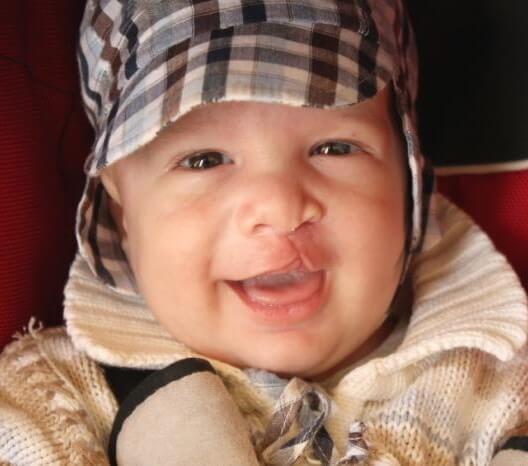
The Centers for Disease Control and Prevention (CDC) report that approximately 2,650 babies are born with a cleft palate every year, and another 4,440 with a cleft lip.

While these orofacial birth defects are common, their cause remains largely unknown. Genetic changes as a result of the mother’s diet or medication are thought to play a role, but the exact genetic mechanism is not fully understood.

A team of international researchers from the United Kingdom, Canada, Saudi Arabia, and the U.S. has set out to investigate the genetic mutations behind cleft lip and palate (CLP) and their accompanying heart defects.

Using genetic mapping, the researchers looked for the chromosomal location of the gene responsible for the disease…After adjusting for various factors, the team found only one pathogenic variant in the HYAL2 gene[, which encodes an enzyme responsible for degrading hyaluronan.]

Given that hyaluronan is found in the connective tissue of many parts in the body, including the heart, the researchers hypothesized that mutations in the HYAL2 gene would cause CLP and heart defects in mice.

The GLP aggregated and excerpted this blog/article to reflect the diversity of news, opinion, and analysis. Read full, original post: Scientists find genetic mutation that causes cleft lip and palate, heart defects

Healthy aging promoted by tweaking ‘old blood’

Screen Shot at AM

The effects of blood on aging were first discovered in experiments that stitched young and old mice together so that they shared circulating blood. Older mice seem to benefit from such an arrangement, developing healthier organs and becoming protected from age-related disease. But young mice aged prematurely.

Such experiments suggest that, while young blood can be restorative, there is something in old blood that is actively harmful. Now Hanadie Yousef at Stanford University in California seems to have identified a protein that is causing some of the damage, and has developed a way to block it.

Yousef has found that the amount of a protein called VCAM1 in the blood increases with age…[The aging effects] were prevented when Yousef injected a compound that blocks VCAM1.

A drug that protects people from the effects of old blood would be preferable to plasma injections, says Yousef. Should transfusions from young donors turn out to be effective, it would be difficult to scale this up as a treatment for all.

The GLP aggregated and excerpted this blog/article to reflect the diversity of news, opinion, and analysis. Read full, original post: Antibody can protect brains from the ageing effects of old blood

Syndactyly: Family’s ‘fused fingers’ deformity sheds light on human genome

Screen Shot at AM

They said it was their family curse: a rare congenital deformity called syndactyly, in which the thumb and index finger are fused together on one or both hands…The scientists have traced the family’s limb anomaly to a novel class of genetic defects unlike any seen before….

The mutations affect a newly discovered design feature of the DNA molecule called topologically associating domains, or TADs.

By studying TADs, researchers hope to better fathom the deep structure of the human genome, in real time and three dimensions….

“We realized that in order to understand how genetic information is controlled, we had to figure out how DNA was folded in space,” said Bing Ren of the University of California, San Diego.

The best evidence for the importance of TADs is to see what happens when they break down. Researchers have lately linked a number of disorders to a loss of boundaries between genomic domains, including cancers of the colon, esophagus, brain and blood.

Now that researchers know what to look for, he said, TAD disruptions may prove to be a common cause of cancer. The same may be true of developmental disorders — like syndactyly.

The GLP aggregated and excerpted this blog/article to reflect the diversity of news, opinion, and analysis. Read full, original post: A Family’s Shared Defect Sheds Light on the Human Genome

‘Brain on a chip’: In vitro model finds regional links to specific diseases, treatments

We have come a long way in our understanding of how the brain works, but the more we know about it, the more we realize we have much to learn.

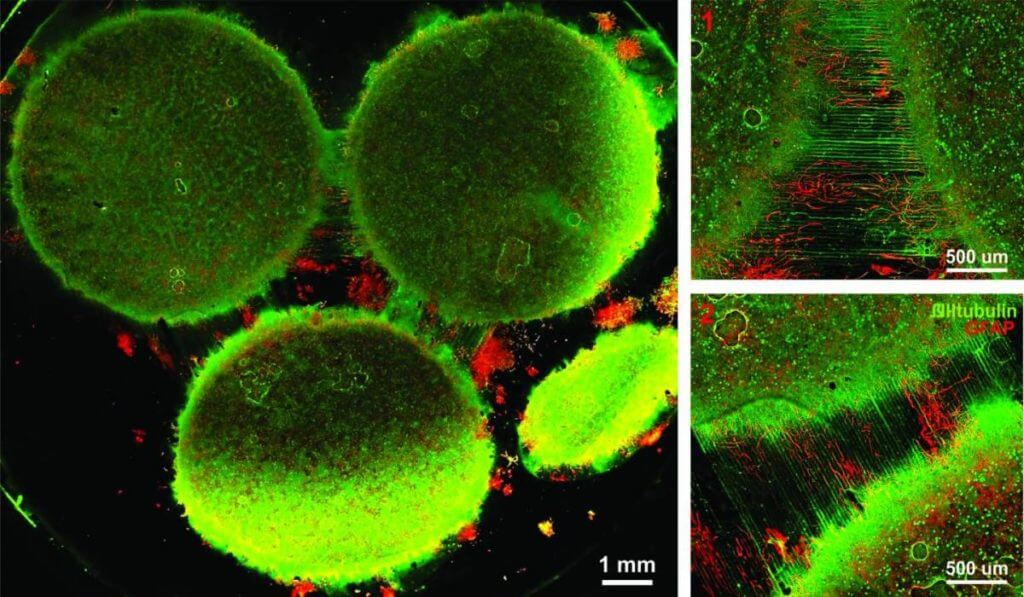
Using an in vitro brain-on-a-chip that they designed to model the brain’s connectivity, [researchers from Harvard University were] able to extensively characterize the differences between neurons from the different regions of the brain.

web x
Image of the in vitro model showing three distinct regions of the brain connected by axons.
CREDIT: Disease Biophysics Group/Harvard University

The researchers modeled the three regions of the brain that are primarily affected by schizophrenia, namely the amygdala, hippocampus, and prefrontal cortex. The team characterized each region in vitro in terms of cell composition, protein expression, metabolism, and neural electrical activity. After that, they analyzed how neurons from each region of the brain changed when in communication with neurons from other regions.

“It’s no surprise that neurons in distinct regions of the brain are different, but it is surprising just how different they are,” said co-author Stephanie Dauth. “We found that the cell-type ratio, the metabolism, the protein expression, and the electrical activity all differ between regions in vitro. This shows that it does make a difference which brain region’s neurons you’re working with.”

The GLP aggregated and excerpted this blog/article to reflect the diversity of news, opinion, and analysis. Read full, original post: Scientists Have Made a New “Brain-On-A-Chip”

Asteroid strike chilled earth, paved way for rise of humans

asteroid

Dinosaurs went extinct around 66 million years ago,…[but a single strike of a meteor] may not have been enough to completely wipe out all life on Earth.

Climate scientists have worked out that it may have been the aftermath of the asteroid hit that was the final straw for the dinosaurs. According to a new study, droplets of sulfuric acid formed high up in the air after the impact of the asteroid, blocking out sunlight for years…Plants would all have died due to the lack of light, and this would have had a direct and fatal impact on the rest of the food chain.

After the strike, the average temperature fell from 27 degrees [80.6 °F] to 5 degrees Celsius [41 °F]  in the tropics. Dinosaurs were used to living in a tropical climate, and…a 22 degree drop would be quite a shock to the system….

According to the study, it took about 30 years for the climate to recover, and by then the damage to dinosaur life had been done. This, of course, left the space for a new era of organisms to thrive that would evolve into humans.

The GLP aggregated and excerpted this blog/article to reflect the diversity of news, opinion, and analysis. Read full, original post: Dark, cold days may have been what actually drove the dinosaurs extinct

Stem cells lay foundation for treatments of cancer, other disorders

STEM CELL RESEARCH GUIDELINES
[Stem cell research] is now considered among the most seminal medical findings of the past century, on a par with the discovery of the double-helical structure of DNA by James Watson and Francis Crick.]

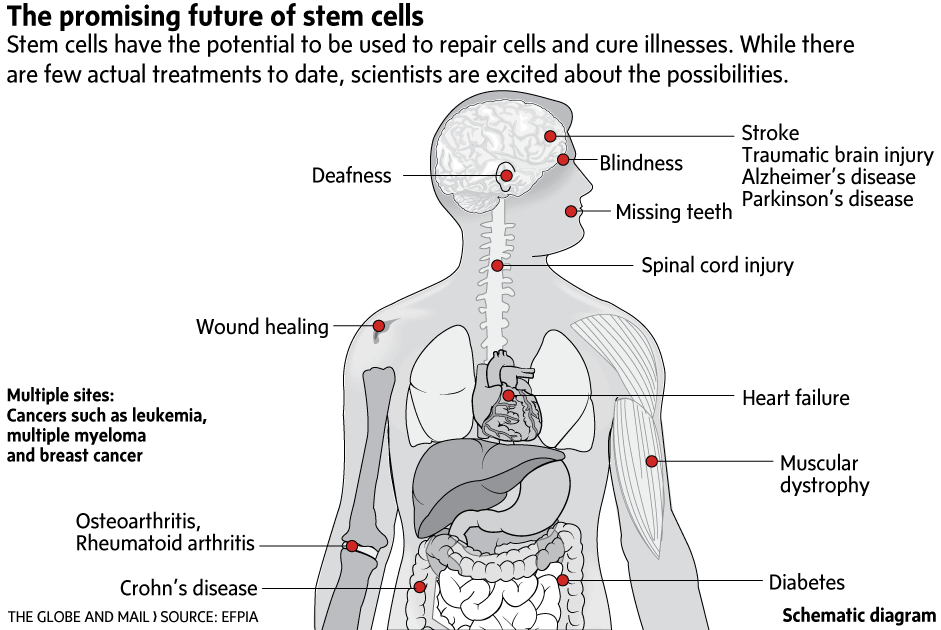
Stem cells not only revolutionized the treatment of cancer, but laid the foundations for regenerative medicine, and fueled the emergence of a biomedical industry, particularly in Canada.

While most modern medicine, from drugs to surgery, is designed to treat symptoms, stem cells can actually cure disease.

There is also promising – but early – research suggesting that stem-cell therapy may be able to cure diabetes, blindness and even spinal-cord injury. Most of this work is being done in thousands of clinical trials around the world.

Critics, however, argue that there has been far more hype than treatments that are effective and affordable in the real world.

[James Price, president and CEO of the Canadian Stem Cell Foundation] said that is true to an extent. “There is a lot of hype because the potential is enormous. Science takes time but, in the stem-cell field, we’re making steady progress.”

image

The GLP aggregated and excerpted this blog/article to reflect the diversity of news, opinion, and analysis. Read full, original post: How the discovery of stem cells revolutionized medicine

How do you know what information to trust about glyphosate, GMOs? Do a ‘SMELL test’

fact check

Editor’s Note: This article, written by Country Guide agriculture columnist Gerald Pilger, discusses how to determine whether an article is “fake news” or not, using what he calls a smell test, checking the Source, Motive, Evidence, Logic and Left out information within the article to determine how factual it is. He uses the controversy surrounding glyphosate as one example.

[M]isinformation [surrounding glyphosate and GMOs] continues to spread … on November 15, 2016, the Food Babe made a number of unsubstantiated claims based on a report published by Food Democracy Now about the toxicity of glyphosate. She went on to imply that Monsanto and the FDA have conspired to conceal glyphosate residues in food.

Her assertions attracted the attention of Snopes, an organization which investigates urban legends and misinformation. Based on investigation, Snopes labelled these Food Babe’s claims as false.

Last year, Snopes also rejected the article…[which] stated: “One in two children will be autistic by 2025 due to the use of glyphosate (Roundup) on food crops.”

Snopes rated the claims made in the article as unproven and concluded: “Whether educated or not, guesswork is only the start of research in epidemiology, and no published research exists to prove…a link between glyphosate and autism. No evidence was presented in the article to provide context for why glyphosate (or GMOs) would be any more likely to account for the presumed increase than other environmental factors.”

Yet for every claim, article, or post that is discredited by an organization like Snopes, there are many more which are not fact checked and are accepted as fact by consumers.

The GLP aggregated and excerpted this blog/article to reflect the diversity of news, opinion, and analysis. Read full, original post: Before you believe it

Two patent lawyers weigh in on the advantages of genetic modification technology

Screen Shot at PM

Editor’s Note: This article discusses patent attorneys Brian Reese and Nishat Shaikh recent piece published in the genetic engineering and biotechnology magazine, GEN, and their opinions on how new genetic modification technology should be regulated.

“It is interesting that these two generations are regulated differently,” Reese said.

The regulation of first generation transgenic genetically modified crops by the USDA is covered by the Plant Protection Act (PPA), which gives the agency authority to regulate plant pests or noxious weeds, including GM organisms.

However, the agency has signaled that genetically engineered crops that do not contain “foreign” DNA are not considered to be GM crops, and thus do not require regulation.

But there are concerns about CRISPR, that it may lead, at some point, to a dangerous narrowing of biodiversity and the potential of an attack by a super insect immune to a plant’s defenses, Reese and Shaikh said.

Further, there is still the public wariness of genetically modified foods, and a negative public perception of the business practices of large agribusiness companies … To essentially have little regulation of the new technology is not a good approach from a public policy point of view, Reese and Shaikh said.

They should be regulated the same, with all issues on the table, and decide on a plan, and what degree of modification is allowed, Shaikh said.

The GLP aggregated and excerpted this blog/article to reflect the diversity of news, opinion, and analysis. Read full, original post: Thorny policy issues follow advances in genetic modification technology

Why Ugandan farmers are blocked from growing biotechnology crops

be ba z e

Editor’s Note: This article, written by crop scientists Micheal Otim, discusses a recent print article called “MPs who visited Namulonge fields did not get clear picture”, published in the New Vision of December 24, 2016.

The writer questioned the capacity and qualifications of Members of Parliament to learn and understand issues surrounding biotechnology and genetic engineering so that they can correctly decide on the pending Biotechnology and Biosafety Bill. The writer, a university don, questions whether the honourable MPs have the capacity to discern what a good scientific experiment should constitute and attempts to discredit the MPs’ learning tour and other such engagements with researchers, on biotechnology, as efforts at “conversion”.

Apparently, the writer is opposed to anyone seeking to know more about biotechnology or genetic engineering- a component of the former.

In Uganda, several biotechnology products have either been developed or are still in the pipeline. Unfortunately, Ugandans cannot yet use these products because we need a law to regulate the biotechnology used to develop them and ensure that products are safe for consumption … Therefore, it’s surprising for a scientist to insinuate that the National Agricultural Research Organization (NARO) is an employer of “science crooks” and yet NARO has openly invited member of the public, including MPs, students, clergymen, farmers, and those opposed to biotech to learn about these products and solutions they offer to crop problems.

NARO does public research, not in secrecy, but under the strict supervision of bodies such as UNCST and the Ministry of Agriculture, Animal Industry and Fisheries. Since its establishment, NARO scientists have developed hundreds of improved varieties of crops including cassava, rice beans, maize, and banana to help raise farmers’ incomes.

The GLP aggregated and excerpted this blog/article to reflect the diversity of news, opinion, and analysis. Read full, original post: Why Ugandans Don’t need more lies about biotechnology

Ambiguities remain as USDA and FDA set to draw up new GMO labeling law

Screen Shot at PM

Congress has effectively preempted the states from imposing different labeling requirements for GE foods than what the USDA eventually requires, but it has left the states wide discretion to impose additional state remedies for violations of these new federal labeling requirements. Thus, there remains a distinct possibility that non-conforming GE food manufacturers will face different levels and kinds of liability across the 50 states if they fail to properly label their GE foods, even though those labeling requirements will be nationally uniform.

In addition, states retain considerable latitude regarding whether and how stringently they wish to police GE food manufacturers who choose label their products “organic.” However, what will happen with “natural” labeling is unclear as this article goes to press, including the basic issue of whether states will have any role whatsoever in policing the use of “natural” in connection with GE foods.

Given the long history of relative legal peace between the FDA’s and USDA’s food labeling authorities and GE product authorities, … the two agencies optimally should work out an agreement before the USDA’s new regulations go into effect regarding how they will blend their labeling authorities regarding GE foods.

By working together immediately, the USDA and FDA can foreclose much of the confusion and controversy that might otherwise arise under the new Act, perhaps finally bringing the GE food labeling controversy in the United States to a legal conclusion.

The GLP aggregated and excerpted this blog/article to reflect the diversity of news, opinion, and analysis. Read full, original post: Labeling Genetically-Engineered Foods: An Update from One of the Front Lines of Federalism