Bangladesh develops country’s first GMO rice variety

biotech

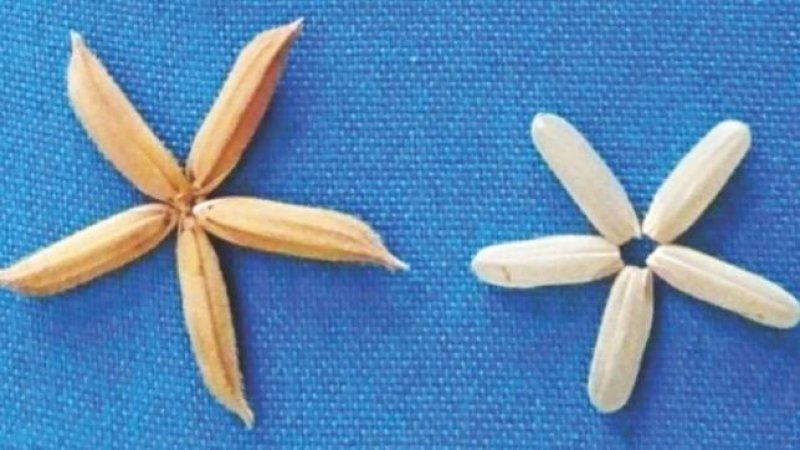
Scientists in Bangladesh have developed the country’s first biotech rice variety giving farmers an answer to the difficulties they face in harvesting the staple with machines.

Stems of BRRIdhan-86, the variety that got release approval yesterday, are strong and stout and easy to reap by mechanical harvesters. This will come handy to farm owners, who have dearth of labourers and also find it difficult to use harvesters.

BRRI breeders told UNB that the new variety, with half a tonne of extra yield potential per hectare over the country’s most produced rice variety BRRIdhan-28, is derived from Iranian rice variety Niamat through application of a biotech tool called anther culture.

Anther culture, applied for the first time in rice science in Bangladesh, is a biotech plant culturing technique where immature pollens are made to divide and grow into tissues either on solid and liquid medium.

The scientists at the Bangladesh Rice Research Institute (BRRI) have also developed a new rice variety with the highest ever zinc (27.6 mg/kg) content. BRRIdhan-84 also got approval along with three more new rice varieties yesterday.

The prospect of higher rice yield through the release of the new varieties also comes against the backdrop of diminishing returns from the country’s rice fields.

Read full, original post: Country’s first biotech rice released

{{ reviewsTotal }}{{ options.labels.singularReviewCountLabel }}
{{ reviewsTotal }}{{ options.labels.pluralReviewCountLabel }}
{{ options.labels.newReviewButton }}
{{ userData.canReview.message }}

Related Articles

Infographic: Global regulatory and health research agencies on whether glyphosate causes cancer

Infographic: Global regulatory and health research agencies on whether glyphosate causes cancer

Does glyphosate—the world's most heavily-used herbicide—pose serious harm to humans? Is it carcinogenic? Those issues are of both legal and ...

Most Popular

Screenshot-2026-06-05-at-2.12.30-PM
Some plants can poison you. So how did humans figure out what is safe to eat?
Credit: ACSH
Viewpoint: Who and what’s to blame for the surge in vaccine-preventable diseases?
Organic-Produce
Viewpoint: Why you should ignore organic food advocates’ advice to avoid ‘pesticide soaked’ conventional fruits and vegetables
ChatGPT-Image-Jun-5-2026-01_17_48-PM
GLP-1 weight-loss drugs may reshape our desires and emotions
ChatGPT-Image-Mar-10-2026-01_39_01-PM
Viewpoint—“Miracle molecule” debunked: Why acemannan supplements don’t work
Screenshot 2026-05-26 at 10.15
Viewpoint: Double standard—Why does the wellness industry get a free pass while Big Healthcare is treated as morally suspect?
ChatGPT-Image-May-26-2026-07_51_21-AM-2
Viewpoint: There are more than 1,000 chemicals in a cup of coffee—including many substances that can cause cancer. Why isn’t it banned?
Screenshot-2026-06-04-at-12.05.08-PM
Cases of brain inflammation surge as U.S. measles pandemic approaches 2000
Screenshot-2026-06-05-at-11.12.44-AM
‘Protecting religious liberty and parental authority’: Challenging expert guidance, Trump signs off on Kennedy’s gutting of childhood vaccine schedule
edb7f6d7-2370-418f-9578-74e29678e35c
Facts & Fallacies Podcast: Nicotine vaping—public health miracle, or risk to children? Professor Cliff Douglas
Picture1
Sounds we can’t hear — the hidden planetary signals behind science, fear, and misinformation
Screenshot 2026-06-05 at 12.14
‘Nicotine-free generation’: Should the U.S. emulate Britain and ban all nicotine products, from cigarettes to vapes?
ChatGPT Image May 26, 2026, 08_42_17 AM (1)
Viewpoint: Greenpeace and poison: How environmental advocacy groups rely on compliant (and often ignorant) journalists to spread disinformation and spark litigation
glp menu logo outlined

Get news on human & agricultural genetics and biotechnology delivered to your inbox.