Nation’s expanding waistline linked to increase in 13 types of cancer

Screen Shot at PM

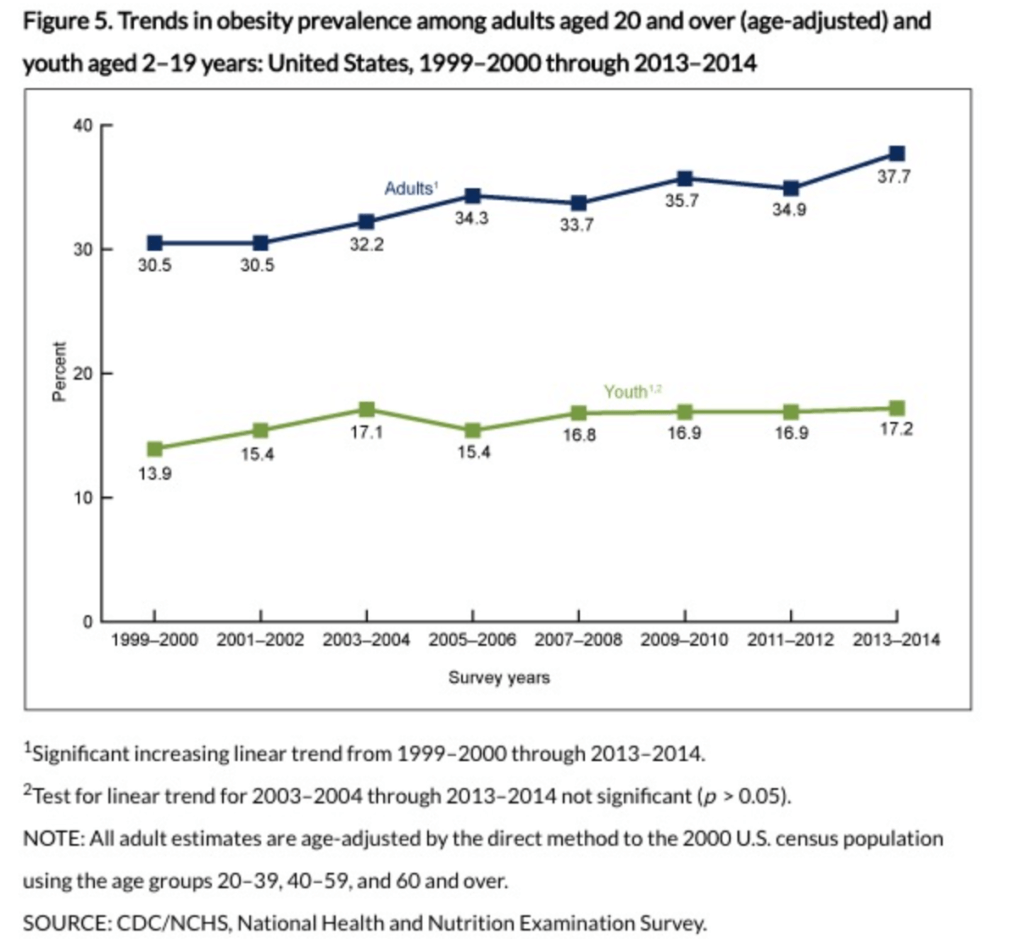
It’s common knowledge that as a country, we’ve been getting fatter for decades. In some states the prevalence of obesity is over 35 percent, as it is in adults over all, as shown in the graphic below.

Probably it’s less widely known that there are at least 13 different types of cancer that are associated with overweight (BMI = 25-29.9) and obesity (BMI = or > 30), according to Dr. C. Brooke Steele of the CDC, and colleagues. These include: adenocarcinoma of the esophagus; cancers of the breast [in postmenopausal women], colon and rectum, endometrium, gallbladder, gastric cardia, kidney, liver, ovary, pancreas, and thyroid; meningioma; and multiple myeloma.
Screen Shot at PM

These investigators used data from the US Cancer Statistics database for 2014 to determine new cases of such cancers, as well as assessing trends between 2005 and 2014. They reported that approximately 40 percent of cancers diagnosed in 2014 were among those associated with overweight and obesity and affected about 631,000 persons.

These data indicate that during the period when many of the risks of overweight and obesity became widely known, both the occurrence of excess body fat as well as associated kinds of cancers were increasing. Clearly, more must be done to target populations at the greatest risk of overweight and obesity; if there is truly a causal link between overweight, obesity and these cancers, then reducing the prevalence of excess avoirdupois could also reduce the incidence of such cancers.

Read full, original post: Obesity-Associated Cancers Are Increasing

{{ reviewsTotal }}{{ options.labels.singularReviewCountLabel }}
{{ reviewsTotal }}{{ options.labels.pluralReviewCountLabel }}
{{ options.labels.noReviewsLabel }}
{{ options.labels.newReviewButton }}
{{ userData.canReview.message }}

Related Articles

Infographic: Global regulatory and health research agencies on whether glyphosate causes cancer

Infographic: Global regulatory and health research agencies on whether glyphosate causes cancer

Does glyphosate—the world's most heavily-used herbicide—pose serious harm to humans? Is it carcinogenic? Those issues are of both legal and ...

Most Popular

ChatGPT-Image-Mar-10-2026-01_39_01-PM
Viewpoint—“Miracle molecule” debunked: Why acemannan supplements don’t work
Screenshot 2026-07-11 094410
Growing animal muscle and fat cells inside rice grains and calling it beef: One of numerous genetically engineered products shaking up our ecosystem
file-f-d-d-
Facts & Fallacies Podcast: Europe's AC debacle underscores fatal flaw in green activism
Screenshot-2026-07-16-at-11.32.12-AM
Viewpoint: Trump appoints climate change hoax promoter to head influential government policy project
Screenshot 2025-09-17 at 12.41
Misinformation alert: No, glyphosate use in Canadian forests is not spurring more wildfires
Screenshot 2026-07-16 at 8.49
Pete Hegseth’s bizarre Viagra commercial as Trump administration endorses ‘hormone replacement therapy’
ChatGPT-Image-Jun-25-2026-12_23_17-PM
No, Bill Gates did not secretly engineer ticks to promote veganism
ChatGPT-Image-Jul-9-2026-02_39_22-PM
Viewpoint: Polyphenols or NAD+ supplements to combat aging: No, Gwenyth Paltrow and followers, don’t waste your money.
Screenshot-2026-07-16-at-6.02.54-PM
Wellness grifters overwhelm information channels in the developing world, and the problem is escalating
Screenshot-2026-07-16-at-12.08.38-PM
Viewpoint: With trust in doctors and mainstream medicine collapsing, medical professionals need a new communications strategy

Sorry. No data so far.

glp menu logo outlined

Get news on human & agricultural genetics and biotechnology delivered to your inbox.