Uganda’s president assessing GMO crops’ potential versus activists’ concerns

Otaniirrigations

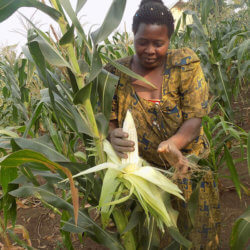
Scientists in Uganda had hoped it was the dawn of a new era in food security for a drought-prone region.

In October, Uganda’s legislature moved to lift a ban on genetically modified crops, a move that stoked both hopes and fears in a fiercely divided populace. Where proponents saw opportunity to lift a region out of a cycle of drought and crop failure, critics cautioned that the introduction of genetically modified organisms (GMOs) into the local environment could spell devastation for native flora and fauna.

Heeding those concerns, Uganda’s President Yoweri Museveni refused to sign the bill when it arrived on his desk in December. Now, he has asked Parliament to work with the nation’s scientists to find a way to balance researchers’ hopes with anti-GMO activists’ concerns.

The president’s combined concern and hope illustrate the spectrum of thinking swirling around GMOs in Uganda and around the world. However, they also suggest that the two viewpoints may not necessarily be mutually exclusive. In his eyes, at least, there are ways to open the door for GM crops to help alleviate the impact of drought on the region while taking steps to preserve the integrity of native ecosystems.

Read full, original post: In GMO debate, Uganda seeks to balance hope and fear

{{ reviewsTotal }}{{ options.labels.singularReviewCountLabel }}
{{ reviewsTotal }}{{ options.labels.pluralReviewCountLabel }}
{{ options.labels.newReviewButton }}
{{ userData.canReview.message }}

Related Articles

Infographic: Global regulatory and health research agencies on whether glyphosate causes cancer

Infographic: Global regulatory and health research agencies on whether glyphosate causes cancer

Does glyphosate—the world's most heavily-used herbicide—pose serious harm to humans? Is it carcinogenic? Those issues are of both legal and ...

Most Popular

ChatGPT-Image-Mar-10-2026-01_39_01-PM
Viewpoint—“Miracle molecule” debunked: Why acemannan supplements don’t work
ChatGPT-Image-Jul-8-2026-12_32_48-PM
Viewpoint: SCOTUS strikes a blow against junk science in Bayer glyphosate case. Will it deter mass tort litigators?
ChatGPT-Image-Jul-7-2026-01_57_55-PM
Viewpoint: Europe’s rejection of air conditioning is the poster child for misunderstanding how to mitigate the impact of climate change
afb-a-b
As the EU loosens restrictions on agricultural gene editing, it remains years behind the rest of the world on equally-safe GMO foods
ChatGPT-Image-Jun-25-2026-12_23_17-PM
No, Bill Gates did not secretly engineer ticks to promote veganism
Screen-Shot-at-PM-pe-vra-kipgaprbdo-vd-ms-jpule-n-jqqaxf-l-e
Viewpoint: Will new breeding techniques help make European agriculture more competitive?
Screenshot-2026-07-08-at-2.14.27-PM
Belief in unproven dietary regimes, vitamins, and crank therapies is putting patients’ health in danger and increasing the risk of getting cancer
Screenshot-2026-07-10-at-2.02.54-PM
Viewpoint: In abortion-restricting Florida, misinformation abounds when Republican congresswoman faces an ectopic pregnancy
Screenshot-2026-07-10-at-3.10.50-PM
Snake-oil cures throughout history
ChatGPT-Image-Jul-1-2026-03_33_49-PM
‘Alternative’ cancer treatments that could kill you
Screenshot-2026-07-10-at-3.25.10-PM
Using AI for health questions? Here are 4 tips for the most accurate answers.
ChatGPT-Image-Jun-30-2026-10_27_31-AM
Viewpoint: Europe clears the way for gene-edited crops — but fear-driven restrictions still slow their full potential
DtAieAIkCZy-uchn-oqg
Viewpoint: In the science misinformed grifter game plan, the organic-food-is-healthier myth might be the worst.
Screenshot-2026-07-10-at-12.55.21-PM
Cancer health facts are particularly susceptible to online misinformation
glp menu logo outlined

Get news on human & agricultural genetics and biotechnology delivered to your inbox.