Is public fear of GMO food increasing?

common sense must rule gmo controversy

The National Science Foundation surveys a representative sample of Americans every two years. Theย General Social Surveyย asks about general attitudes about science in general and about specific science topics.ย For a quick overview of the highlights, seeย Everything Americans Know About Science in Seven Graphsย byย Sara Chodosh.

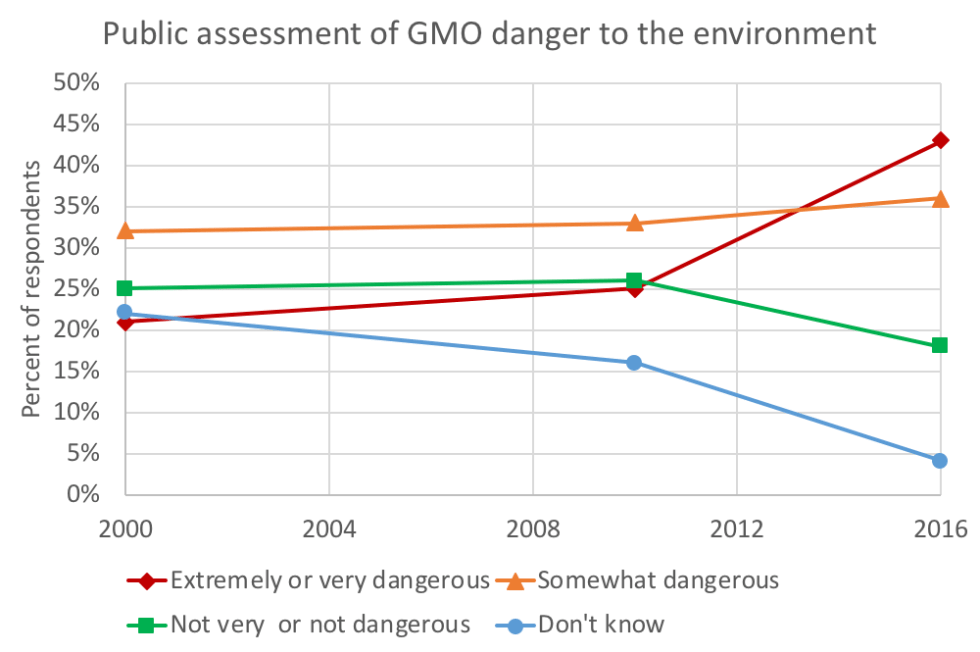
According to the NSF, โ€œdata suggest that concern aboutย GEย food is increasingโ€.

Screen Shot at PM

The results from 2016 are strikingly different from results in 2000 and 2010. The number of respondents who find GMOs dangerous shot up to 79% in 2016, while just 18% thought GMOs are not dangerous, and 4% said they did not know. People are becoming more certain in their fear, not a good sign.

Women were more fearful than men. Those with more science knowledge or higher levels of education are less fearful than those who have less knowledge or are less educated. Age was not a factor.

These results may not accurately describe how Americans feel about GMOs. If you ask people what are the top things they are concerned about when it comes to food, GMOs hardly make the list.

Selling fear is lucrative. Itโ€™s really hard to fundraise when your message is โ€œfood is pretty safeโ€. Multiple organizations and individuals have made names for themselves by scaring people about GMOs.

Editor’s note: Anastasia Bodnar has a PhD in genetics from Iowa State University

Read full, original post:ย The scary truth behind fear of GMOs

{{ reviewsTotal }}{{ options.labels.singularReviewCountLabel }}
{{ reviewsTotal }}{{ options.labels.pluralReviewCountLabel }}
{{ options.labels.newReviewButton }}
{{ userData.canReview.message }}

Related Articles

Infographic: Global regulatory and health research agencies on whether glyphosate causes cancer

Infographic: Global regulatory and health research agencies on whether glyphosate causes cancer

Does glyphosateโ€”the world's most heavily-used herbicideโ€”pose serious harm to humans? Is it carcinogenic? Those issues are of both legal and ...

Most Popular

Screenshot-2026-04-22-at-12.21.32-PM
Viewpoint: Why the retracted Monsanto glyphosate study doesnโ€™t change the scienceโ€”the worldโ€™s most popular herbicide is safeย 
ChatGPT-Image-Apr-16-2026-02_56_53-PM
Financial incentives, over diagnosis, and weak oversight: Autism claims are driving up Medicare costs
Picture1
The FDA couldnโ€™t find a vaccine safety crisis, so it buried its own research
ChatGPT-Image-May-1-2026-11_42_59-AM-2
Viewpoint: NAD is the wellness grifters latest evidence-lite longevity fad. At least the mice are impressed.
Screenshot-2026-05-21-at-12.15.17-PM
UK gene-editing milestone: Livestock barley that increases ruminant value and reduces methane emissions is first-approved CRISPR crop
global warming
โ€˜Implausibleโ€™: Top climate scientists reject worst-case scenarioโ€”soaring temperatures and fast-rising sea levels
Screenshot-2026-05-21-at-3.15.53-PM
Chiropractors may no longer be modern-day snake oil salesmen, but the benefits of their therapy are limitedโ€“at best

Sorry. No data so far.

glp menu logo outlined

Get news on human & agricultural genetics and biotechnology delivered to your inbox.