How CRISPR gene editing could unlock resistance to destructive citrus greening disease

citrus greening boston organics
Image credit: Boston Organics

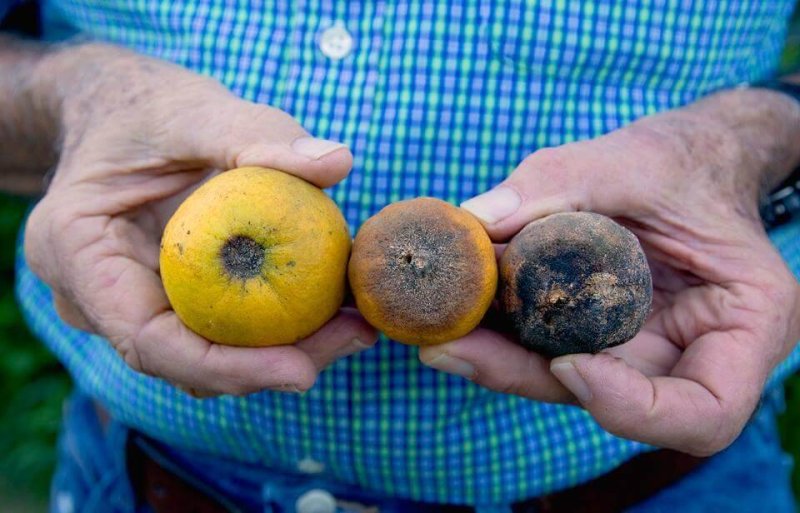
Researchers at the University of California, Riverside have made an important step in understanding the molecular mechanism of huanglongbing (HLB), a destructive disease that is a serious threat to the citrus industry worldwide.

In a paper published [April 30] in Nature Communications, a team led by [Wenbo Ma, a professor of plant pathology in UCR’s College of Natural & Agricultural Sciences] reported a significant breakthrough in understanding the disease mechanism of HLB. They discovered that the bacterium secretes a protein—called Sec-delivered effector 1 (SDE1)—that helps infect plants. SDE1 works by attacking specific proteases—called papain-like cysteine proteases (PLCPs)—that could otherwise help the citrus trees resist infection.

Ma said since scientists cannot grow CLas in the laboratory, the team used a surrogate system comprising the model plant Arabidopsis thaliana and the bacterial pathogen Pseudomonas syringae that was genetically engineered to produce SDE1. Using this system, they show that SDE1 promotes bacterial infection. This study is among the first to describe the molecular tactics employed by CLas to colonize citrus plants.

The team is now investigating the molecular details of how SDE1 suppresses citrus PLCPs with the aim to use the CRISPR gene editing system to modify the proteases to become resistant to the inhibitory effects of SDE1.

Read full, original post: Researchers Move Toward Understanding Deadly Citrus Disease

{{ reviewsTotal }}{{ options.labels.singularReviewCountLabel }}
{{ reviewsTotal }}{{ options.labels.pluralReviewCountLabel }}
{{ options.labels.newReviewButton }}
{{ userData.canReview.message }}

Related Articles

Infographic: Global regulatory and health research agencies on whether glyphosate causes cancer

Infographic: Global regulatory and health research agencies on whether glyphosate causes cancer

Does glyphosate—the world's most heavily-used herbicide—pose serious harm to humans? Is it carcinogenic? Those issues are of both legal and ...

Most Popular

Picture1
The Orange Bowl without oranges: Can CRISPR save Florida citrus?
global warming
‘Implausible’: Top climate scientists reject worst-case scenario—soaring temperatures and fast-rising sea levels
vax-misinformation-main
Facts & Fallacies Podcast: Limit free speech to blunt social media misinfo?
Screenshot 2026-05-22 at 11.31
‘Realistic and durable’: EPA proposes loosening restrictions on some PFAS ‘forever chemicals.’
ChatGPT-Image-May-1-2026-11_42_59-AM-2
Viewpoint: NAD is the wellness grifters latest evidence-lite longevity fad. At least the mice are impressed.
Screenshot-2026-04-22-at-12.21.32-PM
Viewpoint: Why the retracted Monsanto glyphosate study doesn’t change the science—the world’s most popular herbicide is safe 
ChatGPT Image May 26, 2026, 12_06_53 PM
Fake Ebola cure promoters already cashing in as disinformation videos flood social media
ChatGPT Image May 24, 2026, 03_16_36 PM
Here come the biohackers' Enhanced Games—The Olympics for athletes doping up on steroids, hormones and peptides. What’s wrong with that?
Screenshot-2026-05-21-at-12.15.17-PM
UK gene-editing milestone: Livestock barley that increases ruminant value and reduces methane emissions is first-approved CRISPR crop
Picture1
The FDA couldn’t find a vaccine safety crisis, so it buried its own research
glp menu logo outlined

Get news on human & agricultural genetics and biotechnology delivered to your inbox.