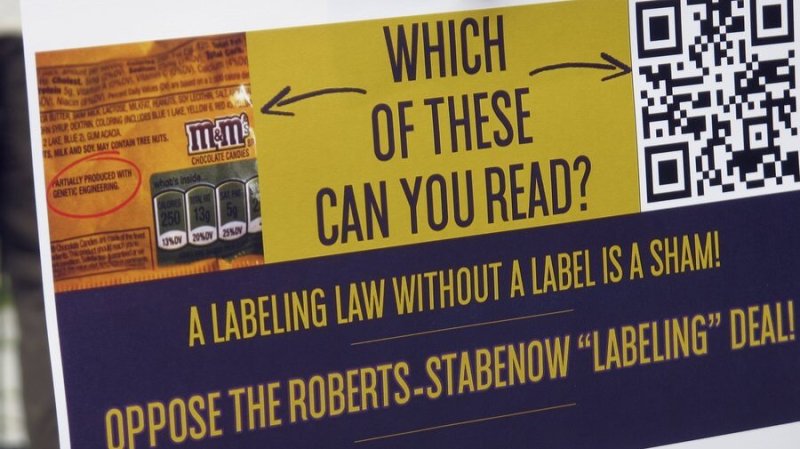
Viewpoint: USDA GMO labeling proposal could make things more confusing

ap wide eb f e a ce c d dd d a s c
Image credit: Wilson Ring/AP

On its surface, the rule is intended to reduce the consumer confusion that abounds when it comes to GMOs. But guess what? As currently written, it may actually make things worse.

The National Bioengineered Food Disclosure Standard, as the proposed rule is known, aims to fundamentally shift the way American food is labelled—starting with the very language we use to talk about GMOs. The standard would omit the commonly used phrases “genetically modified” or “genetically engineered” in favor of a less familiar one: “bioengineered food,” or BE for short.

GMO and BE aren’t synonomous. BE will only refer to those foods that have been created by splicing foreign genes from one species into another, a process known as transgenesis. Some critics say that, in the era of gene-editing tools like CRISPR, that definition is too limiting. Activist groups like the Non-GMO Project consider foods that have been gene-edited in any way, with or without transplanted genes, to be genetically modified. In other words, current GMO-free certifications cover more ground than the narrowly defined BE label that’s been proposed.

The proposed rule also contains a provision that GMO critics have called a cop-out: The option to label BE ingredients via scannable QR code, among other options.

Read full, original post: GMOs are dead, according to the U.S. government. Long live “bioengineered”

{{ reviewsTotal }}{{ options.labels.singularReviewCountLabel }}
{{ reviewsTotal }}{{ options.labels.pluralReviewCountLabel }}
{{ options.labels.noReviewsLabel }}
{{ options.labels.newReviewButton }}
{{ userData.canReview.message }}

Related Articles

Infographic: Global regulatory and health research agencies on whether glyphosate causes cancer

Infographic: Global regulatory and health research agencies on whether glyphosate causes cancer

Does glyphosate—the world's most heavily-used herbicide—pose serious harm to humans? Is it carcinogenic? Those issues are of both legal and ...

Most Popular

ChatGPT-Image-Mar-10-2026-01_39_01-PM
Viewpoint—“Miracle molecule” debunked: Why acemannan supplements don’t work
Screenshot 2026-07-11 094410
Growing animal muscle and fat cells inside rice grains and calling it beef: One of numerous genetically engineered products shaking up our ecosystem
file-f-d-d-
Facts & Fallacies Podcast: Europe's AC debacle underscores fatal flaw in green activism
Screenshot-2026-07-16-at-11.32.12-AM
Viewpoint: Trump appoints climate change hoax promoter to head influential government policy project
Screenshot 2026-07-16 at 8.49
Pete Hegseth’s bizarre Viagra commercial as Trump administration endorses ‘hormone replacement therapy’
Screenshot 2025-09-17 at 12.41
Misinformation alert: No, glyphosate use in Canadian forests is not spurring more wildfires
ChatGPT-Image-Jun-25-2026-12_23_17-PM
No, Bill Gates did not secretly engineer ticks to promote veganism
Screenshot-2026-07-16-at-6.02.54-PM
Wellness grifters overwhelm information channels in the developing world, and the problem is escalating
ChatGPT-Image-Jul-9-2026-02_39_22-PM
Viewpoint: Polyphenols or NAD+ supplements to combat aging: No, Gwenyth Paltrow and followers, don’t waste your money.
Screenshot-2026-07-16-at-12.08.38-PM
Viewpoint: With trust in doctors and mainstream medicine collapsing, medical professionals need a new communications strategy
ChatGPT-Image-Jul-1-2026-03_33_49-PM
‘Alternative’ cancer treatments that could kill you
Screenshot-2026-07-08-at-9.36.03-AM
Viewpoint: Long-contained diseases are on the rise in the U.S. Are Trump cuts to blame?

Sorry. No data so far.

glp menu logo outlined

Get news on human & agricultural genetics and biotechnology delivered to your inbox.