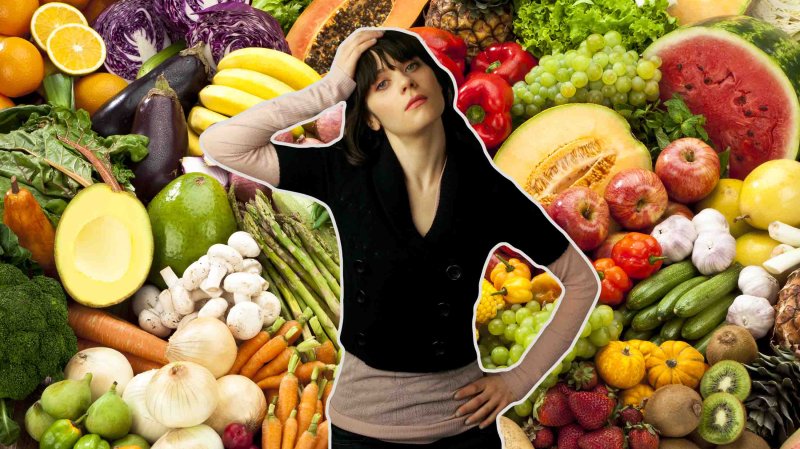
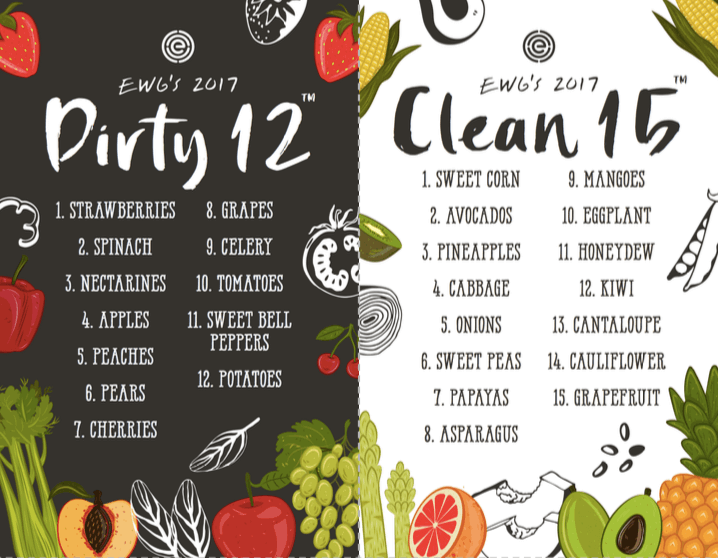
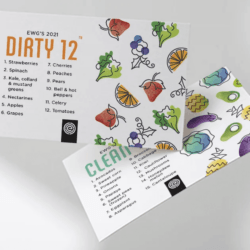
“If you can’t afford to buy organic, avoid the dirty dozen and look for produce with lower pesticide levels, like asparagus, cauliflower, or mangoes,” Deschanel advises viewers of her new, viral Facebook video series, Your Food’s Roots.
The problem: While this appears to be a piece of safety advice, it’s hard to find any scientific support to back it up. And it’s not the only questionable claim that Deschanel shares in the series, which debuted two months ago on Facebook and quickly attracted millions of viewers. The videos do touch on serious issues, but they also illustrate how sloppy science, celebrity culture, and social media virality too often converge to generate market-driven fear-mongering and baseless health claims, rather than serious consumer education.
It’s not entirely surprising to see Deschanel — a mid-2000s hipster icon perhaps best known for her role in the Fox sitcom “New Girl” — suddenly talking about food mileage and azodicarbonamide. As many celebrities have discovered, the combination of wellness culture, ethical consumerism, and Hollywood glamor can make for a potent — and profitable — media cocktail. Pioneers of the model include Gwyneth Paltrow’s Goop, a health and lifestyle brand, Jessica Alba’s Honest Company, and even Tom Brady’s TB12.
These startups have attracted big followings. But scientific rigor sometimes gets lost along the way. Goop, in particular, has repeatedly come under fire for its pseudoscientific claims and products — including “bio-frequency healing” stickers, and perhaps most famously, jade eggs designed to be inserted into the vagina to coax “spiritual detox.” Alba’s outfit was sued last year by consumers after The Wall Street Journal reported that a detergent the Honest Company was marketing as a safer and more environmentally friendly alternative to traditional soaps actually contained a harsh chemical it had pledged to avoid. (Alba’s team settled the suit last June, while denying any wrongdoing.)
Deschanel’s videos are a collaboration between the millennial news-and-issues advocacy site ATTN: (pronounced “attention”) and The Farm Project, a new startup founded by Deschanel and her husband, Jacob Pechenik, that “empowers initiatives that reconnect people with food.” In the videos, Deschanel talks about everything from overfishing to the evils of factory-produced bread. The most popular video in the series, alleging negligent FDA oversight of chemical additives, racked up more than 17 million views in its first month on Facebook. ATTN: paid the series’ production costs.
The videos give lucid overviews of some complex topics, such as the FDA’s controversial “Generally Recognized as Safe” designation for food chemicals. Often, though, the videos seem to favor fear over nuance. A brief bit about the preservative sodium nitrite, which Deschanel jokingly calls “science salt,” implies that the compound is an artificial concoction (it’s a naturally occurring chemical and a metabolic byproduct of digesting many common vegetables) and that it causes cancer in humans (the evidence is mixed).
More concerning is the organics episode in which Deschanel — a millionaire Hollywood star — urges poor Americans to avoid many common fruits and vegetables if they cannot afford to buy organic. Deschanel warns that these are fruits and vegetables that “you should strictly buy organic, due to the amount of pesticides on them.”
There are, of course, real reasons to be concerned about pesticide use, including the effect of chemicals on the environment and on the farmworkers who come into contact with high concentrations of toxic compounds.
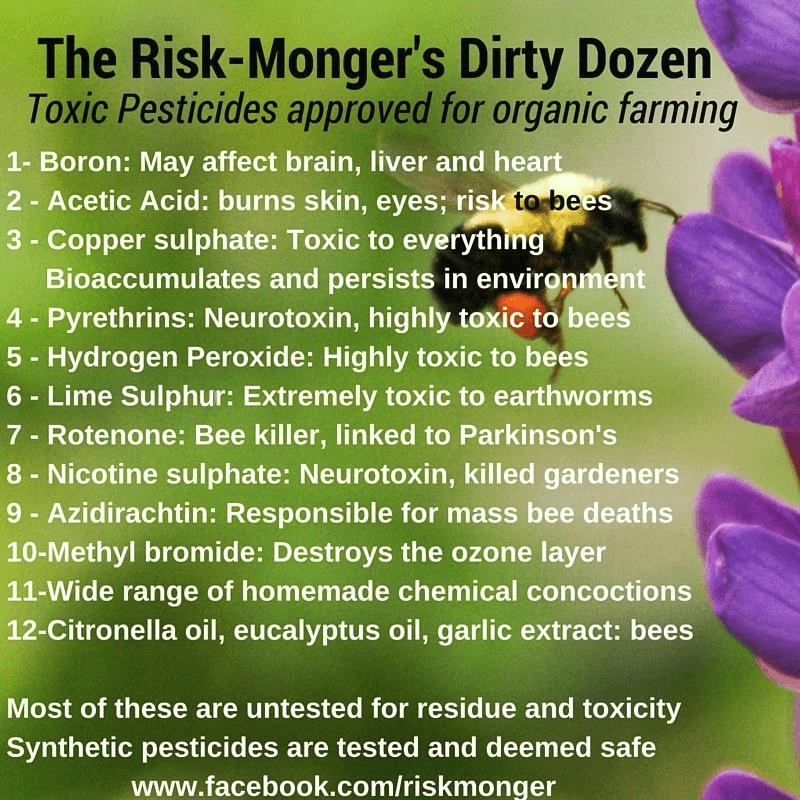 But to date, there is little clear scientific support for the argument that organic produce is, by definition, healthier for consumers than conventional produce, or that conventional produce is actively dangerous because of pesticides. The Environmental Protection Agency sets stringent legal thresholds for pesticide residues on produce, pegged far below levels known to be toxic to people. And organic produce can still contain pesticide residues too — both from nearby conventional fields and from powerful but naturally-derived chemicals that can legally be used on organic crops. (Some synthetic pesticides are also approved for use in organic farming.)
Much more worrying than the prospect of pesticide residues, many experts say, is the prospect of driving consumers away from including fruits and vegetables in their diets altogether. “My work over the last 30 years has consistently suggested that the health risks are negligible for the consumption of conventional produce, and the biggest concern is making sure people eat fruits and vegetables,” said Carl Winter, a specialist in the Cooperative Extension at the University of California-Davis who has published extensively on pesticide residues, including an analysis of the Dirty Dozen. “If public concerns over pesticides — tiny, tiny levels of pesticides in the diet — make them more wary, the tendency can be to decrease their consumption of fruits and vegetables.”
Even the Environmental Working Group, the toxins-focused consumer advocacy organization that publishes the Dirty Dozen list Deschanel cites, emphasizes that “the health benefits of a diet rich in fruits and vegetables outweigh the risks of pesticide exposure. Eating conventionally grown produce is far better than skipping fruits and vegetables.”


Chloe Sacks, a marketing manager at ATTN:, rejected the suggestion that Deschanel was offering health or nutritional advice when she urged consumers to avoid many common fruits and vegetables. “When referencing the dirty dozen, we’re talking about a list of fruits and vegetables that people who strive for an all-natural diet should avoid if they cannot afford to purchase organic produce, since those are the ones found to have the highest level of synthetic pesticides,” Sacks wrote in an email to Undark. “We’re not talking about health risks.”
Policy experts had mixed reactions to the series. I showed the video on the FDA and food regulation to Thomas Neltner, chemicals policy director at the Environmental Defense Fund. “It’s pretty good!” Neltner said after watching the video. “I don’t think people realize how dependent they are on the integrity of the companies that are selling them their food.”
On the other hand, Timothy Caulfield, a health policy scholar at the University of Alberta and the author of a book about Gwyneth Paltrow and celebrity health advice, was concerned about the series’ tone. “I think there’s a little bit of fear-mongering going on,” Caulfield told Undark. The problem with advice like Deschanel’s, he said, is that it “makes it more difficult to take those simple, evidence-based steps towards a healthy lifestyle. It makes it more complicated. It makes it more expensive. And if something is more complicated, if something is more expensive, it’s less likely that healthy behavior is going to be sustained.
“There’s some stuff in these videos, that are very nicely produced, that is kind of true, right?” Caulfield added. “But there’s always this underlying — this blanket of pseudoscience that permeates the entire show.”
For Deschanel, this may only be the beginning. On its website and Facebook page, The Farm Project speaks only in vague terms about its mission and work. The project does not list any staff or contact information on its website, and it would be easy to mistake the startup, with its mission-driven language and world-changing tone, for a nonprofit. The company also did not respond to messages sent to its Facebook page requesting comment on its vision, and Deschanel did not respond to a list of questions sent through her publicist.
But details posted on the startup hiring website AngelList suggest larger — and more corporate — ambitions, describing The Farm Project as “a public benefit corporation that is leveraging media and technology to drive a meaningful shift to sustainably produced food.” The company aims to provide sustainable farmers with “information, technology, and access to financial resources that they need to meet the challenges of managing a modern sustainable farm,” and it’s trying to hire a team of web developers and product managers.
On AngelList, The Farm Project’s founder is listed as Gregory Campbell, a longtime business partner of Pechenik. The two men are MIT graduates — Pechenik got a degree in chemical engineering — and they already collaborate on a business venture called YellowJacket, which provides software to derivatives traders on Wall Street. They now appear to be teaming up with Deschanel to market a vision of a more sustainable, local future — one that’s premised on a deep skepticism of corporations, if not on hard science.
Michael Schulson is a freelance writer who has contributed to numerous science and general media outlets.
This article was originally published at Undark as “When Celebrities Talk Science” and has been republished here with permission.