FitBit for cows: Biohacker invents implanted sensor that tracks livestock health in real time

bioniccows
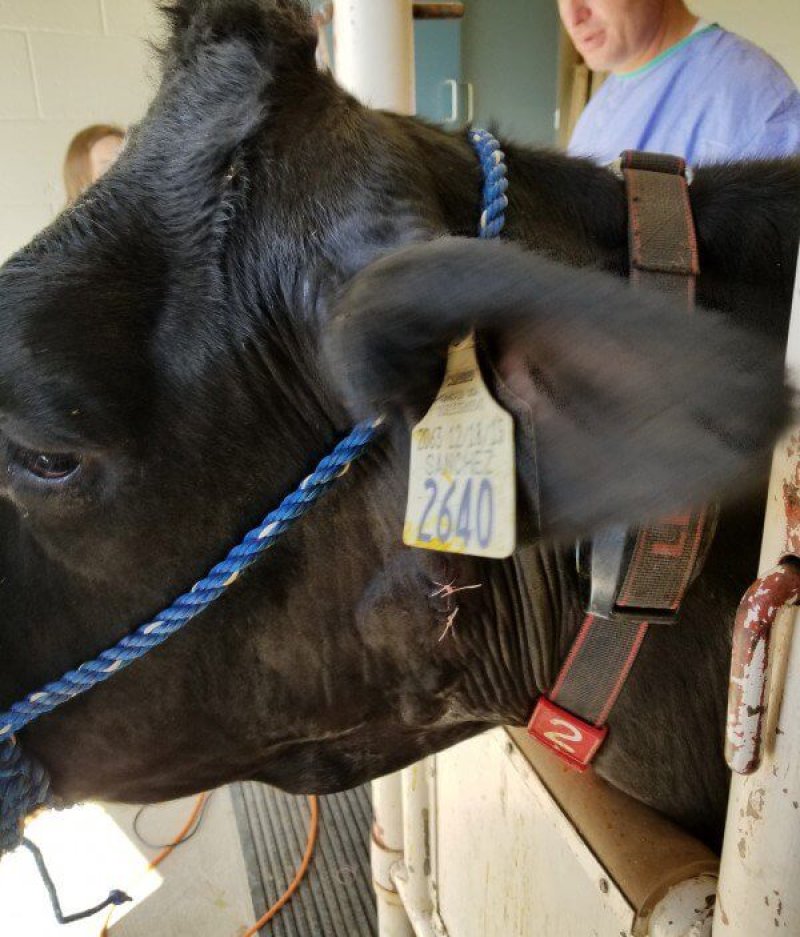
A cow on Utah State University's dairy farm that has been embedded with Livestock Labs' EmbediVet tracker. (Image credit: Livestock Labs)

Though they look indistinguishable from the other cows on a dairy farm in Utah, three cyborg cows with implanted sensors are munching on grass and sending data to help train an artificial neural network. A biohacker named Tim Cannon created the subcutaneous trackers for livestock after his own experiments with RFID implants. Eventually, he wants to bring the technology back to humans.

Cannon got a Circadia Sensor implanted into his arm in 2013. The sleep and temperature monitoring device, he thought, could help him collect data for AI software he developed to predict illness. But investors were hard to find for the implant: outside of the biohacking community, people remain skeptical of having sensor tracking devices implanted inside their bodies.

And so, Cannon turned to livestock. Working with a tech incubator in Australia, he founded Livestock Labs and created the bovine FitBit, which he named EmbediVet. The sensors can record cows’ heart rate, pulse, chewing frequency, temperature, and movements around the farm.

Read full, original post: A Biohacker Created Surgically Implanted Sensors to Track Cows

{{ reviewsTotal }}{{ options.labels.singularReviewCountLabel }}
{{ reviewsTotal }}{{ options.labels.pluralReviewCountLabel }}
{{ options.labels.newReviewButton }}
{{ userData.canReview.message }}

Related Articles

Infographic: Global regulatory and health research agencies on whether glyphosate causes cancer

Infographic: Global regulatory and health research agencies on whether glyphosate causes cancer

Does glyphosate—the world's most heavily-used herbicide—pose serious harm to humans? Is it carcinogenic? Those issues are of both legal and ...

Most Popular

Screenshot-2026-05-01-at-1.29.41-PM
Viewpoint: What happens when whole grains meet modern food manufacturing? Labels don’t tell the whole story.
S
As vaccine rejectionism spreads, measles may be taking a more dangerous turn
Screenshot 2026-05-06 at 2.56
Singularity crisis ahead? Can super babies save us from rogue AI geniuses?
Screenshot-2026-05-06-at-2.07.43-PM
Manufacturing a conspiracy: The timeline of how  the White House embraced the fringe claim that scientists are being mysteriously murdered
Screenshot-2026-04-20-at-2.26.27-PM
Viewpoint — Food-fear world: The latest activist scientists campaign: Cancer-causing additives
Screenshot-2026-04-30-at-2.19.37-PM
5 myths about summer dehydration that could damage your health — or even kill you
Screenshot-2026-03-13-at-12.14.04-PM
The FDA wants to make many popular prescription drugs OTC—a great idea. Here’s why it’s unlikely to happen
ChatGPT-Image-May-6-2026-03_41_05-PM
‘Protecting the integrity of science’: Kennedy’s FDA blocks release of taxpayer-funded studies finding COVID and shingles vaccines safe
Screenshot-2026-04-03-at-11.15.51-AM
Paraben panic: How a flawed study, media hype, and chemophobia convinced the public of the danger of one of the safest classes of preservatives
Screenshot-2026-04-12-135256
Bixonimania: The fake disease scam that AI swallowed whole
Screenshot 2026-05-06 at 12.49
Immortal dragons: The quest to ‘make death optional’
glp menu logo outlined

Get news on human & agricultural genetics and biotechnology delivered to your inbox.