Is religion incompatible with science? Three scientists say it’s possible to have both

orig
Image credit: Slayerment

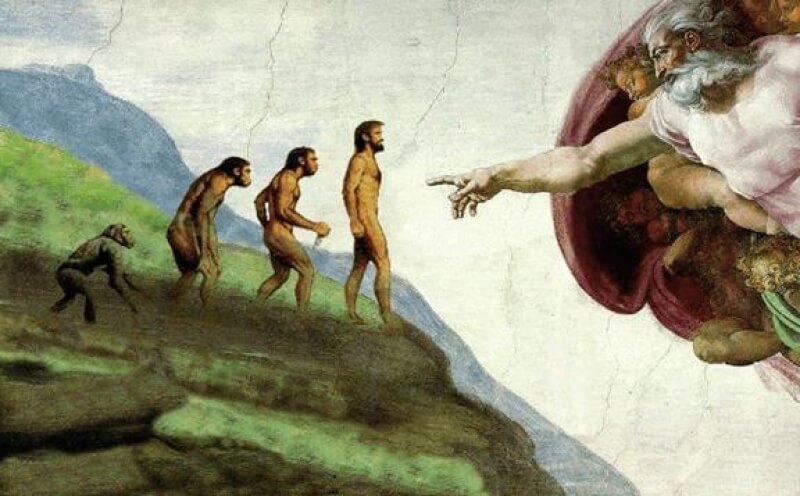
Is the conflict between religion and science as deep as some think? We talk to three scientists about how they reconcile their faith with their work.

While science is a “wonderful tool for understanding the physical universe”, [Christian astrophysicist Jennifer Wiseman] says her religious beliefs give her the answers to the bigger philosophical questions in life — like how mere humans can be significant at all in the context of the universe.

[Immunologist Andrew Harman] is fascinated by cosmology — his favourite book is A Brief History of Time by Stephen Hawking — but he sees Buddhism as answering different kinds of questions to science. Buddhism, Andrew says, is interested in “creating the conditions for enlightenment to arrive” — a state in which people feel “unconditional love, deep spiritual peace, completely free of inner conflict”.

[Muslim geneticist Fahad Ali believes] the Koran encourages “compassion, common decency, generosity and intelligence”. Fahad is yet to complete his honours year but meanwhile has been assisting in research using CRISPR to streamline genetic modification in plants at The University of Sydney Institute of Agriculture.

While there are “big moral questions” about how to apply genetic modification, he believes it should be used to cure disease and increase food production. “Science should be in the service of humanity,” Fahad says.

Read full, original post: Are religion and science always at odds? Here are three scientists that don’t think so

{{ reviewsTotal }}{{ options.labels.singularReviewCountLabel }}
{{ reviewsTotal }}{{ options.labels.pluralReviewCountLabel }}
{{ options.labels.newReviewButton }}
{{ userData.canReview.message }}

Related Articles

Infographic: Global regulatory and health research agencies on whether glyphosate causes cancer

Infographic: Global regulatory and health research agencies on whether glyphosate causes cancer

Does glyphosate—the world's most heavily-used herbicide—pose serious harm to humans? Is it carcinogenic? Those issues are of both legal and ...

Most Popular

wuhan institute of virology main entrance
​​COVID lab leak? Making a case that the Wuhan market origins theory is wrong
Screenshot-2026-06-17-at-9.44.03-AM
Viewpoint: Embryos are becoming the newest battleground of love, loss, and legal uncertainty
Screenshot-2026-06-18-at-11.41.51-AM
Viewpoint—Protecting baloney science: Far right senators move to protect the phony homeopathy industry
ChatGPT-Image-Mar-10-2026-01_39_01-PM
Viewpoint—“Miracle molecule” debunked: Why acemannan supplements don’t work
Screenshot-2026-06-17-at-11.57.12-AM
Viewpoint: Raw milk and the myth of safety—ProPublica exposes the growing anti-homogenization movement
ChatGPT-Image-Jun-9-2026-01_11_37-PM
Turmeric supplements: More risks than benefits
Screenshot-2026-06-18-at-2.52.05-PM
Activist organization accuses Trump of protecting methane-generating stripper wells to benefit billionaire and donor Jeffrey Hildebrand 
Screenshot-2026-06-16-at-10.02.22-PM
Viewpoint: ‘Industrial food’ primer—Challenging the dangerous delusions of the alternative food movement
ChatGPT-Image-Jun-16-2026-10_01_45-AM-2
Viewpoint—Recursive self-improvement: AI leader Anthropic calls for AI slowdown
ChatGPT-Image-Jun-18-2026-02_32_04-PM
Can illegal social media content be stopped before it goes viral? UK is going to try.
ChatGPT-Image-Jun-4-2026-03_07_27-PM
AAP v. Kennedy: While a court challenge grinds on, RFK Jr. quietly advances his anti-vaccine conspiracy agenda
ChatGPT-Image-Jun-16-2026-10_29_11-AM
What’s behind Anthropic’s warning about the accelerating development of AI
glp menu logo outlined

Get news on human & agricultural genetics and biotechnology delivered to your inbox.