How herbicide-resistant GMO soybeans transformed Brazil’s economy

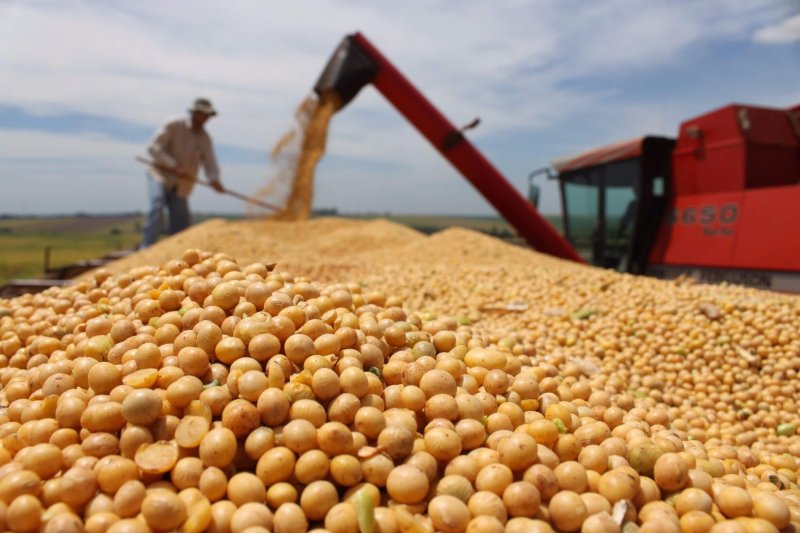
soja
Credit: MercoPress

As Brazil grew richer in the 2000s, its agricultural workers left their farms in droves and headed to work in the rapidly growing industrial sector.

But what exactly was happening? Did new economic opportunities lure workers off farms or did changes in farming lead to industrialization? 

In 2003, Brazil legalized the revolutionary Monsanto’s Roundup Ready soybean seed. The seed (called “Maradona soy” in South America after a famously agile soccer player) had been genetically engineered to be herbicide resistant.

In a pair of papers, [Jacopo Ponticelli, an associate professor of finance at Northwestern University] and coauthors trace how businesses across Brazil reaped the benefits of this revolutionary seed. In the first paper, the researchers find that the seed freed up farm laborers to find other jobs, allowing Brazil’s industrial sector to grow. In the second, the researchers find that the seed helped farmers put more money in the bank, which led to urban centers getting access to cheaper credit, allowing banks to finance more manufacturing and services firms.

Ponticelli says the research not only sheds new light on how economies develop, but also challenges the widespread belief that funneling resources into farming stifles growth and innovation.

Editor’s note: Read the full papers here (behind paywall) and here (behind paywall)

Read full, original post: How a genetically modified soybean helped modernize an economy

{{ reviewsTotal }}{{ options.labels.singularReviewCountLabel }}
{{ reviewsTotal }}{{ options.labels.pluralReviewCountLabel }}
{{ options.labels.newReviewButton }}
{{ userData.canReview.message }}

Related Articles

Infographic: Global regulatory and health research agencies on whether glyphosate causes cancer

Infographic: Global regulatory and health research agencies on whether glyphosate causes cancer

Does glyphosate—the world's most heavily-used herbicide—pose serious harm to humans? Is it carcinogenic? Those issues are of both legal and ...

Most Popular

Screenshot-PM-24
Viewpoint: The herbicide glyphosate isn’t perfect. Banning it would be far worse.
79d03212-2508-45d0-b427-8e9743ff6432
Viewpoint: The Casey Means hustle—Wellness woo opportunism dressed up as medical wisdom
d-b
Blocked arteries, kidney stones, nausea, constipation, fatigue: Long list of health problems caused by too much vitamin D 
ChatGPT-Image-Mar-10-2026-01_39_01-PM
Viewpoint—“Miracle molecule” debunked: Why acemannan supplements don’t work
lab grown meat research kelly schultz lehighuniversity main
Profiles of the 10 top global cultured meat companies
ChatGPT-Image-Apr-30-2026-05_00_48-PM
Wellness grifter physician turned wellness influencer out as surgeon general nominee
Screenshot-2026-04-30-at-11.33.46-AM
Anti-seed-oil to anti-vax pipeline: MAHA movement spreads to teen influencers
ChatGPT-Image-Apr-30-2026-12_21_05-PM-2
The tech billionaires behind the immortality movement
Screenshot-2026-04-28-at-1.21.37-PM
How America’s medical system encourages psychiatric overdiagnosis
ChatGPT-Image-Mar-27-2026-11_27_05-AM
The myths of “process”: What science says about the “dangers’ of synthetic products and ultra-processed foods

Sorry. No data so far.

glp menu logo outlined

Get news on human & agricultural genetics and biotechnology delivered to your inbox.