If these activities are oriented towards agriculture and forestry, they are understood as GREEN; if oriented towards industry, as WHITE; if oriented towards ocean and seas, as BLUE bioeconomy. Bioeconomy is a very young concept and has been used since 1990. In recent years, both the EU and the US have announced their bioeconomic plans for the future. In February 2012, the EU announced its plan for “Sustainable Bioeconomy for Europe”, whereas the US confirmed their “National Bioeconomics” project two months later. In those plans, the main target was oriented at R&D and innovations in biology. While EU is focusing on WHITE bioeconomy, the US’s plan embraces all three types of bioeconomy.

A report by the International Food Policy Research Institute (IFPRI) deals with an interesting question: How much agricultural production should increase as we approach 2050? The report states that the amount of food should be increased by 70%. It is estimated that includes 80% for meat and 52% for grain. This means that world meat production will have to increase from 260 million tons today to 455 million tons in 2050.
On the other hand, while the negative contribution of agriculture to the environment is expressed, the question of animal husbandry stands out. For example, while a kilogram of vegetables requires 322 liters of water and a kilogram of fruit requires 962 liters, a kilogram of chicken requires 4,325 liters, a kilogram of sheep 8,763 liters, and a kilogram of beef requires 8,763 liters of water. It is important to note that one-third of the cereal produced in the world is directed to feeding animals. It cannot be said that, besides large amounts of water consumption, animal breeding is considered to be innocent of the contaminated water, mixing of pathogens, metals, and drug-hormone residues. Another fact is that 80% of the antibiotics used in the US are used in animal husbandry.
80% of the agricultural land in the world is pasture for livestock. Apart from this, approximately 30% of the cultivated plant production is used for animal feeding. In the case of greenhouse gas, animal breeding is responsible for 6-32%, according to different estimates.

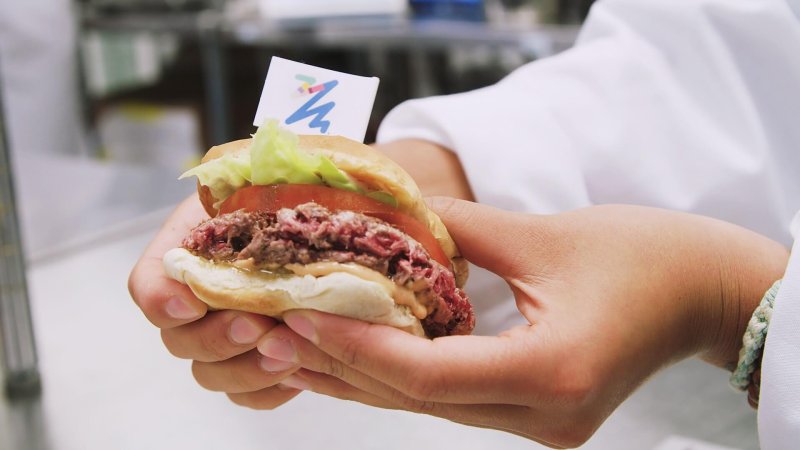
Since around 2013, scientists have begun to show that meat can be produced in laboratories. Not satisfied with this, however, it has moved to commercial dimensions. In the US, companies founded in this area are commercially supported by renowned investors such as Bill Gates and Richard Bronson, as well as food giants such as Memphis Meats, Cargill, and Tyson. It is a fact that EU companies like Nestle and Unilever will not miss this opportunity. The German PHW group has already started to purchase the Israeli startup Supermeat. It seems to be moving beyond chickens and beef. FinlessFoods aims to utilize cell culture to artificially produce meat from the endangered red tuna species on land.

Meat is mainly the composition of muscle and fat cells. They need nutrients suitable for growth and development. When we carry out this system in the laboratory or even in larger environments, we will have healthier and safer meat, without antibiotics, without medicine, without drugs. These artificial products are similar to those, mentioned above because of their potential to overcome environmental negativity, cheapness, benefits to human health and protection of animal welfare. However, It may take quite a while to get to the market. Although Memphis Meats says they will be on the market in 2021, many scientific problems are yet to be solved. At this time, another US firm, Justforall, has announced that chicken meat without broiler will be on the market shelves towards the end of 2018.
The vegetarian menu already offered by Impossible Burger is in about 1,500 restaurants in the US and growing. As a meat substitute, it is interesting that the product of which the vegetable protein tissues are active offers an equivalent flavor to meat. The company supplies the meat color with leghemoglobin, derived from soybean roots, not from the blood. However, the plant herbal hemoglobin is low in the soybean roots, so it will be obtained from a yeast strain (Pichia pastoris). These genetically modified yeast strains are not subject to biotech regulations in the US or EU.
In the 1900s, while a chick could only be marketed in 112 days, now it has been reduced to 45 days. Let’s see what the bioeconomy will deliver in future.
Nazimi Açıkgöz is a Turkish freelance writer and expert on food sufficiency, global warming and agriculture, agricultural biotechnology and green fuels. He has a PhD in rice breeding from Munich Technical University. Follow him on Twitter @nazimiacikgoz