Fueling CRISPR: The nonprofit dedicated to sharing ‘bits of useful DNA’

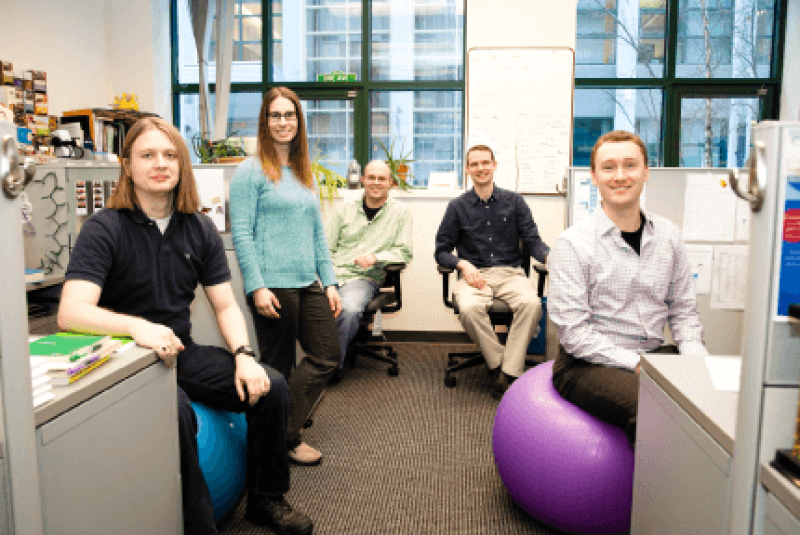
Addgene scientists negotiating work life balance
Addgene team. Image credit: Addgene

When Feng Zhang was a graduate student in the early 2000s, he helped make a groundbreaking discovery: Light-sensitive proteins from pond scum can actually be inserted into brain cells, giving scientists the ability to control parts of the brain with nothing much more than light.


So many labs clamored to use the technique that sharing vials of DNA that encode these light-sensitive proteins became a regular lab chore. Every few weeks, Zhang sat down to help print shipping labels and stuff a batch of envelopes.

Zhang deposited the DNA coding for CRISPR at a small nonprofit called Addgene, located a mile down the road from MIT. Now, he no longer had to personally FedEx CRISPR tools. Scientists could order them straight from Addgene’s website for $65 a pop. Addgene’s whole purpose is to share bits of useful DNA.

Addgene grew steadily at first, reaching more and more scientists every year. Then came CRISPR. “The year of CRISPR we took a very large increase,” says Joanne Kamens, Addgene’s executive director. The company has shared CRISPR components from Zhang’s lab more than 42,000 times, with more than 2,000 institutions in 62 countries. They account for four of the top 10 all-time most popular items available on Addgene’s site.

“If Addgene didn’t exist, our entire lab would be fulfilling these orders,” says Zhang. The nonprofit has also helped CRISPR become one of the fastest-spreading biotechnologies ever.

Read full, original post: The Little-Known Nonprofit Behind the CRISPR Boom

{{ reviewsTotal }}{{ options.labels.singularReviewCountLabel }}
{{ reviewsTotal }}{{ options.labels.pluralReviewCountLabel }}
{{ options.labels.newReviewButton }}
{{ userData.canReview.message }}

Related Articles

Infographic: Global regulatory and health research agencies on whether glyphosate causes cancer

Infographic: Global regulatory and health research agencies on whether glyphosate causes cancer

Does glyphosate—the world's most heavily-used herbicide—pose serious harm to humans? Is it carcinogenic? Those issues are of both legal and ...

Most Popular

Screenshot-2026-04-13-at-1.39.26-PM
Viewpoint: ‘Safer for children?’ Stonyfield yogurt under fire for deceptive organic marketing
Screenshot-2026-04-22-at-10.46.29-AM
Viewpoint: How to counter science disinformation? Science journalist offers 12 practical tips
ChatGPT-Image-May-7-2026-12_16_37-PM-2
Viewpoint: Are cancer rates ‘skyrocketing’ as RFK, Jr. and MAHA claim? The evidence says mostly the opposite
Picture1-14
When superbugs threaten vulnerable children: Can AI help solve antibiotic resistance?
ChatGPT-Image-May-12-2026-08_39_41-PM
GLP podcast: Big Pharma, Big Ag, Big Food—health harming industries or life-saving innovators?
Screenshot-2026-04-23-at-11.00.36-AM
Regulators' dilemma: Thalidomide, Metformin, and the cost of getting drug approvals wrong
Picture1-1
Cooling the planet with balloons: Could a geoengineering gamble slow global warming?
png-pill-omega-Supp-fish-oil
Millions take omega-3 fish oil for brain health. New research suggests it may do the opposite.
glp menu logo outlined

Get news on human & agricultural genetics and biotechnology delivered to your inbox.