What’s the line between life and brain death? Artificial intelligence offers hope of digital simulation

maxresdefault
Image credit: Frederik Questier

Since the invention of bypass machines in the 1950s, which can artificially maintain circulation and respiration, death has come to be defined by an absence of brain activity – brain death.

But even permanent brain death, which is considered undisputed, does not hold as an adequate criteria for some. The field of cryonics rests on the belief that if one’s brain is frozen and kept intact, future scientific advances will enable reanimation. Although often considered outlandish, new advances are being made that involve a process called aldehyde-stabilised cryopreservation.

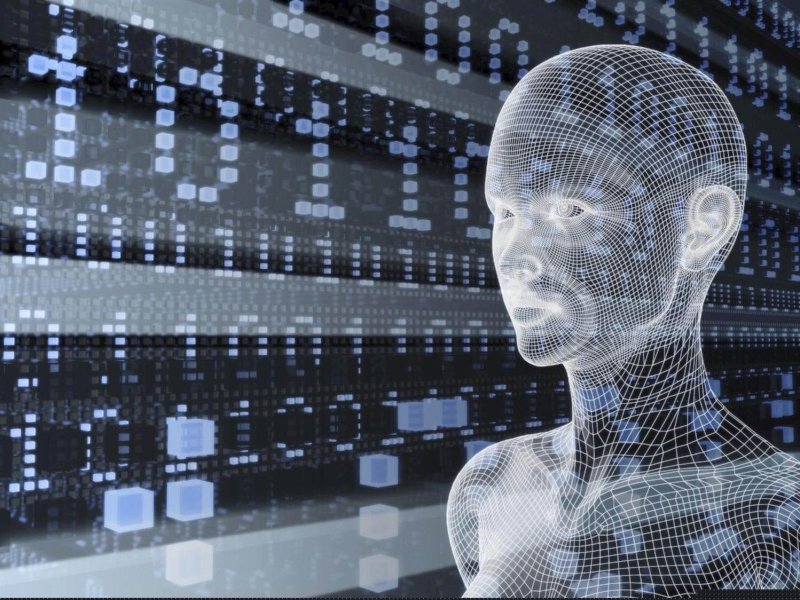
Novel approaches to neurobiology based on information-theory, however, go a step further, making the bold claim that it is possible to accurately emulate the brain’s connectivity, and therefore the mind, in the form of digital information.

According to this perspective, permanent death occurs only when the neural connections that support one’s memory, personality and self are annihilated. It is underpinned by the emerging possibility that one’s connectome can be scanned entirely, transformed into a digital code and then ‘uploaded’ to any new, viable substrate.

The boundary between life and death seems like it will never be clear. Yet the connectome and the information it contains regarding critical aspects of consciousness mark a digital-age transcendence of current thinking regarding biological brain and heart activity as supporting life.

Read full, original post: AI-powered brain emulation is changing our definition of death

{{ reviewsTotal }}{{ options.labels.singularReviewCountLabel }}
{{ reviewsTotal }}{{ options.labels.pluralReviewCountLabel }}
{{ options.labels.newReviewButton }}
{{ userData.canReview.message }}

Related Articles

Infographic: Global regulatory and health research agencies on whether glyphosate causes cancer

Infographic: Global regulatory and health research agencies on whether glyphosate causes cancer

Does glyphosate—the world's most heavily-used herbicide—pose serious harm to humans? Is it carcinogenic? Those issues are of both legal and ...

Most Popular

ChatGPT-Image-Jul-7-2026-12_01_35-PM
Viewpoint: 21 worthless wellness trends inspired by RFK, Jr.’s ill-informed MAHA followers that can harm or even kill you.
ChatGPT-Image-Jun-30-2026-10_27_31-AM
Viewpoint: Europe clears the way for gene-edited crops — but fear-driven restrictions still slow their full potential
ChatGPT-Image-Jul-1-2026-03_33_49-PM
‘Alternative’ cancer treatments that could kill you
Screenshot-2026-07-06-at-12.30.23-PM
2,300 endangered species: Controversial de-extinction company Colossal Biosciences joins U.S. effort to preserve their DNA
ChatGPT-Image-Jul-9-2026-10_36_24-AM
Deeply-flawed ivermectin study revives scientifically unsupported miracle cancer drug myth
d a ca e c c beb x
Facts & Fallacies podcast: The 'woke' crusade against anthropology? Dr. Elizabeth Weiss
ChatGPT-Image-Mar-10-2026-01_39_01-PM
Viewpoint—“Miracle molecule” debunked: Why acemannan supplements don’t work
Screenshot 2026-07-08 at 10.13
What happens when a pro-life congresswoman needs an abortion?
Screenshot-2026-07-09-at-9.48.49-AM
Do cold plunges and contrast therapy work?
ChatGPT-Image-Jun-25-2026-12_23_17-PM
No, Bill Gates did not secretly engineer ticks to promote veganism
ChatGPT-Image-Jul-7-2026-11_19_20-AM
Signal or noise? Study links GLP-1 drugs to slowing the aging process
ChatGPT-Image-Jul-8-2026-04_10_51-PM-1
Kennedy-founded Children's Health Defense doubles down on support for Idaho mother charged by a grand jury with murdering her twins last year after claiming vaccines killed them
ChatGPT-Image-Jul-1-2026-12_37_08-PM
Viewpoint: Trump poised to politicize all U.S.-supported science research
glp menu logo outlined

Get news on human & agricultural genetics and biotechnology delivered to your inbox.