CRISPR-edited crops with better ‘ventilation systems’ could withstand climate change

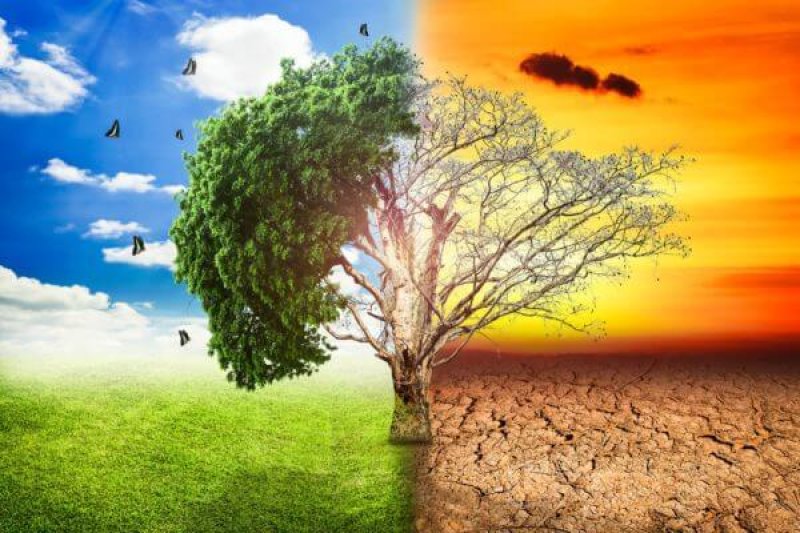
global warming climate change tree big stock x

As the world heats up, plants face a dilemma — the same tiny holes they have to open to exchange gases also let out water. They can close the holes, called stomata, to stay hydrated in hotter, drier conditions but, in doing so, may miss out on critical carbon dioxide.

The question for …. Stanford University [researchers] is how this dilemma will play out as increasing portions of the world’s plants experience consistently warmer, drier environments …. The answer …. suggests opportunities for engineering plants to withstand climate change ….

In a paper published Sept. 6 in Developmental Cell, the researchers worked out which hormone in the plant Arabidopsis thaliana coordinates the number of stomata the plant produces. What’s more, they tweaked the levels of that hormone in the plant — using CRISPR/Cas9 gene editing technology — to get an idea of the extent to which this hormone can increase or decrease the presence of stomata.
The researchers used CRISPR/Cas9 gene editing technology to precisely alter single genes in their plants to increase and decrease the cytokinin levels. This technology is very promising to be able to make directed small changes to improve plants’ ability to withstand climate change, said the researchers.

Read full, original article: How a hormone helps plants build leaves’ ventilation system

Related Articles

Infographic: Global regulatory and health research agencies on whether glyphosate causes cancer

Infographic: Global regulatory and health research agencies on whether glyphosate causes cancer

Does glyphosate—the world's most heavily-used herbicide—pose serious harm to humans? Is it carcinogenic? Those issues are of both legal and ...

Most Popular

Screenshot-2026-09-20-at-9.03.54-AM
From Malaysia to the world: A pioneering science communicator reimagines global science communication for a digital age
Screenshot-2026-09-16-at-2.26.42-PM
Viewpoint: How to ecologically damage America’s forests: Ban glyphosate
ChatGPT-Image-Mar-10-2026-01_39_01-PM
Viewpoint—“Miracle molecule” debunked: Why acemannan supplements don’t work
ChatGPT-Image-Sep-17-2026-12_28_43-PM
Vitamin D, omega-3 fish oil and glucosamine supplements could cause brain damage 
Screenshot-2026-09-20-at-4.31.28-PM
White House drafting executive order to control what OMB Director Vought claims are “woke” NIH science grants
ChatGPT-Image-Sep-20-2026-04_22_32-PM
What’s Trump’s ‘AI Force’? Administration rushes to announce ill-defined watchdog agency and czar amid criticism of its resistance to curb AI acceleration
Screenshot-2026-08-12-at-11.31.46-AM
AI is helping develop new vaccines
Screenshot-2026-09-14-at-4.31.14-PM
Viewpoint: What’s the likely impact when the EPA loosens rules limiting methane pollution from oil and gas wells?
Screenshot-2026-08-19-at-6.19.42-PM
Facts & Fallacies podcast: 'Regenerative farming'? RFK Jr.’s federal push romanticizes the past and risks food security
ChatGPT-Image-Aug-28-2026-03_33_46-PM
Viewpoint: Bad science—Five bogus Trump administration claims about vaccines and autism
ChatGPT-Image-Sep-18-2026-10_49_24-AM
‘Symptom borrowing’: Young people are copying health problems they see on TikTok
Screenshot-2026-09-10-at-12.20.19-PM
'Jet fuel didn't melt the steel': 9/11 conspiracy theories debunked
glp menu logo outlined

Get news on human & agricultural genetics and biotechnology delivered to your inbox.