Why are most human genes ignored by researchers?

genetic testing
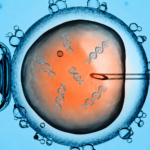
Image credit: CNBC

There are around 20,000 human protein-coding genes, but recent studies have suggested scientists actively study only about 2,000 of them. New research investigates why some genes are studied over and over again, while others are neglected. Its authors found that a genes’ medical significance—how likely it is they play a role in human disease—doesn’t explain the discrepancy. Instead, while many researchers are interested in understudied genes, career incentives encourage scientists to focus on genes that are already better understood.

We spoke with one of the study’s authors, Thomas Stoeger of Northwestern University, to learn more.

RG: What are the main reasons researchers prefer looking at some genes over others?

Stoeger: Several mechanisms make researches look at the same genes over and over again. Many of those involve the ease of justifying future studies and being productive within the time frames given to young researchers. Besides the access to prior literature and reagents and scientific communities, we also observe that junior scientists that study little-studied biology have a lower chance to become a principal investigator, while grants dedicated to the training of future scientists and exploratory science end up supporting research on the same kind of genes as other grant categories.

Based on personal experience and discussions, it would seem that many researchers would actually prefer to study the less explored aspects of biology.

Read full, original post: Most of the human genome isn’t being actively studied

{{ reviewsTotal }}{{ options.labels.singularReviewCountLabel }}
{{ reviewsTotal }}{{ options.labels.pluralReviewCountLabel }}
{{ options.labels.newReviewButton }}
{{ userData.canReview.message }}

Related Articles

Infographic: Global regulatory and health research agencies on whether glyphosate causes cancer

Infographic: Global regulatory and health research agencies on whether glyphosate causes cancer

Does glyphosate—the world's most heavily-used herbicide—pose serious harm to humans? Is it carcinogenic? Those issues are of both legal and ...

Most Popular

Screenshot 2026-05-06 at 2.56
Singularity crisis ahead? Can super babies save us from rogue AI geniuses?
Screenshot-2026-03-13-at-12.14.04-PM
The FDA wants to make many popular prescription drugs OTC—a great idea. Here’s why it’s unlikely to happen
Screenshot-2026-04-20-at-2.26.27-PM
Viewpoint — Food-fear world: The latest activist scientists campaign: Cancer-causing additives
Screenshot-2026-05-01-at-11.56.24-AM
‘Science moves forward when people are willing to think differently’: Memories of DNA maverick Craig Venter
images
The never-ending GMO debate: Pros and cons
Screenshot-PM-24
Viewpoint: The herbicide glyphosate isn’t perfect. Banning it would be far worse.
Screenshot-2026-04-03-at-11.15.51-AM
Paraben panic: How a flawed study, media hype, and chemophobia convinced the public of the danger of one of the safest classes of preservatives
Screenshot-2026-04-30-at-2.19.37-PM
5 myths about summer dehydration that could damage your health — or even kill you
Screenshot-2026-05-01-at-1.29.41-PM
Viewpoint: What happens when whole grains meet modern food manufacturing? Labels don’t tell the whole story.
Screenshot-2026-05-06-at-2.07.43-PM
Manufacturing a conspiracy: The timeline of how  the White House embraced the fringe claim that scientists are being mysteriously murdered
79d03212-2508-45d0-b427-8e9743ff6432
Viewpoint: The Casey Means hustle—Wellness woo opportunism dressed up as medical wisdom
glp menu logo outlined

Get news on human & agricultural genetics and biotechnology delivered to your inbox.