Mexico’s new science minister fiercely skeptical of GMO crops and new breeding techniques

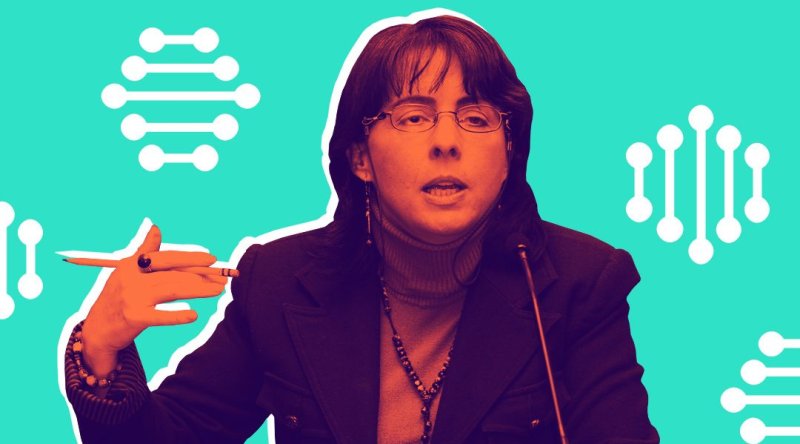
maria elena alvarez buylla
Image Credit: CodigoEspagueti.com

In early June, evolutionary developmental biologist Elena Álvarez-Buylla received an out-of-the-blue phone call from the campaign of Andrés Manuel López Obrador, then the front-runner in Mexico’s presidential election, with a question. If López Obrador won, would she consider becoming the next director of the National Council of Science and Technology (Conacyt), the country’s science ministry and primary granting agency?

“I started to have a feeling that I couldn’t say no,” says Álvarez-Buylla, who founded and leads Mexico’s Union of Scientists Committed to Society (UCCS). “It doesn’t matter how big the personal sacrifice is. … This is a unique and historic moment” for Mexico.

Many scientists are delighted that one of their own will lead Conacyt—most of Álvarez-Buylla’s predecessors were career administrators—and that she’ll be the first woman to do so. But critics worry about her opposition to genetically modified (GM) maize, which Álvarez-Buylla fears could spoil the country’s astonishing agricultural biodiversity.

“There’s not a clear boundary” between her research and her activism, says Rodrigo Álvarez Aguilera, a science teacher here and one of the petition’s organizers. Biochemist Luis Herrera Estrella, director of the National Laboratory of Genomics for Biodiversity in Irapuato, says Álvarez-Buylla is “a very good scientist” but calls her views on GM organisms “radical.”

Read full, original article: Mexico’s new science minister is a plant biologist who opposes transgenic crops


{{ reviewsTotal }}{{ options.labels.singularReviewCountLabel }}
{{ reviewsTotal }}{{ options.labels.pluralReviewCountLabel }}
{{ options.labels.newReviewButton }}
{{ userData.canReview.message }}

Related Articles

Infographic: Global regulatory and health research agencies on whether glyphosate causes cancer

Infographic: Global regulatory and health research agencies on whether glyphosate causes cancer

Does glyphosate—the world's most heavily-used herbicide—pose serious harm to humans? Is it carcinogenic? Those issues are of both legal and ...

Most Popular

ChatGPT-Image-May-7-2026-12_16_37-PM-2
Viewpoint: Are cancer rates ‘skyrocketing’ as RFK, Jr. and MAHA claim? The evidence says mostly the opposite
Screenshot-2026-04-13-at-1.39.26-PM
Viewpoint: ‘Safer for children?’ Stonyfield yogurt under fire for deceptive organic marketing
Screenshot-2026-04-22-at-10.46.29-AM
Viewpoint: How to counter science disinformation? Science journalist offers 12 practical tips
Picture1-14
When superbugs threaten vulnerable children: Can AI help solve antibiotic resistance?
Screenshot-2026-04-23-at-11.00.36-AM
Regulators' dilemma: Thalidomide, Metformin, and the cost of getting drug approvals wrong
Picture1-1
Cooling the planet with balloons: Could a geoengineering gamble slow global warming?
ChatGPT-Image-May-12-2026-08_39_41-PM
GLP podcast: Big Pharma, Big Ag, Big Food—health harming industries or life-saving innovators?
bigstock opioids on chalkboard with rol
GLP podcast: 'Safe injection sites': enabling drug addiction or saving lives?

Sorry. No data so far.

glp menu logo outlined

Get news on human & agricultural genetics and biotechnology delivered to your inbox.