Targeting cancer with sugar-powered immunotherapy

sugar

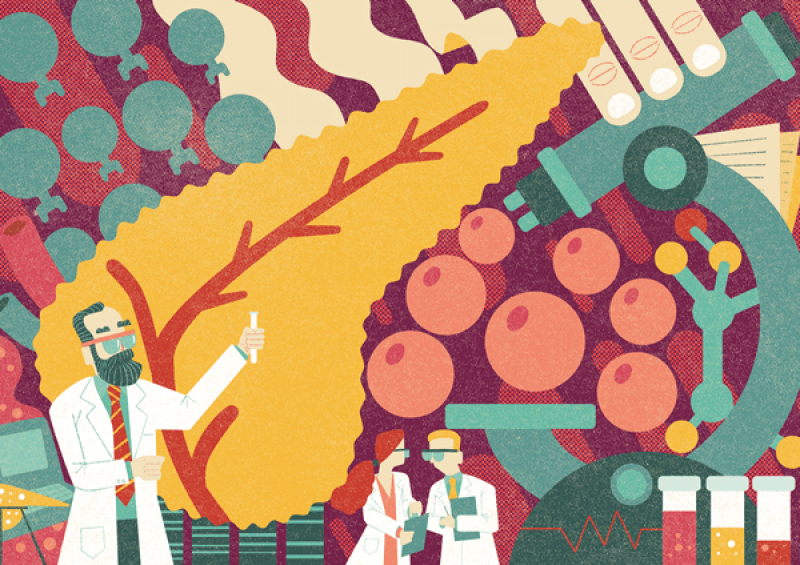
Over the last few decades, researchers tinkering with molecules that turn an immune cell on and off have created a revolutionary approach to fighting cancer. Instead of taking aim at the tumor directly, this new class of medicines harnesses the patient’s own immune cells to tackle the disease.

[A] few companies are venturing into a new frontier—glycobiology, the science of the sugars that stud the surface of cells. Sugars act like switches and knobs that control where and when a cell’s biological machines, proteins and lipids, do their jobs. Yet for all their fine-tuning finesse and power, sugars are highly complex molecules that have often eluded a deeper understanding of their workings because they are so hard to study in the lab.

Recently, though, the science has caught up and biotech companies have begun to build on these findings to develop anti-cancer drugs. [On November 26] at an American Association for Cancer Research meeting in Miami, Palleon Pharmaceuticals, a Massachusetts startup, unveiled new data from experiments in rodents on a profoundly different set of checkpoint blockers that target sugars.

These experimental drugs work by interfering with complex sugars called glycans that coat the surface of tumor cells and let them pass unnoticed by the otherwise vigilant immune system. It’s an “underappreciated mechanism of immune evasion,” says [researcher] Michael O’Dwyer.

Read full, original post: The Biology of Sugars Points to a Sweet Strategy for Treating Cancer

{{ reviewsTotal }}{{ options.labels.singularReviewCountLabel }}
{{ reviewsTotal }}{{ options.labels.pluralReviewCountLabel }}
{{ options.labels.newReviewButton }}
{{ userData.canReview.message }}

Related Articles

Infographic: Global regulatory and health research agencies on whether glyphosate causes cancer

Infographic: Global regulatory and health research agencies on whether glyphosate causes cancer

Does glyphosate—the world's most heavily-used herbicide—pose serious harm to humans? Is it carcinogenic? Those issues are of both legal and ...

Most Popular

Screenshot-2026-04-20-at-2.26.27-PM
Viewpoint — Food-fear world: The latest activist scientists campaign: Cancer-causing additives
Screenshot-2026-03-13-at-12.14.04-PM
The FDA wants to make many popular prescription drugs OTC—a great idea. Here’s why it’s unlikely to happen
ChatGPT-Image-May-1-2026-02_20_13-PM
How RFK, Jr.’s false vaccine claims are holding up $600 million to fight diseases in poor countries
Screenshot-2026-05-01-at-11.56.24-AM
‘Science moves forward when people are willing to think differently’: Memories of DNA maverick Craig Venter
Screenshot-2026-04-03-at-11.15.51-AM
Paraben panic: How a flawed study, media hype, and chemophobia convinced the public of the danger of one of the safest classes of preservatives
viva-la-vida-watermelons
Misinformation and climate change are endangering summer watermelons
Screenshot-2026-04-30-at-2.19.37-PM
5 myths about summer dehydration that could damage your health — or even kill you
ChatGPT-Image-Mar-27-2026-11_27_05-AM
The myths of “process”: What science says about the “dangers’ of synthetic products and ultra-processed foods
ChatGPT-Image-Mar-10-2026-01_39_01-PM
Viewpoint—“Miracle molecule” debunked: Why acemannan supplements don’t work
Drinking lots of water can help reduce the effects of aging
Nanoplastics in drinking water: MAHA activists forge science-based bipartisan coalition 
Screenshot-2026-05-04-at-12.54.32-PM
How Utah became the country’s supplement capital  — and a haven for unregulated, ineffective and fake products
circular-bioeconomy-should-focus-on-sustainable-wellbeing
GLP podcast: What's wrong with 'doomsday' environmentalism? It's false.
79d03212-2508-45d0-b427-8e9743ff6432
Viewpoint: The Casey Means hustle—Wellness woo opportunism dressed up as medical wisdom

Sorry. No data so far.

glp menu logo outlined

Get news on human & agricultural genetics and biotechnology delivered to your inbox.