Big Ag is addicted to nitrogen fertilizers. It’s a massive problem for the global climate, yet it may yield to a microscopic solution: microbes rewired to “fix” nitrogen from the air and turn it into a natural type of fertilizer that corn, wheat, and other cereal crops can use.
…
Enter Joyn Bio, a Boston-based spinoff launched last September from two companies: Bayer CropScience, which boasts a vast library of agricultural microbes, and Ginkgo Bioworks, a pioneering biotech firm that creates custom-made bacteria for industrial applications.
Ginkgo’s Boston research hub is home to an assembly line of robots that are programmed to manufacture, read, or edit strands of DNA. Joyn’s idea is to synthesize variations on some of the genes that are believed to play a role in nitrogen fixation, including those involved in the cooperation between legumes and the bacteria specific to their root systems. Snippets of this synthetic DNA are then slotted by machines into microbes growing in rows of tiny fermentation chambers, before another set of automated tools characterizes the genetically altered microbes’ performance every which way. Synthesize, build, test, repeat.
Joyn is hoping this engineering approach to the fertilizer-replacement challenge—combined with computational power to integrate terabytes of data into predictive metabolic models—will make the company succeed where others have failed.
The Egyptian fruit bat’s immune system enables it to peacefully co-exist with Marburg virus, which can cause a swiftly deadly infection in humans. Although Marburg virus disease affects only a few dozen or hundred people a year, the case:fatality ratio in the scattered outbreaks ranges from 50% to 100%. A recent paper in Cell that explores the bat’s genome reveals how its immune system may prevent the virus from harming the flying mammals, which may hold clues for preventing or treating the infection in humans.
The Egyptian fruit bat Rousettus aegyptiacus lives in groups of 1,000 to more than 100,000 in caves and mines in many places in Africa. The bat weighs less than half a pound and is only half a foot long, but the wings stretch to two feet. Males are distinguishable by their large scrotums, and the bats are highly vocal.
Marburg virus, and the related Ebola virus, are filoviruses. They have a single strand of RNA as their genetic material.
People are infected with Marburg virus when they touch bat excrement, body fluids, or tissue, and can transmit the infection to other people through direct contact. After an incubation period of 2 to 21 days, the illness starts suddenly with high fever, excruciating headache, and aches and pains. Day three brings severe watery diarrhea, abdominal cramps, and nausea and vomiting.
A rash may appear during the first week. But the patient might not live that long because this is also when the gums, nose, vagina, and rectum bleed, along with bloody vomit, which is why Marburg virus disease was formerly called Marburg hemorrhagic fever. Trying to insert an IV to counteract the fluid loss triggers even more bleeding. Meanwhile, cerebral edema leads to confusion, irritability and aggressive behavior. The bleeding may plunge the patient into shock, leading to death.
In survivors, Marburg virus can remain in body parts shielded from the immune system, like the testicles and inside the eyes. In women infected while pregnant the virus can nestle in the placenta, amniotic fluid and fetus, and persist in breast milk.
Investigating caves and mines
The first recorded cases of the disease were from 1967, with 23 cases in Marburg, Germany, 6 cases in Frankfurt, and 2 in Belgrade, Serbia. Twenty-six of the cases were lab workers who had contracted the viral infection from African green monkeys from Uganda in efforts to develop a polio vaccine. Nine of the 26 people died. Over the years a few cases appeared in Angola, the Democratic Republic of the Congo, Kenya, South Africa, and Uganda.
But the reservoir – the healthy species that harbors the pathogen, enabling it to “spill over” into a vulnerable species like our own – remained a mystery. Bats were high on the list of suspects, though, because they were known to carry Ebola virus RNA.
Then an outbreak in 2007 pointed to the Egyptian fruit bat. Four men mining for galena and gold in Kitaka Cave in Uganda fell ill, and one of them died. Such caves typically house thousands of the bats, which, disturbed by the miners, flutter about, leaving sticky guano everywhere. Kitaka Cave had about 100,000 bats.
A team from the Centers for Disease Control and Prevention, the World Health Organization, and the National Institute for Communicable Diseases in South Africa investigated the poop-filled mine. They removed about 400 bats and came back 9 months later for 200 more, to see if Marburg virus, if it was there, had persisted. The investigators also captured and put necklaces on 1,329 bats, then released them. Would the marked bats resurface elsewhere, and if so, how far away? Such a low-tech approach would turn out to reveal valuable information.
Mis- and disinformation are distorting science and public policy. Subscribe to our Daily and Weekly Digests for incisive coverage of ‘disruptive’ innovations in AI, agricultural biotechnology, food, chemicals, nuclear energy, vaccines, and other disruptive innovations.
When the team sent bat blood to the CDC, the researchers there identified antibodies against the virus and bits of viral RNA in 31 of the bats – about 5% – and isolated live virus from 5 bats. That was the first look at Marburg.
The five viral genomes found in the bats were incredibly diverse, which meant the bats had been harboring the viruses for a long time, enough to have accumulated mutations. In addition, the Marburg virus genomes collected from the bats and viruses found in the miners, closely matched.
Marburg virus
The researchers published a key paper in 2009 in PLOS Pathogens. But while they were analyzing their data and writing the paper introducing the Marburg reservoir, two tourists encountered the virus. Only one lived to tell the tale.
In early 2008 Astrid Joosten, from the Netherlands, vacationed with her husband in Uganda. They took a side trip from seeing mountain gorillas to visit Python Cave, whose reptilian namesakes grow huge from their abundant fruit bat meals.
The couple only explored the guano-sticky snake cave for about 10 minutes, but in that time Astrid must have touched some of the excrement that festooned all the surfaces, her husband recalled. She either had a cut on her hand where the virus entered, or touched her hand to her mouth.
However infection happened, Astrid developed a raging fever 13 days later, and then as her organs failed, she bled. Yet her husband, who’d scrabbled through the same rocky cave and had even kissed his dying wife in the hospital, was ok. David Quammen, in his excellent book Spillover, describes another case, of an American who visited Python Cave months before Astrid and developed a never-diagnosed mysterious illness that would turn out to have been Marburg. She survived.
Python Cave is only about 30 miles from Kitaka cave, where the gold miners were infected. After Astrid’s death, a research team discovered a beaded collar on the guano-encrusted floor of Python Cave. It had clearly come from Kitaka Cave, where some of the bat residents had been outfitted with the necklaces. So the bats can fly pretty far – and perhaps even hop across the continent, as some 5 percent of them, albeit healthy, shed the deadly (to us) virus.
The most recent outbreak was 3 cases in Uganda in late 2017. A man in his thirties, a game hunter, lived near a bat-infected cave and spread the infection to two others. All three people died.
Probing the Egyptian fruit bat genome
The sequencing of the bat’s genome began when Jonathan Towner, a researcher with the CDC’s Viral Special Pathogens Branch, collected healthy bats from Python Cave and took them to investigators at the United States Army Medical Research Institute of Infectious Diseases (USAMRIID). They performed a quick sequencing and sent the findings to Stephanie Pavlovich, an MD/PhD student in the laboratory of Thomas Kepler, a professor at the National Emerging Infectious Diseases Laboratories at Boston University.
Pavlovich, who is first author, wanted to take a closer look than the previous sequenced bat genomes – 14 species done to date – which are derived from many short DNA pieces, or “reads,” which misses some parts. So she resequenced the genome using longer reads – a little like reading an entire novel rather than excerpts. It took two years.
The team compared the new-and-improved bat genome sequence to those of other bats, guinea pigs, and humans, to distinguish genes common to mammals from those that might provide the Egyptian fruit bat with its protection from Marburg virus. Gene variants unique to the bats would be signs of positive selection – a mutation that provided an advantage, and so has withstood the test of natural selection. It persists.
Detecting signs of positive selection “allowed us to find a number of genes that were evolving at a faster rate in this bat, and then also a number of gene families that were much larger than we expected,” said Pavlovich in a news release. “We were looking for gene families that had grown either much larger or much smaller than was expected, given the evolutionary history of this bat,” she added. The full sequencing plus other techniques also revealed repeated sequences, which are associated with genes that encode proteins important in the innate immune response.
Two gene families emerged as expanded in the Egyptian fruit bat: those that encode molecules (ASG15, IFNAR1, type 1 interferon receptor, and SIKE1) that dampen the effects of type 1 interferon, which would alert the immune system to virally-infected cells. And the bats have unusual combinations of the components of natural killer (NK) cell receptors. NK cells alert the immune system to the presence of virally-infected cells, so that other molecules and cells can destroy them.
Somehow, the nuances of the bat’s immune response allow neither rampant inflammation to quell the virus, nor let it melt the body into a puddle of blood and tissue, as it does a human. The researchers write that “certain key components of the immune system in bats have co-evolved with viruses toward a state of respective tolerance and avirulence,” which is what enables the animals to live peaceably with Marburg.
Dr. Kepler terms the bat’s measured immune response “soft protection.” The animals seem to have a finer control over the composition of the key NK receptors than do other mammals. “The bat may be assuaging the virus for a short period of time, trying to prevent the virus’ growth without making a full-on attack. There’s something really interesting going on here,” he added.
And so the bat’s immune system doesn’t fight off Marburg; it just ignores the viral infection. The new work points drug developers to screen or synthesize compounds that might tweak the actions of the appropriate interferons and natural killer cell receptors to also blind human cells to the deadly (to us) virus.
Ricki Lewis is the GLP’s senior contributing writer focusing on gene therapy and gene editing. She has a PhD in genetics and is a genetic counselor, science writer and author of The Forever Fix: Gene Therapy and the Boy Who Saved It, the only popular book about gene therapy. BIO. Follow her at her website or Twitter @rickilewis.
Might gene therapy provide a one-time, far less invasive way to ensure that cats and dogs do not beget kittens and puppies? That’s one of the goals of the Alliance for Contraception in Cats & Dogs.
…
Gene therapy to treat a human disease provides functioning copies of a missing or mutant gene. For pet contraception, gene therapy would block key molecules that are essential for sculpting working eggs and sperm. Like gene therapy for human disease, the overall goal is a one-time treatment, in contrast to a drug that must be given at regular intervals.
…
Vectored contraception targets somatic cells, like muscle cells, and not sperm and eggs (the germline), so it impairs only the dogs and cats that receive it.
…
Pets aren’t the only animals whose populations might be controlled with vectored contraception. Researchers envision applications for farm animals, zoo residents, and wild animal populations.
…
The market for vectored contraception would be huge, with estimates of 200 million stray dogs worldwide, the corresponding numbers of the more-independent felines certainly greater. Implementation would require trapping (I won’t venture into the pros and cons of trap-neuter-return here). But a quick intramuscular injection would be much faster and simpler than spaying and neutering.
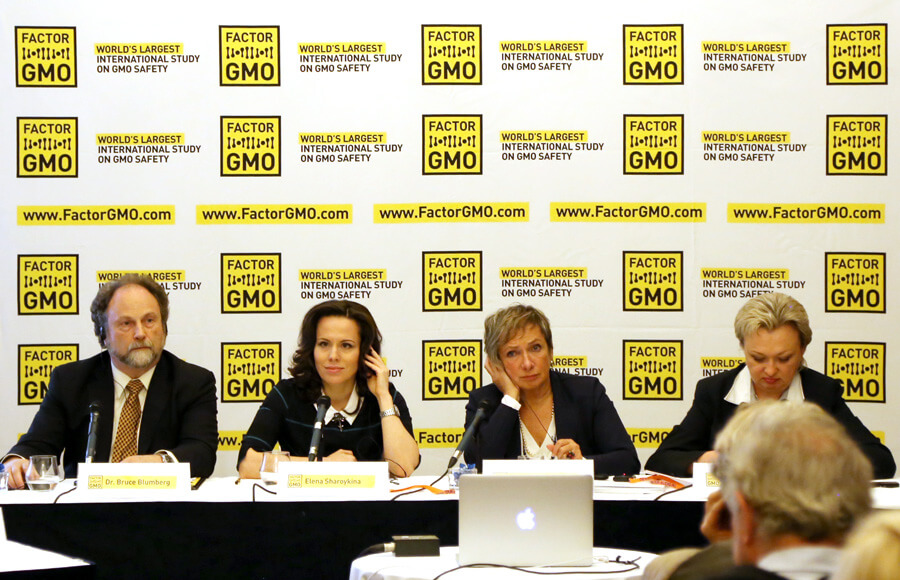
In late 2014, an obscure Russian group called a press conference in London to announce the launch of the “world’s largest international study” — a three-year, $25 million experiment of genetically modified organisms, or GMOs.
In the Factor GMO project, the panelists explained, thousands of rats would eat genetically modified corn that had been grown with Roundup, a controversial weed killer. Scientists would then watch the animals for three years, round the clock, to see if they developed cancer or fertility problems.
“We hope this will be the definitive study that will establish whether or not these chemicals and these GMO products are safe and effective,” Bruce Blumberg, a scientist at the University of California, Irvine, a longtime GMO critic and one of the three scientists originally on the project’s advisory board, told the crowd of reporters.
The event attracted wide news coverage in the British press, everyone from the Guardian to the Daily Mail. Then Blumberg flew home to California. And that’s the last he ever heard from the Russians.
“It is weird,” Blumberg told BuzzFeed News.
Now more than three years later, the Moscow-based Factor GMO is not answering emails from the press. Although the donation button is still active on its website, the effort hasn’t uttered a peep since 2015.
Health Canada is sticking with its proposal to phase out most outdoor and agricultural uses of a common pesticide, even though a recent study found bees are only affected by the substance in certain circumstances.
The recommendation comes the same day as more than 200 scientists published an open letter in the journal Science asking international governments to develop agreements to not use so-called neonicotinoids and to prevent similarly harmful pesticides to be developed and used in the future.
…
In 2016, [Canada’s Pest Management Regulatory Agency] concluded one of the neonics, imidacloprid was building up in the surface and ground water and causing widespread death among aquatic insects. Its interim recommendation then was to ban imidacloprid from most agricultural and outdoor uses entirely.
That study, however, didn’t look at the impact on bees and other pollinators. The regulator did a separate evaluation on that front and concluded neonics only affect bees in certain ways and that if their application was banned on the main crops which are attractive to bees, the risk is “acceptable.”
Nonetheless, the earlier recommendation for a ban will stand, an official with Health Canada said….
[T]he notion of genius as a capability a person can possess has come under attack recently in several ways. Megan Garber, writing in The Atlantic, criticized the excuses of bad behavior that so-called geniuses—specifically men—enjoy.
…
Yuval Sharon, artistic director of The Industry in Los Angeles, whose experimental operas have won widespread acclaim, shared his anxiety about winning a 2017 MacArthur Fellowship, notoriously called the “Genius Grant.” In an essay titled “Genius as Circumstance” in the Los Angeles Review of Books, Sharon writes, “Moments, ideas, a single poem in a collection—a work of genius, no matter how individually wrought—is never the product of a single individual. We should stop thinking of genius as an attribute and instead start to think of it as a condition, a circumstance.”
…
Jazz artist Vijay Iyer, another MacArthur fellow, is also uncomfortable with the conventional meaning of genius. In a Nautilus interview with Kevin Berger, Iyer says the label “genius” narrows our understanding of art and artists, and by extension, science and scientists.
…
“The location of genius is not in any particular individual’s mind, but in a virtual space, or system, where an individual interacts with a cultural domain and with a social field,” [psychologist Mihaly Csikszentmihalyi] wrote in his 2015 book, The Systems Model of Creativity. He suggests that genius, as a noun, has always been a sort of illusion.
So just how bad are the new federal regulations on labeling genetically engineered food?
I don’t think anyone is standing up and cheering The National Bioengineered Food Disclosure Standard (NBFDS), as it’s called, was supposed to replace a potentially expensive and confusing proliferation of statewide standards with a single national standard for labeling GMOs. It does that, or at least it will if it survives the inevitable court challenges it will face. But it also preserves all the muddle, gaps, and inconsistencies about GMO labeling that you might have hoped would be cleared up along the way.
…
In short, when you’re at the grocery store, and you see a package that says the product includes BE ingredients, or better yet, you see one of AMS’s adorable smiley-face BE logos, you’ll know there’s something that you would call a GMO inside. But if it doesn’t, you won’t know much of anything. Under the proposed rule, unlabeled products might contain GMO ingredients, or might not—it just depends.
…
I’m not sure we needed a GMO labeling program, but if we’re going to have one, surely we deserve something better than this.
Scientists have discovered a new link between alcohol, genes and heart health. They found a faulty gene may interact with alcohol to accelerate heart failure in some patients with the gene – even if they only drink moderate amounts of alcohol.
Their research looked at faulty versions of a gene called titin, which are carried by one in 100 people or 600,000 people in the UK. Titin is crucial for maintaining the elasticity of the heart muscle, and faulty versions are linked to a type of heart failure called dilated cardiomyopathy.
The team, made up of scientists from Imperial College London, Royal Brompton Hospital and MRC London Institute of Medical Sciences, analysed 141 patients with a type of heart failure called alcoholic cardiomyopathy (ACM).
…
They found 13.5% of the patients they analysed were found to carry the mutation – much higher than the proportion of people who carry it in the general population.
They said the results suggest the condition is not simply the result of alcohol poisoning, but arises from a genetic predisposition – and that other family members may be at risk too.
Study author Dr James Ware, from the National Heart and Lung Institute at Imperial College London, said: “Our research strongly suggests alcohol and genetics are interacting – and genetic predisposition and alcohol consumption can act together to lead to heart failure.
I am only wondering if those spreading the misinformation are currently following the recent “super” GMO technique referred to as Clusters of Regularly Interspaced Short Palindromic Repeats (CRISPR), which is being hailed and accepted worldwide. And will somebody go to court to stop CRISPR-modified crop varieties even though the whole world is effusively embracing them?
It is rather unfortunate that a lack of understanding of the scientific basis of GMO has resulted in a group of people taking the whole country hostage in their attempt to prevent a bill that commercializes Genetically-Modified (GM) varieties of corn and other crops.
The GMO debate has been raging for almost 40 years now but the fear-mongers are yet to pinpoint any definitive adverse effect on human and/or environmental health. The only argument from the naysayers is bundled in a cocoon of the future “unknowns”, which is not based on any empirical data.
…
While we are fighting GMOs in Ghana so as to continue with our 18th century crop production and farm practices, the scientific community is moving on with a more powerful form of Genetic Modification/Gene-editing techniques: CRISPR.
…
The sooner we move along with these biotechnological advancements the better will it be for our food security.
Editor’s note: Benjamin Senyo Bey has a PhD in plant biology
For health testing, I sent spit samples to 23andMe, Genos and Veritas Genetics, three companies that represent the various levels of DNA testing available to consumers.
…
For $199, 23andMe examines about 690,000 predetermined SNPs. That may sound like a lot, but it’s only 0.01 percent of the 6 billion DNA letters in the human genome. It’s the genetic equivalent of spot-checking a few letters in each chapter of War and Peace and trying to decipher the plot.
Pros
Explains results well
Cons
Examines a limited set of variants
…
Genos offers broader testing, for $499. It reads, or “sequences,” every letter in a person’s protein-producing genes. By deciphering this Cliffs Notes version of the genome, called the exome, Genos can theoretically find genetic changes that are unique to an individual, though the significance of these finds for health isn’t always clear.
Pros
Provides the most raw information
Cons
Provides little to no interpretation of findings
…
Veritas charged $999 to read nearly every letter in my genome, including portions in between genes that regulate gene activity and parts containing noncoding RNAs, which do a variety of cellular jobs. Those sections between genes are proving to be lush territory for discovering health risks.
Pros
Offers the most health information
Can find variants linked to gene regulation
Cons
Reports only the findings that the company considers medically relevant
The secrets of how malaria became a human-killer have been revealed by a genetic study. The work, led by researchers from Wellcome Sanger Institute in Cambridge, compared seven types of malaria – tracing the parasite’s family tree.
This revealed that, about 50,000 years ago, the parasites diverged, with one “branch” evolving into the most deadly human-infecting species.
…
One element of this diversion was a genetic switch that enabled malaria to infect human red blood cells – a “chunk of deadly DNA” that previous studies suggest could yet provide a target for a malaria-blocking vaccine.
…
The researchers examined seven different types of malaria – three that infect chimpanzees, three that infect gorillas and the deadly human-infecting species. Scientists discovered that the evolutionary lineage leading to Plasmodium falciparum emerged 50,000 years ago, but did not fully diverge as a human-specific parasite species until 3,000 to 4,000 years ago.
…
Prof Janet Hemingway, director of the Liverpool School of Tropical Medicine said the discovery was “really important” because it built a picture of how and when a disease crossed the species barrier, going on to become a deadly human disease.
…
“It does perhaps underline why it is so important that we react to current movement of animal parasites and viruses into humans and do not give them chance to become permanently transmitted from human to human.”
After two years of waiting, the USDA has finally published its proposed regulations to implement labeling of genetically modified crops.
…
There are a few things that I find very interesting, and even encouraging about the proposed rules.
First, the USDA has decided these foods will be called “bioengineered” instead of “GMOs.” Words matter and not only is bioengineered probably a more precise term, it also does not come with the negative connotations associated with “GMOs.”
…
Second, the use of a symbol to designate that a product contains GMO ingredients is also an important change. Wouldn’t it be great if the USDA created a label that cast bioengineered foods in a positive light? Maybe they could come up with something that represents the environmental benefits for these crops? Friends, that is exactly what they did!
…
If I had to choose just one, I would probably pick the smiling sun. At the end of the day, genetically modified crops are green crops and the symbol representing them should express it.
…
Fundamentally, I still believe such a labeling requirement is obnoxious and unnecessary. That being said, if such a law is going to exist, this is definitely the right way to do it.
James Priest couldn’t make sense of it. He was examining the DNA of a desperately ill baby, searching for a genetic mutation that threatened to stop her heart. But the results looked as if they had come from two different infants. “I was just flabbergasted,” said Dr. Priest.
…
[Astrea Li], it turned out, carried a mixture of genetically distinct cells, a condition known as mosaicism. Some of her cells carried the deadly mutation, but others did not.
…
[O]ver the course of decades, it has become clear that the genome doesn’t just vary from person to person. It also varies from cell to cell. The condition is not uncommon: We are all mosaics.
…
When a fertilized egg — known as a zygote — starts dividing in the womb, many of its early descendant cells end up with the wrong number of chromosomes. Some are accidentally duplicated, and others lost. Most of these unbalanced cells divide only slowly or die off altogether, while the normal cells multiply far faster. But a surprising number of embryos survive with some variety in their chromosomes.
…
Astrea underwent transplantation surgery and recovered well enough to go home. She went on to enjoy a normal childhood.
…
The experience left Dr. Priest wondering how many more people might be at risk from a hidden mix of mutations.
The poorer a state, the less are the chances of its farmers adopting high-yielding seed technology, right? Well, not when it comes to hybrid rice at least.
Out of the country’s total estimated area of 65.8 lakh acres (26.6 lakh hectares) under hybrid paddy — the un-milled grain containing roughly two-thirds rice and one-third husk and bran — nearly 83% is accounted for by Uttar Pradesh, Bihar, Jharkhand, Chhattisgarh, Madhya Pradesh and Odisha. These are states, whose farmers aren’t as well-off as their counterparts in Northwestern and Southern India, and crop yields well below even that of West Bengal (India’s No. 1 rice producer).
What accounts for this seeming paradox — of relatively poorer farmers taking to planting of hybrids, as opposed to conventional open-pollinated varieties (OPV)?
Hybrids are produced by crossing genetically diverse plants even within the same species. The first-generation or F1 offspring from such crosses tend to have yields higher than what either of the parents (both OPVs) individually can give. Unlike OPVs, though, the grains from hybrids aren’t suited for saving and re-use as seed by farmers. The resultant plants will not have the same hybrid vigour as the F1 offspring. Farmers will, hence, plant hybrid seeds — which, have to be purchased each time — only if the grain yields from them are substantially higher over OPVs.
One of the things that makes us human is how we socialize with one another. What drives our social behavior is a complex mix of genes, epigenetics, and external factors such as how or where a person is raised.
Williams syndrome is a genetic disorder that results in a particularly striking departure from what is considered normal behavior: people with it are hypersocial, extremely empathetic, and indiscernibly friendly towards strangers, especially as children – sometimes to the detriment of their own safety. Scientists have been able to pinpoint that the disorder, which affects 1 in 20,000 to 1 in 7,500 people, results from a deletion of 26 to 28 genes. In recent years, they’ve begun using Williams syndrome to study the influence of this select group of genes on our social behaviors.
Genetic manipulations in mice are frequently used as a tool in neuroscience to uncover the function of genes and their alterations. But single-gene ‘knock-out’ mice, in which a specific gene is lost, haven’t really been able to show the role individual genes play in Williams syndrome. This is largely because the mutations in these genes don’t actually mirror the gene networks responsible for the characteristics that present in people with the disorder. Imagine the Royal Philharmonic Orchestra performing Tchaikovsky’s “Symphony No. 4″ with just the string players missing – it might sound a bit off, but you’d probably still be able to make out the tune. If the woodwinds and the piano – two classes of instruments that also play a central role in the symphony – were missing too, the tune would be completely lost.
Unlike the diseases I study, for which a single gene is responsible, working out how a collection of 26 to 28 genes interact with external factors to shape social behavior is a lot more challenging.
Williams Syndrome Image credit: Embraceablemovie.com,Kent Creative
In 2009, years after the first 25 Williams syndrome-causing genes were identified, a group of scientists decided to functionally pick apart the gene deletions that cause Williams syndrome by creating three different types of mouse models – two missing one copy of a different portion of the 25 implicated genes and a third mouse model lacking all 25 genes like in the human disease.
All three mice were able to replicate crucial aspects of the human Williams disorder, including increased sociability, to varying degrees.
To explore the involvement of the two groups of genes in social disinhibition, a variety of social interaction tests were carried out in these mice. For example, in the partition test where a clear plastic wall is placed between cages that contain holes and the behavior and level of interest towards either a novel or familiar mouse on the other side is scored, all three deletion mice spent significantly more time close to the new mouse compared to normal mice.
This suggested that multiple genes within the whole deletion region give rise to this behavior. However, for the tube test, where two mice meet in a narrow tube and the dominant one makes the other reverse, the full-deletion mice and only the mice that were missing the first portion of the 25 genes frequently lost to the normal mouse.
Although mouse studies are clearly very helpful, providing a powerful way to study the effects of individual and combinatorial gene disruption, mice are genetically different from us and therefore do not perfectly represent our genetic landscape. To make things more complicated, this landscape is highly diverse between individuals.
Stem cells derived from real patients with complex neurodevelopmental disorders such as schizophrenia can be turned into 2D and 3D cell structures and studied in a dish. Unlike mouse models, patient-derived stem cell models allow us to investigate the true, rather than similar, cellular effects of our genes.
In the last few years, this strategy has been used by a number of research groups working on Williams syndrome to create brain cells that essentially have the human disorder, with their findings being published in Nature.
The gene GTF2I has been studied in numerous patient-derived cellular models, revealing multiple functions. GTF2I is a transcription factor – a protein that controls how genetic information is expressed from DNA – and has been shown to play a key regulatory role by directly controlling other genes in the deletion region. Different cell lineages have been created, including the precursors of the telencephalon (telencephalic neural progenitor cells), the seat of all higher brain functions, and neural crest stem cells from which our facial structures derive. By studying these different brain cell types, scientists discovered that GTF2I is particularly bad at carrying out its job of controlling other genes in cells like the ones just described. As might be expected, these pathways are relevant to some of the characteristics associated with Williams syndrome.
These factors influence not just the social aspects of the disorder, but the physical characteristics associated with it as well. People with Williams syndrome have a striking set of facial features, traditionally described as “elfin,” with an upturned nose, high cheekbones, big smiles, and pointy chins. Taken together, it is not so surprising that some folklorists speculate that real people with Williams syndrome may have inspired many fictional works throughout history, such as William Shakespeare’s Puck in A Midsummer Night’s Dream.
So what has studying Williams syndrome taught us about normal social behavior? Disease-causing genes that have been linked to particular traits of those with the disorder can offer clues for us to better understand variations in behavior within the general population. Differences in our DNA don’t always cause disease. In fact, they are quite normal. These DNA “polymorphisms” can be single changes, deletions, or insertions or changes in the number of nucleotides, the building blocks that make up our DNA. Such polymorphisms can give rise to differences in certain human behaviors, and this is where Williams syndrome comes in.
‘Social’ genes
Through studying its multigenetic basis, Williams syndrome has helped us to identify which genes have an impact on our social behavior. For example, common polymorphisms in the gene GTF2I, found in the Williams syndrome deletion area, are associated with reduced anxiety in the general population and warmth, a facet of extraversion, in women. Offering a functional basis for variations in this gene, these polymorphisms have been specifically linked to reduced amygdala reactivity, a brain region involved in fear responses.
Williams syndrome hasn’t only helped us to understand our own social behavior, but also that of other species. Have you ever wondered why a dog is more likely to lick your face and wolf more likely to bite it off? Giving new meaning to the phrase “man’s best friend,” a study into the genetic basis of the various characteristics associated with domestication of dogs has found that our friendly canine pals have a genetic deletion in the equivalent genomic region linked to Williams syndrome in humans. They found that hypersociability, a key characteristic of the disorder, is a fundamental element of domestication that distinguishes dogs from wolves. Remarkably, they have also been able to identify structural variants in GTF2I and GTF2IRD1 that they propose contribute to extreme sociability in dogs, highlighting the conservation of these genes and their associated behavior between man and his best friend.
There are many rare diseases that go unnoticed. While often devastating for the people who live with them, they can seem irrelevant to everyone else because what leads to them is so hard to relate to. Hopefully though, what Williams syndrome can reveal about the way we interact with each other will encourages us to look a little closer at other rare and mysterious diseases and ask what they might teach us.
Yewande Pearse is a research fellow based at LA Biomed, in affiliation with the University of California, Los Angeles. She completed her PhD in Neuroscience at the Institute of Psychiatry in 2016. She is working on stem cell gene therapy using CRISPR-Cas9 to treat Sanfilippo Syndrome. She also has worked in the areas of stroke and huntington’s disease research. Follow her on Twitter @yewandepearse.
Law enforcement and genetic genealogists didn’t waste any time after public DNA databases led to the Golden State Killer suspect… A forensics company announced a service to do this analysis en masse, and the DNA database GEDmatch has already changed its privacy policy to allow for its use by law enforcement. Remember, even if you’re not in these databases, your cousins probably are.
A hundred samples in a month is nothing. If this technique works, it seems likely to become routine for police departments across the country.
…
On the one hand, it’s pretty cool that murderers and rapists can be brought to justice, and families can get closure on their missing loved ones. On the other, I never agreed to put my DNA in a law enforcement database—but now snippets of it are probably already there thanks to third or fourth or fifth cousins who had no idea their Ancestry file would ever be used this way.
In pig production, inefficient feed digestion causes excessive nutrients such as phosphorus and nitrogen to be released to the environment. To address the issue of environmental emissions, we established transgenic pigs harboring a single-copy quad-cistronic transgene and simultaneously expressing three microbial enzymes, β-glucanase, xylanase, and phytase in the salivary glands. All the transgenic enzymes were successfully expressed, and the digestion of non-starch polysaccharides (NSPs) and phytate in the feedstuff was enhanced.
Fecal nitrogen and phosphorus outputs in the transgenic pigs were reduced by 23.2–45.8%, and growth rate improved by 23.0% (gilts) and 24.4% (boars) compared with that of age-matched wild-type littermates under the same dietary treatment. The transgenic pigs showed an 11.5–14.5% improvement in feed conversion rate compared with the wild-type pigs.
These findings indicate that the transgenic pigs are promising resources for improving feed efficiency and reducing environmental impact.
…
This genetic strategy offers a very valuable biological solution for inefficient feed digestion and environmental emissions due to the global expansion of the livestock industry.
Christopher Barbey, a UF doctoral student, researches strawberry genetics at UF with his research partner in a lab with no name on its door.
His partner, Kevin Folta, used to display his name, but he took it down years ago when he began receiving death threats because of some of his more controversial research.
In a Facebook post Tuesday night, Folta, a professor and the former chairman of the horticultural sciences department at UF, said damaging attacks from activist groups caused him to resign from his chairman position.
In his resignation email … he said his decision is also for personal reasons, which he later explained as a difficult divorce.
…
[H]is colleagues hail him as a worldwide influence. Barbey said Folta is the reason he came to UF from Idaho for graduate school.
“I followed Kevin online because he is a huge champion for people who have a pro-science attitude toward genetic engineering and what it can do,” Barbey said.
Folta said [activist group GMWatch] has targeted him for years because he is a scientist, calling them a hate group that harrasses him, his mother and his ex-wife. The group has also targeted scientists working on vaccines and climate change, he said.
The sun’s ultraviolet (UV) radiation is a major cause of skin cancer, but it offers some health benefits too, such as boosting production of essential vitamin D and improving mood. [May 17] a report in Cell adds enhanced learning and memory to UV’s unexpected benefits.
Researchers have discovered that, in mice, exposure to UV light activates a molecular pathway that increases production of the brain chemical glutamate.
….
“The authors make an interesting observation linking moderate UV exposure to . . . [production of] the molecule urocanic acid. They hypothesize that this molecule enters the brain, activates glutaminergic neurons through glutamate release, and that memory and learning are increased,” [said scientist Martin Steinhoff].
While the work is “fascinating, very meticulous, and extremely detailed,” says dermatologist David Fisher of Massachusetts General Hospital and Harvard Medical School, “it does not imply that UV is actually good for you. . . . Across the board, for humanity, UV really is dangerous.”
…
Whether the results obtained in mice, which are nocturnal and rarely see the sun, will hold true in humans is yet to be determined. But, Fisher says, if the results do hold, the finding that urocanic acid alone can enhance learning and memory might suggest “a way to utilize this information to benefit people without exposing them to the damaging effects of UV.”