Gene editing is touted as a promising new way of altering the DNA of plants or animals to speed their growth, enhance flavor, extend shelf life or combat viruses. But those who see it as a key component of agriculture’s future want to make sure that the regulations written for it do not stifle its promise.
…
New methods such as CRISPR may allow plant breeders to avoid the regulatory bottlenecks.
…
All of the gene-edited products APHIS has reviewed thus far under its “Am I Regulated” process have received “no” answers – including a non-browning mushroom developed at Penn State using CRISPR/Cas9.
But that’s not the case for gene-edited animal products.
For now, the Food and Drug Administration (FDA) defines all intentionally altered genomic DNA as a new animal drug, irrespective of how or why they were changed. For example, firms that use gene editing to develop pigs with PRRS resistance, would have to go through FDA’s process for evaluating a drug.
“It’s a nonsensical position,” says Alison Van Eenennaam, a cooperative extension specialist in animal genomics and biotechnology at the University of California-Davis who has conducted extensive research on gene editing with cattle.
“Regulatory processes should be proportional to risk and consistent across products that have equivalent levels of risk,” she explained.
For years, the World Anti-Doping Agency has considered requiring all Olympic athletes to submit copies of their genetic code. It would work as a check on so-called “gene doping,” the idea of changing the body’s biological machinery to make it stronger, run faster, or recover more quickly. A clean slate would reveal any nefarious performance-boosting tweaks—like, theoretically, altering the expression of fast-twitch muscle genes to engineer a perfect sprinter.
Establishing a genetic baseline for every professional athlete has long been cost-prohibitive—especially if it calls for a full genome sequence. But on February 5, the proposal is being seriously discussed for the first time at WADA’s headquarters in Montreal. As the cost of sequencing a person’s entire genome drops to only a few hundred dollars, the agency could implement the plan within the next few years.
…
[G]ene-editing techniques could be use to insert genes that regulate blood-oxygen levels, for example, which are critical for endurance athletes, or genes that regulate removal of lactic acid after a hard effort.
…
As the WADA panel discusses whether it makes sense to require genome sequences in whole or in part, they’ll also tackle issues of genetic privacy. If an athlete submits their sequence, the people who get to see that information will likely be debated by athletes, coaches and sports officials.
Glyphosate is rarely used on its own in the field. Herbicide formulations as a whole include a variety of other chemicals, such as surfactants to help glyphosate enter plant cells, and other additives that extend the product’s shelf life. This spurred [Deborah Kurrasch, a neuroscientist at the University of Calgary] to compare the effects of glyphosate alone to the effects of Roundup (containing the same glyphosate concentration) in zebrafish. Remarkably, she found Roundup had the opposite effect as glyphosate by itself: The fish moved more, and basal respiration was higher.
…
In a study published in January, Kurrasch found that in C. elegans worms, exposure to Touchdown [Syngenta’s glyphosate-containing herbicide] could increase the activity of specific reactive oxygen species—which cause oxidative stress—and also mitochondrial inhibition. The worms also showed neurodegeneration in both dopaminergic and GABAergic neurons. This was at concentrations at which occupational agricultural and pesticide workers would routinely be exposed to….
…
William Reeves, Chemistry Safety and Outreach Lead at Monsanto, is not surprised about the results of such studies. The surfactants used in Roundup are similar to those used in regular household products, he explains, which cause membrane degradation and subsequent mitochondrial breakdown in high doses. “You would see the same thing with dish detergent, you would see it with hand soap,” he tells The Scientist.
He says that concentrations of glyphosate and Roundup generally applied in previous studies greatly exceeded those that would be normally found in real-world environments.
…
[Vanessa Fitsanakis, a neurotoxicologist at Northeast Ohio Medical University] adds that based on the data she has seen, “the amount that we could be ingesting with food is relatively small,” especially considering that the majority of glyphosate is used on field crops that we don’t eat directly, she explains. Farmworkers’ occupational exposure to the pesticide, and the adjuvants it is used with, is what concerns her most.
Before Cheryl Connolly gave birth to her first child, Loudon, she ran through the checklist of all the things expecting parents are supposed to do these days:
Create a birth plan.
Consent to the newborn heel prick test for metabolic diseases.
Bank his umbilical cord blood.
But now, she learned, there was a new one to consider: Sequence his DNA.
Connolly knew of an ongoing genomics research study called MyCode, which would make it possible for his doctor to take a sample from Loudon’s umbilical cord and send it to a lab that would look for mutations in his genetic code.
..
On the one hand, you might learn valuable information—like whether your child has the gene for dangerously high cholesterol, a treatable condition called familial hypercholesterolemia.
…
On the other hand, you could also discover something terrifying that you’re helpless to prevent. A growing number of labs and apps will reveal a child’s potential to develop certain cancers or incurable diseases, such as Parkinson’s and Alzheimer’s, that wouldn’t appear until your child was grown—if at all.
…
[E]xperts aren’t convinced that the potential usefulness of such information is worth saddling a child with an unwanted medical identity—and their parents with unnecessary angst.
The CRISPR-Cas9 gene-editing technique is an important concept to know about in these days of biotech advances, but it can be pretty difficult to visualize properly. Is it really like molecular scissors? Where does the DNA go? Is it a big molecule or a small one? Fortunately a group has created a 3D animation of the process that shows it at the molecular level.
You can watch the animation, created by biologists at Russia’s Skoltech Institute and the Visual Science organization, below or at the latter’s website:
Wonder how accurate it really is? It got the thumbs-up from none other than Jennifer Doudna, one of the people who helped discover and refine CRISPR techniques:
Molecular animations are an essential way to demystify and explain complex biological systems. Through the use of stunning imagery and attention to detail, Visual Science and Skoltech have captured the dynamic mechanisms of CRISPR-Cas proteins and their use as research tools.
Some Chinese buyers have canceled corn purchases from the United States and switched to rival supplier Ukraine, as Beijing tightens controls on processing genetically modified strains of the crop, three trade sources and an analyst told Reuters.
Any prolonged shift by one of the world’s top corn importers would unnerve U.S. farmers as they prepare to harvest a bumper crop this year and could potentially mark a new front in trade tensions festering between China and the United States.
Chinese buyers late last year stepped up purchases of U.S. corn, which is mostly genetically modified, following a rally in domestic prices.
But the sources said it had become tougher for Chinese grain mills to get permits to process genetically modified corn this year, forcing some traders that supply them to instead turn to non-GMO shipments from Ukraine.
…
It was unclear how many shipments had been affected, but one of the sources, a senior trader in Beijing, said up to four cargoes totaling about 210,000 tonnes and worth about $40 million based on current prices had been canceled last month as end-users had not received permits to process GMO crops.
Are you white and a little resentful that black people get their own cool disease, sickle cell anemia? There is good news for you. Celiac disease is all the latest rage and you can be any color at all and claim it.
How do you know if you are gluten intolerant? Elaborate assays? DNA? At least a blood sample? Nope, you just have to give up wheat and say you feel better and you are allowed to claim you have it. And proponents have even scarier numbers – they claim 97 percent of the people who have Celiac disease don’t know they have it, so their ranks are really much bigger.
Unfortunately, some people really do have Celiac disease, an actual immune disorder – gluten is like poison to them, not an “I feel better if I don’t eat a bagel” issue. Those sufferers are not the laughable one percent suddenly claiming they have Celiac disease, though. Maybe fashion disease people grew up in the 1990s when teachers wanted all kids to be labeled ADD, or they are the types who go to parties today and determine 80 percent of other party-goers have Asperger’s. They are used to having something. They need it.
But for the real Celiac victims, there is good news, thanks to the fashion trend kind; due to the surge in gluten “sensitivity,” there are lots and lots of new products on the market to take your money. No surprise, since “Wheat Belly” was a New York Times bestseller. Even Lady Gaga is on the bandwagon, claiming she is going gluten-free in order to lose some weight, despite there being no scientific evidence that going gluten-free causes weight loss, other than any sudden shock to your system causes weight loss – if Lady Gaga went on an all Meat Dress diet she would also lose weight. Heck, some studies even show that if you burn more calories than you consume, you will lose weight. Modern dietary science is downright revolutionary like that.
But Lady Gaga is a rich, white girl so Celiac disease is the perfect self-diagnosis to make in 2012.
When I was younger, no restaurants had gluten-free options and gluten-free products were also hard to find in stores. I mean, wheat has been in bread for thousands of years and we have done okay. Not now, people have really changed a generation after I graduated college. Who says human evolution has stopped? Well, maybe it hasn’t stopped, maybe Americans are just evolving differently. Social scientists want to believe, during an election year, that our brains are actually evolving differently for Republicans and Democrats, as an example. A biology study by political scientists published in Trends In Genetics says they can map 60 percent of political affiliation to the genome. Might it be that there is also a new, left-right biology correlation to food and other diseases?
So it would seem, at least according to trends about other beliefs. Along with believing more in UFOs, psychics and astrology than right-wing people, left-wing people also believe they are hyper-sensitive to food. That could be genetic and may lend credence to often-dismissed kooky claims that they can taste GMOs or are allergic to them. Same with vaccines. Anti-vaccine people are overwhelmingly left-wing; while a right-wing state such as Mississippi is almost at 100 percent vaccination, left-wing Washington State is sinking below herd immunity levels and kindergartens in Seattle report 25 percent non-vaccinated children. Maybe they don’t need vaccines the way genetically inferior right-wing people do. It could be that left-wing people have co-evolved a much stronger immune system to go along with their super-smart brains. Well, except for celiac disease, they have a super-strong immune system.
No rash. She must be a Republican. Credit: Shutterstock.com
What do non-scientists out in the real world feel about the disease trend? A chef on Straight Dope noted:
How about a chef’s perspective? I do banquets for conventions and other large groups, and for the five years I’ve been doing this kind of work (been in foodservice for 27 years, but 5 in banquets/conventions), I’ve seen definite patterns.
Groups that skew toward membership with higher education levels and, usually, a more “liberal” or “left-leaning” tendency (environmental groups, women’s groups, advocacy groups, Democrat Party fundraisers, any group where the women far outnumber the men, etc.) tend to have a much higher percentage of members with “special” dietary needs, including gluten-free, all manner of allergies, vegans/vegetarians, lactose-intolerant, etc., while lesser-educated, more conservative types of groups and groups with more men than women tend to cheerfully eat whatever the hell we put in front of them.
No real shock there. By itself, that is not evidence, but the people most inclined to have a “natural” fetish tend to invent reasons to justify it, and they can afford it. Faux Celiac disease is for the agricultural 1 percent – if you can buy organic food, you can afford gluten-free too.
Hopefully more companies catch on to this public health crisis but some seem to be showing real leadership on the issue. Chipotle’s must be in a panic, I thought, because that is where the demographic mostly likely to have trendy Celiac disease go for authentic Mexican food. Nope, they are already aware. Most of their menu is available gluten-free.
I’m tempted to go gluten-free myself. I am educated, I live in California, I assume I am supposed to be gluten-intolerant like an alarming chunk of middle class white women here are. Plus, I wouldn’t want to miss out on this health boost the way I missed out on the other big dietary trends that promised to save America, like the Tapeworm Diet or the Macrobiotic Diet or that All Booze Diet.
We all remember how those made us thin and healthy.
Hank Campbell is president of the American Council on Science and Health, founder of Science 2.0 and co-author of the book Science Left Behind. Follow him on Twitter @HankCampbell.
A version of this article was originally published on Science 2.0’s website as “Celiac: The Trendy Disease For Rich White People” and has been republished here with permission from the author.
Editor’s note: This article is part three of a three-part series by Marc Brazeau on his 2018 predictions on food, farming and GMOs. Read part one and part two.
2017 brought numerous instances of fissures and fault lines in the various coalitions that mostly work together to maintain the status quo in the food system.
Farmer groups are allied with both the input companies – from John Deere to BASF to Monsanto – as well as the meat processing and commodity companies – Tyson, Smithfield, ADM, Cargill against consumer and environmental groups. On some issues, I think the agvocates are right and consumer and environmental groups are wrong, but in general, I think the positioning of farmers in opposition to environmentalism and consumer demands for transparency, animal welfare, and sustainable production put farmers in an increasingly isolated position. Their superior political organization coupled with the outsized political representation of rural voters can only outrun increased interest in what we eat and where it comes from for so long.
Click image to enlarge
Examples from 2017
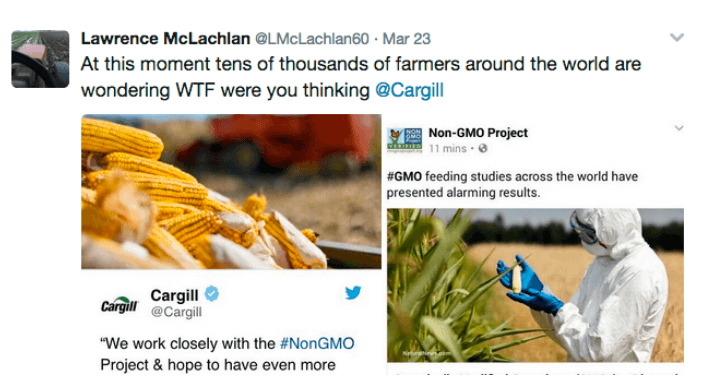
#CARGILLGATE: Cargill partners with the Non GMO Project, Ag Twitter explodes.
The freakout on Ag Twitter when the commodity broker Cargill signed an agreement with the Non-GMO Project to certify their non-GMO commodities was significant and dissonant enough that I managed to slough off this year’s writer’s block enough to write something about it:
So when Cargill touted their existing relationship with the Non GMO Project on Twitter, all hell broke loose. Especially on Ag Twitter.
I could see why farmers would be annoyed that Cargill would partner with an organization that routinely throws the average American farm under the bus. On the other hand, I can see why Cargill would partner with a non-GMO certifier that has greater brand equity and might be able to deliver a larger niche price premium than more technocratic industry third party certification services.
What surprised me was the depth of the anger and sense of betrayal. What Cargill was doing was a pretty straightforward business decision aimed at fattening the bottom line, one that might even deliver better bushel prices to farmers selling into that market. As farmers are apt to tell anyone that has suggestions on how they might do farming better, at the end of the day, it’s the bottom line that keeps the lights on. There are a few reasons I think we saw such a highly agitated response to a rational business decision by privately held, profit maximizing firm.
The first and most obvious to me is the sense of betrayal at a firm whom farmers see as a coalition partner. The ag producer community sees itself in a coalition with the big ag input companies (Monsanto, Syngenta, John Deere, etc), the big middlemen (Cargill, ADM, Tyson, etc); and the big food processors (General Mills, Proctor and Gamble, etc) against consumer and environmental groups. The big firms fund a lot of agricultural advocacy and they are lobbying partners on various pieces of legislation relating to GMO labeling, animal welfare standards, environmental protections. The partnership of Cargill with the Non GMO Project violates the shared priorities in this coalition in a fundamental way.
This is all the more striking against the backdrop of nearly complete apathy in the ag producer community to any interest in market concentration or antitrust concerns. While farmers became grievously exorcised about Cargill partnering with the wrong third party certifier of non-biotech crops, concerns about market concentration sapping their bargaining power as price takers in the commodity markets mostly generates yawns outside of press releases and congressional testimony from the head of the National Farmers Union.
Monsanto’s Dicamba Debacle: The Empire Strikes Back
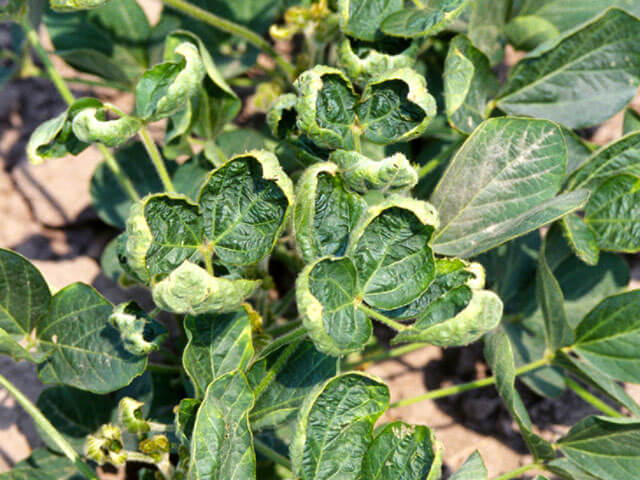
In 2016, Monsanto released a new line of soybeans resistant to the herbicide dicamba ahead of the EPA’s approval of the new formulations of dicamba designed to pair with the soybeans. This did not turn out well. Too many farmers facing another year of trying to deal with glyphosate-resistant to pigweed decided the roll the dice and use older formulations of dicamba with the new soybeans. Those formulations are not approved for use on or near soybeans which are very vulnerable to dicamba. The dicamba can volatilize and drift for miles to other fields and inflict serious crop damage. Which is what happened across tens of thousands of acres of soybeans in Arkansas, Tennessee, and Missouri. This caused serious issues between neighboring farmers, to the point where one farmer shot his neighbor when confronted about damage from drift.
Soybean plants damaged by dicamba herbicide drift
Monsanto put the blame squarely on farmers. And while in each individual case, the farmers were clearly responsible, the overall problem had a foregone certainty to it that made it hard not to expect a little more from Monsanto than finger pointing.
Then in 2017, Monsanto and BASF’s new dicamba formulations were approved for use on soybeans despite misgivings from land-grant university weed scientists who felt they hadn’t been properly tested and could still have drift issues. Which they did – across an estimated 3.1 million acres this time. This time around, Monsanto asserted that the issues were human error again and nothing that couldn’t be solved with more education on proper application. Local weed scientists weren’t so sure. They thought that there were still serious volatility and drift issues. State regulators started looking at banning dicamba. Monsanto and the farming community started pushing back on the researchers. NPR’s Dan Charles filed an extensive report. (In fact, his reporting on the issue has been first-rate.)
“If this were any other product, I feel like it would be just pulled off the market, and we’d be done with it,” Bob Scott, a weed scientist at the University of Arkansas says.
But dicamba, and the crops created to tolerate it, aren’t just any products. There is big money behind them. Monsanto, seed dealers, farmers who are struggling with weed problems — they all have a stake in this technology. The university scientists who are pointing out problems with them are confronting an economic juggernaut.
Monsanto — and farmers who want to use dicamba — have been fighting back. In Arkansas, where state regulators proposed a ban on dicamba during the growing season next year, Monsanto recently sued the regulators, arguing that the ban was based on “unsubstantiated theories regarding product volatility that are contradicted by science.” The company called on regulators to disregard information from Jason Norsworthy, one of the University of Arkansas’ weed researchers, because he had recommended that farmers use a non-dicamba alternative from a rival company. Monsanto also attacked the objectivity of Ford Baldwin, a former university weed scientist who now works as a consultant to farmers and herbicide companies.
“I read it as an attack on all of us, and anybody who dares to [gather] outside data,” Scott says. “And some of my fellow weed scientists read it that way as well.”
Bradley says executives from Monsanto have made repeated calls to his supervisors. “What the exact nature of those calls [was], I’m not real sure,” Bradley says. “But I’m pretty sure it has something to do with not being happy with what I’m saying.”
I contacted three academic deans at the University of Missouri, asking for details about the calls. A university spokesman said they were too busy to respond.
Monsanto’s Partridge says, “We are not attacking Dr. Bradley. We respect him, his position, opinion, and his work. We respect him, and academics in general.”
Bradley says criticism from people in Missouri’s farming community whom he has known for years hits him even harder. “To have somebody say that what [I’m] saying is bad for Missouri agriculture, that’s a hard one to take,” he says. “There’s not a lot of glory in these positions, or major financial incentive. We chose these jobs to help the farmers in our states.”
Academic weed scientists are supportive of farmers through their research and extension work, that’s the mission of ag departments in land-grant universities. They are often funded in part by the big seed and chemical companies. But they also tend to be committed environmentalists. Part of their mission is also advising state regulators the best they can. In this case, those goals and alliances were at cross-purposes in very uncomfortable ways.
Missouri is requiring special training for dicamba applicators above and beyond their general certification. Two weeks ago, a legislative panel in Arkansas gave backing to a ban called for by the State Plant Board. There is legislative pressure in Illinois for a ban as well.
Trouble at the GMA
Meanwhile the coalition of major food processors like Coca-Cola, PepsiCo, General Mills, et. al, with their suppliers, again ADM and Cargill along with ag groups like the Corn Growers Association has been fighting a rearguard battle against consumer demands for transparency and public health advocates demands for nutritional labeling and more nutritious formulations of processed food, mostly reductions in sugar. Some companies are ready to throw in the towel and give consumers what they want. Others have acquired smaller brands that were already meeting those consumer’s needs and don’t see any upside having their parent company pouring millions of dollars into fighting against the corporate missions of the smaller brands they just spent tens, if not hundreds of millions of dollars acquiring.
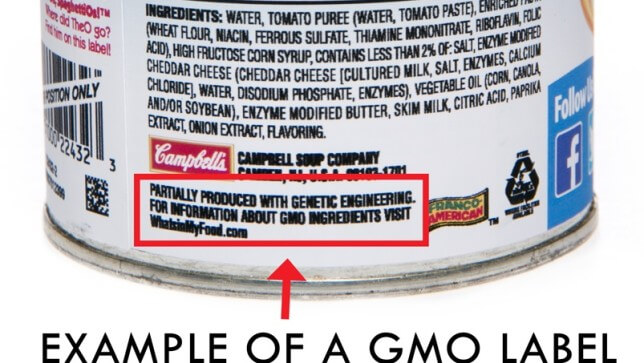
The cracks in the coalition became clear in July of 2017, when Campbell’s announced they were pulling out of the Grocery Manufacturing Association (GMA). Unlike companies which have followed, they were publicly explicit about their reasons. They had opposed the GMA’s role in passing the SAFE Act of 2015 which made provisions for voluntary GMO labeling, but foreclosed a national mandatory label. In 2016, Campbell’s became the first major food company to provide voluntary GMO labeling on their products.
They also plan to comply with the FDA’s new nutrition labeling guidelines new nutrition facts panel by the original July 2018 deadline, even though the deadline has since been pushed back. Meanwhile, the GMA had lobbied against the new guidelines and applauded pushing back the deadline, stating that compliance would be virtually impossible.
Then in October, Politico reported that Nestlé was leaving as well and for similar reasons.
Nestlé has been at odds with the trade association on some of the most high-profile food issues in Washington in recent years. During the Obama administration, Nestlé was among a handful of companies that backed Obama administration effort to mandate added sugars labeling and encourage food companies to cut back on sodium voluntarily — two policies that GMA lobbied against.
Nestlé also helped push GMA to submit split comments on added sugars labeling to the FDA, so the association essentially included the pros and the cons of the policy rather than presenting a unified front opposing the idea. At the time, no one could recall a time when GMA had ever submitted such divergent comments on such a major — and controversial — regulatory issue.
Later in October, Campbell’s announced they were joining the Plant Based Food Association (causing heads to explode across the ag coalition, one imagines).
In December, the GMA was rocked again as Tyson and Unilever left, following defections by Mars and Dean Foods. Then last month, Cargill and Hershey cut ties as well.
Fault lines in the Big Organic house as well
Competing visions and interests aren’t just isolated to conventional producers and the major legacies brands. There is tension between the frenemies of the Non-GMO Project and certified organic. While most organic grocery products have ponied up to the Non-GMO Project, they also fear that the Non-GMO Project is cannibalizing organic sales, as many consumers don’t have a clear idea what the labels represent, they just want a label, any label that signals a “better” product.
Murray’s Chicken, a company based in New York, recently announced that it was now “offering ‘better-for-you’ non-GMO chicken without the organic price tag.” In a Whole Foods Market that I recently visited, the store had posted a sign explaining that organic eggs were out of stock, but that “during this shortage, we have expanded our selection of Non-GMO Project Certified eggs to provide you with high-quality alternatives.”
David Bruce, director of eggs, meat, produce and soy for Organic Valley, a major organic food company, says the non-GMO labels “definitely” are diverting some consumers away from organic food. “We call it trading down,” he says.
But the biggest break was also due to where the parties came down on the SAFE Act (aka the DARK Act) and mandatory labels.
When the major players in the organic marketing space decided on detente with the GMA and company on mandatory labels and backed the passage of the SAFE Act, the organic grassroots went bananas.
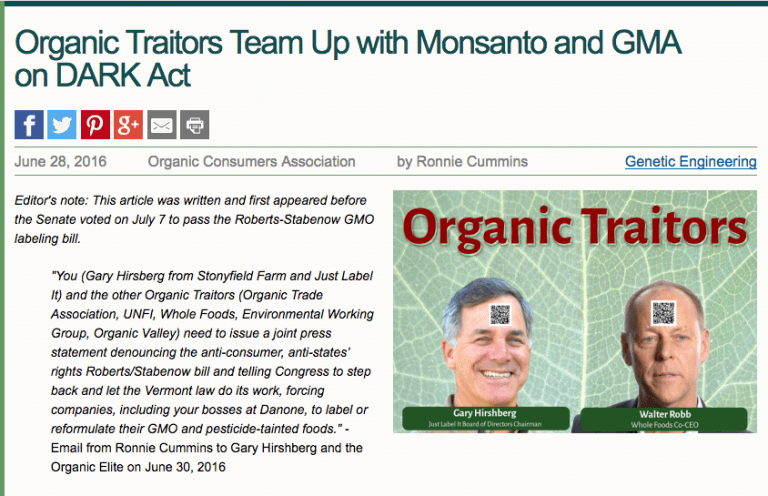
The growing list of Organic Traitors includes the head of Whole Foods Market, Walter Robb; Gary Hirschberg, the CEO of Stonyfield Farm and the pseudo-pro GMO labeling group Just Label It; the Environmental Working Group, represented by Scott Faber, former head lobbyist for the pro-biotech Grocery Manufacturers Association; UNFI, the largest wholesaler of natural and organic foods; and the OTA, led by “natural” brands such as Smuckers and White Wave, and represented by their Board Chair Melissa Hughes from Organic Valley.
These self-selected “Good Food” and “Organic” leaders have been telling Congress behind closed doors—and now publicly—that they and the organic community will accept an industry-crafted DARK Act “compromise”—the Stabenow/Roberts bill— that eliminates mandatory GMO labeling and preempts the Vermont law with a convoluted and deceptive federal regime for QR codes and 1-800 numbers that is completely voluntary, with no firm guidelines for implementation, and no provisions whatsoever for enforcement. Perhaps even more outrageous, the legal definition of “bioengineered” foods under the new DARK Act means that 95 percent of the current GMO-tainted foods on the market, including foods made from Roundup-resistant and BT-spliced corn and soy, would never have to be identified.
Falling out of the good graces of the organic grassroots might be one of the reasons why the avalanche of negative comments on Stonyfield’s recent calamitous “educational” video on GMOs were barely offset by just a handful of supportive comments. The kind of keyboard warriors you’d expect to stick up for Stonyfield and their GMO misinformation campaign don’t consider them a member in good standing of the organic tribe.
This was inevitable
As consumer, especially affluent consumer preferences for food that is, or at least seems, more natural, more authentic, more environmentally friendly and ethical – companies would be inevitably pushed and pulled in new and different directions. Whether that’s Campbell’s embracing transparency, public health goals and joining the Plant Based Foods Association or conventional farmers feeling betrayed Cargill partnering with the Non-GMO Project (but oddly unconcerned about major mergers and further market concentration) or organic activists being consistently disenchanted with organic food as it’s brought to the masses, these coalitions were headed for stormy waters.
Of the predictions I’m making this year, this one is the least specific. It’s barely a prediction actually, more of some friendly advice … watch this space, I don’t have any idea what’s going to happen next only that it will and it will be interesting.
Postscript:
Western Producer reports on Cargill’s continued relationship with the Non-GMO Project while other commodity brokers step into that space as well:
Cargill clarified its position, saying it agrees with the science showing that GMOs are safe. In the same sentence Cargill said it also believes that consumers deserve choices. “Cargill has adopted a “yes and yes” approach – we believe in the science and its benefits, and we understand that both science and consumer values drive decision making.”
The nuanced position didn’t appease the online crowd.
“Sort of like selling ammo to both sides in a civil war,” tweeted Lawrence McLachlan, a farmer from Ontario.
Cargill, despite the criticism, hasn’t backed away from the Non-GMO Project. Cargill states on its website that it has the “broadest portfolio” of non-GM ingredients and a number of them are Non-GMO Project certified.
The Cargill controversy is now old news and possibly forgotten, but not by other players in the food industry.
For other agri-companies the lesson learned is that it’s possible to pull off this sort of duplicity. It’s possible to embrace science and non-science and get away with it. It’s possible to sell into a higher value market, boost the bottom line and withstand the pushback from farmers.
Bunge now has a Non-GMO Project verified vegetable oil, labelled as Whole Harvest. The veggie oil comes from non-GM canola grown in Canada and non-GM soybeans from the U.S. Cibus, a U.S. plant-breeding firm, is now selling a herbicide tolerant variety of canola in Canada that isn’t genetically modified. It hopes to tap into the market for non-GM canola oil, as its canola will be grown for a Bunge crushing plant in Harrowby, Man. Those companies can now sell into the non-GM space, while also claiming to support science and modern agriculture because Cargill has proven that the “yes and yes” strategy can work.
There may be a lesson here for farmers.
Writing angry tweets may feel good but they rarely change corporate behaviour, unless its tens of thousands of tweets from suburban consumers in places like New York, Chicago or Toronto. If farmers really want to get the attention of a grain company, they’ll need a more focused and co-ordinated campaign – perhaps collectively refusing to sell grain to a company that works with the Non-GMO Project.
If growers are unwilling to take collective action on these sorts of issues there is another option – learn from Cargill.
The company’s assessment might be correct.
Marc Brazeau is the editor of Food and Farm Discussion Lab. Follow him on Twitter @eatcookwrite
This article was originally published at Food and Farm Discussion Lab as “2018 Predictions: Fraying Food and Ag Coalitions” and has been republished here with permission.
With the help of a suite of genetic engineering tools including CRISPR — and money from Mars Inc., one of the world’s biggest chocolate producers — researchers with Berkeley’s Innovative Genomics Institute are working to breed a super-resilient variety of cacao tree.
The institute’s work starts with light-pink cacao flowers taken from trees grown on a plantation near Miami and then shipped to Berkeley. The tiny flowers may hold the key to making cacao trees more tolerant of weather extremes and more resistant to disease.
Scientists at the institute remove cells from the petals, sterilize them to kill off fungi or germs, and then place single plant cells into culture dishes. From there, the scientists plan to use the gene-editing tools in an attempt to create mutations within the DNA inside the cells, which would then grow into cacao trees; one or more of these many gene-edited trees may prove superior at resisting disease.
At some point, the scientists might even be able to engineer trees whose flowers bloom at different temperatures, or trees with higher yields of cacao beans.
Gene expression patterns in the brains of people with autism are similar to those of people who have schizophrenia or bipolar disorder, according to a large study of postmortem brain tissue. The findings appear [Feb. 8] in Science.
All three conditions show an activation of genes in star-shaped brain cells called astrocytes, and suppression of genes that function at synapses, the junctions between neurons. The autism brains also show a unique increase in the expression of genes specific to immune cells called microglia.
“This study demonstrates for the first time that [gene expression] can be used to robustly define cross-disorder phenotypes that are shared and distinct,” says lead investigator Daniel Geschwind, professor of neurology, psychiatry and human genetics at the University of California, Los Angeles. “And these phenotypes are related to the molecular and cellular pathways that likely have gone awry.”
…
The analysis revealed that autism, schizophrenia and bipolar brains show low levels of gene expression in three modules characteristic of neurons.
Two of these modules are important for neuronal communication; the other one is involved in the function of mitochondria, which generate energy for cells.
…
“This is starting to pinpoint some of the common pathways,” says Tomasz Nowakowski, assistant professor of anatomy at the University of California, San Francisco, who was not involved in the study.
In the spring of 2012, while digging a hole for a thermal pool, construction workers in Grosseto, Italy, hit scientific pay dirt: layers of stratified soil and rock filled with prehistoric bones and artifacts close to 171,000 years old. Excavating the pool would have to wait. With further digging, the researchers found tantalizing evidence of early fire use—nearly 60 partially burned digging sticks made mostly of boxwood. The most likely creators of the sticks were Neandertals, who are known to have lived in Europe at that time. If our extinct cousins did indeed craft the sticks, they represent the earliest use of fire for toolmaking among Neandertals.
…
To verify their find, the researchers tried to recreate the sticks. Using sharpened stones and a ground fire—similar to the methods prehistoric peoples would have used—they successfully created a replica. The charred stick closely resembled a class of artifacts called “digging sticks,” multipurpose tools found around the world; today’s hunter-gatherers in Australia and South Africa still use them.
…
If the find is indeed linked to Neandertals, [archaeologist Erich] Fisher says that it could be one more nail in the coffin of their image as unsophisticated, technologically backward hominids. “This will reinforce the idea that there probably were commonalities,” in toolmaking across species, says John Rick, an archaeologist at Stanford University in Palo Alto, California. “It humanizes Neandertals.”
Stonyfield Farms, a large organic dairy company sells and markets its products using many of the strategies outlined in the Academics Review report on organic marketing. One of their most recent advertisements has attracted a lot of attention from consumers, and also scientists and farmers. The video can be seen here. The question is, how does it stack up in terms of bias, and fact checking?
In the video, the kids are quoted describing GMOs as, “monstrous” and give an example saying, “They take a gene from a fish and put it in a tomato.” It’s worth noting that while a gene from a flounder that confers cold tolerance was trialed in a tomato variety to make them easier to grow in northern climates, it was never commercialized due to poor performance and concerns about consumer acceptance. The Center for Science in the Public Interest has commented on how exploitive and mischaracterizing this message in Stonyfield advertisement is. The video ends with a young girl saying ‘it’s better to get informed before you like, eat it’. But Stonyfield’s handling of the situation indicates that they don’t support the free flow of information around this subject at all.
The cause is a lack of a protein called L2 normally present in female egg cells. Without the protein, the eggs don’t develop normally and can’t be fertilized.
The same protein is also present in human eggs, so it’s highly likely L2 plays the same role in women.
…
The study was published Monday [Feb. 5] in the journal Developmental Cell. It can be found at j.mp/l2eggs.
An estimated 15 percent of infertility in couples is unexplained. And according to the Centers for Disease Control and Prevention, about 10 percent of women aged 15 to 44, or 6.1 million, have impaired fertility.
…
The L2 protein is involved in silencing genetic activity in the unfertilized egg, placing it in a quiescent state. That state ends after fertilization in the early embryo. But without L2, genetic activity continues and an embryo cannot be formed.
It’s also possible that L2 plays other roles in preparing the egg that aren’t yet known, Cook-Andersen said. And importantly, multiple causes of infertility can be active at the same time, each reducing the chance for a successful pregnancy.
A recent study by the U.S. Geological Survey detected neonicotinoid pesticides in 10 Great Lakes tributaries throughout the year, although the levels were highest during the growing season.
…
“At these levels [of pesticides detected] it may not cause severe consequences today, but we could start seeing issues down the line with aquatic invertebrates,” said Michelle Hladik, a USGS research chemist and lead author of the study, published Jan. 19.
…
The most common neonicotinoid products are manufactured primarily by Bayer and Syngenta. Both companies said the USGS study and others around the world do not indicate a risk for the aquatic environment.
“It is critical to understand that the mere detection of a pesticide, or other chemical does not imply any risks to aquatic insects,” Bayer Crop Science said in a statement to Bloomberg Environment. “In fact, there was nothing new about the monitoring data presented—it is consistent with data from earlier USGS monitoring programs and publications. These results are good news about the quality of our waterways.”
…
Hladik said that while chronic exposure measurements may not cause significant impacts in the lab, in nature they could potentially cause issues like decreased reproductivity, growth rates, and movement in some species.
What makes the brain tick? What keeps the constant stream of energy welling up within ourselves when we are alert and awake?
…
Researchers now report that the deepest, oldest part of the brain sets the level of activation for the newest part of the brain, the cerebral cortex. Knowing how the brain is engineered paves the way for novel approaches to disorders such as Alzheimer’s disease and depression.
…
The deep, old parts of the brain, located just above the spinal column and in the center of the brain, collectively known as the basal forebrain, are evolutionarily ancient structures shared by humans with other animals with the same basic brain blueprint.
…
Researchers have been interested in a particular part of the basal forebrain, called the “Nucleus Basalis of Meynert” (NBM), as a potential driver of resting state brain networks such as the DMN. While brain networks generate local activity through interactions among the parts making up those networks, they are also dependent upon the background global level of brain activity to stay afloat.
…
Future research is being conducted to continue to refine our understanding of how the brain works, how networks of the brain function in relation to anatomical areas and physiological processes, and how basic neuroscience can translate into clinical applications, and possibly human performance enhancement.
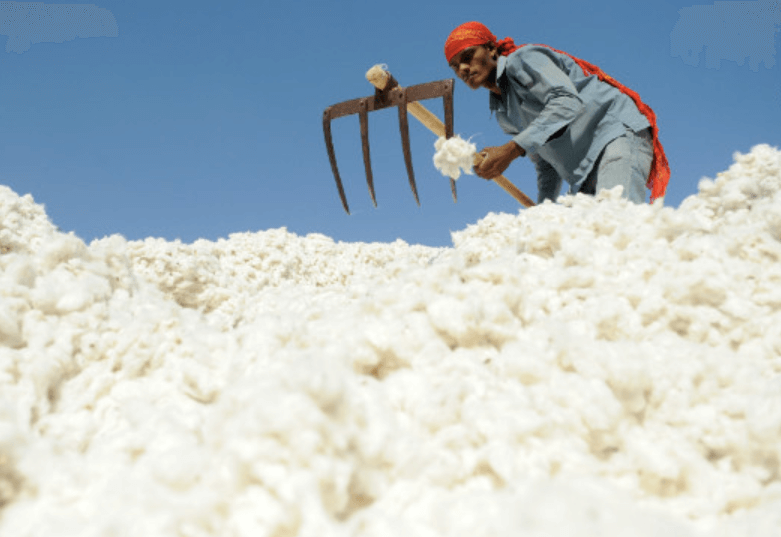
The production of cotton in the country has nearly doubled since the introduction of Bt cotton in 2002, the government told the Rajya Sabha [the upper house of the Parliament of India]….
In a written reply to a question, Union minister Mahesh Sharma also said the hybrids have helped to minimise the damages caused by pests like bollworm.
Mahesh Sharma
His remarks assume significance as they come amid a controversy over the country’s GM crop regulator, Genetic Engineering Appraisal Committee (GEAC), recommending the commercial use of GM mustard in a submission to the environment ministry.
Several groups, including RSS-affiliate Swadeshi Jagran Manch (SJM), have criticised the GEAC move, saying commercial use of GM mustard would impact allied agri-activities.
[Editor’s note: RSS (Rashtriya Swayamsevak Sangh) is an Indian right-wing, Hindu nationalist, paramilitary volunteer organization that is widely regarded as the parent organization of the ruling party of India, the Bharatiya Janata Party.]
The minister, however, said evaluation of each application for environmental release of GM crops is done on a “case-to-case” basis after a thorough examination of health, environment and food and feed safety assessment.
“Since the introduction of Bt cotton in 2002, there has been a near doubling of cotton production …” he said.
…
“Bt cotton hybrids have helped to minimise the damages caused by Bollworm, reduce pesticide use, and increase production, yield and net income of the farmers,” Sharma said.
It’s not just in Europe that glyphosate divides governments: the very same molecule is responsible for a string lawsuits and counter-lawsuits in California that have attracted national attention and have prompted 11 American states to go toe-to-toe with Sacramento.
It’s hard to believe that the panic and vitriol exhibited over the last few years could derive from a single organization’s study. Yet glyphosate’s most vehement opponents on both sides of the Atlantic point to a sole document to justify their strong opinions: a 2015 report by the International Agency for Research on Cancer (IARC), classifying the herbicidal agent as “probably carcinogenic to humans”. This determination made the IARC an outsider in the international scientific community, as every other major organisation, from the European Food Safety Authority (EFSA) to the US Environmental Protection Agency (EPA), has concluded that there is no evidence that glyphosate is linked to cancer in humans.
…
The IARC’s dubious report not only threatened glyphosate’s relicensing in the EU but provoked serious repercussions in the U.S. as well. The IARC’s Group 2a classification required California to include glyphosate on the list of chemicals “known to the state to cause cancer”, triggering swift and severe consequences.
Read full, original post: #Glyphosate: Hysteria wins out yet again over science and rationality
[DARPA biotechnology director Justin] Sanchez was not only [at Body Hacking Con] to promote the agency’s expansive research portfolio. He also had a message of urgent caution for so-called biohackers, people who have decided the formal drug research and approval process is too cumbersome and who are using themselves as guinea pigs for increasingly more ambitious biology experiments.
…
In an interview after his stage talk, Sanchez was more circumspect. “More and more people have access to biotechnology. It is very democratized right,” he told me. “People need to think deeply. If you do have access to it, that doesn’t mean you should use it.”
His message would not be heeded the very next day at the conference, when one biohacker injected himself on stage with an extremely experimental treatment for herpes. The therapy had gone through no regulatory approval process and had never before tested in humans.
…
“There’s many levels of safety and security for the internet that we as a society are struggling with,” he said. “We’re in the early days of biological technologies. Let’s think about how to do this in a responsible way now so that, as that technology does mature, we’re better prepared to use it in a way that will benefit society,” [Justin said].
Harvard University genetics guru George Church — one of the scientists at the forefront of the CRISPR genetic engineering revolution — announced on Wednesday [Feb. 8] a start-up, Nebula Genomics, that will use the blockchain to not only allow individuals to share their personal genome for research purposes, but retain ownership and monetize their DNA through trading of a custom digital currency.
…
Nebula took direct aim at 23andMe in its white paper, and one reason why it can offer genetic testing for less.
“Today, 23andMe (23andme.com) and Ancestry (ancestry.com) are the two leading personal genomics companies. Both use DNA microarray-based genotyping for their genetic tests. It is an outdated and significantly less powerful alternative to DNA sequencing […] it generates small amounts of data that are of limited value to individual data owners and researchers.”
…
Nebula claims its peer-to-peer network, based on the blockchain, will enable data buyers to acquire genomic data directly from data owners without middlemen. This will enable data owners to receive sequencing subsidies from data buyers and profit from sharing their data. The model will also deal with privacy concerns by allowing data owners to privately store their genomic data and control access to it. Data owners will remain anonymous, while data buyers will be required to be fully transparent about their identity.