Are ‘incredible genes’ protecting President Trump’s health?

trump

Unless someone swipes one of President Trump’s used forks from the Mar-a-Lago dining room and sends it to 23andMe for DNA analysis, the world will simply have to guess what the White House physician meant when he told reporters…that Trump “has incredible genes, I just assume.”

“Incredible genes” may seem like hand-waving, but there’s no question some genetic variants protect against heart disease, hypertension, diabetes, and other killers. And Trump chose his parents well: His father died of pneumonia at 93 after developing Alzheimer’s disease but apparently avoiding cancer and heart disease. His mother lived to 88…her only known ailment was osteoporosis.

His genetic inheritance might explain how Trump can get by with only four or five hours of sleep, which supposedly raises the risk of hypertension, and yet have blood pressure of 122/74 without anti-hypertensive medication. (At 71, Trump is in the age group for which the systolic target, the first number, is 130.)

His luck might not last, however. “Even if Trump has been dealt a good genetic hand, he’s certainly not helping himself” with an unhealthy lifestyle, said Dr. Sekar Kathiresan, a cardiologist and geneticist at Massachusetts General Hospital and the Broad Institute who has done seminal work in protective DNA variants. People whose genes lower their risk of disease “can mess that up.”

Read full, original post: Trump’s doctor says he has ‘incredible genes.’ Will they keep protecting his health?

Finding meaning in the music of our genes

Screen Shot at PM

While we know that how well we can sing or play a musical instrument may partly be determined by our genes, some scientists are taking the relationship between DNA and music a bit further. Quite a bit, actually: They are working on the idea that DNA actually is music, and that a composer creates a symphony or headbanger rock song much like our genes code proteins.

In his famous, often mind-bending book, Godel, Escher, Bach, Douglas Hofstadter theorizes the connection between music and genetics (and you’ll have to remember—or Google—recording tapes to get this):

Imagine the mRNA to be like a long piece of magnetic recording tape, and the ribosome to be like a tape recorder. As the tape passes through the playing head of the recorder, it is “read” and converted into music, or other sounds…When a “tape” of mRNA passes through the “playing head” of a ribosome, the “notes” produced are amino acids and the pieces of music they make up are proteins.

Taking this to a more mercantile extreme, some companies, like YourDNASong, will convert your DNA sequence to musical notes, creating a musical composition that’s uniquely, well, you. The music-DNA code match could be classical, jazz, or any other genre.

While this may sound like fun, there’s a serious side to matching gene expression patterns to music. The work may help us better understand the patterns that occur in genetics, and might even help pinpoint disease.

music 1 18 18 3Gil Alterovitz, a bioinformatics researcher at MIT, is looking at ways that gene expression can be coded according to musical notes (much like gene expression patterns are coded by a computer for bioinformatics displays). In this way, the complexity of gene expression in cancer can be somewhat more easily recognized, as in this rendition of normal versus cancer cell expression.

“When you hear inharmonious music it kind of catches your attention,” Alterovitz told The Scientist, “and that would be a sign of a pathological problem.”

While music has been around as long as we’ve been human, the idea of matching gene patterns with musical ones was started by a researcher named Susumu Ohno, who was head of research at City of Hope, a cancer hospital and research center in Duarte, California. In the 1980s, Ohno noted that gene expression, mutations and other molecular biology processes followed patterns, and periodic repetition, much like a musical composition:

Individual genes in the genome have been duplicated and triplicated often to the point ot redundancy, and each coding sequence consists of numerous variously truncated as well as various base-substituted copies. Musical compositions also rely on this principle of repetitious recurrence. Coding base sequences can be transformed into musical scores. Conversely, musical scores can be transcribed to coding base sequences of long open reading frames.

Since Ohno, who died in 2000, published his work, other scientists have been exploring this rather odd relationship between genes and music.

More recently, a group of Italian researchers examined gene regulation functions, such as DNA methylation and histone acetylation, and their relationships to music. Much of the repetitiveness noted by Ohno still exists at the molecular level, and the Italians proposed that music could actually influence the brain, if only by listening to it. “Music will shape our brains by depositing epigenetic marks and induce some musicians to compose,” they wrote in 2012.

music 1 18 18 2Other research has shown that differences in brain anatomy exist between musicians and non-musicians, including changes in the corpus callosum, and in motor, auditory and visual-spatial regions of the cortex. Music may even protect aging brains from cognitive decay that could lead to dementia. This protection may in fact arise from the melodic stimulus of music, possibly provided by adult neurogenesis.

And more recently, another group of Italian scientists looked at ChIP-Seq data of histone modifications (a now-common way to gather data on this epigenetic process), and discovered that once the data was converted into discrete sounds, the researchers could determine patterns of differential gene expression and other genetic actions that affected phenotypes.

Beethoven’s work shows discrete patterns. So does “Satisfaction” by the Rolling Stones, as does hip-hop. By mixing music and genes (at least the study of them), we may be able to determine just how each process works.

Andrew Porterfield is a writer and editor, and has worked with numerous academic institutions, companies and non-profits in the life sciences. BIO. Follow him on Twitter @AMPorterfield.



Myth busting: Do farmers ‘drench, douse or slather’ crops in pesticides?

pesticides

In many articles critical of modern agriculture the narratives about pesticides tend to use terms like “slathered,” “drenched,” or “doused.” These are alarming images and foster consumer fears about the role of pesticides in the food supply. Those actually involved in the control of pests on farms know that these are extremely misleading impressions of how farmers manage their crops. It is useful to make some visual comparisons to provide perspective.

A good example of what it means to “slather”

“Slather” is a term we use to describe the process of applying a heavy dose of sunscreen. Putting 1/2 ounce of sunscreen on just your face (57 square inches) would amount to 0.009 ounces/square inch. If an acre of a farmed crop were “slathered” to that same degree, that dosage would be more than 54,000 ounces per acre. Most crop protection products are applied in the range of 3 – 64 oz. per acre. That means that the sunscreen slather image is exaggerated by a factor of 850 to 18,000. The use of the term “slather” is completely inappropriate when describing the use of pesticides in agriculture. “Petroleum distillates” (essentially mineral oils) are organic-approved pesticides that are applied at rates up to 1792 oz. per acre. Even that wouldn’t qualify as “slathered” in comparison to the sunscreen.

One reason people may imagine high pesticide use rates are the images of the spraying process. Most pesticides are delivered in a water spray. The actual amount of pesticide involved might range from a few ounces to a few pounds per acre, but is diluted in much more water. To get good spray coverage of something like an orchard crop, it might be necessary to use 100 to 400 gallons of water per acre. To be clear, that spray is almost all water. For something like an herbicide application to a row crop, the “spray volume” might be only five gallons of water per acre, again delivering a few ounces to maybe two quarts (64 oz.) of actual pesticide. How does a farmer’s use of five to 400 gallons per acre of water compare to the emotive terms “drenched” or “doused?”

What “drenched” really looks like

If you get caught in a sudden thunderstorm you might say you got “drenched.” If you were not in the rain too long that drenching might represent five one-hundredths’ of an inch of rain. On an acre that amount of rain would represent 1,358 gallons – far more than even the largest volume used for a crop protection spray.

When you put milk on your breakfast cereal (say ¼ cup to a bowl that is six inches across) you might say you “drenched” it. If that kind of volume were put on an acre of land, it would represent 3,465 gallons – eight to 700 times more than the water volumes in agriculture. Again, “drenched” is a seriously misleading way to describe what farmers do when they spray.

The strange tradition of “dousing” the winner of a race with Champagne

There is a tradition of “dousing” a winning race car driver with Champagne. That seems like a waste of good Champagne, but let’s assume only half of the bottle actually goes on the winner’s head. To apply that sort of volume to a farmed acre would represent 16,148 gallons. So what a farmer might ever apply should really not be described as “dousing” the crop.

Farmers don’t have any incentive to spray more crop protection agent than they need – these products cost money. A farmer also has no incentive to spray with a bigger volume of water than is needed to get the agent effectively delivered.

So when you hear or read about farmers “slathering,” “drenching,” or “dousing” their fields, remember that these emotive terms and mental images are at best, misleading, and frequently, manipulative.

This article originally appeared on Putting Pesticides in Perspective here and was reposted with permission of the author.

Steve Savage is an agricultural scientist (plant pathology) who has worked for Colorado State University, DuPont (fungicide development), Mycogen (biocontrol development), and as an independent consultant. His blogging website is Applied Mythology. You can follow him on Twitter @grapedoc.

European court recommends gene-edited crops be exempt from EU GMO laws

yalenews editing genomes msh

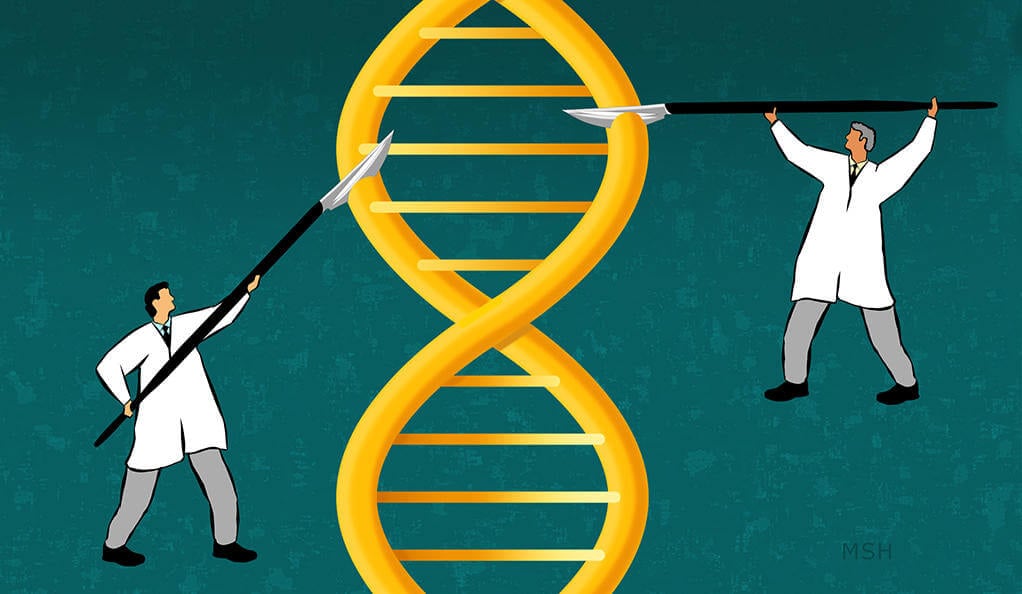
Gene editing technologies should be largely exempted from EU laws on GM food, although individual states can regulate them if they choose, the European court’s advocate general has said.

The opinion may have far-reaching consequences for new breeding techniques that can remove specific parts of a plant’s genetic code and foster herbicide-resistant traits.

Hundreds of millions of dollars have been invested in the technology, which could be subject to labelling, authorisation and safety checks, if the court decides it falls under the EU’s GM legislation later this year.

But in a complex preliminary opinion, Michal Bobek advised that “organisms obtained by mutagenesis” should not be seen as genetically modified, unless they contained recombinant nucleic acid molecules or other GM organisms.

Biotech industries argue that gene editing-type alterations could occur naturally through evolution, but critics counter that they involve genetic mutations that are lab-based and artificial by definition.

The European commission is waiting for clarification from the courts before deciding whether new legislation – or an update of existing laws – could be needed for the new technology.

The court was originally asked for its opinion by France in 2016 after a coalition of farmers and environmental groups had called for herbicide-tolerant crops resulting from new breeding techniques to be treated as GM products.

Read full, original post: Gene edited crops should be exempted from GM food laws, says EU lawyer

CRISPR food coming soon: USDA decision speeds up regulatory process for gene-edited crops

Champignon

In September, the U.S. Department of Agriculture gave the green light to a version of the plant Camelina sativa, an important oilseed crop that had been genetically engineered using CRISPR to produce enhanced omega-3 oil. What was interesting about this approval was that the USDA did not ask that the inventors of the plant endure the usual regulatory hoops required to sell biotech crops. The next month, a drought-tolerant soybean variety developed with CRISPR also got a quick pass from the USDA.

That’s because while those crops were certainly gene-edited, they were not genetically “modified,” according to USDA regulations. While scientists used CRISPR to snip and tweak the plant’s DNA, they did not add any foreign DNA to it. This, the USDA has now repeatedly found, means those CRISPR-edited plants fall outside of regulatory purview.

“It eliminates that huge barrier to entry for agbiotech companies,” [Oliver Peoples, CEO of Yield10 Bioscience, which developed the camelina] told Nature. Had the company been forced to endure the usual USDA regulator process, he said, it would have taken at least six years and $30 million to $50 million to test and collect the data required to bring the crop to market.

Instead, he said, “We did this in two years and [the USDA’s decision] took two months, and I assure you we didn’t spend $30 million on it.”

Read full, original post: Why CRISPR-Edited Food May Be in Supermarkets Sooner Than You Think

Viewpoint: It’s time to take a harder look at sugar’s connection to the diabetes epidemic

sugar

Discussions about the global epidemics of obesity and type 2 diabetes tend to assume that these are new phenomena…In the United States, however, the origins of the diabetes epidemic may be found in hospital records from the 19th century.

The candy, chocolate, and ice cream industries had all been founded in the 1840s; the soft drink industry was launched most prominently by Coca Cola and Pepsi in the 1880s.

The idea that sugar could be a fundamental cause of diabetes, not just a source of empty calories, fell out of fashion over the years, but given the present dire situation the idea should be considered seriously again.

In the midst of such a huge public health crisis, and with the acknowledgment that failure is inevitable, the obvious question to ask is why. Why, despite all our best efforts, have these epidemics gone unchecked?

Ultimately, science is not about proving what is true or what is not, as the Nobel laureate physicist Richard Feynman has said, but what is more or less likely. The hypothesis that sugar consumption causes diabetes through a mechanism other than its contribution to calorific overload could be true. Whether it is likely or not is still a judgment call. If it is true, though, it changes how we must communicate the dangers of sugar consumption.

Read full, original post: What if sugar is worse than just empty calories? An essay by Gary Taubes (behind paywall)

Burkina Faso abandons insect-resistant GMO cotton, suffers lower yields

Screen Shot at PM

As Burkina Faso farmers predicted, their nation has lost its standing as Africa’s largest producer of cotton since halting the cultivation of genetically engineered, pest-resistant Bt cotton.

Mali has now emerged as the number one producer of cotton in Africa, edging Burkina Faso out of the place it held for more than a decade, according to a report from Radio France International (RFI), the French public radio service.

Cotton farmers in Burkina Faso had predicted a decline in production by the end of 2017 when I paid a visit to that country last September. They were concerned that the increased pest attacks that followed the decision by government and cotton companies to phase out the production of GE cotton seeds would make 2017 a bad production year.

They were right, as confirmed by figures from the National Cotton Council of America. In 2017, Mali produced 1.325 million bales of cotton fiber, while Burkina Faso produced 1.300 million bales.

Kuraogo Salifu, a cotton farmer in the Pandema District, told me: “This year, we have increased the size of cotton fields all over but most of the fields are suffering from the pest pressure. The country will not achieve increased yields as expected.”

Read full, original post: Burkina Faso loses rank as top African producer after dropping GMO cotton

Video: Kansas state lawmaker Steve Alford makes racially charged genetics comments, will not resign

Kansas Alford Racism WIDE

A white Kansas lawmaker who suggested at a public forum that blacks were predisposed to abusing drugs resigned from two legislative committee leadership jobs but did not give up his seat in the Legislature. Republican Rep. Steve Alford, from the western Kansas town of Ulysses, faced calls on social media to leave office altogether from critics who saw his remarks as racist. And a black House member said Alford should resign from the Legislature.

During the public meeting…in Garden City, Alford discussed his opposition to legalizing any use of marijuana and referenced a time in the 1930s when it was outlawed.

Kansas is one of the few remaining states that haven’t legalized some form of medical marijuana, including low-THC marijuana derivatives that can’t get a user high. But the legalization question has been percolating in Kansas in recent years.

The 75-year-old Alford said marijuana and other drugs were prohibited partly because blacks responded “the worst” to the drugs “because of their character makeup – their genetics and that.” None of the roughly 60 people in the crowd was black.

The Garden City Telegram first reported on the statement Monday and posted a video of it to YouTube. Alford apologized later that day, saying: “I was wrong, I regret my comments, and I sincerely apologize to anyone whom I have hurt.”

https://youtu.be/4IVNkUr8t4k

Read full, original post: Kansas lawmaker quits posts but keeps his seat after remarks about blacks’ “genetics”

Mystery ‘cocoliztli’ epidemic that wiped out the Aztecs may have been caused by salmonella

epidemic

In the 16th century, an epidemic known as “cocoliztli” that caused bleeding and vomiting swept through large areas of Guatemala, Mexico and even reached Peru. It wiped out 80% of the population, killing millions of people.

Ancient DNA and a new technique have been used to determine the likely cause of this mysterious epidemic that contributed to a “cataclysmic” population decline.

Salmonella genomes, which cause typhoid fever, were recovered from DNA within the teeth of 10 skeletons buried in an undisturbed “cocoliztli” or “pestilence” cemetery in Oaxaca, Mexico. This would be the first known occurrence of salmonella in the Americas, according to a new study published in the journal Nature on [January 15]. Typhoid fever has long been suspected due to the recorded symptoms, but this is the first identification of bacteria at the site.

The researchers also believe that the arrival of Europeans to what was then known as Mesoamerica caused the devastating epidemic.

“We cannot say that it definitively caused the epidemic,” [researcher Kirsten] Bos said. “It was the only pathogen that surfaced from our extensive analysis, and an enteric fever is consistent with the recorded symptoms of the epidemic. But it may not have been the only disease circulating in the population at this time. Others could have been present that were not detectable by us through the techniques we used.”

Read full, original post: Scientists identify what may have killed millions in mystery epidemic

Glyphosate herbicide harms human gut microbiome? ‘Not biologically plausible’

Microbiome FINAL
[O]n numerous occasions I have heard glyphosate critics argue that glyphosate should be opposed because it might alter the microbiome in humans. In a post on his Facebook page, The Mad Virologist discussed a recently published study on the effects of glyphosate on gut microorganisms, and inspired me to unpack the microbiome argument against glyphosate and explain what’s wrong with it.

Glyphosate binds to and inhibits the action of an enzyme known as EPSP synthase, which plants need in order to make three important aromatic amino acids: phenylalanine, tyrosine, and tryptophan via what’s known as the shikimic acid pathway, which occurs in plants, bacteria, fungi, algae and some protozoan parasites.

The shikimic acid pathway doesn’t exist in us. Humans and other mammals, for example, can’t make those amino acids at all to begin with, so we get them directly from our food.

The claim that glyphosate harms human health via disruption of the microbiome was never a biologically plausible one, because it only makes sense when the system is not being viewed as a whole. Ironically, glyphosate and GE food opponents like to say that they take a holistic approach, but this is not a holistic argument, because it ignores the environment in which the microbiome exists.

Read full, original post: Glyphosate and the gut microbiome: Another bad argument annihilated

Viewpoint: We can’t afford to let ethical questions blunt the potential of CRISPR gene editing

CRISPR dna editing

With CRISPR, there is no doubt that there are multiple very concerning implications to the technology.

Should humans actually alter their genetic code to introduce preferential attributes? Should parents be allowed to dictate what their children look like? And, perhaps most pressing of all, should we be altering our own evolutionary path in this extreme way?

All of those ethical questions will have to be decided upon much further down the line and a large amount of regulation will have to make sure, if we do allow any of these things, that they can be safely controlled.

However, that potential of CRISPR aside, the immediately pressing issue is the amount of fatal and life altering conditions that CRISPR might be able to stop.

When it comes to cancers, hereditary diseases, viral infections and rare genetic diseases for instance there are many that are incurable and highly fatal. In the case of cancer alone, despite surgeries and therapies, it is very difficult to stop, aggressive and people are contracting it at increasing rates.

CRISPR could be the technology with which we can fight multiple problems and any worries about the longer term ethical questions of playing god with our DNA, should not stop research from progressing in the pursuit of solutions to deal with these fatal diseases.

Read full, original post: Through CRISPR gene editing we can (and should) change the nature of our species

Viewpoint: GMO, conventional or organic? Let farmers decide

Organic Farm FannyTrang

When one disparages farms that are organic or ones that use full-on technology, this does not take into consideration the importance of all food systems.

Standing in a field of GM canola in Western Australia, we were discussing genetically modified versus non-GM crop production. On this farm, the high salinity of the soil was addressed using saltbush in a natural rotation. The restriction in production was offset with a GM canola variety that yielded more. The combination of natural and technical practices allowed the farmer to thrive.

In Southern Australia, I stood in a field of non-GMO canola used in a rotation for production of alfalfa (called lucerne there). The natural untreated crop was integral to production because the compressed legume was exported to Japan, a country which does not tolerate a long list of applications in its imported products.

I have come to appreciate the complexity of every farmer’s story. Arguing against GM, conventional, or organic farming is moot. We must always allow farmers and societies both the opportunity of education and the choice of how they want to farm so they can best invest, divest, or initiate change on their farms.

Read full, original post: Farming is not a one-size-fits-all business

Rural-urban divide: Groundbreaking gene therapies could exacerbate inequality in cancer care

woman cancer patient

Two new cancer treatments have shown miraculous cures, but if you happen to live in Arkansas or Montana, or a handful of other rural states—let alone outside the U.S.—you’ll have to travel hundreds of miles to get them. And it’s by no means certain that they’ll eventually be available everywhere.

These groundbreaking gene therapies, Kymriah and Yescarta, were approved last year in the U.S. Not only are they hugely expensive—Kymriah is $475,000 and Yescarta is $373,000 for a one-time treatment—but for now you can get them only in certain urban areas. We mapped those locations below.

As you can see, some of the biggest gaps are in rural states, where cancer already kills more people than it does in cities. That’s a problem because both therapies are given as a last resort when traditional cancer drugs have failed. By the time patients get Kymriah or Yescarta, they’re often very sick, so traveling long distances is hard and could delay treatment.

https://www.google.com/maps/d/viewer?mid=1fb0OjvC6pkNQwXk_CFxCu_8vtUJekHUH&ll=37.499251936938684%2C-96.87716939999995&z=5

[Cancer Instutute director Peter Emanuel] says administering these therapies and managing potential side effects requires a large and specialized team of hospital workers, so it’s probably best—at least for now—that Kymriah and Yescarta are available only at hospitals with more resources.

Read full, original post: Gene Therapy Could Make Cancer Care More Unequal, and This Map Shows Why

Are genetically engineered Arctic apples safe to eat?

hi bc arctic apple

The Arctic apple is the juiciest newcomer to produce aisles. It has the special ability to resist browning after being cut, which protects its flavor and nutritional value. Browning also contributes to food waste by causing unappealing bruising on perfectly edible apples.

Are Arctic apples safe?

After over a decade of research, regulatory agencies in the United States and Canada like the FDA and USDA recently approved Arctic apples for human consumption. Accumulated evidence shows that Arctic apple trees and fruit are no different from their traditional counterparts in terms of agricultural and nutritional characteristics.

Yet some anti-GMO groups continue to protest the approval of Arctic apples, arguing that unforeseen consequences of the genetic alteration could impact safety. It’s true that it’s impossible to predict and disprove every possible consequence of a genetic change. But a recent review by the National Academies of Science that covers decades of published research found no convincing evidence that GE crops have negatively impacted human health or the environment. While it’s important to rigorously test all new crops that are developed, GE crops should not be considered inherently more dangerous than their traditionally-bred relatives.

Artboard
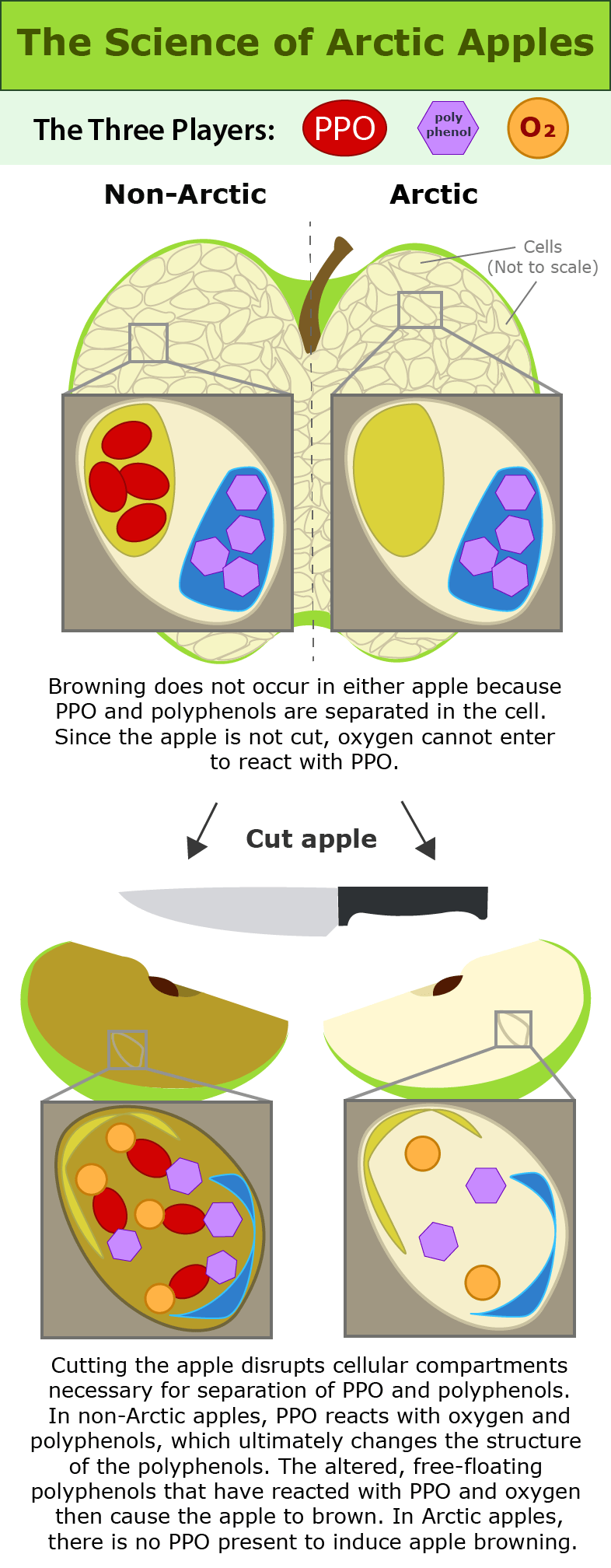
The molecular-level science behind Arctic Apples – PPO enzymes (red ovals), polyphenols (purple hexagons), and oxygen (orange circles) must all be present for browning to occur. (Graphic by Lillian Horin)

Read full, original post: Arctic Apples: A fresh new take on genetic engineering

EU braces for landmark decision on whether CRISPR, other New Plant Breeding Techniques will be regulated as GMOs

cf e d deb k

UPDATE: The European Court of Justice’s advocate general has said gene editing technologies should be largely exempted from EU laws on GM food.

The European Court of Justice on Thursday [Jan. 18] is set to issue a preliminary opinion on whether so-called New Plant Breeding Techniques (NPBTs) should fall under the EU’s laws governing genetically modified organisms. The matter is of immense importance to environmental groups, who say these new methods are merely an industry attempt to authorize GMOs in Europe through the back door. However, the Netherlands, backed by the U.K. and the seed industry, has lobbied hard and asked the Commission to stop considering plants and vegetables created through these breeding techniques to be genetically modified organisms. If accomplished, they say, vegetables such as mushrooms that do not brown and wheat that is resistant to powdery mildew could be integrated into farmers’ toolkits much in the same way they are already done so in the U.S.

NPBTs are seen by proponents as having some of the advantages of GMOs while avoiding their legal and reputational disadvantages. But no crops derived from NPBTs have EU authorization because of the uncertain legal situation.

Read full, original post: POLITICO Pro Morning Agri and Food: Palm oil — New plant breeding techniques — Acrylamide in chips (behind paywall)

Depression and epilepsy may share same genetic roots

παιδί με επιληψία x

From the time of Hippocrates, physicians have suspected a link between epilepsy and depression. Now, for the first time, scientists at Rutgers University-New Brunswick and Columbia University have found evidence that seizures and mood disorders such as depression may share the same genetic cause in some people with epilepsy, which may lead to better screening and treatment to improve patients’ quality of life.

The scientists studied dozens of unusual families with multiple relatives who had epilepsy, and compared the family members’ lifetime prevalence of mood disorders with that of the U.S. population.

They found an increased incidence of mood disorders in persons who suffer from a type of the condition called focal epilepsy, in which seizures begin in just one part of the brain. But mood disorders were not increased in people with generalized epilepsy, in which seizures start on both sides of the brain.

Seizures in most people with epilepsy can be controlled by drugs and surgery. The fact remains, however, that epilepsy and mood disorders such as depression affect quality of life and increase disability and healthcare costs.

“A number of genes have been found for epilepsy and understanding if these genes also might be causing depression is important,”[researcher Gary] Heiman said. “In particular, more studies should be done to understand the relationship between focal epilepsy and mood disorders.”

[Editor’s note: Read full study]

Read full, original post: Epileptic seizures and depression may share a common genetic cause, study suggests

Learning what Alzheimer’s does to the brain could lead to personalized treatments

alzeimers

Around 50 million people worldwide are thought to have Alzheimer’s disease. And with rapidly ageing populations in many countries, the number of sufferers is steadily rising.

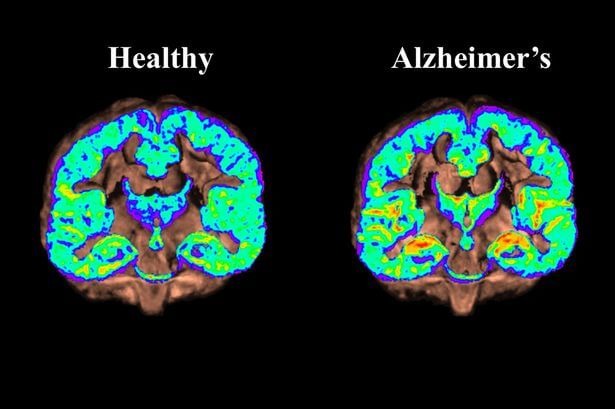
We know that Alzheimer’s is caused by problems in the brain. Cells begin to lose their functions and eventually die, leading to memory loss, a decline in thinking abilities and even major personality changes. Specific regions of the brain also shrink, a process known as atrophy, causing a significant loss of brain volume. But what’s actually happening in the brain to cause this?

The main way the disease works is to disrupt communication between neurons, the specialised cells that process and transmit electrical and chemical signals between regions of the brain. This is what is responsible for the cell death in the brain – and we think its due to a build up of two types of protein, called amyloid and tau. The exact interaction between these two proteins is largely unknown, but amyloid accumulates into sticky clusters known as beta-amyloid “plaques”, while tau builds up inside dying cells as “neurofibrillary tangles”.

One of the difficulties of diagnosing Alzheimer’s is that we’ve no reliable and accurate way of measuring this protein build-up during the early stages of the disease. In fact, we can’t definitively diagnose Alzheimer’s until after the patient has died, by examining their actual brain tissue.

Another problem we have is that beta-amyloid plaques can also be found in the brains of healthy patients. This suggests the presence of the amyloid and tau proteins may not tell the whole story of the disease.

More recent research suggests chronic inflammation may play a role. Inflammation is part of the body’s defence system against disease and occurs when white blood cells release chemicals to protect the body from foreign substances. But, over a long enough period, it can also cause damage.

alzheimers 12 18 17 1In the brain, tissue-damaging long-term inflammation can also be caused by a build-up of cells known as microglia. In a healthy brain, these cells engulf and destroy waste and toxins. But in Alzheimer’s patients, the microglia fail to clear away this debris, which can include toxic tau tangles or amyloid plaques. The body then activates more microglia to try to clear the waste but this in turn causes inflammation. Long-term or chronic inflammation is particularly damaging to brain cells and ultimately leads to brain cell death.

Scientists recently identified a gene called TREM2 that could be responsible for this problem. Normally TREM2 acts to guide microglia to clear beta-amyloid plaques from the brain, and to help fight inflammation within the brain. But researchers have found that the brains of patients whose TREM2 gene doesn’t work properly have a build-up of beta-amyloid plaques between neurons.

Many Alzheimer’s patients also experience problems with their heart and circulatory system. Beta-amyloid deposits in the brain arteries, atherosclerosis (hardening of the arteries), and mini-strokes may also be at play.

These “vascular” problems can reduce blood flow in the brain even more and break down the blood-brain barrier, a structure that is critical for removing toxic waste from the brain. This can also prevent the brain from absorbing as much glucose – some studies have suggested this may actually occur before the onset of toxic proteins associated within Alzheimer’s disease within the brain.

Personalised treatment

More recently, researchers have been looking deeper into the brain, specifically at the precise connections between neurons, known as synapses. A recent study published in Nature describes a process in the cells that may contribute to the breakdown of these synaptic communications between neurons. The findings indicate that this may happen when there isn’t enough of a specific synaptic protein (known as RBFOX1).

The conversation x xThanks to this kind of research, there are now many new drugs in development and in clinical trials that could target one or more of the many brain-wide changes that occur with Alzheimer’s disease. Many researchers now believe that a more personalised approach to Alzheimer’s patients is the future.

This would involve a combination of drugs tailored to target several of the problems mentioned above, much like current treatments available for cancer. The hope is that this innovative research will challenge and pioneer a new way of treating this complex disease.

Anna Cranston joined life sciences/pharmaceutical company TauRx Therapeutics Ltd. in October 2015 as a PhD student, working within translational neuroscience at the University of Aberdeen. Her project primarily focuses on the synaptic alterations and neuroinflammation observed within models of Alzheimer’s Disease and Tauopathy.

A version of this article was originally published on the Conversation’s website as “Here’s what we think Alzheimer’s does to the brain” and has been republished here with permission.

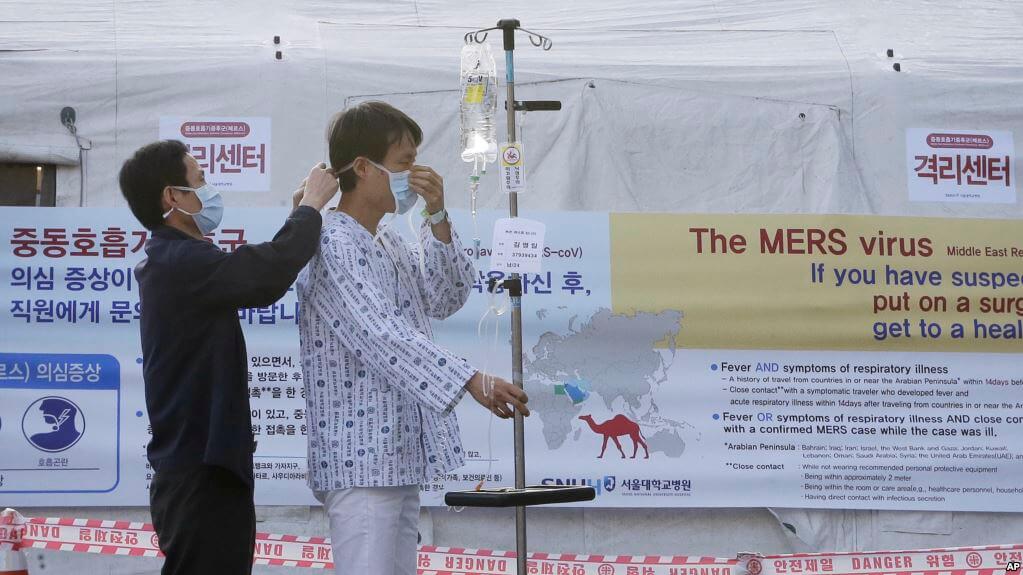
MERS treatment could come from genetically engineered cows

παιδί με επιληψία x

Human antibodies made in genetically engineered cows have proved safe in an early stage clinical trial…and could be developed into a treatment for the fatal viral disease, MERS.

MERS, or Middle East Respiratory Syndrome, is a SARS-like viral infection first identified in Saudi Arabia in 2012 that has caused deadly outbreaks in the Middle East as well as sporadic cases around the world.

Despite more than five years of waves of infection, no effective treatment or vaccine has been developed against MERS.

In research published in the Lancet Infectious Diseases journal…scientists found that human antibodies called SAB-301 generated in so-called transchromosomic cattle — animals with human DNA incorporated into their genome were safe in healthy volunteers.

The antibodies also persisted for more time than the MERS virus typically remains in the body, the study found, with antibodies still detected in bloodstream after 90 days.

This points a way ahead for the antibodies which offer immunity against an invading infection to be tested in further trials in people infected with MERS, the researchers said.

Transchromosomic cattle have human DNA that codes for human antibodies incorporated into their genome. To make SAB-301, they were injected with a part of the MERS virus, stimulating their immune systems to produce antibodies against it.

Read full, original post: Human antibodies made in cows could be developed to treat MERS

‘Sabotage’ of field trials by anti-GMO activists causes seed company to reconsider research in France

GP AP

Limagrain, the world’s fourth-largest seed maker, will consider moving its research activities out of France if field trials in its home market continue to be sabotaged by opponents of genetically modified crops.

The French cooperative group was targeted last month by protestors who invaded test fields southeast of Paris and scattered non-commercial seed. That was the latest in a series of actions by opponents of gene-editing technology, which they say will herald a new generation of genetically modified organisms (GMOs).

Limagrain said the incident ruined a 37-hectare trial of wheat based on conventional breeding and showed the risk of a repeat of virulent debate over GMOs.

“If we have repetition of this kind of problem, I will be the first to say that we should relocate our research and not conduct it in France,” Jean-Yves Foucault, Limagrain president and one of the farmers who own the cooperative group, told reporters.

Limagrain, which is a major seed maker through listed subsidiary Vilmorin, previously stopped performing GMO field trials in France, where commercial growing of such crops is banned.

The emergence of new breeding techniques has reignited debate over genetic modification in Europe.

Read full, original post: French seed group says GMO protests could force R&D relocation