Balwinder Kang has a simple message for those who don’t think Indian farmers like him should be able to utilize the latest technology: come to my farm and judge for yourself.
“To all the people opposing this technology, I would welcome them to come stay with me, and for one crop cycle see how farmers live and see the difference technology makes,” Kang said.
Kang said that critics of biotechnology, be they government officials or activists who “have never been to a farm,” fail to realize how much of a positive impact genetically modified (GM) seeds can have on a farmer’s livelihood.
Kang, however, knows this firsthand. He has been farming full-time since 1984 and has seen a revolution when it comes to GMO cotton.
Balwinder Kang (photo by Robert Hazen)
…
Believing that at heart “every farmer is a gambler,” Kang decided to sign up to participate in Bt cotton trials. The difference was immediately apparent, although Kang remained skeptical.
…
But when the improved results were repeated the next year, the gambler decided to try his hand with Bt cotton when it was released for commercial cultivation.
…
“Some farmers were convinced, some were not. But the next year, when they saw my yield and the quality of the cotton, and saw that the costs were going down, most of them were convinced,” he said.
Kiwi garden centres will not immediately follow hardware giant Bunnings’ lead and stop selling controversial pesticides said to harm bees.
Palmers Garden Centres, Kings Plant Barns and Oderings Garden Centres will not pull products containing neonicotinoids, but will continue to re-evaluate the situation and listen to customer feedback on the matter.
Neonicotinoids are found in pesticides such as Yates Confidor and Kiwicare Plant Health Insect Hit, and are used mainly to control sucking pests such as aphids, thrips and white fly on vegetables such as brassicas, cucurbits, onions and stone fruit. They are also commonly used on lawns, shrubs and ornamentals.
Neonicotinoids have been linked with declining bee numbers and are banned in EU, even though the science on it is still controversial. Some studies suggest they affect bees’ navigation and immune systems, resulting in colony death.
A spokesperson from Palmers Garden Centre said they frequently re-evaluate their decision to sell products containing the potentially harmful neonicotinoids, but have decided to keep them on the shelves for the time being.
“Part of the reason we have continued to stock these products is because there are very few alternative pesticides that are as effective as Yates Confidor is for controlling pests like aphids and white flies,” Palmers Category Manager Ron van Zuilen said.
Women who work night shifts have substantially higher risks of breast, digestive system, and skin cancers, a recent study found. The findings reinforced a connection researchers have observed between cancer and the circadian clock, a biological system that controls the daily schedule of physiological processes.
Now, in findings that could lead to a new class of cancer drugs, researchers have uncovered details about a key molecular link between circadian rhythm and cancer.
The nuclear hormone receptors REV-ERBα and REV-ERBβ are essential components of the body’s circadian clock. Gabriele Sulli and Satchidananda Panda at Salk Institute for Biological Studies and coworkers show that when each of two small organic molecules, SR9009 and SR9011, turn on the receptors in cell culture, the interactions kill breast, colon, leukemia, melanoma, and brain cancer cells, as well as dormant premalignant cancer cells (Nature 2018, DOI: 10.1038/nature25170).
…
The data suggest that circadian clock-targeted agents could treat a wide range of cancers with few side effects, the researchers say. But they point out that further safety testing and trials in people are necessary. The Salk team found that the two compounds kill cancer cells by inhibiting lipid production and “autophagy,” a process in which cells degrade unwanted cellular components. Cancer cells need both metabolic processes to grow and reproduce.
Is DNA property? At first glance, the answer would appear to be yes. After all, why would surreptitiously swabbing someone’s DNA be any different than surreptitiously pickpocketing their wallet?
…
[John] Wilbanks, who is Chief Commons Officer at Sage Bionetworks, a nonprofit seeking to foster open systems of biomedical research, says that property rights in DNA are especially tricky and context-dependent, in part because DNA exists both as a physical object and as digital information that can be easily copied. “If I find your USB stick with your genome sequence on it on the bus, then I can put your DNA online, and you can’t sue me.”
…
Stanford University Law School professor Hank Greely agrees that human biology does not fit neatly into the property box. “Do you own your kidney?” he asks. “Well, kind of. No one can take it from you without your consent, but neither can you sell it.”
…
Part of the reluctance to embrace ownership of human biology in some quarters, Greely says, is because of its ugly connotations. “Owning kidneys makes people think of slavery. They think it degrades humanity.” He understands this argument but also finds it to be ironic. “Doesn’t it degrade the dignity and authority of individuals to say that they don’t own their own cells?”
The European Commission expects “important” clarity on the scope of GMO legislation ahead of a Court ruling on new plant breeding techniques, an EU spokesperson told EURACTIV.com following the release of an Advocate General’s first opinion.
European Court of Justice Advocate General Michal Bobek released on Thursday (18 January) his opinion following a request by France in 2016 to clarify whether a variety of herbicide-resistant rapeseed obtained through new plant breeding techniques (NPBTs) should follow the GMO approval process.
The case concerns one type of NPBT (mutagenesis) and it is unclear whether the judgment will extend to other NPBTs and what impact a negative ruling would have on genetic engineering in general.
Bobek noted that organisms obtained by mutagenesis are, in principle, exempted from the obligations in the GMO directive.
Although his opinion is not binding, European Court of Justice judges rarely go against the advice of their advocate-general. The final judgment is due in May 2018.
…
[An] EU official reiterated the Commission’s position that a broad EU reflection on new breeding techniques and innovation in the seeds sector (and beyond) is needed.
Late last year, researchers announced the first-ever attempt to edit genes inside a living human. As might be expected, it was greeted with a round of stories — both in mainstream and scientific publications — heralding the potential dawn of a new age in medicine.
It all sounds promising — using cutting edge technology to fix a rare life-threatening genetic defect. But as is often the case with these sorts of breathless announcements, there are reasons to be cautious. Chief among them: It’s going to be months, it not years, before we even know if it has a chance of working as hoped.
The patient is Brian Madeux, 44, who has Hunter syndrome, an X-linked extremely rare inborn error of metabolism. The condition is marked by the inability to produce an enzyme, iduronate-2-sulfatase, needed to break down some sugars. Over time, the sugars build up in blood, cells and connective tissue, causing organ problems, brain damage and death at a younger age.
Madeux is lucky in several ways — he has not experienced the cognitive decline seen in most patients and he has lived longer than the average patient, meaning he likely has the milder version of the disease. Still, his life expectancy is far below that of the average adult male.
That’s where Sangamo Therapeutics enters the picture. The California company is testing its gene-editing therapy for two metabolic diseases and hemophilia.
Dr. Sandy Macrae, the company’s president, described the procedure to reporters: “We cut your DNA, open it up, insert a gene, stitch it back up.”
The longer, and more technical, explanation is that zinc finger nucleases are used along with a new gene and infused into the body. They travel to the liver, where the zinc fingers insert the functional gene, which is supposed to produce the enzyme that was missing. Previously, genes were edited in cells in a lab setting (and then returned to a patient), but this is the first attempt to change a gene in vivo.
That’s where the potential for problems comes in. Unlike cutting open a human body, cutting DNA can’t be changed once it’s done. A bungled surgery usually can be fixed or repaired. But whatever’s done to the DNA is for good. This has been a challenge even for gene therapies, where genes are corrected in the lab and carefully examined before being put back into a patient.
Consider what happened in 1999 to Jesse Gelsinger, who died four days after an experimental gene therapy procedure. According to the New York Times: “When Jesse got the vector, he suffered a chain reaction that the testing had not predicted — jaundice, a blood-clotting disorder, kidney failure, lung failure and brain death.”
And even if the initial results appear promising, it could be months or years before a full evaluation is possible. We saw this in 2002 after the initial positive results from a gene therapy trial (it started in 1999) involving twenty patients with severe combined immunodeficiency (SCID) or “bubble boy” disease. Patients with the extremely rare inherited condition cannot make B cell and T cell antibodies that respond to foreign antigens. They often die shortly after birth.
The trial, which used a retrovirus to insert a corrected gene, appeared at first to be a success, with patients showing normal immune responses. But just months after the team release its promising research results in 2002, one of the boys became sick with what would eventually be diagnosed as leukemia. Eventually, four more boys would develop the disorder, with one dying from it.
Further research showed that near the edited SCID gene was a cancer-causing gene (oncogene), LMO2, that had been activated by the retrovirus’ edited gene sequences.
With this in mind, we know that the full results of the first in vivo human gene editing experiment may not be known for years — whatever the short-term results may indicate.
Sangamo also is working on another metabolic disorder, Hurler syndrome (a disease in the same category as Hunter syndrome) and two types of hemophilia, Factor VIII deficiency (classical hemophilia) and Factor IX deficiency (Christmas disease). If those work, and there’s no apparent side effects from the procedure, other illnesses will no doubt be looked at. Even then, they would have to be the types of conditions that could lend themselves to such a procedure. Not all genetic modifications could be delivered in such a way.
But what if it does work without any side effects?
The genetic conditions that would benefit the most from the editing process are the single gene defect conditions — those caused by one malfunctioning gene. This would include autosomal recessive conditions and those that are X-linked.
These types of disorders are seen as the most promising for genetic editing, whether it’s from fixing the process in the genetic error that causes the condition or using the new technique to edit the gene itself.
It’s certainly not enough to envision cures for so many of these conditions that plague humanity, at least not yet. However, it’s not a certain failure, either. All anyone can do is wait.
Annie Keller is a freelance medical writer in Columbus, Ohio.
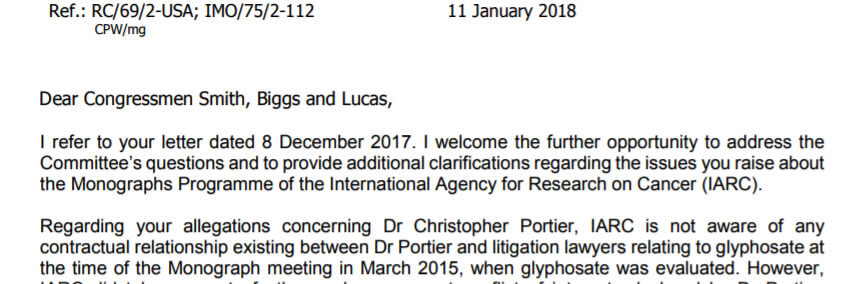
Outgoing IARC Director, Christopher Wild, refused to attend the US House Science Committee hearing into the IARCgate scandal. In actions of arrogance never seen before at any UN agency, Wild is snubbing IARC’s single largest funder. To make matters worse, several days ago (on January 11), Wild wrote a regrettably undiplomatic letter to the honorable US Congressional leaders in language that was terse, insulting, demeaning and factually incorrect. As IARC is searching for a new head for this moral train-wreck of an agency, Wild seems determined to leave it in tatters.
As US lawmakers are surely befuddled by such ill-chosen lack of decorum (and by present standards in DC, that is saying something!), the Risk-Monger thought it worthwhile to be the one to answer to Chris Wild’s outrageous claims, trickery and misinformation. The following read-through of Wild’s loathe-letter to America will hopefully shine some light on how horrible IARC has become. It highlights six different ways Chris Wild, in his letter, lied to the US Congress.
Diversion
The clever wordsmithing here reveals much more about what IARC is trying not to admit than about what they did not know. To say that IARC was not aware of Portier’s association with law firms at the time of the publication of the glyphosate monograph is not worth very much. After all, everyone knows Portier had signed a very lucrative contract as a litigation consultant for two predatory law firms suing Monsanto sometime during the week after Monograph 112’s initial findings were published.
Editor’s note: Click on images to enlarge
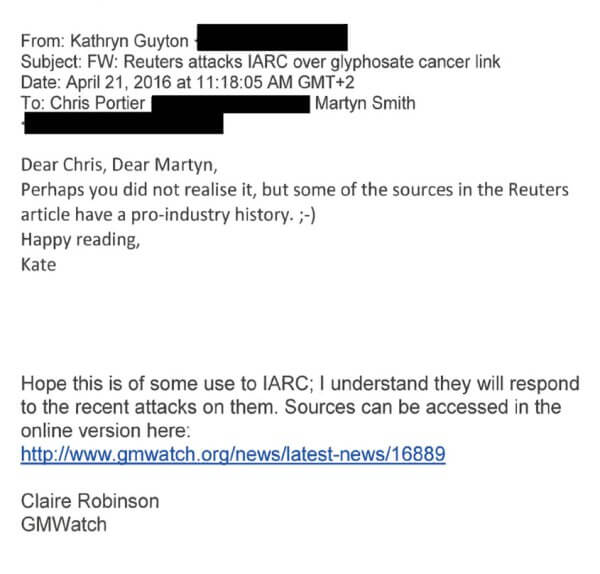
What Chris Wild neglected to acknowledge is how IARC’s glyphosate monograph lead author, Kate Guyton, was in regular contact with Portier in the two following years as their objectives to discredit EFSA aligned. The Portier Papers reveals emails where Guyton was sharing attack campaigns done on her behalf by rabid, anti-GMO campaigners like GMWatch’s Clare Robinson, who seems to have internal channels with the IARC anti-glyphosate lead, or how Guyton was aligning interviews for Portier and herself with anti-pesticide Le Monde journalists like Stéphane Foucart (for an anti-EFSA article).
I would find it unbelievable for Guyton to not have been aware of Portier’s lucrative remuneration set-up with the US predatory law firms given the amount of work she was coordinating on this activist scientist’s campaign schedule.
Portier portrayed himself as IARC’s self-acknowledged man in the trenches heroically there to defend all that the agency has been aiming to achieve as “agents of change”.
I believe this is what members of the US Congress would like to know more about, and such diversionary tactics to avoid coming clean here smells of lying.
Misinformation
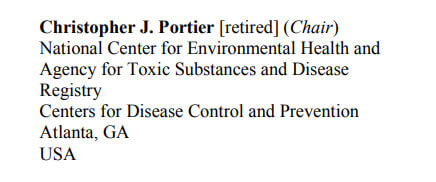
What Wild states about Portier’s conflict of interest fails to align with what actually happened. In the original list of participants for the Monograph 112 Working Group, Portier was listed only by his US government affiliations (since “retired”). At the beginning of the meeting, Portier acknowledged that he worked for the American NGO, Environmental Defense Fund (hence the reason it was added only as a footnote in the final version). Others on the panel had conflicts of interest but they still stayed as full members of the IARC Working Group.
What is interesting here is that IARC was fully aware that Portier was working for the American anti-pesticides group but chose not to list that as Portier’s principal affiliation. I can only assume this emanates from the built-in anti-industry bias that has destroyed the agency’s credibility – they perhaps felt that only industry affiliations were conflicts of interest. If you took money from an NGO trying to falsely scare people with, say, a wristband that detected chemicals in the environment, you were assumed to be doing God’s work.
And besides, as Wild states, it was only a part-time job with the NGO, so it was only a little bit of a conflict of interest (and OK, maybe just an apparent conflict, and thus not “real”). So I suppose it was only a little bit of a lie.
Shouldn’t that director have already cleaned out his desk by now?
Deception
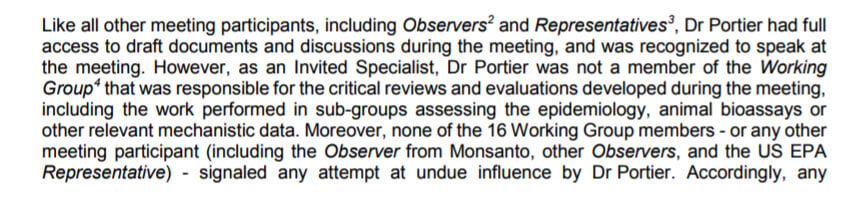
Putting a comma before an ‘and’ is poor English unless you are willfully creating a semi-colon mistake. Observers did have access to documents and could listen to discussions (comma) but only Working Group members and the Invited Specialist could join in the discussions. I can understand how people who don’t speak English as their first language could otherwise make such a mistake and the suggestion in this letter that Portier, like the observers, could not be involved in discussions was simply poor grammar and surely not a baldfaced lie.
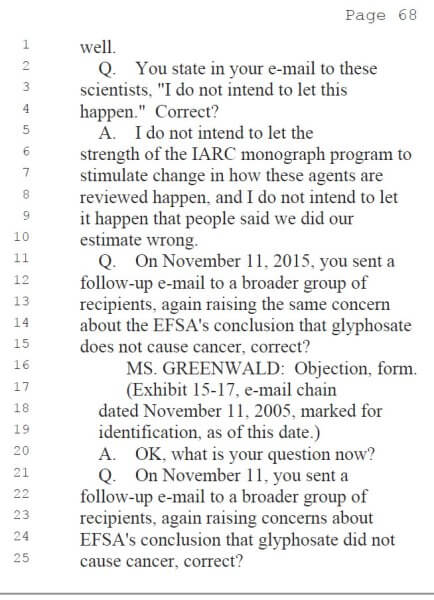
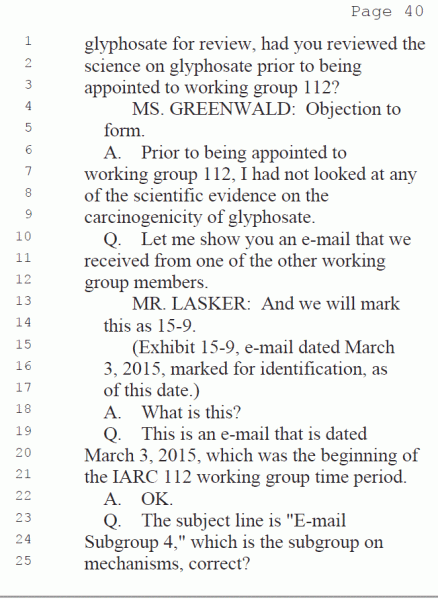
What Wild meant to say, I am sure, was that the only thing the Invited Specialist (Portier) could not do at the Working Group meetings was vote in the final decision on whether glyphosate was indeed carcinogenic, and at what level. This was probably for the best given that Portier had admitted in his deposition that prior to attending the glyphosate monograph meeting, he had never worked on glyphosate.
That nobody took notice of Portier’s behavior during the meeting should not be surprising – he was among friends at that meeting. Less than a year later, in January 2016, Portier was joined by IARC glyphosate Working Group members, Francesco Forastiere, Ivan I. Rusyn and Hans Kromhout in a private meeting with EU Commissioner Andriukaitis to lobby against the EFSA position. How the transport of these scientists was funded and who organized this fruitless meeting is a mystery that Kate will probably bring to her grave.
Misrepresentation
Wild’s defense of Portier’s role as chair of the Independent Advisory Group that recommended IARC’s coming programme of monographs is where the stench from this miserable little letter has caused me to open a window (in January mind you). What Wild neglected to say was that the chair of this independent panel had just finished a six-month residency at IARC directly under Kurt Straif (the head of IARC’s monograph programme) and just three days later chairing an independent panel. I suppose they saved on airfare for the good doctor!
And what was Portier’s affiliation as chair of this “Independent” Advisory Group? During his six months at IARC, everyone seemed to know Chris as that statistician from EDF, but when the Advisory Group’s report was published, Portier’s affiliation once again reverted to his past glories. If I were a director at EDF, I would be a little annoyed at the lack of respect the NGO was getting for all they were paying this mercenary man. If I were the good doctor, I would also at times sign in as an employee at IARC. If I were the IARC director, I would be deeply ashamed of this entire scandal and immediately clean my desk out!
The last point of this paragraph opens up another can of smelly worms. In the months following the publication of the next five-year monograph programme, glyphosate was added to a previously planned monograph on four insecticides: tetrachlorvinphos, parathion, malathion and diazinon. According to the Portier Papers deposition, there was no credible justification for this late addition. So just like that, an herbicide was added to a monograph Working Group of a different class of pesticides. Couldn’t IARC have waited until a later monograph? What was the rush?
Who makes decisions like this? Either poor civil servants who don’t think very much or determined people with an agenda and an ax to grind. In the case of IARC, probably both!
Maybe Kate Guyton was rushed with the last-minute addition of glyphosate to the Monograph 112 substance list and had not had enough time to find sufficient literature to contribute to the Working Group preparation materials.
Now Wild’s letter gets very offensive.
I find it amusing that Christopher Wild is schooling US congressmen from the House Committee on Science, Space and Technology about how the US Agricultural Health Study (AHS) research is conducted and then trying to diminish the importance of the data it is producing (only two states?). How ignorant does Wild actually think these people are? As a Canadian wandering around policy centers in Brussels and often assumed by my accent to be American, I can validate how certain Brits in high places tend to be intellectually condescending towards Americans. This is indicative of the rampant arrogance at the heart of IARC that has put those overpaid functionaries to the point of being defunded by its largest member. Chris, I strongly suggest you write a second letter where you apologize for your disgraceful tone – shame on you!
That Wild is misinformed on his finger-wagging expedition provides just one more case study for my lecture hall on how to avoid falling into the “arrogance of ignorance” trap. The AHS data used by IARC, that the outgoing director smugly smears on, is from much earlier data publications and is not significant. What the chair of the IARC monograph 112 Working Group (on glyphosate), Aaron Blair, said in a sworn deposition is, however, very significant. Blair stated that if IARC had considered the AHS data he had at his disposal at the time of the glyphosate Working Group meetings, the outcome of IARC’s decision on glyphosate would have been quite different. Blair was one of the principal scientists in the AHS study.
Wild is admitting the AHS information contradicts his glyphosate Working Group findings … and … so … ? Chris, … if you need some help, this is the point in your letter where you ‘fess up’ and take responsibility.
OK, I forgot. At IARC, everybody else is wrong.
A leader should be able to see a situation clearly, know when difficult decisions need to be made and then have the courage to make them. IARC will reopen monographs when significant data makes it necessary to reconsider previous conclusions. In the case of the irrefutable AHS data, the revelations of inappropriate conduct by IARC staff, the clear evidence (and outrage) by the scientific community, the activist NGOs’ woeful abuse in misusing IARC’s hazard assessment findings as a battering ram to hit regulatory science, industry and public faith in farming and the food chain, … then it is time for a leader to step up, retract Monograph 112 and reopen the research with more objective experts.
The question is whether IARC’s Chris Wild has the courage to lead or will we have to wait for his successor to clean up his mess?
Obfuscation
This lying letter takes on a new device of deception: obfuscation.
Obfuscating might be clever, certainly is cunning, but, sorry, Chris, it is still lying. Aaron Blair did say the recent AHS data would have influenced the IARC decision on glyphosate. What you put in your letter is different. “Anything that was shown by Monsanto lawyers” is not referring to the AHS data. This question was planted by the plaintiff attorney (mainly for the benefit of NGO activists running the PR campaign against glyphosate) to try to repair the damage that a scientist, under oath, was forced to admit. Read the bloody Blair deposition Chris, and then we’ll talk!
So Chris, you accuse the US congressmen of being selective, but your own cunning methodology in parsing the English language was worse than selective, it was misleading (ie, lying). What your clever wordsmithing is trying to sell, well, I for one, ain’t buying.
The next five paragraphs of Chris Wild’s letter indicated a bizarrely rambling effort to show how other agencies keep information confidential (including the customary prerequisite IARC jab at those “pigs in Parma”) before we got at the main point he was trying to make: Please don’t try to gain access to our internal documents and emails (especially not Kate’s)!
So after brutally insulting the US Congress and the taxpayers they have been elected to represent, after ignoring their request to come to a Congressional hearing and after finding all means to lie to these lawmakers, Chris decides to close by saying he “would be grateful” if the “appropriate authorities” in the US (apparently not those from the US Committee on Science, Space and Technology) would not demand transparency or try to gain access to confidential IARC documents and emails. He wishes to keep “immunity”.
WOULD BE GRATEFUL??? Are you serious Chris? You forgot to say “Pretty Please”!
Dr. Wild, you are sitting on what is perhaps the greatest scandal to ever disgrace any UN agency, and rather than opening up the antics of your officials for scrutiny, you are continuing in some vain attempt at a cover-up and begging for immunity. I am not just referring to the disgraceful activist side-shows of Kate Guyton (whose email trail would probably sink the agency) or Kurt Straif’s dubious activities in that malignant hornet’s nest of activism known as Ramazzini.
Chris, it’s time to face the facts: It’s over! Haul your arse to Washington, bow your head in shame, open your records and allow people who have some accountability the opportunity to start rebuilding the agency whose name you have disgraced. Otherwise, you will be known as the last Director at IARC.
The hubris here is outrageous. The closing lines of this letter indicate that this little sanctuary from the real world in Lyon seriously thinks of itself as some noble bastion of international diplomacy, blue helmet heroics and world-class research. Maybe that is why they go around inflating themselves, citing their heroes and handing out medals of honor as if Charles de Gaulle were still lurking in the hallways. In reality, they are a rag-tag mishmash of second-rate activist scientists providing poorly-devised hazard assessments that they then use to undermine regulatory science. Wake up, Chris! At best your agency’s work should continue to be politely ignored; at worst you should be shut down.
Liar, Liar
This letter, submitted on 11 January 2018, is a watershed in moral depravity. It shows the many different manners of lying. In less than four short pages, IARC, in the name of its director, exemplified six different ways to not tell the truth: misinformation, diversion, deception, misrepresentation, obfuscation and the last form of lying: omission.
Omission
One final observation about your letter, Chris. You did not touch upon the most outrageous scandal raised in the Congressmen’s letter: that IARC edited out parts of the glyphosate monograph post-working group in order to make the glyphosate conclusions smell more “carcinogenic”. Surely, Chris, you must have some condescending riposte to put those stupid Americans in their place. Or is your only response to be “grateful” if they stopped demanding transparency and scrutiny and allowed IARC to continue on, business as usual? You omitted, in your letter, any discussion on the charge that IARC’s Monograph 112 on glyphosate lacks academic integrity.
Here is what I suspect about the slimiest part of IARCgate. There are internal IARC documents that discuss the reasons to edit out certain conclusions or evidence in the glyphosate monograph. They are likely not scientific since most of the glyphosate monograph lacks that virtue. Some of the editions were statistical, implying that the good Dr. Portier was probably involved (and he carelessly left an email trail).
Prove to me that my suspicions are wrong, Chris. Release all of the emails from Kate Guyton and Kurt Straif. Justify how Guyton’s message and her insistence back in 2016 to IARC Working Group members to not comply with US FOIA requests was not obstruction.
This request for confidentiality is not protecting members of IARC’s Working Groups (as you confusedly tried to explain); you are protecting IARC employees who likely broke standards of academic integrity.
IARC needs to be transparent.
IARC needs to be accountable.
IARC needs to be respectful to its Member States.
IARC needs to finally come clean and be honest.
The odd thing is that I was in Washington last month and had many coffees and discussions about all things IARC. My advice at all times was that I felt the US should not defund or pull out of IARC but try to reform the agency from within (with some “coalition of the rational” among IARC’s 25 Member States).
But when I witness such moral depravity, such bald-faced lying and such scum bubbling up on the shores of the Rhone river, maybe my past advice along the Potomac should be tempered. Maybe IARC has lost any legitimacy to continue to exist.
David Zaruk has been an EU risk and science communications specialist since 2000, active in EU policy events from REACH and SCALE to the Pesticides Directive, from Science in Society questions to the use of the Precautionary Principle. Follow him on Twitter @zaruk
This article was originally published at David Zaruk’s blog as “IARCgate: Shouldn’t IARC Stop Lying?” and has been republished here with permission.
To stay up to date on all the news in human and agricultural genetics, subscribe to our daily and weekly email newsletters, and follow us on Facebook and Twitter.
[Janice] Chen and her colleagues found something odd when they scanned viewers’ brains: as different people retold their own versions of the same scene [of BBC’s Sherlock], their brains produced remarkably similar patterns of activity.
Chen is among a growing number of researchers using brain imaging to identify the activity patterns involved in creating and recalling a specific memory. Powerful technological innovations in human and animal neuroscience in the past decade are enabling researchers to uncover fundamental rules about how individual memories form, organize and interact with each other.
…
[I]n humans, studies have identified the signatures of particular recollections, which reveal some of the ways that the brain organizes and links memories to aid recollection. Such findings could one day help to reveal why memories fail in old age or disease, or how false memories creep into eyewitness testimony. These insights might also lead to strategies for improved learning and memory.
…
“It was a surprise that we see that same fingerprint when different people are remembering the same scene, describing it in their own words, remembering it in whatever way they want to remember,” says Chen. The results suggest that brains — even in higher-order regions that process memory, concepts and complex cognition — may be organized more similarly across people than expected.
Animal and plant breeders are trying out a set of powerful new tools which have the potential to revolutionize agricultural practices and provide consumers with more healthy and safe food options.
…
[T]wo processes developed in recent years are accelerating breeders’ ability to genetically alter crops and animals and apply the brakes to harmful organisms. Both can precisely improve a plant or animal without incorporating DNA from another species. One process is a mouthful called Clustered Regularly Interspaced Short Palindromic Repeats, or CRISPR, and the other is a similarly large swallow called Transcription Activator-Like Effector Nucleases (TALEN).
…
They are used to insert genes or knock them out, tag their location on a chromosome, correct genetic defects, etc. Thus, scientists hope to use them to benefit human health, first of all, but also to edit the genes of animals, plants, bacteria, fungi, and other organisms. They want to improve livestock breeds and crop varieties, but also eliminate diseases, wipe out pathogens, rein in harmful insects, and more.
Significantly, unlike other traditional gene-editing methods, employing CRISPR or TALEN is cheap, quick and relatively easy for breeders to use.
…
[R]esearchers [using CRISPR] successfully bred pigs that are not harmed by the Porcine Reproductive and Respiratory Syndrome (PRRS) virus, a disease that costs North American farmers more than $660 million annually.
You may have more in common with your friends than you think, according to a new study published in Proceedings of the National Academy of Sciences. Your genes may be similar, too.
Past research has suggested that people tend to be somewhat genetically similar to their spouses and adult friends, likely because humans naturally gravitate toward people with whom they have something in common. But how and why does this subconscious sorting happen?
…
Overall, the researchers found that friends were more genetically similar than random pairs of people, and about two-thirds as similar as the average married couple.
…
This effect may be due to a concept called social homophily, or the idea that individuals form bonds based on shared characteristics, many of which can be traced back to genetics.
But there may also be a second phenomenon at work, according to the paper: social structuring, or the idea that people are drawn to others in their own social environment, which may itself be partially shaped by genetics.
…
“Are individuals actively selecting to be around people who are like them, or is it due to impersonal forces, such as social structures, that we all are affected by?” [researcher Benjamin] Domingue says. “Our evidence, with respect to friends, suggest that it’s largely the effect of social structures.”
The national debate about the use of GMOs in Mexico experienced a significant shift when the technology received strong academic support from one of the most important colleges in Latin America.
This past November, the Biotechnology Institute of the National Autonomous University of Mexico (UNAM) publicly endorsed the use of genetically modified organisms (GMOs) in agriculture. This was made in the context of the presentation of the book “Transgenicos: Amplios beneficios, ausencia de daños y mitos” (Transgenics: Wide benefits, absence of damage and myths). The 500-page book represents extensive research conducted by Mexican scientists and highlights the many positive aspects of GMOs.
“It seems unfair and immoral that farmers in Mexico cannot opt for the biotechnology of transgenic cultivars as in several countries of Ibero-America, where there is no evidence of damage by planting, but of coexistence between this type of cultivars,” states a passage in the book.
…
From 1996 to date, the Mexican government has authorized different strains of transgenic corn for human consumption and for food processing.
However, due to the controversy surrounding agricultural technology, the planting of some crops that had already been approved in the past is now prohibited.
In the past few months, the possibility of do-it-yourself genetic engineering has exited the realm of the purely hypothetical.
…
All of these attempts fall outside the purview of U.S. regulatory oversight, since the job of agencies like the Food and Drug Administration doesn’t generally include policing what people can do to themselves. But this new reality raised the question: should it?
Writing in Scientific American, the bioethicist Eleonore Pauwels considers this question.
…
“We could build adaptive regulatory support that ensures safe and responsible citizen participation in health research, or we could drive these emerging communities of innovators underground or out of existence,” she argues.
The better path, she concludes, is the former:
The path forward is not to promote radical, unregulated science, but to develop engagement channels that force citizens, patients, ethicists and regulators to rethink and design an adaptive oversight system—one that fosters empowerment and responsibility rather than just adherence to the status quo.
…
Pauwels is by no means alone in her thinking. On the heels of those two public displays, in December the FDA issued a stern warning to biohackers in America. Undertaking DIY gene therapy, it warned, is ill-advised and risky, and selling the supplies to do it is flat-out against the law.
Easing the public into being more comfortable with genome-edited food will take more than simply stating facts according to Kevin Diehl.
The director of regulatory product strategy, scientific affairs and industry relations for DuPont Pioneer in America provided the keynote address on the second day of TropAg 2017 in Brisbane [Australia]….
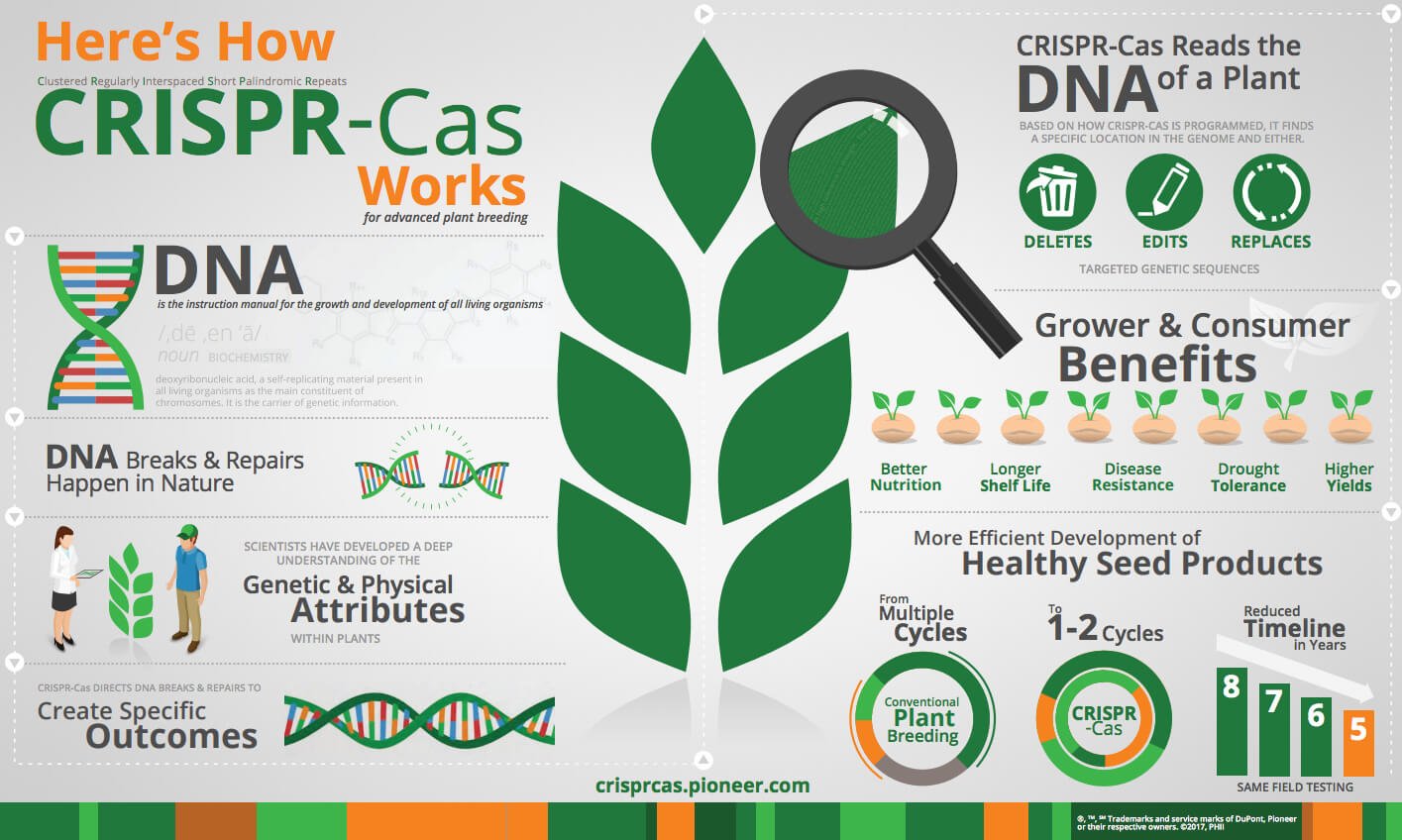
Mr Diehl gave an insight into targeted plant breeding applications of CRISPR-Cas technology.
He described CRISPR-Cas as “very elegant molecular scissors” which allow genome editing that is faster, cheaper and more accurate than previous DNA editing.
Taking a step back from the details of the process, Mr Diehl listed science, regulatory frameworks and social licences as key enablers of innovation.
He said while the science was well covered, the agriculture industry needed to get better at the other two, particularly establishing societal value, trust, and transparency.
“The general public has the right, especially in social media, and the ability to weigh in on these issues,” he said.
“We’ve always thought that data will win the day. How did that work out for GM? Not so well.
“Facts don’t always work. Sometimes you have to listen. You may have to listen to those who don’t agree with you.”
German Agriculture Minister Christian Schmidt said on Thursday [Jan. 18] he could see no set date for an end to use of the controversial weed-killer glyphosate in Germany.
Schmidt caused international controversy and a major row in Germany’s government coalition in November by unexpectedly backing a European Union Commission proposal to permit use of glyphosate for the next five years despite a heated debate over whether it causes cancer.
Christian Schmidt
Schmidt’s vote effectively allowed the extension in glyphosate use in the face of opposition from France and the center-left Social Democrats (SPD) in Germany’s government coalition.
A provisional blueprint for talks for a new government coalition in Germany agreed in January calls for systematically and significantly limiting glyphosate use with the aim of entirely ending use as quickly as possible.
German Environment Minister Barbara Hendricks, a member of SPD, has called for an end to glyphosate use in the current four-year parliament.
…
[Schmidt] said alternatives to glyphosate must be found first, which he said could involve new forms of weed-killers or new methods of farming.
Huntington’s has no cure. Over decades biotech companies have poured billions of dollars into developing and testing pharmaceuticals for these devastating conditions, only to unleash storms of disappointment. Yet in December a ray of something approximating hope poked through when a California company released preliminary findings from its small Huntington’s study.
Results from this early-stage clinical trial have not yet been published or reported at medical meetings. But some researchers have growing confidence that the drug should work for Huntington’s and perhaps other diseases with clear genetic roots.
…
The recent human trial, led by [neurologist Sarah] Tabrizi, enrolled 46 people with early Huntington’s disease at nine sites in the U.K., Germany and Canada. The researchers injected either the antisense drug or a placebo into the study participants’ spinal fluid—a 20-minute procedure similar to those that deliver epidural anesthesia to women in labor.
…
After collecting the participants’ spinal fluid and tallying final measurements of mutant Htt, the results were clear: Antisense therapy was not only safe and well tolerated, it reduced the targeted disease-causing protein.
…
Next up: a larger trial in hundreds of patients to see if lowering mutant Htt protein slows progression of the disease, then a trial in healthy people who carry the mutant HTT gene to see if antisense treatments could prevent Huntington’s altogether.
A research scientist, Paul Onyenekwe, has described the approval granted to two international agencies by a Nigerian regulatory agency to test run some genetically modified cassava in Nigeria as a welcome development.
Mr. Onyenekwe, the President of Nigeria Biotechnology and Biosafety Consortium, NBBC, was reacting to criticisms levelled against the approved field trials by some civic groups.
The Groups, Health of Mother Health Foundation, HOMEF, and its partners said the decision by the Nigerian Biosafety Management Agency, NBMA, to grant permission for “Confined Field Trials, CFT, of genetically modified, GM, cassava (AMY3 RNAi Transgenic lines)” was condemnable.
…
“Are HOMEF and co aware of what cassava farmers in the country are going through? A recent visit to the cassava growing belt of Oyo, Osun and Ogun revealed a great deal of suffering. Farmers are not getting value from their hard work. The uprooted cassava tuber loses starch value before reaching processing companies located at Sango Otta where the products are then grossly underpaid,” [said Onyenekwe.]
…
“Researchers at IITA asked for permission of the NBMA – as required by law – to test a new variety of cassava that could potentially solve this issue for farmers.”
…
“The statement issued by HOMEF deliberately uses fear and discredited publications.”
Read full, original post: Nigeria: Why We Support Field Trials of Genetically Modified Cassava in Nigeria – Scientist
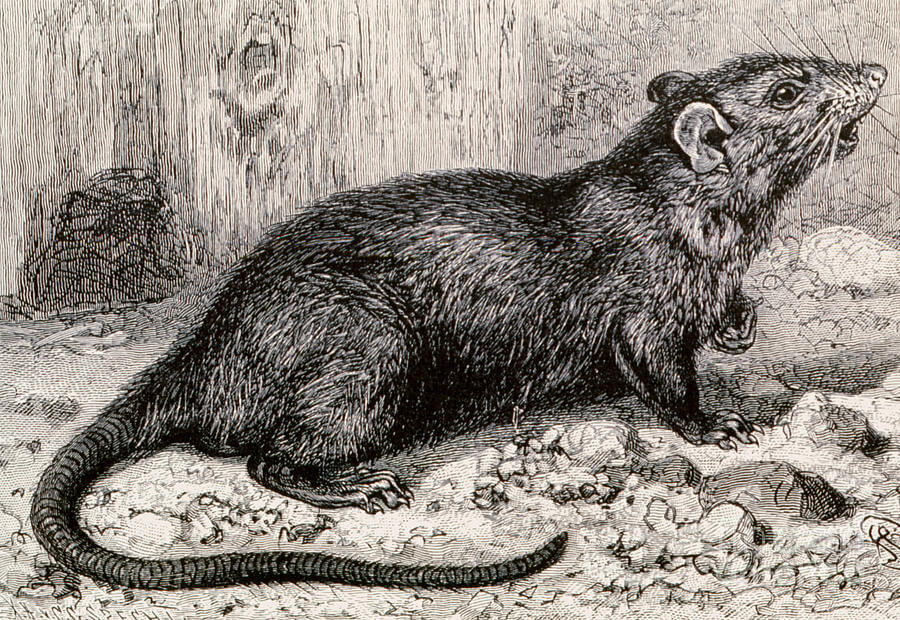
Rats were not to blame for the spread of plague during the Black Death, according to a study. The rodents and their fleas were thought to have spread a series of outbreaks in 14th-19th Century Europe.
But a team from the universities of Oslo and Ferrara now says the first, the Black Death, can be “largely ascribed to human fleas and body lice”. The study, in the Proceedings of the National Academy of Science, uses records of its pattern and scale.
…
“We have good mortality data from outbreaks in nine cities in Europe,” Prof Nils Stenseth, from the University of Oslo, told BBC News.
“So we could construct models of the disease dynamics [there].”
He and his colleagues then simulated disease outbreaks in each of these cities, creating three models where the disease was spread by:
rats
airborne transmission
fleas and lice that live on humans and their clothes
In seven out of the nine cities studied, the “human parasite model” was a much better match for the pattern of the outbreak. It mirrored how quickly it spread and how many people it affected.
“The conclusion was very clear,” said Prof Stenseth. “The lice model fits best.”
…
“Our study suggests that to prevent future spread hygiene is most important,” said Prof Stenseth.
Australia is set to reform how it regulates new genetic engineering techniques, which experts say will help to dramatically speed up health and agriculture research.
The changes will enable agricultural scientists to breed higher yielding crops faster and cheaper, or ones resistant to drought and disease.
Australia’s gene technology regulator Raj Bhula has proposed reducing regulations around gene editing techniques such as CRISPR, following a 12 month technical review into the current regulations.
The most radical change put forward by the regulator is that some of the more efficient and newer genetic technologies, known as gene editing, would not be considered “genetic modification”.
“With gene editing you don’t always have to use genetic material from another organism, it is just editing the [existing] material within the organism,” Dr Bhula said.
…
“If these technologies lead to outcomes no different to the processes people have been using for thousands of years, then there is no need to regulate them, because of their safe history of use,” she said.
…
If approved, the reforms will have wide ranging benefits for agriculture research, and could speed up the research and commercialisation of disease, salt or drought-resistant crops, or high yielding varieties.