Breast cancer and BRCA: Mutation doesn’t affect patient survival rate

d eb f image

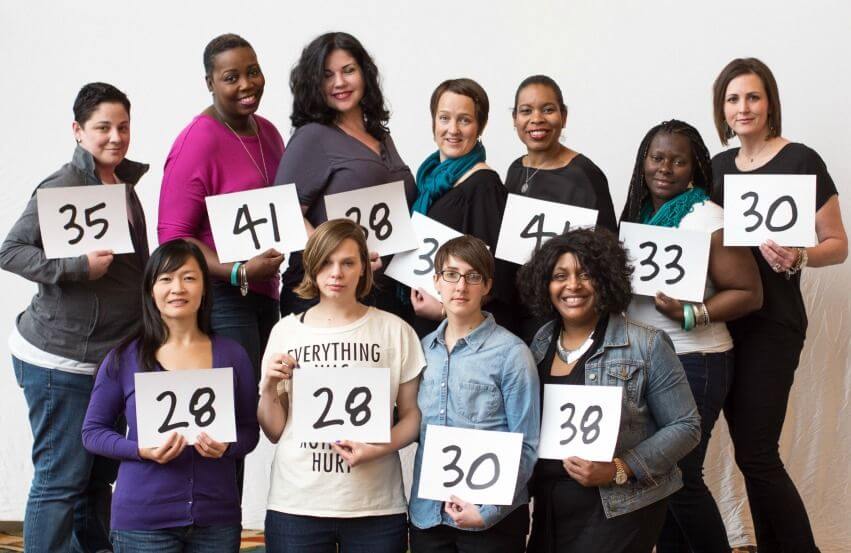
Young breast cancer patients with faulty BRCA genes have the same survival chances as those without, a study has found. The researchers, who looked at almost 3,000 women, also found outcomes were the same whatever kind of treatment women had – including mastectomies.

The study, published in The Lancet Oncology, found 12% of 2,733 women aged 18 to 40 treated for breast cancer at 127 hospitals across the UK between 2000 and 2008 had a BRCA mutation. The women’s medical records were tracked for up to 10 years. During this time, 651 of the women died from breast cancer, and those with the BRCA mutation were equally likely to have survived at the two-, five- and 10-year mark as those without the genetic mutation.

About a third of those with the BRCA mutation had a double mastectomy to remove both breasts after being diagnosed with cancer. This surgery did not appear to improve their chances of survival at the 10-year mark. But the researchers said surgery may still be beneficial.

The study’s author, Professor Diana Eccles, of the University of Southampton, said: “Women diagnosed with early breast cancer who carry a BRCA mutation are often offered double mastectomies soon after their diagnosis or chemotherapy treatment.

“However, our findings suggest that this surgery does not have to be immediately undertaken along with the other treatment.”

Read full, original post: Breast cancer survival ‘unaffected by faulty gene’

Can ‘public good’ GMOs change the conversation?

xhu grid x

Today, as technology is becoming more accessible and less expensive, smaller labs and researchers are able to produce GMOs at a reduced costs — with the seed produced available for public good, not profit. And this allows them to respond to small, localized food production issues such as bananas in Uganda and papaya in Hawaii.

For the development sector — where the impact of lost local crops can mean loss of income, increased poverty and loss of culture — does “public good” GMO change the debate?

For scientists, GMOs are not the only solution for food security — but they are an important one. “Combined with improved farming conditions, better use of water and reducing waste, GMOs can help to create better food options,” [plant molecular biologist Marina] Trigueros said.

And with the changing environment, she has no doubt that the future of food will be GMO.

“In ten years we are not going to have this discussion,” Trigueros said. “GMOs are going to be there. People will accept them and we hope to even see organic shops accepting them. The new generations will understand this is the food of science, and they will be fine with that.”

Read full, original post: Are GMOs the key to global food security?

Mars in 15 years? Not without overcoming 3 big challenges

mars

Editor’s note: Zahaan Bharmal is the Head of Marketing Strategic Communications at Google and has a degree in Physics from Oxford University

In July this year, the Earth and Mars will come closer than at any other point in the last 15 years. They will be in perihelic opposition, meaning Mars will reach the nearest point in its elliptical orbit while the Earth simultaneously passes directly between Mars and the sun.

Unfortunately, we are not ready to send humans to Mars in 2018.

If we are going to put a human footprint on Mars in the next 15 years, we will need to address three big challenges: rockets, restlessness and radiation.

SpaceX eventually plans to replace its current fleet with a single one-size-fits-all rocket, called the BFR, capable of carrying 100 people and a payload of 150,000kg.

Elon Musk believes that for people to actually want to go to Mars, the journey has to be fun. That is why plans for the BFR crew compartments include zero-gravity games, movies, lecture halls, cabins, and a restaurant, Musk believes passengers “are going to have a great time!”


[W]ill we be ready in 15 years? Uncertain. Radiation arguably represents our greatest threat. Clearly, the challenges in sending humans to Mars are immense. But so too are the opportunities, and I remain optimistic that we will see a human footprint on Mars in the next 15 years. As Elon Musk once said: “I think fundamentally the future is vastly more exciting and interesting if we’re a
spacefaring civilisation and a multi-planet species than if we’re not.”

Read full, original post: Will we be ready to put a human footprint on Mars in 15 years?

Uganda’s Minister of Science: Country will be better off with GMO law

article ED E x

Uganda’s Minister of Science, Technology and Innovation, Elioda Tumwesigye, has said Uganda should embrace science and innovation for faster economic transformation of Uganda.

Tumwesigye said it is surprising that Uganda and other African countries are still debating Genetically Modified Organism (GMO) yet countries like America had the debate many years ago and have since advanced.

Screen Shot at AM
Elioda Tumwesigye

“GMO debate was in the US 20 years ago. They are now talking about genetic editing,” Tumwesigye said, adding: “Uganda is better off with the [GMO] law than without. We want to protect our people.”

“If Africa can embrace science, we can achieve what we want [faster economic development]. Let’s use the technology as long as it is deemed safe,” he said, adding that his ministry is committed to building the science sector including supporting the controversial National Biotechnology and Biosafety Bill of 2012, also referred to as the GMO Bill.

Minister Tumwesigye noted that many Ugandans don’t have an idea about GMOs and the Bill, revealing that whenever they see something big including hybrids, they call them GMOs yet Uganda doesn’t have them yet.

Read full, original post: Uganda Better Off With GMOs Than Without-Minister

Why this winter’s flu is wreaking so much havoc

flu

To put it flatly, H3N2 is the problem child of seasonal flu.

It causes more deaths than the other influenza A virus, H1N1, as well as flu B viruses. It’s a quirky virus that seems, at every turn, to misbehave and make life miserable for the people who contract it, the scientists trying to keep an eye on it, and the drug companies struggling to produce an effective vaccine against it.

There’s long been a theory — and it appears to be gaining ground — that a person’s ability to fight off flu infections is based on their previous experiences with influenza. More specifically, their earliest experiences with flu. It’s thought that the first flu viruses that infect you leave an imprint on your immune system’s memory; if correct, the notion is that you’ll always be able to fight off viruses similar to your first flu foes better than you will other types of flu viruses.

“The biggest challenge or frustration is that H3 … for whatever reason, is the virus that we see causing the most severe illness in large numbers of people,” said [researcher Ed] Belongia. “And it’s also the virus for which our vaccine is least effective. And so that’s a double whammy that so far we have not been able to adequately deal with.”

Read full, original post: ‘The problem child of seasonal flu’: Beware this winter’s virus

Viewpoint: Russia Today’s ‘fake news’ about GMOs is a strategic attack by Putin on US science and technology

original

On Sunday [Jan. 7], CBS’s 60 Minutes ran a segment on the propaganda role of Russian news network RT, or Russia Today.

RT, the Kremlin’s primary English-language propaganda arm, is the mouthpiece for Russian President Vladimir Putin’s agenda. Fake news is its stock in trade, as illustrated by its blatant disinformation attacks on the reporting of news by respected media outlets like the BBC.

Russia’s targets are not limited to politics. Dr. Alex Berezow of the American Council on Science and Health has described how RT subtly undermines the technology and economic growth of the United States.

Genetic engineering in agriculture is a sector that holds intense interest for the Russians.

Follow the latest news and policy debates on sustainable agriculture, biomedicine, and other ‘disruptive’ innovations. Subscribe to our newsletter.

An example of the lengths to which Russian trolling in the United States will go to discredit genetic engineering was a wire-service story claiming that Melania Trump has banned genetically engineered foods from the White House and favors organic products.

The Russian agenda gets plenty of support from inside the United States. For decades the U.S. organic industry’s propaganda campaign has been trolling and dispensing the same sorts of disinformation to discredit the competition (that is, genetic engineering).

Read full, original post: Putin is mounting sly, self-serving attacks on American science

Have ‘bio-citizens’ pushed us to a regulatory turning point?

bio
[We are at the beginning of] an upstart revolution where citizens are deciding not to wait around for a cure or even a diagnosis. From analyzing their own genetics and mastering genome editing on simple bacterial and viral cells to prototyping surgical devices, these “bio-citizens” are using newly available biotechnologies and resources to better understand and improve their health. Last September, with hundreds of them from the U.S., Mexico, India and China, we met at the renowned MIT Media Lab to discuss governance models for a “biotech without borders” movement.

We as a society are at a turning point.  We could build adaptive regulatory support that ensures safe and responsible citizen participation in health research, or we could drive these emerging communities of innovators underground or out of existence.

Is self-experimentation with gene editing techniques something we should herald as a new form of “permissionless” innovation? Or will self-proclaimed biohackers, by testing the regulatory framework, harm the emerging ecosystem of citizens who contribute to biomedical innovation? Could they induce federal regulators to shut down all types of self-experimentation or severely restrain different forms of citizen-driven biomedical research?

The path forward is not to promote radical, unregulated science, but to develop engagement channels that force citizens, patients, ethicists and regulators to rethink and design an adaptive oversight system—one that fosters empowerment and responsibility rather than just adherence to the status quo.

Read full, original post: The Rise of Citizen Bioscience

11 states join Monsanto in lawsuit against California’s glyphosate cancer warning

AgSprayer

Monsanto Co has gained the support of 11 states in its fight to stop California from requiring the company to place cancer warnings on products containing glyphosate.

Monsanto, the National Association of Wheat Growers and several other agricultural groups have filed a federal lawsuit with the support of these 11 states.

Indiana, Iowa, Missouri and several other farming states said in court documents that adding such labels would be misleading because there is no definite link between cancer and glyphosate.

If California requires Monsanto to include cancer labels on their glyphosate products, businesses in the Midwest would also have to include the warnings (or stop selling their products), as their goods may wind up in California.

The Golden State added glyphosate, the main ingredient in the Roundup herbicide, to their list of cancer-causing chemicals in July 2017. Products containing this chemical will need to carry warnings by July 2018.

Read full, original post: Monsanto Gains Support of 11 States in California Cancer Dispute

Report: Price for blindness gene therapy Luxturna is ‘four times too high’ at $850,000

gene therapy

The $850,000 list price for a new medicine that treats a genetic form of childhood blindness is about four times too high for the value the drug provides, a nonprofit that studies the cost-effectiveness of new drugs said [on January 12].

The report from the Institute for Clinical and Economic Review focused on the medicine Luxturna, the first-of-its-kind gene therapy approved for the U.S. market and the most expensive medicine by list price. It is the latest flashpoint in the debate over how to afford an innovative medicine — in this case, a therapy that corrects a genetic mutation in people’s cells — that carries, and in some views, deserves, a pricey list cost.

In its report, ICER said a cost-effective price for Luxturna would be $153,000 to $217,000 — a discount of 75 percent or more. ICER cited a lack of data that Luxturna causes permanent improvements in vision as a key reason that its developer, Spark Therapeutics, should not be charging so much.

While Luxturna is a one-time therapy, it does not “cure” people born with mutated RPE65 genes; instead, it is meant to stop disease progression and restore some visual strength. But other gene therapies in pipelines could, by replacing faulty genes with functional ones, actually amount to cures.

Read full, original post: At $850,000, price for new childhood blindness gene therapy four times too high, analysis says

Preventing GMO gene flow: Scientists design synthetic species that can’t breed with wild counterparts

field crop x

Genetically modified organisms could potentially do a lot of good for the world, like ending the spread of diseases, or maybe one day helping us grow more food to feed the hungry.

There’s a big problem, though. When you release altered species out into the wild, how can you prevent them from breeding with untweaked organisms living in their natural environment, and producing hybrid offspring that scientists can’t control or regulate?

“This is a problem that has been recognised for a while,” says synthetic biologist Maciej Maselko from the University of Minnesota.

Together with his team at the university’s BioTechnology Institute, Maselko has come up with a radical solution to this scientific dilemma – but it’s not one that any procreation-inclined GMOs will like too much.

synthetic incompatibility
Yeast, unaltered vs self-destructing (Maselko et al./Nature Communications)

“We want something that’s going to be identical to the original in every way, except it’s just genetically incompatible,” Maselko explained to Nature.

The initial findings are reported in Nature Communications, and the newer research is being presented at the Plant and Animal Genome Conference in San Diego this week.

Read full, original post: Scientists Are Engineering GMO Species to Self-Destruct After Breeding in The Wild

IARC cancer agency mounts PR effort as probe of possible corruption grows

IARC ques x

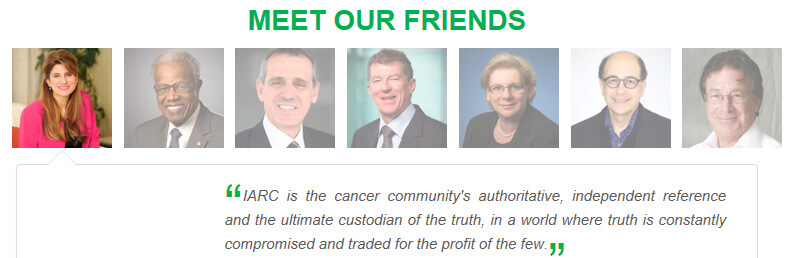
Usually, when a non-profit organization mentions “friends,” it’s part of a fundraising campaign. But for the International Agency for Research on Cancer, its “friends” announcement listed its supporters, as it referred to itself as the “cancer community’s authoritative, independent reference and the ultimate custodian of the truth.”

The move comes as the IARC, a research arm of the World Health Organization, finds itself under increasing scrutiny in the wake of its decision in 2015 to classify glyphosate as “probably carcinogenic,” using what is called a hazard evaluation.  The IARC classification was widely circulated by anti-chemical and ant-GMO advocacy groups, which argued for bans or tighter restrictions. The move has been widely criticized by scientists and regulatory bodies around the world.

The Friends announcement, made in November 2017, marks the first time a United Nations agency has launched a public relations effort to show its influence and reputation. The 50-year-old agency is under pressure from the US House of Representatives, which has demanded (and been refused) information on the agency’s decision-making process involving the determination of cancer risk. The agency also has been the subject of news stories (mainly from Reuters) reporting that it deliberately rejected information supporting the non-cancerous properties of the popular herbicide glyphosate and is facing increasing criticism about its methodology in determining cancer risks from other regulatory and public health organizations.

The Friends of IARC list is impressive. Its 19 members include Princess Dina Mired of Jordan; Pekka Puska, Finnish Member of Parliament and former head of that country’s national health institute; retired heads of other UN-connected agencies such as the Pan American Health Organization and World Health Organization; and research scientists. Three members of the “friends” are Nobel Laureates Harold Varmus, Harald zur Hausen and Tomas Lindahl. Anotheris Nubia Munoz, a Colombian cancer researcher who was, according to the Friends site, “nominated for the Nobel Prize in Medicine” in 2008 (except for Peace, nominees who don’t receive prizes are never publicly announced).

It is not clear what makes a “friend of IARC.” But according to the website:

The Friends of IARC are our ambassadors, testifying to the work and values of the Agency and supporting us in reaching out to society and stakeholders, in order to reach our goal of reducing the global burden of cancer.

Many friends are also recipients of the IARC medal of honor, given to “acknowledge and reward the work of scientists whose research has made an outstanding contribution to advancing our understanding of the biology or of the epidemiology of cancer.” Recipients who are also Friends include Richard Peto, Richard Klausner, David Lane, zur Hausen, Varmus, Munoz, and Princess Mired.

friends

While all of these recipients and members are noted leaders in their fields, it is highly unusual for a UN agency to set up a friends site.

However, IARC has been needing some public relations help, due to several developments:

  • IARC gained notoriety mainly because its determination in a 2015 Monograph that glyphosate, the active ingredient in the herbicide RoundUp (that patent has now lapsed), was a “probable carcinogen.” No other regulatory or advisory agency, including IARC’s parent organization, WHO, has declared the herbicide to be carcinogenic. However, IARC’s ruling was quickly supported by non-government organizations, including Greenpeace and Friends of the Earth, in their efforts to halt the public use of genetically modified crops, many of which are bred to grow even in the presence of glyphosate.
  • A Reuters story earlier in 2017 reported that IARC had overlooked data showing no connection between glyphosate and cancer. However, according to Reuters, IARC member and US National Cancer Institute epidemiologist Aaron Blair knew about—but did not share—the study’s results:

    Previously unreported court documents reviewed by Reuters from an ongoing U.S. legal case against Monsanto show that Blair knew the unpublished research found no evidence of a link between glyphosate and cancer. In a sworn deposition given in March this year in connection with the case, Blair also said the data would have altered IARC’s analysis. He said it would have made it less likely that glyphosate would meet the agency’s criteria for being classed as “probably carcinogenic.

    Why didn’t Blair share the data? Because he couldn’t—it was at the time unpublished and IARC rules forbid review of unpublished reports.

  • Meanwhile, US Congressional inquiries have continued to dig into IARC’s decision-making process. Representatives Lamar Smith, Andy Biggs and Frank Lucas wrote IARC director Chris Wild, first demanding he testify before the House Science and Technology Committee. After Wild refused, the Congressmen wrote again, in December threatening to withdraw support for IARC if he does not reconsider his refusal to provide information and testify before the Committee:

Since 1985, IARC has received more than $48 million from NIH, $22 million of which has gone to the Monograph Programme (IMO). The U.S. Constitution grants Congress the power to oversee the spending of taxpayer dollars. As such, the Committee is required to carry out its Constitutional duty to ensure the stewardship of these funds. Given that the Committee has questions regarding the scientific integrity of the IMO, the Committee may decide to consider the appropriateness of providing continued U.S. federal government funding for the program. In light of these considerations, the Committee requests that IARC reconsider its position and provide a list of potential witnesses who are available to testify before the Committee.

  • And, while IARC’s friends include three Nobelists, another group of prominent toxicologists from Europe and the United States, declared that IARC’s “cancer classification on hazard-identification such as IARC and UN GHS are outmoded.” The scientists also pointed to the fallacy of IARC’s placement of chemicals with different potencies and modes of action, and warned that the WHO arm was triggering unnecessary health scares, and diversion of public funds to investigate cancer risks.

All in all, IARC’s needs may extend beyond boosters.

Andrew Porterfield is a writer and editor, and has worked with numerous academic institutions, companies and non-profits in the life sciences. BIO. Follow him on Twitter @AMPorterfield.

Sex and genetics: We’re looking for someone who isn’t an exact match of ourselves

Beauty and the Beast after credits hq

It happens with Abraham and Sarah. It happens with Oedipus and Jocasta. And certainly, it happens in a big way with Jaime and Cersei Lannister. From the Bible, to the plays of Sophocles, to the hit TV series Game of Thrones, we humans enjoy juicy stories about incestuous relations. Most of us want to keep it on the pages of fiction. But not everybody. Some of those who do it for real defend their actions, saying they’re afflicted with a condition called genetic sexual attraction. Sounds scientific, but don’t bother looking for GSA in the Diagnostic and Statistical Manual of Mental Disorders 5th Edition (DSM-V). You won’t find it because it doesn’t exist. There is neither a disorder, or a sexual orientation, that gives people a sexual preference for their siblings, or their children. Writing last year for Salon Magazine, Amanda Marcotte did a thorough job debunking GSA.

sex 1 5 18 2The premise of GSA is that there must have been some evolutionary benefit to incest way back in history. Getting close to people outside of your own group could have been dangerous in the Stone Age, after all. He or she might attack you. If there was a benefit, logic dictates there would be genes for this trait floating around the human gene pool. That would lead some siblings to be uncontrollably attracted to one another. While this concept does dovetail with some insights and evidence from modern genetics suggesting that mixing between distant cousins –third cousins possibly being optimal– could produce more benefits than harm, if falls apart if one considers matches between first degree relatives and first cousins. This raises the question what the interaction between genetics and sexual attraction and mate selection really is. It turns out that biology does not generally drive people to seek their opposites, but it does make them attracted to people who aren’t a genetic match.

Genetic basis of sexual desire

Genes do exert a powerful, direct effect on sexual desire. One key example that was uncovered more than a decade ago involves the DRD4 gene, which affects receptors for dopamine, which plays a major role in pleasure.  Research by a team at Hebrew University, in Jerusalem, demonstrated in a watershed paper in the journal Nature in 2006 that simple variations in DRD4 affect the libido level. Without any pathology coming into play, some people are simply more driven than others by a desire for sex, simply because of their genetic makeup. If you have one version of the gene, you are more horny than someone who has a more common version of the gene, and that person is more horny still than someone else who has yet another version.

Along with dopamine receptors and other matters of brain chemistry, genes control body shape and proportions, and today we know that both men and woman are attracted to each other’s shapes. Men like curves, and in very specific proportions.

The HLA system: Insight from the immune system

Perhaps most telling is the outcome of a research study published last year in Scientific Reports involving a complex of genes known as the human leukocyte antigen (HLA) system. The term antigen refers to proteins that are expressed on the surfaces of cells in many different tissues, proteins that are encoded by one’s HLA genes. The immune system uses the HLA antigens to distinguish an individual’s own tissues from what is foreign, for instance a virus or a bacterium. This keeps the immune system from attacking “self” tissues and cells, meaning those that belong to the individual who owns the immune system. Not all humans have the same combination of HLA antigens on their tissues, but some do. There are various HLA groups, just as there are various blood groups. Consequently, HLA genetics is at center stage in transplant medicine. It also comes into play in autoimmune diseases. Rheumatoid arthritis and systemic lupus erythematosus (SLE) are common examples of autoimmune diseases. In such diseases, the immune system misidentifies tissues a foreign, when actually they are self.

sex 1 5 18 3Since research on non-human animals has shown that HLA antigens also are related to odors released by individuals and recognition of odors by others, scientists thought to explore whether such an effect also could occur in humans. It turns out that a similar thing happens in humans. Volunteers consisted of couples who were tested for their HLA patterns. They were compared in different ways with their reported degrees of sexual satisfaction with their partners, and with their partners’ HLA patterns. Each member of a couple also was asked about his or her preference, or lack thereof, for the partner’s body odor. The findings suggested that humans tend to be more attracted to people who do not match their own HLA patterns. In other words, someone who is a good recipient of your bone marrow is less likely to want you as a mate than someone who is not a good tissue match with you.

But you may know that whenever somebody requires bone marrow, the first place that doctors check is within the family, because that’s where HLA matching is most likely. Considering all of this, a tendency for incest does not appear to be worked into our genetic programming. How nice for us that Sophocles, the biblical writers, and the characters in Game of Thrones were not up to speed on HLA genetics.

David Warmflash is an astrobiologist, physician and science writer. BIO. Follow him on Twitter @CosmicEvolution

Neuroevolution: Artificial intelligence learns by adapting and evolving

AI
[An] old idea—improving neural networks not through teaching, but through evolution—is revealing its potential. Five new papers from Uber in San Francisco, California, demonstrate the power of so-called neuroevolution to play video games, solve mazes, and even make a simulated robot walk. Neuroevolution [is] a process of mutating and selecting the best neural networks.

At Uber, such applications might include driving autonomous cars, setting customer prices, or routing vehicles to passengers. But the team, part of a broad research effort, had no specific uses in mind when doing the work. In part, they merely wanted to challenge what Jeff Clune, another Uber co-author, calls “the modern darlings” of machine learning: algorithms that use something called “gradient descent,”

The most novel Uber paper uses a completely different approach that tries many solutions at once. A large collection of randomly programmed neural networks is tested (on, say, an Atari game), and the best are copied, with slight random mutations, replacing the previous generation. The new networks play the game, the best are copied and mutated, and so on for several generations.

[G]oing forward, the best solutions might involve hybrids of existing techniques, which each have unique strengths. Evolution is good for finding diverse solutions, and gradient descent is good for refining them.

Read full, original post: Artificial intelligence can ‘evolve’ to solve problems

As climate heats up, can drought-tolerant GMO crops help prevent famine and conflict?

indiamonsoon

When most of us think about the threats posed by climate change, events like floods, droughts, intense storms and hotter temperatures come to mind.  These are all, according to the vast majority of scientists, exactly what we can expect to see more and more of.  However, what is often overlooked are the sociopolitical consequences of these climatic changes. In other words, we tend to view these natural disasters in a vacuum without recognizing the myriad ways in which climate change is both directly and indirectly shaping economies, cultures and governments.

This being the case, looking back at conflicts such as those in Syria and the Sudan, it has become increasingly clear that climate change played a role in triggering the instability that led to these conflicts. Which begs the question: could these conflicts have been prevented through non-political measures that responded to changes in climate?

The answer increasingly seems to be yes. Further developments in biotechnology and a deeper understanding of what triggered the conflicts in Syria and Sudan point to novel prevention solutions grounded in modern agriculture. The arrival of genetically engineered (GE) drought-tolerant crops that can withstand longer and more intense droughts could have the potential to prevent future conflicts.

Read full, original post: GMO crops could help stem famine and future global conflicts

Non-GMO, organic, gluten-free: Are food labels overwhelming consumers?

Editor’s note: The following is part of an editorial by Capital Press, a website covering agriculture in the US West

Foodies, farmers, processors and others spend a lot of time talking about labels, and there are plenty to talk about.

They include how and where food was grown and processed and what is — and isn’t — in it. Labels spell out whether food has gluten, genetically modified ingredients and whether it was grown organically.

They also include how many calories a serving contains and, in many cases, how much fat and other substances are in it.

All of which is fine. We’re in favor of information. But we also wonder how much time consumers spend reading labels on food items.

The proliferation of labels also makes us wonder whether consumers are being overwhelmed. Does the fact that potato chips don’t have gluten warrant a separate label? Does a busy shopper need all that information, down to the daily value percentage of dietary fiber?

Yet the call is for more labels, not fewer.

So go ahead, plaster more labels on everything. But we still believe most consumers primarily rely on another label — the price tag — more than all the others combined when they decide what to buy.

Read full, original post: Editorial: Go ahead, put a label on it

Viewpoint: Uganda’s President Yoweri Museveni should trust country’s scientists—not activists—on GMO safety

beans uganda x

Editor’s note: Arthur Makara is the executive director of the Science Foundation for Livelihoods and Development in Uganda

When [Uganda’s] President [Yoweri] Museveni announced his decision to defer signing the National Biosafety Act 2017 into law a few days ago, I wrote a piece clarifying that he is likely to have been misinformed. I based my argument on the nature of the issues he raised, which I felt were a reflection of something other than the President’s well-established views on science, technology and innovation, and specifically on biotechnology.

yoweri president de louganda
Uganda’s President Yoweri Museveni

Uganda has been praised globally for its quality of scientists, and scientific outcomes, and the evidence is there for everyone to see. The Members of Parliament passed the National Biosafety Act because many of them who went to NARO institutes — Namulonge, Kawanda, the National gene bank in Entebbe, livestock research institute in Tororo, and the Makerere University teaching and research laboratories — were amazed at what Uganda has in terms of capacity and the quality of scientists and the science they are doing. They were further encouraged by the patriotism of the scientists and above all, the need to give scientists a legal and regulatory direction as they continue with new and emerging endeavors such as biotechnology for the benefit of all Ugandans.

I therefore encourage the President to consult more with his true cadre — the scientists.

Read full, original post: Commentary: Listen to Uganda’s scientists

Could nearby alien civilizations be more primitive, and therefore undetectable?

alien

Editor’s note: Abraham Loeb is chair of the astronomy department at Harvard University

As we discover numerous habitable planets around other stars in the Milky Way galaxy, including the nearest star, Proxima Centauri, one cannot help but wonder why we have not yet detected evidence for an alien civilization.

Based on our own experience, we expect that civilizations much older than ours will be scientifically savvy and hence technologically advanced. But it is also possible that a simpler lifestyle rather than scientific prosperity has dominated the political landscape on other planets, leading to old civilizations that are nevertheless technologically primitive.

We could search for the remnants of technological civilizations from afar. But if we detect nothing through our telescopes, the only way to find out whether long-lived civilizations are technologically primitive is to visit their planets. Astrosociology could become a particularly exciting frontier of exploration as we venture into space.

Over the billions of years available to our technological civilization to explore the Milky Way, we could compile a sociological census of billions of exoplanets. And even if we find mostly faith-based alien cultures instead of advanced infrastructure that would accelerate our own technological development, it would be fascinating to explore the diversity of galactic interpretations of the concept of God.

Read full, original post: Are Alien Civilizations Technologically Advanced?

Ethical questions surround deep brain stimulation therapy for Parkinson’s and other neurological diseases

deep brain
[D]eep brain stimulation [is] a type of therapy in which one or more electrodes are inserted into your brain and connected to a surgically implanted, battery-operated medical device in your chest. This device, which is approximately the size of a stopwatch, sends electric pulses to a targeted region of your brain. The idea is to control a variety of neurological symptoms that can’t be adequately managed by drugs.

Over the last twenty years, deep brain stimulation, known as DBS, has become an efficient and safe alternative for the treatment of chronic neurological diseases such as epilepsy, Parkinson’s disease and neuropathic pain.

[T]hese new applications are raising profound ethical questions about individuality, personality, and even what it means to be human.

Gabriel Lazaro-Munoz, an assistant professor at The Center for Medical Ethics and Health Policy at Baylor College of Medicine [said] “These responses define us as human beings and dictate our autonomy. If a participant experiences a personality change, does this change who they are or dehumanize them by altering their nature? These are some of the questions we have to consider.”

And then there is the question of money. The costs of DBS are covered by most insurance companies and Medicare only for FDA-approved targets like Parkinson’s. Off-label uses are not covered, at least for now.

Read full, original post: Deep Brain Stimulation for Mental Illnesses Raises Ethical Concerns

Public controversy over GMOs exposes divide between scientists and consumers

gmo monsanto protest toronto

Editor’s note: The following is from a Q&A with Nancy Cox, dean of the University of Kentucky College of Agriculture, Food, and Environment.

Q: [A] major concern among consumers revolves around genetically modified organisms. Can you touch on this and tell us where the science stands today?

A: Certainly. The concept of genetically modified organisms first came about when genes were inserted into plants for a certain characteristic. One of the most famous ones of those is Roundup Ready soybeans. A gene would be inserted into the soybeans that would make them resistant to Roundup so you could spray those soybeans with Roundup and it would kill all the weeds and preserve the soybeans. It was a great agronomic production practice. It made you use less herbicide because you could control the weeds better.

That said, consumers had a very negative reaction to the concept of altering the genes in an organism that they or animals were going to eat. The technology has generally been proven to be very safe, but it’s a big challenge for the consumer to understand that the way scientists do.

The whole GMO story has been a lesson in the divide between the scientific community and the consumer and I think it taught the scientific food production communities a big lesson about not developing technologies that were unacceptable to consumers.

Read full, original post: The food revolution: How consumer demand is changing the way we eat, what we eat