Have ‘bio-citizens’ pushed us to a regulatory turning point?

bio
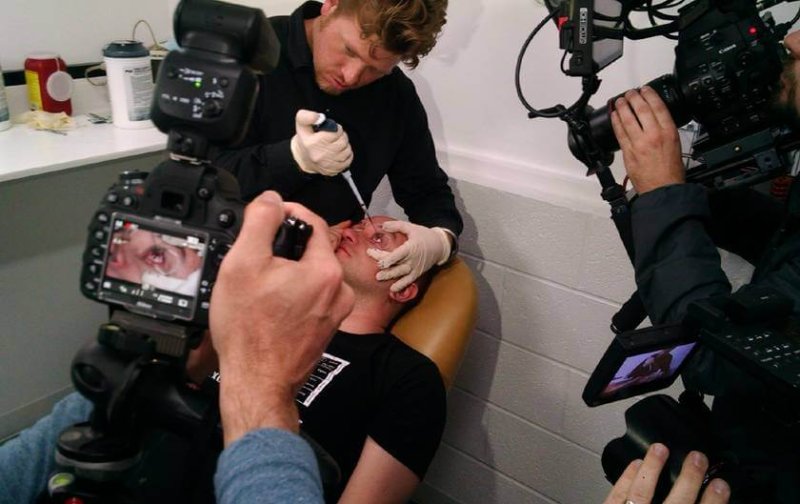
[We are at the beginning of] an upstart revolution where citizens are deciding not to wait around for a cure or even a diagnosis. From analyzing their own genetics and mastering genome editing on simple bacterial and viral cells to prototyping surgical devices, these “bio-citizens” are using newly available biotechnologies and resources to better understand and improve their health. Last September, with hundreds of them from the U.S., Mexico, India and China, we met at the renowned MIT Media Lab to discuss governance models for a “biotech without borders” movement.

We as a society are at a turning point.  We could build adaptive regulatory support that ensures safe and responsible citizen participation in health research, or we could drive these emerging communities of innovators underground or out of existence.

Is self-experimentation with gene editing techniques something we should herald as a new form of “permissionless” innovation? Or will self-proclaimed biohackers, by testing the regulatory framework, harm the emerging ecosystem of citizens who contribute to biomedical innovation? Could they induce federal regulators to shut down all types of self-experimentation or severely restrain different forms of citizen-driven biomedical research?

The path forward is not to promote radical, unregulated science, but to develop engagement channels that force citizens, patients, ethicists and regulators to rethink and design an adaptive oversight system—one that fosters empowerment and responsibility rather than just adherence to the status quo.

Read full, original post: The Rise of Citizen Bioscience

{{ reviewsTotal }}{{ options.labels.singularReviewCountLabel }}
{{ reviewsTotal }}{{ options.labels.pluralReviewCountLabel }}
{{ options.labels.newReviewButton }}
{{ userData.canReview.message }}

Related Articles

Infographic: Global regulatory and health research agencies on whether glyphosate causes cancer

Infographic: Global regulatory and health research agencies on whether glyphosate causes cancer

Does glyphosate—the world's most heavily-used herbicide—pose serious harm to humans? Is it carcinogenic? Those issues are of both legal and ...

Most Popular

Screenshot 2026-05-06 at 2.56
Singularity crisis ahead? Can super babies save us from rogue AI geniuses?
Screenshot-2026-03-13-at-12.14.04-PM
The FDA wants to make many popular prescription drugs OTC—a great idea. Here’s why it’s unlikely to happen
Screenshot-2026-04-20-at-2.26.27-PM
Viewpoint — Food-fear world: The latest activist scientists campaign: Cancer-causing additives
Screenshot-2026-05-01-at-11.56.24-AM
‘Science moves forward when people are willing to think differently’: Memories of DNA maverick Craig Venter
images
The never-ending GMO debate: Pros and cons
Screenshot-2026-05-01-at-1.29.41-PM
Viewpoint: What happens when whole grains meet modern food manufacturing? Labels don’t tell the whole story.
Screenshot-PM-24
Viewpoint: The herbicide glyphosate isn’t perfect. Banning it would be far worse.
Screenshot-2026-04-03-at-11.15.51-AM
Paraben panic: How a flawed study, media hype, and chemophobia convinced the public of the danger of one of the safest classes of preservatives
Screenshot-2026-04-30-at-2.19.37-PM
5 myths about summer dehydration that could damage your health — or even kill you
Screenshot-2026-05-06-at-2.07.43-PM
Manufacturing a conspiracy: The timeline of how  the White House embraced the fringe claim that scientists are being mysteriously murdered
Screenshot-2026-04-12-135256
Bixonimania: The fake disease scam that AI swallowed whole
glp menu logo outlined

Get news on human & agricultural genetics and biotechnology delivered to your inbox.