How the media, government and Google talk about GMOs differently—and why it matters

GMO questions e

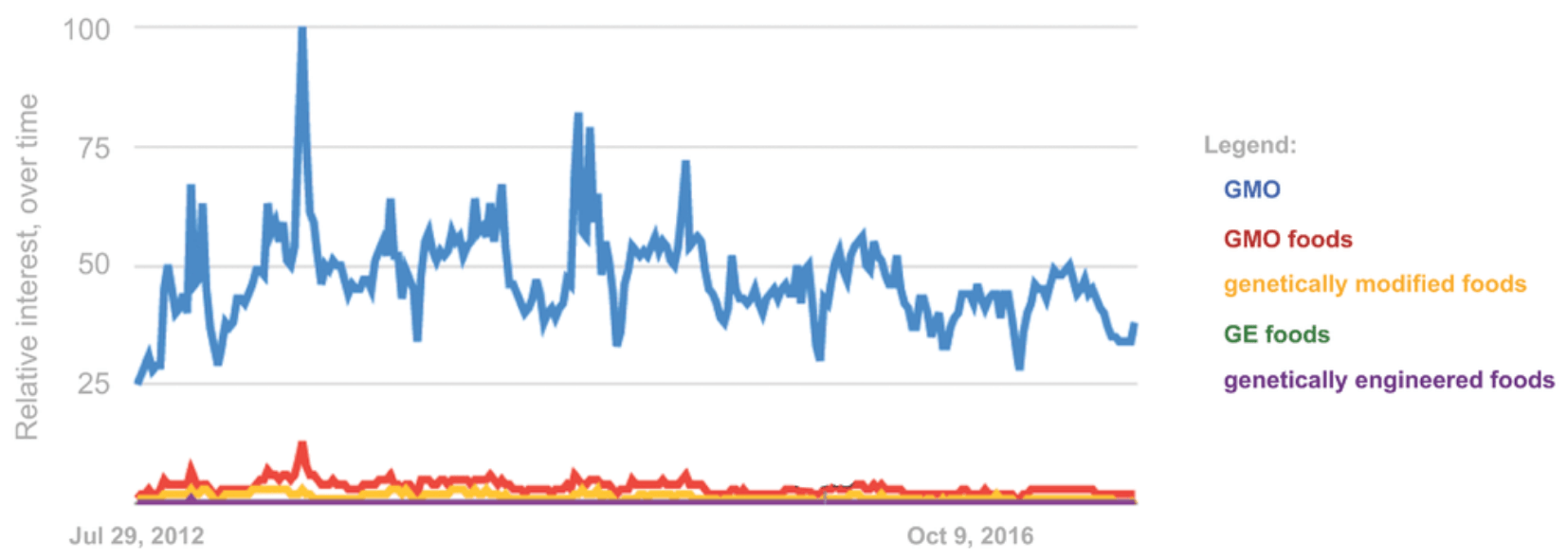
Here, semantic network analysis is performed to characterize the presentation of the term “GMO (genetically modified organism),” a proxy for food developed from GE crops, on the web. Texts from three sources are analyzed: U.S. federal websites, top pages from a Google search, and online news titles. We found that the framing and sentiment (positive, neutral, or negative attitudes) of “GMO” varies across these sources.

Only 10% of the most central words were shared by all three sources, while a much larger proportion (between 42–78%) of words were unique to each source. This indicates that information about food derived from GE crops is portrayed differently by federal websites, highly trafficked websites, and online news. For example, we found that online news titles were unique in their use of terms suggestive of argumentation, including ban, fight, debate, challenge, kill, and battle….

This focus on argumentation and controversy may impart a lack of confidence in the safety or usefulness of commercially available GE products. Alternatively, federal websites’ unique use of words related to the regulatory process, including regulation, protection, ensure, evaluate, review, and assessment, may invoke trust in the safety of commercial GE crops.

Screen Shot at PM

Read full, original post: Semantic Network Analysis Reveals Opposing Online Representations of the Search Term “GMO”

Blight-resistant GMO potatoes could reduce pesticide use in Uganda

d b d f a d b

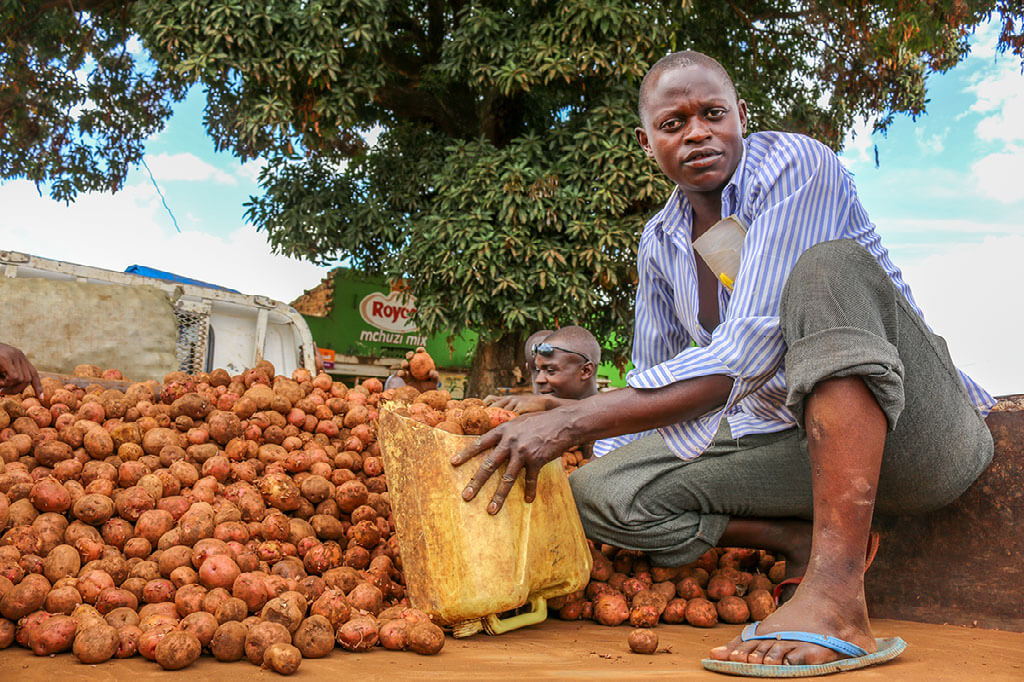
Uganda is steadily progressing towards having a potato that will not require chemical spraying.

According to Dr Alex Barekye, who is the director of Kachwekano Zonal Agricultural Research Development Institute in Kabale District, this new variety has shown great results in resisting late Blight disease that is a menace in potato growing areas.

The new GM potato will keep chemicals off the crops and that means farmers who could not afford chemicals will now begin to harvest more. The chemical companies will lose and farmers will gain, contrary to the saying that GMOs are all about chemicals and multinational corporations, and not for farmers.

Uganda, despite the high number of research trials, ratification of Cartagena protocol on Biosafety in 2001, and the passing by Cabinet of Biosafety Policy in 2008, remains a laggard in having a domesticated comprehensive regulatory framework for genetic engineering research developments.

As in most African countries, the major adoption challenge is the political will. Political will is seen in action not utterances. The delay in passing the Biosafety Bill and the further delay by the President to assent to the same could be interpreted as a “go slow” policy position. Going slow implies farmers will continue to suffer with pests and diseases.

Read full, original post: GM potato: Variety could deflate GMO myths’ bubble in Uganda

Twin studies suggest our genes heavily influence how children ‘gaze’ and view interactions

The way children view both social and nonsocial situations may be determined at least in part by their genes, a new study of identical and fraternal twins suggests.

Identical twins tend to look at the same parts of pictures, whether they depict children playing or an object, such as a musical instrument. Fraternal twins also show viewing patterns that are similar, but less so than identical twins. The gaze patterns of unrelated children are even less alike.

[Researcher Dan] Kennedy and his colleagues used eye-tracking technology to monitor the gaze of 119 identical and 114 fraternal same-sex twin pairs. The children watched as photographs of social scenes such as children playing, and of objects such as road signs, appeared for three seconds on a screen. The team then created a ‘heat map’ from the eye-tracking data that charts the parts of each photo that caught the children’s attention.

The viewing patterns are most similar among identical twins. On a scale of 0 to 1, with 1 indicating exactly the same patterns, identical twin pairs scored an average of 0.6. Fraternal twins are also close, with a score of 0.56, and pairs of unrelated children had an average score of 0.54. Although these numbers seem similar, the differences are statistically significant.

Kennedy says his next step is to study how individual differences in eye movements relate to differences in behavior and cognition.

Read full, original post: Genetics governs children’s gaze patterns, twin study finds

Will Canadians accept unlabeled genetically modified salmon?

salmon getty

Between April and June [2017], Canadians participated in an unprecedented experiment: supermarket shoppers bought about five tonnes of genetically engineered (GE) Atlantic salmon, making it the first transgenic animal approved and sold for human consumption anywhere in the world. What’s notable, beyond the precedent, is that none of the shoppers knew they were buying it.

It has taken twenty years for this fish to be approved for human consumption in both the United States and Canada, but complications over disclosure rules for GE animals are keeping the fish out of American stores for now. This has not been the case in Canada, where Health Canada does not require the GE fish—sold mostly as filets to restaurants and supermarkets—to be labelled in any way.

[Robert Devlin, a research scientist at Canada’s Department of Fisheries and Oceans] says it’s not certain that the public will accept GE salmon. But he also says the proliferation of GE animals seems inevitable. To date, there are more than thirty-five species of fish that have been genetically engineered for various traits, he says, and right now, at least fifty labs in the world are working to engineer fish that can be safely contained in open net pens in the ocean. “This technology is coming, and we in Canada are just the first.”

Read full, original post: Please Enjoy Your Genetically Engineered Dinner

Rethinking the pesticides–neonicotinoids–bee health crisis narrative: Why the media get it wrong

Screen Shot at PM

Are bees endangered because of the use of insecticides, and in particular the class of chemicals known as neonicotinoids, which are used on many crops?

It’s a debate that’s played out in research laboratories and in the media over the past decade since the phenomenon known as Colony Collapse Disorder roiled the bee industry in California and elsewhere in North American and Europe beginning in 2006-7.

Needless to point out to those who have followed the neonics controversy, this is a highly politicized issue. Most people with a stake in this debate, including entomologists, farmers and beekeepers, are genuinely struggling to understand the complex factors behind why bees face a host of problems, from attacks from the killer varroa destructor mite to the overuse of insecticides to kill them and the pervasive use of agricultural pesticides. But in the media and in cyberspace, hyperbole and ideology have come to eclipse rational discussion and the sometimes plodding pace of science. The highly-charged debate now pits activists, including some advocacy-minded scientists, against the agro-chemical industry and many scientists who view neonics as a relatively minor driving force in the health issues confronting honeybees and bumble bees.

One resource that has often been looked upon by the media as an objective source is the Bee Informed Partnership (BIP)—a US Department of Agriculture project developed in cooperation with University of Maryland entomologist  Dennis vanEngelsdorp. Each year in the spring it releases an annual U.S. ‘bee hive loss estimate’. Each year, it seems, the report frames the debate over whether the ‘bee crisis’ is accelerating or abating.

Media v Science?

The popular narrative among journalists and on the Internet in recent years has been that honey bees and wild bees face impending doom—it’s been dubbed a beepocalypse or beemageddon, with most of the ire focused on a class of pesticides, applied mostly as a seed coating, known as neonicotinoids. The insecticide was introduced in the 1990s in large part to replace chemicals that were demonstrably hurting bees and posed human health dangers as well.

Bee health is a genuine concern. After all they are trucked around from farm to farm as insect livestock. And entomologists and the USDA say that varroa mites have been infesting bee hives at an accelerating rate over the past few decades, and present a serious and on-going threat. Pesticides rank low as a likely cause of bee health problems, contend most entomologists, but that’s not the way the issue has played out in the media and online.

Anti-pesticide campaigners  have long rejected the conclusions of government agencies and scientists, deciding that bee health issues could not be driven by something as prosaic as a well-known parasite, and have focused instead on neonics.

The question of the relative role of neonics in bee health is fascinating because of the split in the science—some lab studies point to potential serious problems linked to one or more of the neonics but field research, meta-studies and the hard numbers worldwide—bee hives are at record numbers globally—tell a much different story.

The release of BIP’s death count has become a spring ritual followed closely by those invested in beepocalypse narrative; in years when the BIP loss numbers have been high, the media has generally taken them as confirmation that the disaster has finally arrived. Activists fill the social media echo chamber with scare blogs, which they often use as an anchor issue for fund raising or campaigns.

But the most recent year’s survey results didn’t exactly support that narrative. Over-winter losses, which is when bees face severe threats from cold weather, were 21.1%, the lowest in the 10 years the survey has been in existence. Taken together with previous years’ findings, the 2016-17 number continues a downward trend of over-winter losses that, on the current path, will reach the 15% goal set in the 2015 National Pollinator Strategy by 2024.Screen Shot at PMSeven years ago, however, BIP began collecting survey responses on in-season (summertime) honeybee losses as well. However, combining in-season and over-winter losses can result in an alarming and spectacularly misleading loss number. For example, in 2016, it was 44%, making it appear that nearly half of all US honeybees had died, which is exactly how most of the media reported it.
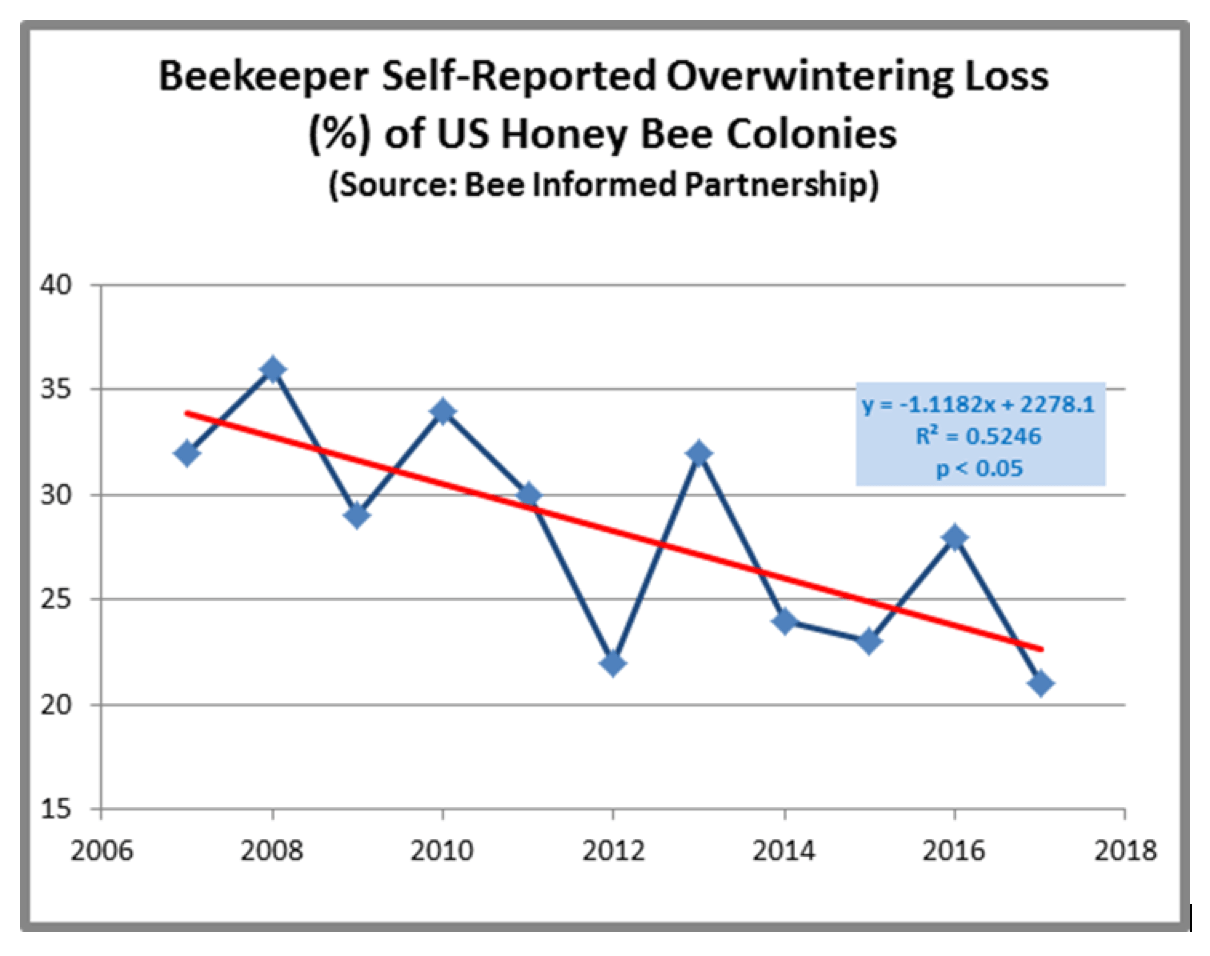
In the latest reporting year, 2016-17, the combined result was lower: 33.2%. This was the second lowest in the seven years of reporting combined statistics, but it was still an occasion for apocalyptic headlines: “A third of the nation’s honeybee colonies died last year,” headlined USA Today. Time, which ran a scare cover story years ago pondering “A World Without Bees”—an article criticized by numerous scientists—stayed true to form, headlining: “Honeybee Deaths Are Down, But the Beepocalypse Continues.”

No beepocalypse

That’s shallow journalism. While the Bee Informed Partnership’s combined loss numbers generate media attention, they provide a very thin sliver of the picture bee health, and the numbers themselves are easily manipulated to fit a narrative. There are three major reasons why:

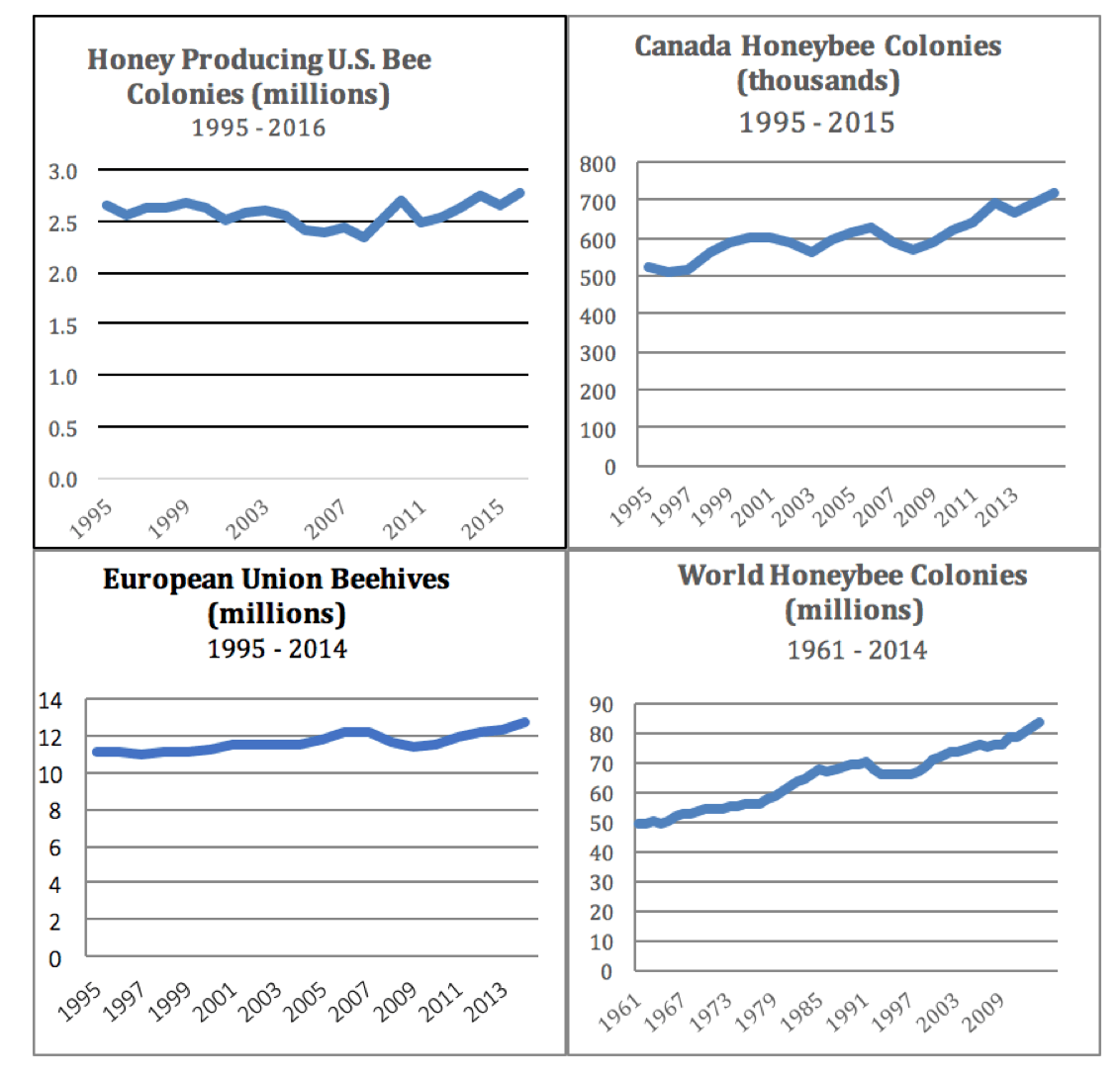
The first reason is that the macro statistics of the total bee population tell a different story than the BIP numbers. The previous year, when it was reported that “a third of the nation’s honeybee colonies died”, the US honeybee population actually reached a 22-year high. The untold story in the popular media, although reported on science-based websites like the GLP and on university and bee expert sites, is that despite some ups and downs, the number of honeybee colonies has remained remarkably stable since the mid-1990s, when neonicotinoids were introduced.

They’ve hovered around 2.5 million hives in the US, even through the challenges of Colony Collapse Disorder from 2006-2010, with the last five years seeing significant growth in bee numbers. There was indeed a sharp dive in US bee numbers in the eighties and early nineties, when the Varroa mite invaded the US, but those declines leveled off and eventually reversed in the years neonics have been on the market. Overall numbers are steady or increasing in Canada, Europe and on every continent except Antarctica (where there are no honeybees), over the last 20 years—the entire period that neonicotinoid pesticides have been on the market.
Screen Shot at PM

USDA annual report on honey-producing colonies in the U.S. (USDA publishes its final statistics one year after preliminary estimates); Canada; Global/FAO 1/FAO 2

Based on government statistics, bee population worldwide trend has been positive for over half a century. Between 1995 and 2014, we have seen the following increases in honeybee populations:

  • North America: +8%
  • Europe: +10%
  • Africa: +19%
  • South America: +43%
  • Asia: +43%
  • Ocenia: +30%

Despite these rising trends, inflammatory media stories and the NGO social media echo chamber have won the day in Europe, where politicians have put aside the findings of entomologists and appear to be preparing to not only extend their “temporary” 2013 ban, but expand it to almost all uses, even on crops bees never visit. The same activist groups – and of course the media – continue to exert enormous political pressure in the US to follow suit. So far, EPA appears to be resisting, as their recent draft assessments of the three largest selling neonics suggests, but many close observers of the agency believe the process has been touch and go for some time.

How and why bees naturally die off and beekeepers replenish hives

A new Bee Informed Partnership report will be out in a few months. It will be interesting to see if reporters make the distinction between the normal seasonal bee colony losses experienced by beekeepers, which have been a factor in beekeeping since time immemorial, and overall population trends.

Bees reproduce very rapidly—the normal life-span of a worker bee in the summer months is only 6 weeks—and so beekeepers can rebuild their hives very rapidly as well.  Not long ago, many beekeepers in northern latitudes, particularly in Canada, where intense cold makes keeping bees over winter a challenge, would empty their hives of bees, harvest all the honey in them, and start over with new queens and purchased ‘packaged bees’ the next spring. They had a self-inflicted 100% loss rate. But they had healthy, thriving bee populations throughout the summer and a stable, thriving beekeeping industry as well.

Colony losses, whether overwinter or in the spring, represent an economic cost to beekeepers, and they can provide clues to overall hive health. But the numbers we see in recent years do not portend calamity. In fact, they can, and do, rise and fall with little effect on the total number of beehives in the country, or in the world—which is almost entirely determined by how many bee colonies beekeepers decide to “grow.” This, in turn, is largely determined by economic considerations—the price of honey or the going rate for pollination services.

Predictably, however, every time the Bee Informed Partnership releases its headline-grabbing annual loss number, the media prophesizes doom. A rough analogy might be if a stock market survey only reported those stocks that had experienced losses at some point during the year, without bothering to mention that overall the market was steady or rising.

One might argue that it’s not BIP’s responsibility to ensure that the media doesn’t misinterpret or misuse its statistics. Fair enough. There’s also no question that Dennis vanEngelsdorp, who initiated the BIP, is someone dedicated to the welfare of honeybees and beekeepers. It was vanEngelsdorp and a co-author who conducted the first research into the mysterious disappearance of worker bees from the hive, a phenomenon they dubbed Colony collapse Disorder”, and he has been one of the nation’s foremost investigators of the many diseases afflicting bees today.

All of this, however, simply casts the problems with the bee loss survey into starker relief. Any scientist—or indeed any competent science reporter—taking a close look at the BIP’s methodology would have to acknowledge that it suffers from numerous limitations, and some of them are so severe that they make its results practically meaningless as a guide to the true state of bee populations.

Not all bee health data are created equal

This brings us to the second big problem: the BIP’s numbers are drawn from a voluntary survey, to which most beekeepers don’t bother to respond. In fact, BIP data typically represent only a small fraction of all beekeepers in the US—about 13% for 2016-17. That would be a large enough sample for a scientifically randomized poll, as we’ve grown accustomed to in politics. But BIP simply mails its questionnaire to beekeepers and tallies up the results of those who send it back. As the respondents are self-selected, one would intuitively assume that the results would be biased toward beekeepers with serious loss problems.

And indeed, this appears to be the case. The vast majority of respondents are small or hobby beekeepers, with only a vanishingly small fraction of commercial beekeepers—1.4%—participating. There are in fact many more hobby beekeepers in the US than commercial bee keepers, but they represent a small fraction of the overall bee colonies.

Why does this matter? It’s well known that many small and hobby beekeepers have the worst bee problems, most likely because of inexperience. They often neglect to treat for varroa and other diseases and can have much higher losses. BIP’s survey, however, has no mechanism for adjusting for these biases and it performs no analysis of the data to make its conclusions more representative.

One sees this clearly as well in the enormous regional disparities. Twice as many honeybee colonies are located west of the Mississippi as east of it, but twice as many beekeepers are located east of the Mississippi. In other words, larger beekeeping operations in the west; smaller and backyard/hobbyist beekeepers in the east.  But the over-concentration of BIP respondents in one region —or even in certain states within regions—can easily skew the results. In the 2015-16 BIP survey, for instance, Ohio and Pennsylvania were heavily over-represented (with some colonies from those states being double-counted for Florida as well).

And the spotty, inconsistent nature of the survey can create huge distortions. In one case, a single queen breeder in California reportedly engaged the BIP investigators to survey his operations in California and Montana – yielding more than 10 times the number of BIP data points from his operations alone than for the entire remainder of California. In another instance in Montana, a single large operator who experienced devastating losses (due to error, carelessness or bad luck) caused the state to be depicted by BIP as a ‘heavy loss’ state even though none of the other beekeepers in the state experienced abnormal losses.

Given the BIP survey’s limitations, and particularly its skewed representation of the size and geography of the beekeeping operations responding, perhaps its findings would be more useful if they were portrayed not as national honey bee colony loss statistics, which they are not, but rather as the losses experienced by those sectors of the beekeeping industry that actually respond to the BIP survey.

Do other US bee hive data present a similar, problematic picture?

A third reason to be skeptical of the value of the BIP survey is that we have a more comprehensive survey conducted by USDA’s National Agricultural Statistics Service. Not surprisingly, it paints a very different picture of honeybees, and yields a much more dynamic picture of beekeepers’ operations over the course of the year. Unlike BIP, the NASS constructed a stratified sample of honey operations with which the Department has regular contact, backed up by telephone calls and, when necessary, enumeration for non-respondents. USDA charted colony losses, colonies added or renovated and total honeybee colonies in the U.S. by quarter, January 1, 2015 through March 1, 2016.

Over the course of those 15 months, the total number of U.S. honeybee colonies fluctuated dramatically from a high of 3.1 million to a low, in the survey’s last quarter, of 2.6 million, with most quarters registering more than 2.8 million colonies. Along with losses, the NASS also charts additions. For examples, a total of 662 thousand colonies were added and 693 thousand colonies were “renovated” in just the one quarter of April-June 2015.

In other words, normal beekeeping operations, in which operators decide to add or shed colonies in response to market conditions (demand and price, domestically and abroad, for different types and grades of honey, and/or anticipated commercial pollination needs and opportunities) can easily cause the total number of U.S. honey bee colonies to fluctuate by almost 20% within a 15-month period—even while populations compared year to year are steady or growing.

This underscores the mistake of imagining U.S. honeybee colonies as a sort of natural population subject only to declines caused by environmental factors (e.g., pesticides). Rather, state-by-state and nationally, farmers and beekeepers are constantly adding to, fine-tuning and sometimes deliberately reducing their numbers of honey bee colonies in response to economic incentives. BIP’s self-selected and less-inclusive survey data needs to be compared with more comprehensive USDA data to be seen in proper perspective.

Varroa challenge

One fortunate upshot of all of these survey efforts to assess honeybee losses of recent years is that they have thrown into relief the real, critical problem facing honeybees. It’s varroa mites—not pesticides, and particularly not neonicotinoiod pesticides that consistently rank among the least detected residues in honeybee colonies. Recent years’ Bee Informed Partnership surveys have correctly highlighted parasitic varroa and the dozen or more viruses and diseases that they vector into honey beehives as the #1 threat to honey bees.

USDA’s NASS survey points to the same conclusion. So, does the practical experience of beekeepers in Australia, where there are no varroa mites, and Alberta, Canada, where authorities have made varroa control the overwhelming priority for beekeepers. This conclusion has been further reinforced by the 2016 multi-year study of disease incidence in honeybees co-authored by none other than vanEngelsdorp.  It found varroa prevalence (as well as the bee gut fungus/parasite Nosema ceranae) among U.S. bee colonies far more extensive than previously thought and identified these, along with Deformed Wing Virus, as the principal scourges of honeybees today.

So, why aren’t we concentrating on addressing the acknowledged parasite threat? One reason is that the varroa mite problem is very hard to address—trying to ‘kill a bug on a bug’, keeping one of them safe, is incredibly challenging. That’s especially true since varroa have shown a remarkably rapid ability to develop resistance to different treatment methods as they’re developed. For another, pesticides, and the large corporations that manufacture them, make a convenient and tempting target.

One other thing is very clear from all these surveys—whether from the BIP, NASS, or various European efforts: bees are not facing an apocalypse or serious endangerment as the result of pesticide poisoning.

Jon Entine is the Executive Director of the Genetic Literacy Project. His biography is here. Twitter: @jonentine.

Talking Biotech: How genetic engineering can reduce cancer-causing contaminants in peanuts

Eating Nuts Adds up to Longer Life x

Groundnut, or peanut, is a major food staple and excellent protein source in many parts of the world. However, since the nut itself develops in soil, it is prone to fungal infection with Aspergillus flavus, the species that produces aflatoxin. Aflatoxins are some of the most potent naturally-produced carcinogens and are thought to be responsible for liver cancer worldwide. In the Developing World fungal infection and toxin production are a problem on fresh and stored food products. Fungicides and other chemical controls are not readily available. Dilip Shah from the Donald Danforth Plant Science Center worked with a team of researchers to devise a multi-faceted plan to protect groundnut from fungal infections. In this week’s podcast he describes two approaches, of how genetic engineering can be used to control the fungus, or its production of the toxin.

Follow Talking Biotech on Twitter @TalkingBiotech

Follow Kevin Folta on Twitter @kevinfolta | Facebook: Facebook.com/kmfolta/ | Lab website: Arabidopsisthaliana.com | All funding: Kevinfolta.com/transparency

Viewpoint: Why I avoid buying food with the Non-GMO Project label

Non GMO Labelling

Katie Pinke is the general manager/publisher of AgWeek

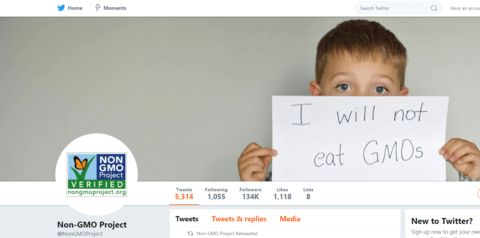
I decided to visit the Non-GMO Project website and Twitter profile to look through their information shared about creating a “non-GMO” world.

AG PinkePostThe people behind the project are a marketing machine, doing everything they can to get consumers to avoid GMOs in food. They’ve convinced millions of people and thousands of food brands and retailers of their beliefs. They imply non-GMO choices are higher quality, healthier and safer and you are at risk if your food isn’t “Non-GMO Project” verified. They make other false claims that don’t support our country’s diverse agriculture industry and the resulting food choices. They go so far to feature a child holding up a sign that says “I will not eat GMOs” as their Twitter profile cover.

HBC DI
Katie Pinke

GMO or Non-GMO choices are not about feeding you and me. It’s about feeding hungry people and people who don’t care about our opinions on food labels.

The Non-GMO Project is a sham. I’m disappointed so many food companies feel they have to give in or need to have the Non-GMO Project logo on their food. I’m disappointed in the hundreds of millions of consumers, including myself, who buy the food without thinking much about it.

I’m going to do my best to avoid food labeled with the Non-GMO Project logo.

Read full, original post: Food shaming: Why I’m avoiding foods labeled ‘Non-GMO Project’ verified

Despite 2014 EU ban, neonicotinoid insecticides still found in quarter of UK honey samples

bee oilseed rape c flpa rex shutterstock rexfeatures a x

Almost a quarter of British honey samples remain contaminated after a partial ban on neonicotinoid pesticides, new research has revealed.

The contamination rate has fallen – it was more than half before the ban – but the study shows that the potent insecticides remain prevalent in the farmed environment and still pose a serious risk to bees and other vital pollinators.

Neonicotinoids are the world’s most widely used insecticides but growing evidence of serious harm to bees led the EU to ban their use on flowering crops such as oilseed rape, starting in spring 2014. The new findings will add to pressure on the EU to ban all outdoor uses of the pesticides, with a vote expected in coming months. Neonicotinoids at the levels found in the honey are not known to pose any risk to human health.

Honey is seen as a good sample of the local environment and work published in October revealed global contamination by neonicotinoids, with 75% of samples from around the world containing the chemicals.

“[Our] results suggest mass flowering crops [such as oilseed rape] may contain neonicotinoid residues where they have been grown on soils contaminated by previously seed-treated crops,” the researchers said in their paper, published in the journal PLOS One.

Read full, original post: Quarter of British honey contaminated with bee-harming pesticides, research reveals

Herbicide-resistant ‘super weeds’? Don’t blame GMO crops, study says

ows

Andrew Kniss is a professor of weed science at the University of Wyoming

Genetically engineered (GE) herbicide-resistant crops have been widely adopted by farmers in the United States and other countries around the world, and these crops have caused significant changes in herbicide use patterns.

GE crops have been blamed for increased problems with herbicide-resistant weeds (colloquially called by the misnomer “superweeds”); however, there has been no rigorous analysis of herbicide use or herbicide-resistant weed evolution to quantify the impact of GE crops on herbicide resistance.

Here, I analyze data from the International Survey of Herbicide Resistant Weeds and the USDA and demonstrate that adoption of GE corn varieties did not reduce herbicide diversity, and therefore likely did not increase selection pressure for herbicide-resistant weeds in that crop.

Adoption of GE herbicide-resistant varieties substantially reduced herbicide diversity in cotton and soybean. Increased glyphosate use in cotton and soybean largely displaced herbicides that are more likely to select for herbicide-resistant weeds, which at least partially mitigated the impact of reduced herbicide diversity.

The overall rate of newly confirmed herbicide-resistant weed species to all herbicide sites of action (SOAs) has slowed in the United States since 2005. Although the number of glyphosate-resistant weeds has increased since 1998, the evolution of new glyphosate-resistant weed species as a function of area sprayed has remained relatively low compared with several other commonly used herbicide SOAs.

Read full, original post: Genetically Engineered Herbicide-Resistant Crops and Herbicide-Resistant Weed Evolution in the United States

GMO peace treaty: Mark Lynas lays out 7 steps to stop the fighting

Screen Shot at AM

The following is part of a speech by environmental writer and activist Mark Lynas at the 2018 Oxford Farming Conference

[W]hat might a peace treaty look like? What might be the give and take on both sides of this enduringly fractious controversy? Here’s my seven-point plan.

  1. Environmentalists accept the science of GMO safety, and scientists in return need to accept that politics matter in how scientific innovations are deployed.
  2. We drop national GMO bans and instead allow fully informed choices to be made by consumers in the marketplace via rigorous labelling and full traceability.
  3. We all get over the Monsanto obsession but make a much more serious effort to start getting off the chemical treadmill and moving farming onto more sound ecological principles.
  4. maxresdefault e
    Mark Lynas

    We agree to support public sector and non-corporate uses of genetic engineering where these can clearly contribute to environmental sustainability and the public interest.

  5. We support all forms of agriculture that aim to find ways towards greater sustainability. Let a hundred flowers bloom.
  6. We stop the name-calling. Let’s avoid using the term anti-science in particular. Anti-GMO activists are not opposing the scientific method in general, they are opposing a particular technological innovation.
  7. Let’s make ethical objections to genetic engineering explicit and in the process recognise real-world tradeoffs about where we do and don’t use this technology.

Read full, original post: Mark Lynas – Speech to the Oxford Farming Conference 2018

Can CRISPR gene editing save chocolate from extinction?

download

Beyond the glittery glass-and-sandstone walls of the University of California’s new biosciences building, rows of tiny green cacao seedlings in refrigerated greenhouses await judgment day.

Under the watchful eye of Myeong-Je Cho, the director of plant genomics at an institute that’s working with food and candy company Mars, the plants will be transformed. If all goes well, these tiny seedlings will soon be capable of surviving — and thriving — in the dryer, warmer climate that is sending chills through the spines of farmers across the globe.

It’s all thanks to a new technology called CRISPR, which allows for tiny, precise tweaks to DNA that were never possible before. These tweaks are already being used to make crops cheaper and more reliable. But their most important use may be in the developing world, where many of the plants that people rely on to avoid starvation are threatened by the impacts of climate change, including more pests and a lack of water.

If all goes as planned, they could develop cacao plants that don’t wilt or rot at their current elevations, doing away with the need to relocate farms or find another approach.

Read full, original post: Chocolate is on track to go extinct in 40 years

Viewpoint: GMO debate’s name-calling, death threats and ‘anti-science’ rhetoric bad for agriculture

march for science nyc exlarge

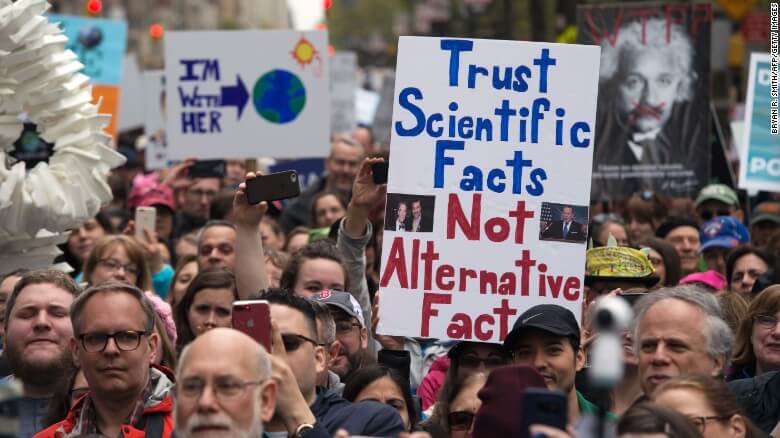
What has the world come to when people get death threats for expressing an opinion about agriculture?

The toxicity of the debate about farming in general and genetically modified organisms (GMOs) in particular is so entrenched that Mark Lynas, a prominent British journalist and environmentalist who publicly changed his mind about genetic modification, wasn’t even surprised by the death threats. “I got very few,” he says. And the name-calling and Internet trolling were just what he expected when he put his head over the parapet to champion GMOs. Other vocal supporters of conventional agriculture told me of a litany of insults: “Nazi,” “baby killer,” “Monsanto shill” and lots of stuff that we can’t put in a family newspaper.

[L]ately I’ve noticed a backlash (at least, I read it as a backlash) that deploys “science” as a cudgel to browbeat not just the anti-GMO name-callers but just plain people who express skepticism about conventional agriculture, or confidence in organic — organic farmers, even.

Even so, I don’t see parity. While I find the anti-organic rhetoric unpleasant and contemptuous, I have not seen the same level of personal, threatening vitriol that emanates from the anti-GMO sector.

[C]alling someone who disagrees with you “anti-science” is both condescending and contemptuous because everybody, since the dawn of time, has believed their positions to be consistent with the science as we know it.

Read full, original post: Want to fix agriculture? Stop with the name-calling — and death threats.

Deep learning: Google wants to use retinal photos to predict blood pressure, age, smoking status

shutterstock

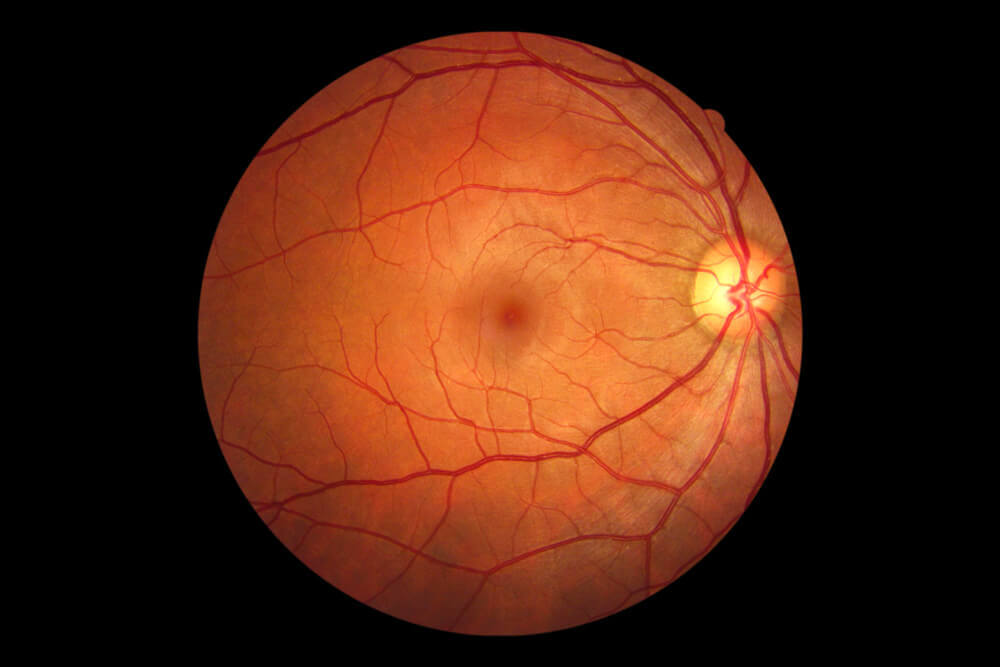
Eyes are said to be the window to the soul—but researchers at Google see them as indicators of a person’s health. The technology giant is using deep learning to predict a person’s blood pressure, age and smoking status by analysing a photograph of their retina. Google’s computers glean clues from the arrangement of blood vessels—and a preliminary study suggests that the machines can use this information to predict whether someone is at risk of an impending heart attack.

The research relied on a convolutional neural network, a type of deep-learning algorithm that is transforming how biologists analyse images. Scientists are using the approach to find mutations in genomes and predict variations in the layout of single cells. Google’s approach, described in a preprint in August, is part of a wave of new deep-learning applications that are making image processing easier and more versatile—and could even identify overlooked biological phenomena.

“It was unrealistic to apply machine learning to many areas of biology before,” says Philip Nelson, a director of engineering at Google Research in Mountain View, California. “Now you can—but even more exciting, machines can now see things that humans might not have seen before.”

“I think there will be a very big breakthrough in the next few years,” [biologist Alex Wolf] says, “that allows biologists to apply neural networks much more broadly.”

Read full, original post: Deep Learning Sharpens Views of Cells and Genes

White blood cell warning system ‘sprays’ DNA to alert other cells

When some of our white blood cells detect viruses or other microbes that have invaded our bodies, they may alert other cells to the threat by spraying out some of their DNA. This unexpected warning system, described in a study…could hasten the body’s response to pathogens.

Researchers already know that some of our cells deploy DNA to directly fight infections. Immune cells known as neutrophils can eject their DNA, forming a mesh of sticky strands called a neutrophil extracellular trap (NET) that captures and kills microbes. Other immune cells generate similar DNA snares.

Although our bodies have several mechanisms for identifying threats and notifying other cells, “we have discovered a parallel signaling system for cell danger,” [immunologist Anders] Rosén says. The advantage of [mitochondrial DNA] as a warning may be speed, says [biochemist Björn] Ingelsson, who sees it as “a rapid messenger molecule” that can induce a protective response in minutes. Other immune defenses typically require hours or even days to mobilize.

Other studies have found high levels of free-floating mtDNA in patients who have been wounded or suffer from a variety of illnesses, including heart disease, certain infections, and autoimmune diseases such as lupus. But whether this DNA is the same as the newly documented webs remains unclear.

Read full, original post: White blood cells launch DNA ‘webs’ to warn of invaders

Does our genetics ‘determine’ how ‘smart’ we can become? Debate erupts in Britain

article E D x

Education in England is no better than mediocre, and billions of pounds have been wasted on pointless university courses and Sure Start schemes for young children, Michael Gove’s special adviser has said in an outspoken private thesis written a few weeks before he is due to step down from his post.

Dominic Cummings, the most influential adviser to the education secretary in the past five years, also argues in a revealing 250-page paper that “real talent” is rare among the nation’s teachers – and, eye-catchingly, says educationists need to better understand the impact of genetics on children.

In one of the most controversial passages of the thesis, Cummings maintains that individual child performance is mainly based on genetics and a child’s IQ rather than the quality of teaching.

He says: “There is strong resistance across the political spectrum to accepting scientific evidence on genetics. Most of those that now dominate discussions on issues such as social mobility entirely ignore genetics and therefore their arguments are at best misleading and often worthless.” He claims research shows that as much as 70% of a child’s performance is genetically derived.

Cummings is highly critical of the quality of teaching, writing: “While some children will always be blessed by a brilliant teacher, by definition that is not a scaleable solution to our problems: real talent is rare and mediocrity is ubiquitous.”

Read full, original post: Genetics outweighs teaching, Gove adviser tells his boss

Lou Gehrig’s disease might be treatable using CRISPR

crispr

University of California, Berkeley scientists have for the first time used CRISPR-Cas9 gene editing to disable a defective gene that causes amyotrophic lateral sclerosis, or Lou Gehrig’s disease, in mice, extending their lifespan by 25 percent.

The therapy delayed the onset of the muscle wasting that characterizes the disease, which results in progressive weakness and eventually proves fatal when the muscles that control breathing fail.

The UC Berkeley research team used a virus that Schaffer’s team engineered to seek out only motor neurons in the spinal cord and deliver a gene encoding the Cas9 protein into the nucleus. There, the gene was translated into the Cas9 protein, a molecular scissors that cut and disabled the mutant gene responsible for ALS.

The researchers found that, at death, the only surviving motor neuron cells in the mice were those that had been “infected” with the virus and contained Cas9 protein, said Thomas Gaj, a postdoctoral fellow who led the study, now at the University of Illinois at Urbana-Champaign.

“The treatment did not make the ALS mice normal and it is not yet a cure,” Schaffer cautioned. “But based upon what I think is a really strong proof of concept, CRISPR-Cas9 could be a therapeutic molecule for ALS.”

Read full, original post: First Step Toward CRISPR Cure for Lou Gehrig’s Disease

Native American ancestors arrived from Asia in a wave, not a trickle, suggests ancient DNA

c a dd b

A rare smidgen of ancient DNA has sharpened the picture of one of humanity’s greatest migrations. Some 15,000 to 25,000 years ago, people wandered from Asia to North America across a now-submerged land called Beringia, which once connected Siberia and Alaska. But exactly when these ancient settlers crossed and how many migrations occurred are hotly debated. Now, the oldest full genome to be sequenced from the Americas suggests that some settlers stayed in Beringia while another group headed south and formed the population from which all living Native Americans descend.

The genome comes from an 11,500-year-old infant found in 2013 at the site of Upward Sun River in central Alaska’s Tanana River Basin, a part of Beringia that’s still above sea level. The infant, one of two from the site, belonged to a population that likely numbered in the low thousands, who hunted Beringia’s abundant herds and gathered plants. 

Why did one group linger and thrive in Beringia while another took off to explore the Americas? A search for fresh resources could have spurred the migrants, [geneticist Eske] Willerslev says, but so could sheer curiosity. “There were people who were happy with what they had, and there were others who looked out at the great ice caps and wanted to see what was on the other side,” he says.

Read full, original post: Ancient Americans arrived in a single wave, Alaskan infant’s genome suggests

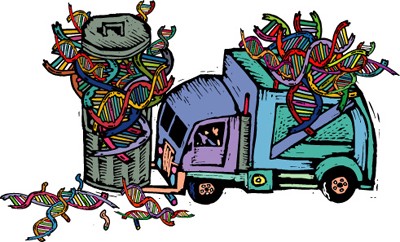
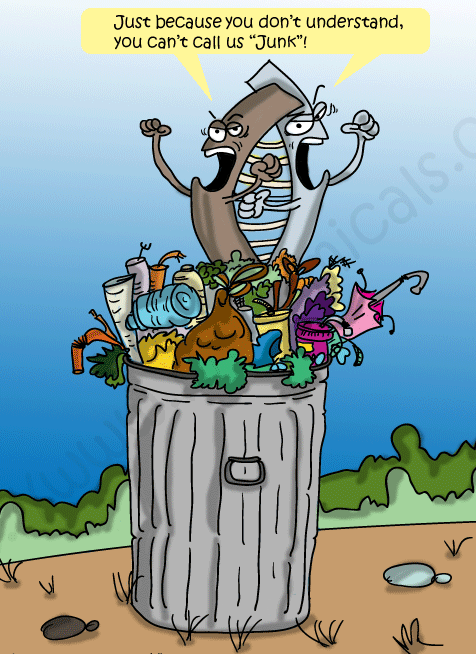
‘Junk DNA’: Mining our genome’s dark matter for new disease treatments

junk

In one of my recent conversations with Prof. Pawan Dhar I found out about a library of over 500 novel molecules that his group has constructed in a span of six years. Prof. Dhar is a synthetic biology pioneer in India. His work on lab-made genes from DNA sequences historically considered “junk” has led to a novel drug discovery platform.

Did you know: Nearly 80 percent of human DNA only codes for RNA and stops there. Nobody knows why rest of the DNA (15 percent or more) exists? Welcome to the “dark matter of genome” — historically considered junk.

What is junk DNA?

In the 1970s, the term junk DNA was originally proposed by geneticist Susumu Ohno to describe the non-functional DNA sequences that do not code for proteins. For years this notion kept many scientists from spending their time studying these sequences. In 2001, the Human Genome Project revealed that a minority of our DNA comprises protein coding genes and majority of DNA sequences are RNA coding. In addition, sequences were found that were protein coding in the past but were retired into what we call, pseudogenes.

junk 1 4 18 2
Source: Institute of Molecular Medicine

Unraveling the mystery of non-expressing regions in DNA has been the key focus of research for the last few years.

Imagine making user-defined genes and proteins from this dark matter of genome

Like humans, bacteria also undergo genetic mutations. They are capable of developing defense mechanisms as well. In the last few years the antibiotic resistance crisis has emerged around the world. The rise of antibiotic resistance is often attributed to the misuse and overuse of medications. Given the current scenario, the existing therapeutics are rapidly becoming ineffective. There is a need to develop new and bold ways of thinking to develop more effective therapeutic strategies.

But is this junk an untapped goldmine?

Prof. Dhar presented this idea of cooking up brand new genes from “junk’ DNA to his team at RIKEN, Japan. Unfortunately, nobody showed interest. Students were afraid of failure as there was no prior publication in this area. He hired a lab technician from Myanmar to perform experiments and teamed up with collaborators from Singapore to perform bioinformatics work.

junk 1 4 18 3The “eureka moment” came when his team found a clear evidence of “junk gene” expression and its impact on the cell survival.

Buoyed by this initial success, Prof. Dhar dedicated the next few years in mining “junk DNA” of various model organisms and developing a large computational inventory of “junk” DNA sequences towards therapeutic applications. His recent experimental work (unpublished) at the School of Biotechnology, JNU, New Delhi, has led to development of a new drug discovery platform. Specifically, his group has reused “junk” DNA sequences to make anti-malarial, anti-microbial, anti-leishmania and anti-cancer peptides. Furthermore peptides against Alzheimers’ and Parkinson’s disease are currently going through experimental validation.

From junk to jewel

The current armour of anti-malarial drugs are beginning to prove ineffective due to the emergence of resistant plasmodium strains. But, if one uses synthetic/non natural peptides coming from “junk” DNA sequences to treat malaria, it would be very interesting to see how parasites react over time, as they do not have a prior history of natural exposure towards these molecules and may take time to develop resistance.

Likewise, conventional antimicrobial and anti cancer treatment strategies merit a major revision, as resistant strains/cells have started showing up in the natural environment. We need a fresh look at the scale and depth of the problem vis-a-vis existing solutions.

junk 1 4 18 3
Source: Educate Truth

Junkomics as his students, fondly call it, has opened up new avenues of research as the strategy of lab-made genes can be used to synthesize custom designed proteins and RNAs towards pre-defined therapeutic outcomes. One of the most attractive features of the lab-made genes approach, is that every molecule comes with an assured IP (Intellectual Property). Before synthesizing and testing the molecule, one can do the prior art search and only then go ahead.

Paradigm shifts in finding novel drugs are urgently required as the traditional drug discovery pipeline has almost dried up. Perhaps, in future pharmaceutical sector will use unique strengths of several strategies to develop combinatorial solutions. Only time will tell whether “junk DNA”-based therapeutic solutions will survive clinical trials. However, the idea seems to be novel and very interesting to merit a closer look.

After all, the Junk DNA is not all that much junk! Maybe it’s time to rewrite our high school and graduation books.

The information presented here is a brief overview of the work carried out at the School of Biotechnology, Jawaharlal Nehru University, India. I would like to thank Prof. Dhar for taking out time and giving me a gist of his past and unpublished work.

Eshna Gogia works as a business developer for Helixworks. Follow her on Twitter @eshna_gogia.

This article originally appeared at Medium under as Junkomics: Diggin’ through genomic ‘garbage’ for the hidden treasure and has been republished here with permission from the author.

Can online gamers help developing nations solve aflatoxin crop contamination?

peanuts x

Users of a multiplayer online puzzle game could become the latest front in a growing effort to defeat a deadly, persistent, and globally widespread agricultural contaminant that causes liver cancer and has been linked to stunted growth in children. They would join a handful of other projects in the past few years designed to weaken or eliminate the compound, called aflatoxin, or the crop mold that generates it.

Success in this arena has been elusive but could prevent between roughly 25,000 and 155,000 cases of liver cancer annually, most of which occur in sub-Saharan Africa, Southeast Asia, and China, according to an estimate published in 2010. About 4.5 billion people in developing nations are chronically exposed to the toxin through the food they eat, according to the Centers for Disease Control and Prevention.

Aflatoxin is produced primarily by Aspergillus fungi that infect crops, especially corn, peanuts, cottonseed, and tree nuts.

undark logoThe latest foray seeks to exploit the ingenuity and creativity of thousands of puzzle solvers at the website Fold.it, a crowdsourcing project in which participants seek new and efficient ways to fold selected virtual proteins, which scientists might then be able to replicate in the real world as a way of targeting diseases.

The site recently unleashed the first of a series of puzzles designed to optimize the structure and shape of an enzyme that could degrade or neutralize aflatoxin. Within several months, researchers at the Massachusetts-based biotech firm Thermo Fisher Scientific plan to work with the top puzzle solutions to synthesize hundreds of genes that can make the new versions of the enzyme.

Then biochemist Justin Siegel of the University of California, Davis, and his lab team are set to harvest proteins from the genes and test for activity against the type of aflatoxin that is most carcinogenic. Ultimately, the enzyme could be induced genetically in crops or applied via a wash or spray on crops after they are harvested, Siegel said.

“Using enzymes to treat food to modulate flavor and texture and nutritional properties is a very old, well-established industry,” Siegel said. “So it’s like, let’s develop an enzyme to treat this food. So instead of modulating the flavor or texture, it’s detoxifying it.”

Another tactic in the battle against aflatoxin has emerged from decades of work in the lab of Peter Cotty, a research plant pathologist with the U.S. Department of Agriculture and an adjunct professor at the University of Arizona. He and colleagues have developed a biological control technology to manage aflatoxin and have registered strains of the Aspergillus flavus fungus that do not produce aflatoxin. These more benign strains can be applied to crops and effectively out-compete the toxin-producing strains.

aflatoxin 1 5 18 2Upgrades to agricultural practices might help too. Pummi Singh, a graduate student working with Cotty, recently compared dried red chili samples purchased in the United States with similar samples purchased in Nigeria for the presence of aflatoxin and the culprit fungus. In findings published in the October issue of Food Control, she reports that significantly more of the samples from Nigeria contained aflatoxin and the fungus, compared to those from the U.S., which is not surprising. Regulations designed to control aflatoxin and other dangerous food contaminants are well enforced by U.S. federal agencies, whereas such local regulations in Nigeria are not well enforced, she said.

But the aflatoxin and fungal count levels in the U.S. chilies were not that much different than those from the chilies from Nigeria from a health standpoint. Singh found that 93 percent of the chili samples from Nigeria were under the safety threshold of 20 parts per billion, whereas 98 percent of the U.S. samples were below that level. The finding raises questions about the cost-effectiveness of U.S. regulation enforcement for food safety. Aflatoxin testing and management in the U.S. costs tens of millions of dollars annually.

Practices such as airtight packaging, temperature controls, and reduced exposure to soil and open air can help to control fungus and aflatoxin in chilies, Singh said. And biological control technology also might perform well and be more cost-effective, she added.

Along with the development of biological treatments and chemical approaches, such as the Foldit-inspired enzyme, Siegel agrees that improvements to agricultural practices are necessary in the effort to overcome aflatoxin. But he hints that they might not be feasible for all crops and in all parts of the world. “If you can get a good cold storage base, good agricultural practices and humidity controlled worldwide, sure, you don’t need the enzyme,” he said, “but good luck.”

Robin Lloyd is a freelance writer, editor and educator, as well as a contributing editor for Scientific American and an adjunct professor at New York University’s Science, Health and Environmental Reporting Program.

This story originally appeared on Undark Magazine as Online Gamers Puzzle Over Deadly Crop Contaminant and has been republished here with permission.