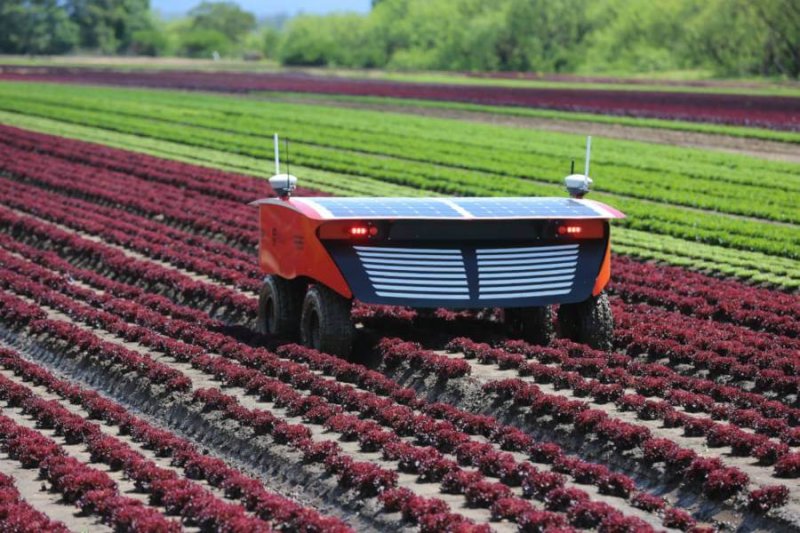
4 expanding technologies that could help boost crop yields and preserve the environment

Credit: SciDevNet
Credit: SciDevNet

The scope of [agricultural] advances during the past three years is nothing short of astonishing. Today’s growers now have at their disposal a full complement of science-based tools, among them disease-resistant seeds, biological crop inputs, increasingly precise nutrients, data-driven farm management and robotics to improve on-farm productivity and curtail food waste.

[Phil Erlanger, managing partner and cofounder at Pontifax AgTech] has identified four areas of agtech innovation that….hold the most promise for success under the criteria of making more money for farmers, protecting the ag environment and contributing to the world’s food security….

Sophisticated Crop Inputs….New biological inputs, when combined with micronutrients, are helping reduce chemical loads in crops, thus improving soil health while reducing runoff of traditional fertilizers into lakes, rivers and streams.

Gene Editing….“As agriculture migrates away from genetic modification, gene editing tools that aim to optimize the physiology of plants are growing in importance,” [Erlanger said].

Automation and Robotics. [Agriculture] producers are experiencing “a growing need for organized data” as their production processes grow more complex. They are also increasingly constrained by labor shortages. Here’s where both automation and robotics can boost productivity and profits….

Health and Nutrition….If the ag sector is to feed up to 10 billion people in coming decades, knowledge from biotech science and human nutritional needs will have to be adroitly applied to the ag sector.

Read full, original article: Ag Sector Positioned To Withstand Market Volatility

{{ reviewsTotal }}{{ options.labels.singularReviewCountLabel }}
{{ reviewsTotal }}{{ options.labels.pluralReviewCountLabel }}
{{ options.labels.newReviewButton }}
{{ userData.canReview.message }}

Related Articles

Infographic: Global regulatory and health research agencies on whether glyphosate causes cancer

Infographic: Global regulatory and health research agencies on whether glyphosate causes cancer

Does glyphosate—the world's most heavily-used herbicide—pose serious harm to humans? Is it carcinogenic? Those issues are of both legal and ...

Most Popular

Screenshot-PM-24
Viewpoint: The herbicide glyphosate isn’t perfect. Banning it would be far worse.
d-b
Blocked arteries, kidney stones, nausea, constipation, fatigue: Long list of health problems caused by too much vitamin D 
Screenshot-2026-04-27-at-12.22.38-PM
Running ‘wild’: Last year, RFK, Jr. was given a green light to ‘reform’ chemical policies. Glyphosate illustrates how Trump now has him on a tight leash, and MAHA is furious
ChatGPT-Image-Apr-22-2026-11_06_18-AM
Wellness influencer nonsense: No, nicotine does not boost cognition and productivity, but it can damage your health 
bayer-supremecourt-lt
EPA concludes glyphosate is not carcinogenic. Missouri courts say Monsanto failed to warn it might be. SCOTUS weighs in.
ChatGPT-Image-Feb-16-2026-01_57_31-PM
Viewpoint: ‘Science-as-Satan’ unites the MAHA—MAGA movements. Is a breakup in the works?
Screenshot-2026-04-27-at-1.40.55-PM
With federal funding for scientific research already reeling, Trump fires the entire apolitical National Science Board
Screenshot-2026-04-13-at-3.54.04-PM
AI disinformation stress test: Challenges and response strategies
Screenshot-2026-04-12-135256
Bixonimania: The fake disease scam that AI swallowed whole
ChatGPT-Image-Feb-16-2026-01_04_32-PM
Raw milk myth wake-up call
glp menu logo outlined

Get news on human & agricultural genetics and biotechnology delivered to your inbox.