Stanford investigating whether faculty has ties to controversial Chinese CRISPR baby experiment

2-7-2019 ak hj
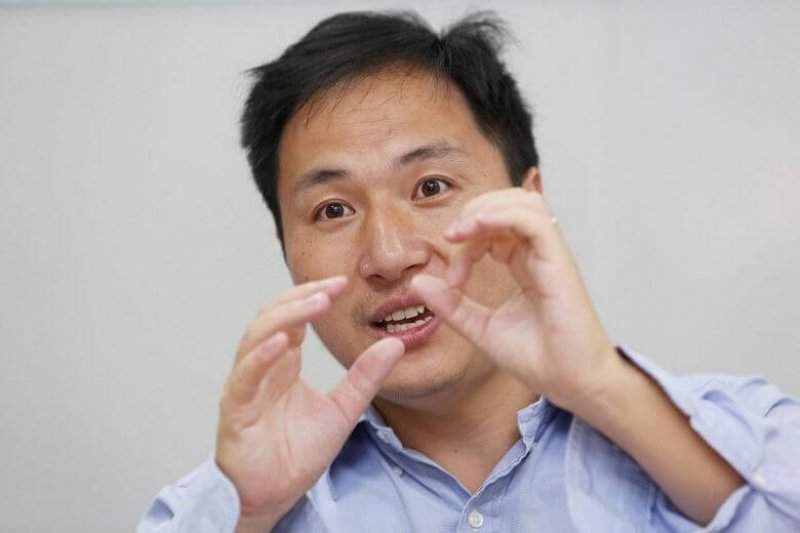
He Jiankui. Image credit: Reuters

Officials at Stanford University have opened an investigation into what several high-profile faculty members knew about a Chinese effort to create gene-edited babies led by a onetime researcher at the California school, He Jiankui.

The investigation, according to people familiar with it, aims to understand what liabilities or risks Stanford may have in connection with the controversial medical experiment, which led last year to the birth of two girls whose genomes had been altered with a molecular tool called CRISPR to render them immune to HIV.

Stanford launched the investigation following media reports that three of its faculty—more than at any other institution—were aware of He’s plans to create the gene-edited children. They are William Hurlbut, a medical ethicist and theologian who interacted extensively with He over many months; gene-editing specialist Matthew Porteus; and Stephen Quake, a biophysicist who holds a powerful role as  co-president of the $600 million Chan Zuckerberg Biohub, as well as being He’s former postdoc advisor.

[I]nvestigators may hope to clarify whether any Stanford employees assisted He or had financial entanglements with him, or what steps they could have taken to stop him.

Read full, original post: Stanford will investigate its role in the Chinese CRISPR baby debacle

{{ reviewsTotal }}{{ options.labels.singularReviewCountLabel }}
{{ reviewsTotal }}{{ options.labels.pluralReviewCountLabel }}
{{ options.labels.noReviewsLabel }}
{{ options.labels.newReviewButton }}
{{ userData.canReview.message }}

Related Articles

Infographic: Global regulatory and health research agencies on whether glyphosate causes cancer

Infographic: Global regulatory and health research agencies on whether glyphosate causes cancer

Does glyphosate—the world's most heavily-used herbicide—pose serious harm to humans? Is it carcinogenic? Those issues are of both legal and ...

Most Popular

ChatGPT-Image-Jul-22-2026-09_13_07-AM
Viewpoint—The Strategic Litigation boom: Understanding the tightening coalition among NGOs, foundations, journalists, and tort lawyers
How to Include More Strawberries in Your Diet
Strawberries are berries—and 35 other surprising food and drink myths
close up arabica coffee farmer s hands picking beans plant his farm colombia
Viewpoint: Why do so many ‘mainstream’ and ‘respected’ media outlets exaggerate climate change threats?
diversity
We are entering a new era of personalized medicine—if you’re white
Screenshot-2026-07-07-at-12.55.44-PM
Viewpoint: Yes, we can adapt to a changing climate without devastating the environment and the economy
ChatGPT-Image-Mar-10-2026-01_39_01-PM
Viewpoint—“Miracle molecule” debunked: Why acemannan supplements don’t work
ChatGPT-Image-May-22-2026-10_26_09-AM
Trump-RFK, Jr. National Science Board firings: Accountability vs. partisan meddling
organic scaled
Facts & Fallacies podcast: Organic food cuts pesticide exposure? A response to Dr. Rhonda Patrick
Screenshot 2026-07-22 at 10.25
Science brain drain escalates as Trump purge extends to USDA
ChatGPT-Image-Jul-6-2026-02_25_26-PM
40 million Americans take glucosamine. If you have memory loss, it could accelerate cognitive decline.
Screenshot-2026-07-01-at-2.49.48-PM
Dr. TikTok and male fertility: Viral claims tout GLP-1 drugs as fertility boosters. What does the science say?
ChatGPT-Image-Jun-25-2026-12_23_17-PM
No, Bill Gates did not secretly engineer ticks to promote veganism
using genetics to reverse aging
Is the longevity obsession a new form of ageism?

Sorry. No data so far.

glp menu logo outlined

Get news on human & agricultural genetics and biotechnology delivered to your inbox.