Roundup lawsuit: Plaintiff takes the stand against Monsanto in first federal glyphosate-cancer trial

roundup monsanto bayer merger

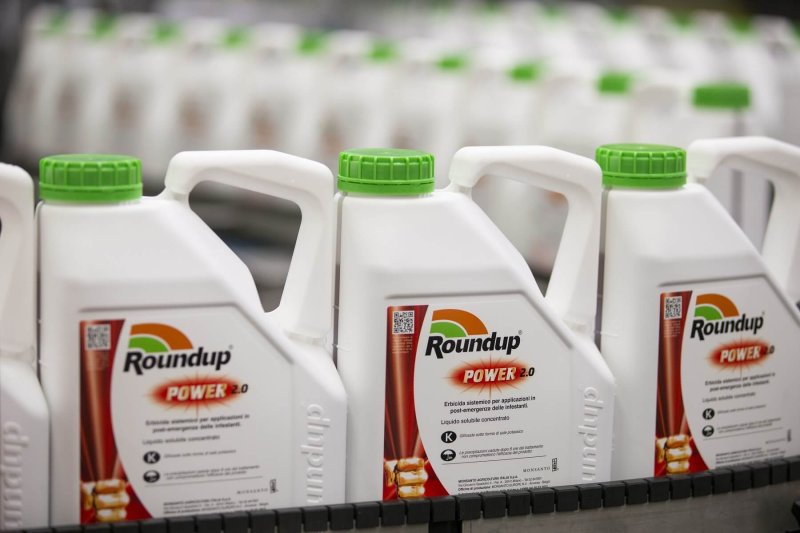
Edwin Hardeman, the first person to challenge Monsanto’s Roundup in a federal trial, testified [March 5] that he sprayed the herbicide for nearly three decades and got it on his skin before he was diagnosed with cancer.

The 70-year-old Santa Rosa man has alleged that his exposure to Roundup, starting in 1986, when he began applying it to control weeds and poison oak on his properties, caused him to develop non-Hodgkin lymphoma (NHL)….

unnamed file
Plaintiff Edwin Hardeman, right, with his wife Mary. Image Credit: Jeff Chiu/AP

Hardeman’s high-stakes case is considered a “bellwether” trial for hundreds of other plaintiffs in the US with similar claims, which means the jury verdict could affect future litigation and possible settlements….Hardeman said he stopped using Roundup in 2012. On Christmas Day of 2015, he discovered a swollen lymph node on his neck and the following year was officially diagnosed with NHL.

…
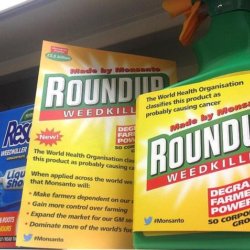
US district judge Vince Chhabria ruled prior to the start of trial that the plaintiffs were barred from discussing Monsanto’s influence on government regulators and cancer research, restricting the arguments to scientific study and questions about whether Roundup caused Hardeman’s NHL….Hardeman’s lawyers have said these limitations are significantly hurting their case.

Read full, original article: Edwin Hardeman says the weed killer Roundup caused him to develop non-Hodgkin lymphoma in this first federal trial


Related Articles

Infographic: Global regulatory and health research agencies on whether glyphosate causes cancer

Infographic: Global regulatory and health research agencies on whether glyphosate causes cancer

Does glyphosate—the world's most heavily-used herbicide—pose serious harm to humans? Is it carcinogenic? Those issues are of both legal and ...

Most Popular

Bayer Crop Circle in Golden Wheat
Making fertilizer from thin air: Bayer’s gene-editing innovation could dramatically cut chemical fertilizer use in growing food
Picture1
Viewpoint: How badly is the U.S. food-safety net fraying? FDA’s bungled handling of the tainted lettuce crisis deepens concerns over cuts to disease tracking and response
Screenshot-2026-11-03-at-12.31.18-PM
Gene editing once viewed with suspicion by UK  farmers, upwards of 90% now open to their sustainability benefits
Smiling-Woman-Over-Teal-Abstract-Shapes
Viewpoint: RFK Jr.’s latest foray into junk science: Even Kennedy’s hand-picked NIH director balks at appointment of crackpot mental health director
Neon Genome_ Fetal Dreamscape
The race to genetically engineer babies
Reaching Through the Woven Sky
Challenging genetic modification rejectionists: Our evolving food system has relied on science for thousands of years
Screenshot-2026-10-29-at-11.18.34-AM
Viewpoint: ‘Just the flu’: Skipping your child’s flu shot could be a fatal mistake
ChatGPT-Image-Mar-10-2026-01_39_01-PM
Viewpoint—“Miracle molecule” debunked: Why acemannan supplements don’t work
Screenshot-2026-11-02-at-11.34.28-AM
Farmers are collateral damage in the PFAS “forever chemicals” crossfire. Here’s what they need to know.
Glossy Plastic Bag of Tokens and Labels
Viewpoint: How CNN got played by environmental activists pushing a plastics scare and litigation agenda
Screenshot 2026-10-27 at 10.32
“Do your own research”: What Medicare’s annual open enrollment circus teaches us about the seductive trap of DIY health and science
Red and Green Embroidered Campaign Caps
Viewpoint: The fragile (and often bizarre) MAHA-MAGA-far left health-and-chemicals coalition is fracturing. Here’s why
Screenshot-2026-10-28-at-3.00.44-PM
Viewpoint: Activist attacks on corporations increasingly depend on "attribution" science to target oil companies for global climate change
glp menu logo outlined

Get news on human & agricultural genetics and biotechnology delivered to your inbox.