Electrical brain zaps show promise at improving memory in older adults

4-11-2019 brain opener free
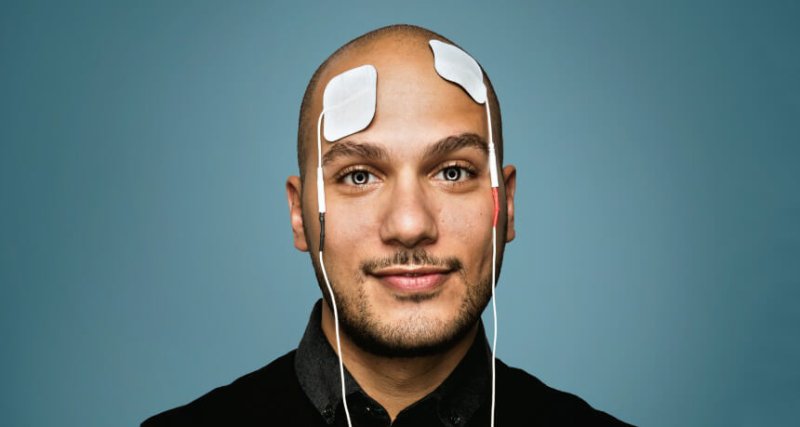
Image: Eli Mier Kaplan/Science News

Shooting electrical current into the brain for just 25 minutes reversed the decline in working memory that comes with aging, scientists reported on Monday. Although the researchers tested the effects on people for only 50 minutes, the finding offers hope for boosting a mental function that is so crucial for reasoning, everyday problem-solving, and planning that it has been called the foundation of intelligence.

By stimulating the brain in precise regions with alternating current (AC), “we can bring back the superior working memory function you had when you were much younger,” psychology researcher Robert Reinhart.

For alternating current, delivered by electrodes embedded in a skull cap, to become a treatment for working memory deficits, however, it would have to overcome a long list of hurdles, starting with proof that it’s safe. But whether or not the findings, published in Nature Neuroscience, result in any practical applications, they provide some of the strongest evidence yet of why older adults aren’t as good at remembering a just-heard phone number or an address in a just-seen text: Brain circuits become functionally disconnected and fall out of synchrony.

Read full, original post: Zapping brain with precise electrical current boosts working memory in older adults, study finds


{{ reviewsTotal }}{{ options.labels.singularReviewCountLabel }}
{{ reviewsTotal }}{{ options.labels.pluralReviewCountLabel }}
{{ options.labels.newReviewButton }}
{{ userData.canReview.message }}

Related Articles

Infographic: Global regulatory and health research agencies on whether glyphosate causes cancer

Infographic: Global regulatory and health research agencies on whether glyphosate causes cancer

Does glyphosate—the world's most heavily-used herbicide—pose serious harm to humans? Is it carcinogenic? Those issues are of both legal and ...

Most Popular

Screenshot-2026-05-01-at-1.29.41-PM
Viewpoint: What happens when whole grains meet modern food manufacturing? Labels don’t tell the whole story.
S
As vaccine rejectionism spreads, measles may be taking a more dangerous turn
Screenshot 2026-05-06 at 2.56
Singularity crisis ahead? Can super babies save us from rogue AI geniuses?
Screenshot-2026-05-06-at-2.07.43-PM
Manufacturing a conspiracy: The timeline of how  the White House embraced the fringe claim that scientists are being mysteriously murdered
Screenshot-2026-04-30-at-2.19.37-PM
5 myths about summer dehydration that could damage your health — or even kill you
Screenshot-2026-04-20-at-2.26.27-PM
Viewpoint — Food-fear world: The latest activist scientists campaign: Cancer-causing additives
Screenshot-2026-03-13-at-12.14.04-PM
The FDA wants to make many popular prescription drugs OTC—a great idea. Here’s why it’s unlikely to happen
ChatGPT-Image-May-6-2026-03_41_05-PM
‘Protecting the integrity of science’: Kennedy’s FDA blocks release of taxpayer-funded studies finding COVID and shingles vaccines safe
Screenshot-2026-04-12-135256
Bixonimania: The fake disease scam that AI swallowed whole
Screenshot-2026-05-01-at-11.56.24-AM
‘Science moves forward when people are willing to think differently’: Memories of DNA maverick Craig Venter
Screenshot-2026-04-03-at-11.15.51-AM
Paraben panic: How a flawed study, media hype, and chemophobia convinced the public of the danger of one of the safest classes of preservatives
glp menu logo outlined

Get news on human & agricultural genetics and biotechnology delivered to your inbox.