Life on Earth is carbon-based. But that doesn’t mean other planets have to use the same building block.

5-8-2019 5-8-2019 organosilicon based life c e cad b bf a e a bfba nbcnews fp
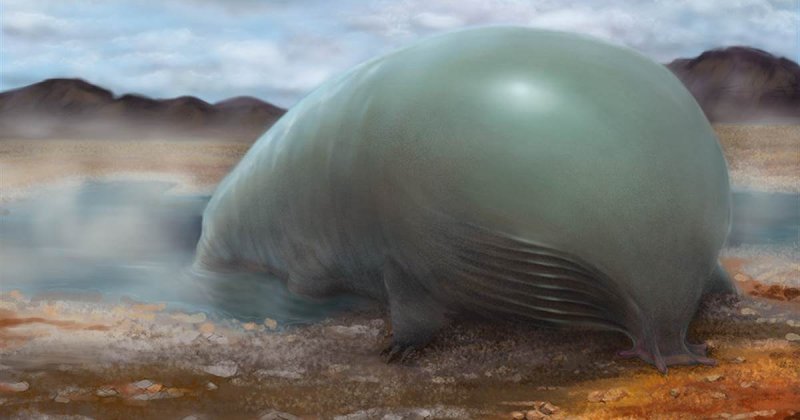
An artists' rendering of organosilicon-based life. Organosilicon compounds contain carbon-silicon bonds. Image: Lei Chen/Yan Liang/Caltech

All life on Earth, and thus, all life we’ve ever observed in the universe, shares a few basic characteristics. Its molecular structures are built using carbon, it relies on water to act as a solvent and facilitate chemical reactions, and it uses DNA or RNA as its blueprints.

…

But just because these properties of life are true on Earth doesn’t mean they are true everywhere. In fact, we can readily imagine different environments where alternative forms of life can exist. Here are some of the major ways we think that life can vary from the standard we see on Earth.

…

Under certain conditions, silicon-based chemistry might be more favorable for life than carbon-based. Silicon chemistry would also be much more amenable to life in oceans of cold elements that we don’t usually associate with life, such as liquid nitrogen, methane, ethane, neon, and argon. Places like these exist in the universe, notably in our own solar system.


…

A lot of what we know about chemistry suggests that carbon- and water-based life will be the most common among the universe, but we’ve only ever had a sample of one to study: our own planet.

Read full, original post: What would alternate, alien forms of life look like?

Related Articles

Infographic: Global regulatory and health research agencies on whether glyphosate causes cancer

Infographic: Global regulatory and health research agencies on whether glyphosate causes cancer

Does glyphosate—the world's most heavily-used herbicide—pose serious harm to humans? Is it carcinogenic? Those issues are of both legal and ...

Most Popular

Screenshot-2026-10-01-at-10.52.08-AM
Non-browning CRISPR gene-edited bananas move one step closer to British markets
AI-Force-Leadership-Portrait
Jay Clayton controversy: The divisive history of Trump’s newly-appointed AI czar
Screenshot-2026-09-22-at-10.54.12-AM
‘They misunderstand science’: Research attempting to tie autism to changes in the gut microbiome comes under fire
ChatGPT-Image-Mar-10-2026-01_39_01-PM
Viewpoint—“Miracle molecule” debunked: Why acemannan supplements don’t work
Elderly-Speaker-at-MAHA-Institute
At anti-vaccine MAHA conference, RFK Jr. pledges to unify federal health information and combat vaccine safety ‘misinformation’
ChatGPT-Image-Sep-21-2026-11_21_39-AM
Viewpoint: Food cults: Online ‘nutrition communities’ can pose unique dangers
Screenshot 2026-10-01 at 12.30
Combating ‘narrative distortion’: Will pharma companies step up to challenge health misinformation?
ChatGPT-Image-Sep-10-2026-10_36_07-AM
Viewpoint: Even lousy scientific articles can shield authors when they hype dubious health claims and products
Screenshot-2026-10-01-at-11.21.27-AM
Vaccine hesitancy, like malaria, surges globally, topping 35% in some countries
ChatGPT-Image-Sep-21-2026-03_15_09-PM
Viewpoint: Chipotle-inspired lesson: 10,000 sick customers suggest that processed foods can be safer than fresh ones
glp menu logo outlined

Get news on human & agricultural genetics and biotechnology delivered to your inbox.