Saving bees ‘to death’? Our efforts to grow the honeybee population by using artificial hives may harm other pollinators

bumblee
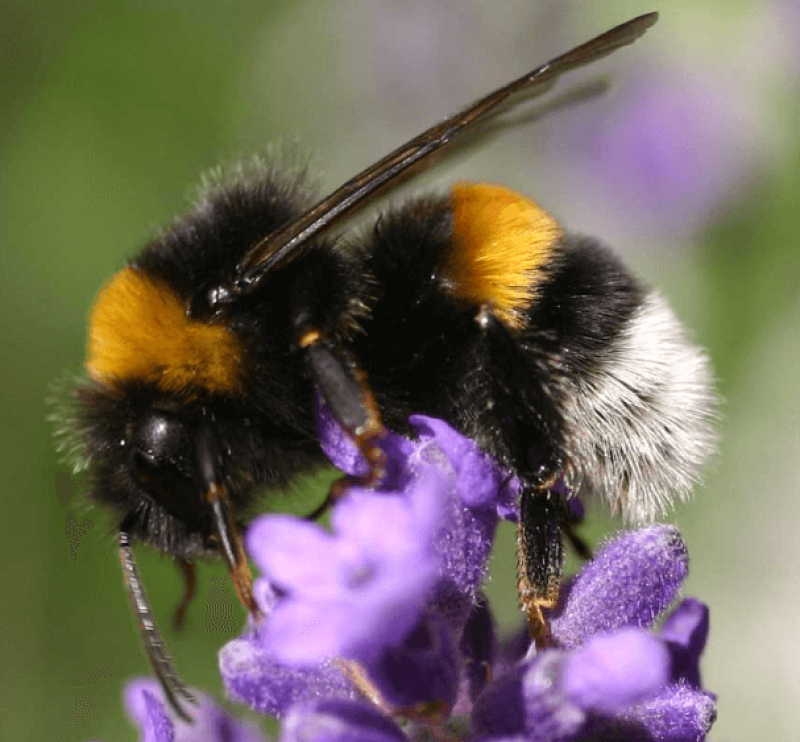
Bombus terrestris, a species of bumblebee

Everyone wants to save the bees. But as populations decline every year, we may be saving them to death. Human efforts to breed more of these insects in artificial beehives and plant more flowers may seem the obvious way to stave off heavy losses.

New research shows the answer is not that clear cut, because viruses may be spilling over from commercial honeybee colonies into wild bee populations, according to a study from the University of Vermont published Wednesday in PLOS One.

[T]he study revealed wild bumblebees pick up more viruses the closer they forage to managed honeybee colonies. But if bumblebees don’t venture into the commercial hives, how are they picking up viruses?

Flowers have been suspected as reservoirs for bee viruses, but no researcher had linked virus deposits on flowers to bumblebee infections in the wild until this study.

The team looked at two viruses — deformed wing virus and black queen cell virus — both of which infect honeybees and bumblebees. These infections can potentially cause significant colony damage in honeybees, but researchers don’t know yet what they do to bumblebee colonies.

Read full, original article: Are commercial honeybees making wild bees sick?

{{ reviewsTotal }}{{ options.labels.singularReviewCountLabel }}
{{ reviewsTotal }}{{ options.labels.pluralReviewCountLabel }}
{{ options.labels.newReviewButton }}
{{ userData.canReview.message }}

Related Articles

Infographic: Global regulatory and health research agencies on whether glyphosate causes cancer

Infographic: Global regulatory and health research agencies on whether glyphosate causes cancer

Does glyphosate—the world's most heavily-used herbicide—pose serious harm to humans? Is it carcinogenic? Those issues are of both legal and ...

Most Popular

Screenshot-PM-24
Viewpoint: The herbicide glyphosate isn’t perfect. Banning it would be far worse.
79d03212-2508-45d0-b427-8e9743ff6432
Viewpoint: The Casey Means hustle—Wellness woo opportunism dressed up as medical wisdom
d-b
Blocked arteries, kidney stones, nausea, constipation, fatigue: Long list of health problems caused by too much vitamin D 
ChatGPT-Image-Mar-10-2026-01_39_01-PM
Viewpoint—“Miracle molecule” debunked: Why acemannan supplements don’t work
ChatGPT-Image-Apr-30-2026-05_00_48-PM
Wellness grifter physician turned wellness influencer out as surgeon general nominee
Screenshot-2026-04-30-at-11.33.46-AM
Anti-seed-oil to anti-vax pipeline: MAHA movement spreads to teen influencers
lab grown meat research kelly schultz lehighuniversity main
Profiles of the 10 top global cultured meat companies
ChatGPT-Image-Mar-27-2026-11_27_05-AM
The myths of “process”: What science says about the “dangers’ of synthetic products and ultra-processed foods
ChatGPT-Image-Apr-30-2026-12_21_05-PM-2
The tech billionaires behind the immortality movement
Screenshot-2026-04-28-at-1.21.37-PM
How America’s medical system encourages psychiatric overdiagnosis

Sorry. No data so far.

glp menu logo outlined

Get news on human & agricultural genetics and biotechnology delivered to your inbox.