‘I’m not me’: Rare depersonalization disorder leaves patients feeling disconnected from their bodies

ohcrickets dpdrpaintmk en
Image: Kathleen Young

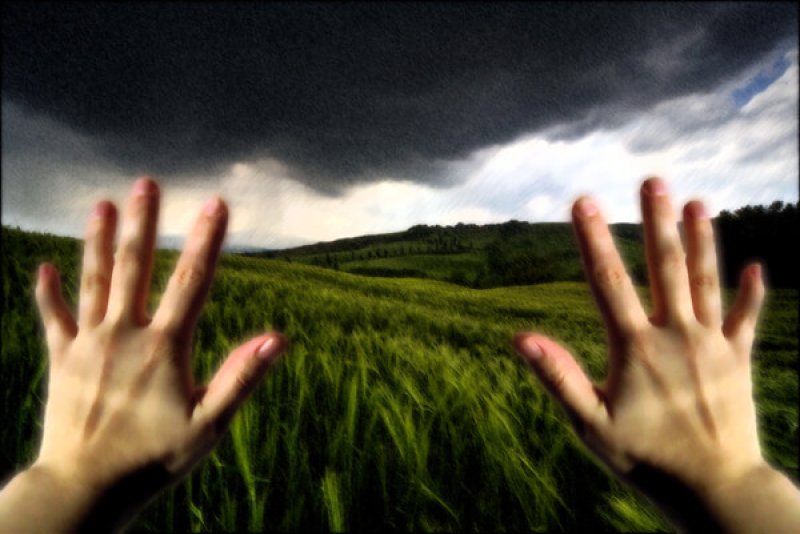
I would stare at my hands and think, “I’m not me.” No matter where I was, in the middle of a busy street or at my dining table at home, the condition would be the same. It was like looking at my hands through a plate of glass.

I was suffering from depersonalization, a neglected and little-understood disorder.

According to studies in the United States and Britain, depersonalization affects 2 percent of the population — 6.4 million in the United States and 1.3 million people in Britain. This is about the same as schizophrenia and bipolar disorder, conditions that are much better understood. Although the disorder’s criteria has been expanded in the latest edition of the “Diagnostic and Statistical Manual of Mental Disorders” (DSM-5), it is still largely neglected by doctors as a condition in its own right.

Cognitive behavior therapy is the most common form of treatment, despite mixed results. This involves emotion mapping and processing, along with charting the origin of the self in childhood with its associated image-memories. The idea is for the patient to build a bridge between “I” and “myself.”

Read full, original post: ‘I’m not me’: A bizarre disorder leaves people feeling distant from their bodies

{{ reviewsTotal }}{{ options.labels.singularReviewCountLabel }}
{{ reviewsTotal }}{{ options.labels.pluralReviewCountLabel }}
{{ options.labels.newReviewButton }}
{{ userData.canReview.message }}

Related Articles

Infographic: Global regulatory and health research agencies on whether glyphosate causes cancer

Infographic: Global regulatory and health research agencies on whether glyphosate causes cancer

Does glyphosate—the world's most heavily-used herbicide—pose serious harm to humans? Is it carcinogenic? Those issues are of both legal and ...

Most Popular

ChatGPT-Image-Jun-25-2026-12_23_17-PM
No, Bill Gates did not secretly engineer ticks to promote veganism
ChatGPT-Image-Mar-10-2026-01_39_01-PM
Viewpoint—“Miracle molecule” debunked: Why acemannan supplements don’t work
Screenshot-2026-06-05-at-2.12.30-PM
Some plants can poison you. So how did humans figure out what is safe to eat?
ChatGPT-Image-Jun-17-2026-10_52_43-AM
Anguished parents, doctors in tears: Utah’s long measles outbreak takes a toll
ChatGPT-Image-Jun-23-2026-03_12_23-PM
Is cellular reprogramming junk science? Nearly 20 patients are getting eye injections in the first FDA-cleared cellular trial

Sorry. No data so far.

glp menu logo outlined

Get news on human & agricultural genetics and biotechnology delivered to your inbox.