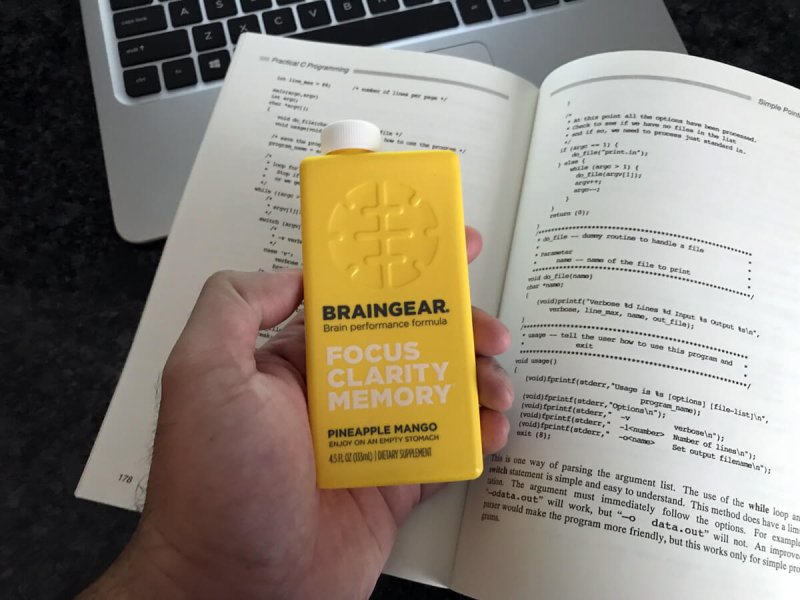
Nootropics and the quest to improve our brains through ‘barely regulated’ dietary supplements

braingear
Image: Zander Chance

It helped too that, as vague as the term “smart” is, “nootropics” is equally broad. It was coined by Romanian scientist Corneliu E. Giurgea in 1972 when he created a drug he believed enhanced memory and learning. … But today it’s an umbrella term that includes everything from prescription drugs, to dietary supplements … anything a person might use in an effort to enhance cognitive function, whatever that might mean to them. …

For those people, there’s Whole Foods bottles of Omega-3 and B vitamins. In 2013, the American Psychological Association estimated that grocery store “brain booster” supplements and other cognitive enhancement products were already a $1 billion-a-year industry. In 2014, analysts projected “brain fitness” becoming an $8 billion industry by 2015. And of course, supplements — unlike medications that require prescriptions — are barely regulated, making them a nearly limitless market.

The brain supplements industry is still expanding. A recent report by Grand View Research estimated it could reach $10.7 billion annually by 2025, growing steadily at about 8 percent per year. “Growing health concerns over depression, anxiety, anti-aging, and sleep recovery issues” will contribute to the continued rise, the report states.

Nobody is taking these things for no reason. They’re pushing themselves for what seems to them like very good reasons, and turning themselves into crash test dummies.

Read full, original post: The all-too-understandable urge to buy a better brain

{{ reviewsTotal }}{{ options.labels.singularReviewCountLabel }}
{{ reviewsTotal }}{{ options.labels.pluralReviewCountLabel }}
{{ options.labels.newReviewButton }}
{{ userData.canReview.message }}

Related Articles

Infographic: Global regulatory and health research agencies on whether glyphosate causes cancer

Infographic: Global regulatory and health research agencies on whether glyphosate causes cancer

Does glyphosate—the world's most heavily-used herbicide—pose serious harm to humans? Is it carcinogenic? Those issues are of both legal and ...

Most Popular

d-b
Blocked arteries, kidney stones, nausea, constipation, fatigue: Long list of health problems caused by too much vitamin D 
Screenshot-PM-24
Viewpoint: The herbicide glyphosate isn’t perfect. Banning it would be far worse.
ChatGPT-Image-Mar-27-2026-11_27_05-AM
The myths of “process”: What science says about the “dangers’ of synthetic products and ultra-processed foods
Screenshot-2026-04-29-at-11.31.42-AM
Dad brains: Only women undergo bodily changes during and after childbirth? Think again.
ChatGPT-Image-Mar-3-2026-01_17_14-PM
MAHA wellness influencers deride proven anxiety medications, tout lifestyle fixes
png-pill-omega-Supp-fish-oil
Fish oil supplements for brain injuries probably don’t work 
circular-bioeconomy-should-focus-on-sustainable-wellbeing
GLP podcast: What's wrong with 'doomsday' environmentalism? It's false.
ChatGPT-Image-Feb-16-2026-01_04_32-PM
Raw milk myth wake-up call
ChatGPT-Image-Apr-28-2026-12_46_14-PM-2
Kennedy has quietly stopped touting problematic raw milk. Health concerns aren’t why
ChatGPT-Image-Feb-16-2026-01_57_31-PM
Viewpoint: ‘Science-as-Satan’ unites the MAHA—MAGA movements. Is a breakup in the works?
ChatGPT-Image-Apr-22-2026-11_06_18-AM
Wellness influencer nonsense: No, nicotine does not boost cognition and productivity, but it can damage your health 
glp menu logo outlined

Get news on human & agricultural genetics and biotechnology delivered to your inbox.