Viewpoint: GMO Impossible Whopper can help save the planet—and lots of cows

proxy duckduckgo com
Credit: Burger King
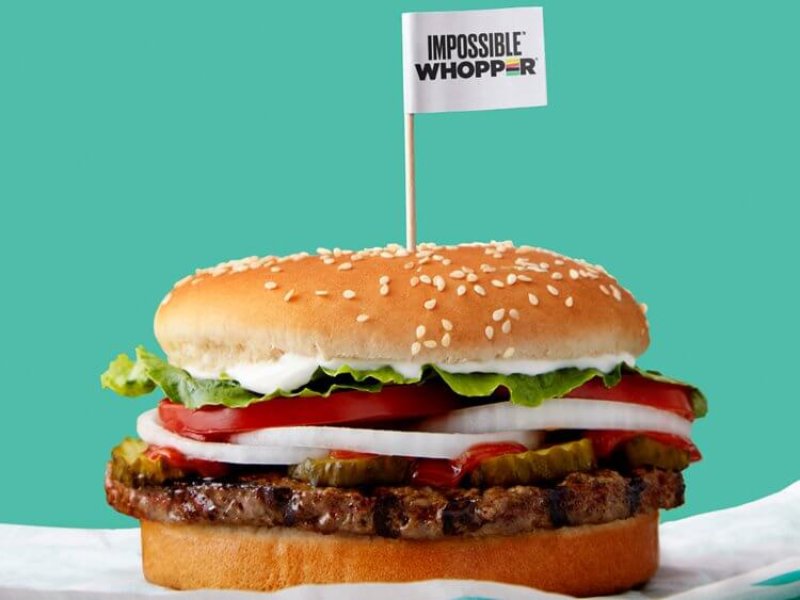
[In September] I stepped inside a Burger King for the first time in three years.

I wanted to try out the new, plant-based “Impossible Whopper,” and learn from an expert—a vegan, no less—about its supposed potential to save the planet, your health, and the lives of lots of cows.

Short answers: truth, fiction, and truth.

[Editor’s note: Jay Michaelson is the legal affairs columnist at The Daily Beast.]

[I]n terms of global warming, the plant-substitute meats really could make a difference. Almost 15 percent of global greenhouse gas emissions come from animal agriculture, and large-scale cattle production is among the most intensive. It’s a triple hit, often involving deforestation in developing countries (such as Brazil) and pesticide use, intensive water use, and transportation in industrialized ones. It’s been estimated that a pound of beef produces the amount of carbon dioxide equal to 31 miles of driving a car.

On any given day, more than one in three Americans eats fast food. That’s 84.8 million adults. Even if only half of them are eating burgers, that’s nearly 10 million pounds of beef every single day.

What’s more, most of that is industrially farmed. While small-scale cattle farming can actually be carbon negative (cows eat grass that sucks carbon dioxide out of the air), large-scale farming is fossil-fuel intensive ….

Read full, original article: Just How Good Is the Impossible Burger for You or the Planet?

{{ reviewsTotal }}{{ options.labels.singularReviewCountLabel }}
{{ reviewsTotal }}{{ options.labels.pluralReviewCountLabel }}
{{ options.labels.newReviewButton }}
{{ userData.canReview.message }}

Related Articles

Infographic: Global regulatory and health research agencies on whether glyphosate causes cancer

Infographic: Global regulatory and health research agencies on whether glyphosate causes cancer

Does glyphosate—the world's most heavily-used herbicide—pose serious harm to humans? Is it carcinogenic? Those issues are of both legal and ...

Most Popular

d-b
Blocked arteries, kidney stones, nausea, constipation, fatigue: Long list of health problems caused by too much vitamin D 
Screenshot-PM-24
Viewpoint: The herbicide glyphosate isn’t perfect. Banning it would be far worse.
79d03212-2508-45d0-b427-8e9743ff6432
Viewpoint: The Casey Means hustle—Wellness woo opportunism dressed up as medical wisdom
ChatGPT-Image-Mar-27-2026-11_27_05-AM
The myths of “process”: What science says about the “dangers’ of synthetic products and ultra-processed foods
ChatGPT-Image-Apr-30-2026-12_21_05-PM-2
The tech billionaires behind the immortality movement
ChatGPT-Image-Apr-30-2026-05_00_48-PM
Wellness grifter physician turned wellness influencer out as surgeon general nominee

Sorry. No data so far.

glp menu logo outlined

Get news on human & agricultural genetics and biotechnology delivered to your inbox.