Soot in the womb: Research suggests air pollution threatens developing babies

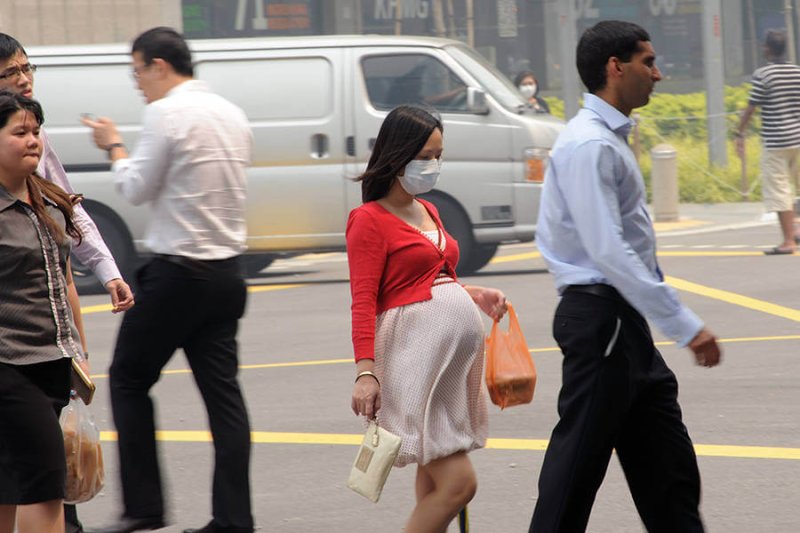
pregnancy pollution singapore roslan rahman afp getty
Image: Roslan Rahman/AFP

Breathing in polluted air may send soot far beyond a pregnant womanโ€™s lungs, all the way to the womb surrounding her developing baby.

Samples of placenta collected after women in Belgium gave birth revealedย soot, or black carbon, embedded within the tissueย on the side that faces the baby, researchers report online September 17 inย Nature Communications. The amount of black carbon in the placenta correlated with a womanโ€™s air pollution exposure, estimated based on emissions of black carbon near her home.

โ€œThereโ€™s no doubt that air pollution harms a developing baby,โ€ says Amy Kalkbrenner, an environmental epidemiologist at the University of Wisconsinโ€“Milwaukee who was not involved in the new work. Mothers who encounter air pollution regularly may have babiesย born prematurely or with low birth weightย (SN: 5/13/15).

These developmental problems have been tied to an inflammatory response to air pollution in a motherโ€™s body, including inflammation within the uterus. But the new study, Kalkbrenner says, suggests that โ€œair pollution itself is getting into the developing baby.โ€

โ€ฆ

โ€œThe black carbon particles truly stand out uniquelyโ€ from the rest of the tissue, says [biomedical physicist] Bryan Spring.

Read full, original post: Air pollution can reach the placenta around a developing baby

{{ reviewsTotal }}{{ options.labels.singularReviewCountLabel }}
{{ reviewsTotal }}{{ options.labels.pluralReviewCountLabel }}
{{ options.labels.newReviewButton }}
{{ userData.canReview.message }}

Related Articles

Infographic: Global regulatory and health research agencies on whether glyphosate causes cancer

Infographic: Global regulatory and health research agencies on whether glyphosate causes cancer

Does glyphosateโ€”the world's most heavily-used herbicideโ€”pose serious harm to humans? Is it carcinogenic? Those issues are of both legal and ...

Most Popular

Screenshot 2026-05-26 at 10.15
Viewpoint: Double standardโ€”Why does the wellness industry get a free pass while Big Healthcare is treated as morally suspect?
ChatGPT-Image-Jun-4-2026-11_49_36-AM-2
โ€˜You donโ€™t understand Tolkienโ€™: Skeptic Pope trolls tech giants about the exaggerated, risk-less benefits of AI
ChatGPT-Image-Jun-4-2026-01_27_58-PM
Viewpointโ€”N.A.D.+: Why Gwenyth Paltrowโ€™s heralded anti-aging supplement doesnโ€™t work
Screenshot-2026-06-03-at-1.24.46-PM
Challenging anti-GMO disinformation: Why genetically-tweaked crops offer bushels of benefits
Screenshot 2025-07-30 at 10.48
Can gene editing eliminate Down syndrome? Scientists have done it in lab-grown cells
ChatGPT-Image-Mar-10-2026-01_39_01-PM
Viewpointโ€”โ€œMiracle moleculeโ€ debunked: Why acemannan supplements donโ€™t work
Screenshot-2026-06-04-at-12.05.08-PM
Cases of brain inflammation surge as U.S. measles pandemic approaches 2000
ChatGPT Image May 26, 2026, 08_42_17 AM (1)
Viewpoint: Greenpeace and poison: How environmental advocacy groups rely on compliant (and often ignorant) journalists to spread disinformation and spark litigation
downsyndrome_compilation_MID_1
CRISPR breakthrough that can remove the chromosome responsible for Down syndrome raises ethical questions
tick-DNA
GLP podcast: Spread meat allergy with gene-edited ticks? Bioethicists pose vile โ€˜thought experimentโ€™
ChatGPT-Image-May-26-2026-07_51_21-AM-2
Viewpoint: There are more than 1,000 chemicals in a cup of coffeeโ€”including many substances that can cause cancer. Why isnโ€™t it banned?

Sorry. No data so far.

glp menu logo outlined

Get news on human & agricultural genetics and biotechnology delivered to your inbox.