Here’s a question for you: what if there were dangerous toxins that could make their way into your food, but they don’t actually pose a risk because our food system keeps the threat in check? Would you want to know more about this?
I’m talking here about a real thing—something that could be seriously scary, but which fortunately isn’t among the problems we face, at least in the “rich world.” The toxic chemicals I’m talking about are called mycotoxins. These are natural chemicals that can form in various foods when those foods are infected with certain fungi or molds. This sort of infection often happens because a crop is damaged by insects, but there are some cases where the infection can happen without those sorts of injuries.
So, how are you and I protected from this dangerous side of nature? Well, as is often the case with pest-related challenges, what really helps is to have a diverse set of tactics—what we might call “Food Safety Ninja Strategies.”
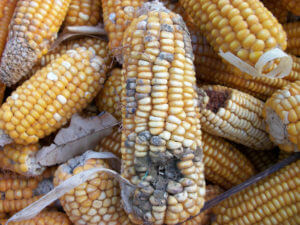
In many cases the key “bad guys” are insects, because the damage they cause through their feeding opens the door to infection by the mycotoxin-producing molds. Particularly with corn and tree nuts, there are caterpillars who chomp away at the developing ears of corn or the hulls of the nuts. A similar thing can happen with fruits like apples when insect feeding leads to growth of a Penicillium mold that makes a different mycotoxin called patulin. Patulin isn’t as scary as aflatoxin, but still something to be avoided if possible.
In an earlier POPagriculture episode titled “There’s More Than One Way to Kill a Bug,” I talked about how farmers deal with insects using insecticides, biocontrol agents, natural enemies of the bugs, and with chemicals that repel, disorient, or otherwise confuse the bugs. Those are all good options for our “food-supply-protecting ninjas.” In the case of field corn, the genetically engineered hybrids that produce the safe and selective Bt protein suffer much less insect damage, and thus the risk from mycotoxins, like aflatoxin, or another nasty one called Fumonisin, is drastically reduced.

Podcast: Play in new window | Download
Subscribe: RSS
Full show transcript available here.
Steve Savage is a plant pathologist and senior contributor to the GLP. Follow him on Twitter @grapedoc. The Pop Agriculture podcast is available for listening or subscription on iTunes and Google Podcasts.