African Americans and Latinos are underrepresented in Alzheimer’s research. Here are 4 ways to fix that

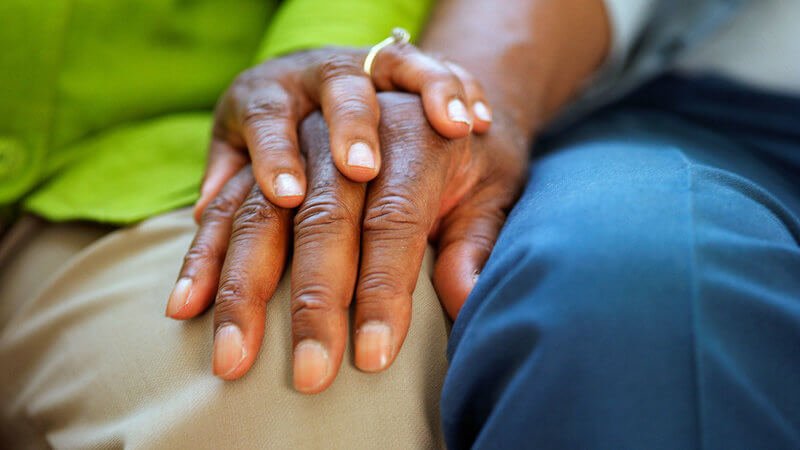
dementia hands wide f f ff aa ebc c df b s c
Image: Leland Bobbe/NPR

UsAgainstAlzheimer’s, the organization we work with, recently analyzed more than 300 peer-reviewed studies of non-drug interventions for Alzheimer’s and dementia. Just under 4% of them focused on communities of color.

This is startling given the fact that African Americans are two to three times more likely to develop Alzheimer’s than non-Hispanic whites, while Latinos are 1.5 times more likely.

There are four steps the health care system, researchers, and policymakers can take to better prepare for these shifting demographics.

Promote early detection and diagnosis. Despite a higher risk for Alzheimer’s and dementia, African Americans and Latinos living with these conditions are less likely than non-Hispanic whites to receive a diagnosis from a provider.

Broaden criteria for research eligibility. Strict eligibility criteria for Alzheimer’s trials can lead to limited representation of minorities in clinical research.

Better information on social determinants of health. Collecting and mapping data on social determinants of health will address gaps in Alzheimer’s research and health services.

Expand medical and family leave. According to a national poll of dementia caregivers, more than half of those surveyed who used paid family leave benefits reported positive effects on their ability to provide care and on their own emotional well-being.

Read full, original post: A road map for including Latinos and African Americans in Alzheimer’s research


{{ reviewsTotal }}{{ options.labels.singularReviewCountLabel }}
{{ reviewsTotal }}{{ options.labels.pluralReviewCountLabel }}
{{ options.labels.newReviewButton }}
{{ userData.canReview.message }}

Related Articles

Infographic: Global regulatory and health research agencies on whether glyphosate causes cancer

Infographic: Global regulatory and health research agencies on whether glyphosate causes cancer

Does glyphosate—the world's most heavily-used herbicide—pose serious harm to humans? Is it carcinogenic? Those issues are of both legal and ...

Most Popular

Screenshot-PM-24
Viewpoint: The herbicide glyphosate isn’t perfect. Banning it would be far worse.
d-b
Blocked arteries, kidney stones, nausea, constipation, fatigue: Long list of health problems caused by too much vitamin D 
Screenshot-2026-04-27-at-12.22.38-PM
Running ‘wild’: Last year, RFK, Jr. was given a green light to ‘reform’ chemical policies. Glyphosate illustrates how Trump now has him on a tight leash, and MAHA is furious
ChatGPT-Image-Apr-22-2026-11_06_18-AM
Wellness influencer nonsense: No, nicotine does not boost cognition and productivity, but it can damage your health 
bayer-supremecourt-lt
EPA concludes glyphosate is not carcinogenic. Missouri courts say Monsanto failed to warn it might be. SCOTUS weighs in.
ChatGPT-Image-Feb-16-2026-01_57_31-PM
Viewpoint: ‘Science-as-Satan’ unites the MAHA—MAGA movements. Is a breakup in the works?
Screenshot-2026-04-27-at-1.40.55-PM
With federal funding for scientific research already reeling, Trump fires the entire apolitical National Science Board
Screenshot-2026-04-13-at-3.54.04-PM
AI disinformation stress test: Challenges and response strategies
Screenshot-2026-04-12-135256
Bixonimania: The fake disease scam that AI swallowed whole
Screenshot-2026-04-27-at-12.41.50-PM
How pediatricians are navigating America’s surge of health misinformation
glp menu logo outlined

Get news on human & agricultural genetics and biotechnology delivered to your inbox.