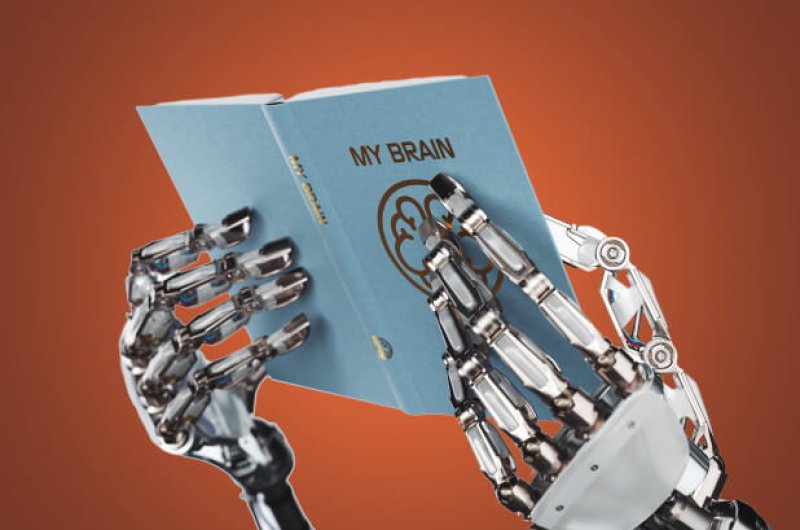
Machines now read faster than we can. But do they understand the words?

ai computers can read now feature
Image: iStock

In an April 2018 paper coauthored with collaborators from the University of Washington and DeepMind, the Google-owned artificial intelligence company, [computational linguist Sam] Bowman introduced a battery of nine reading-comprehension tasks for computers called GLUE (General Language Understanding Evaluation). The test was designed as “a fairly representative sample of what the research community thought were interesting challenges,” said Bowman, but also “pretty straightforward for humans.”

The machines bombed.  Even state-of-the-art neural networks scored no higher than 69 out of 100 across all nine tasks: a D-plus, in letter grade terms.

Their appraisal would be short-lived. In October of 2018, Google introduced a new method nicknamed BERT (Bidirectional Encoder Representations from Transformers). It produced a GLUE score of 80.5. On this brand-new benchmark designed to measure machines’ real understanding of natural language — or to expose their lack thereof — the machines had jumped from a D-plus to a B-minus in just six months.

But is AI actually starting to understand our language — or is it just getting better at gaming our systems?

“We know we’re somewhere in the gray area between solving language in a very boring, narrow sense, and solving AI,” Bowman said.

Read full, original post: Machines Beat Humans on a Reading Test. But Do They Understand?

{{ reviewsTotal }}{{ options.labels.singularReviewCountLabel }}
{{ reviewsTotal }}{{ options.labels.pluralReviewCountLabel }}
{{ options.labels.noReviewsLabel }}
{{ options.labels.newReviewButton }}
{{ userData.canReview.message }}

Related Articles

Infographic: Global regulatory and health research agencies on whether glyphosate causes cancer

Infographic: Global regulatory and health research agencies on whether glyphosate causes cancer

Does glyphosate—the world's most heavily-used herbicide—pose serious harm to humans? Is it carcinogenic? Those issues are of both legal and ...

Most Popular

ChatGPT-Image-Mar-10-2026-01_39_01-PM
Viewpoint—“Miracle molecule” debunked: Why acemannan supplements don’t work
Screenshot 2025-09-17 at 12.41
Misinformation alert: No, glyphosate use in Canadian forests is not spurring more wildfires
Screenshot 2026-07-11 094410
Growing animal muscle and fat cells inside rice grains and calling it beef: One of numerous genetically engineered products shaking up our ecosystem
ChatGPT-Image-Jul-9-2026-02_39_22-PM
Viewpoint: Polyphenols or NAD+ supplements to combat aging: No, Gwenyth Paltrow and followers, don’t waste your money.
file-f-d-d-
Facts & Fallacies Podcast: Europe's AC debacle underscores fatal flaw in green activism
ChatGPT-Image-Jul-8-2026-12_32_48-PM
Viewpoint: SCOTUS strikes a blow against junk science in Bayer glyphosate case. Will it deter mass tort litigators?
ChatGPT-Image-Jul-7-2026-01_57_55-PM
Viewpoint: Europe’s rejection of air conditioning is the poster child for misunderstanding how to mitigate the impact of climate change
ChatGPT-Image-Jun-25-2026-12_23_17-PM
No, Bill Gates did not secretly engineer ticks to promote veganism
afb-a-b
As the EU loosens restrictions on agricultural gene editing, it remains years behind the rest of the world on equally-safe GMO foods
ChatGPT-Image-Jul-1-2026-03_33_49-PM
‘Alternative’ cancer treatments that could kill you
Screenshot 2026-07-16 at 8.49
Pete Hegseth’s bizarre Viagra commercial as Trump administration endorses ‘hormone replacement therapy’

Sorry. No data so far.

glp menu logo outlined

Get news on human & agricultural genetics and biotechnology delivered to your inbox.