Bacterial DNA found in gene-edited dairy cow could slow development of more CRISPR animals

Gene Editing streched
Credit: Lori Hays

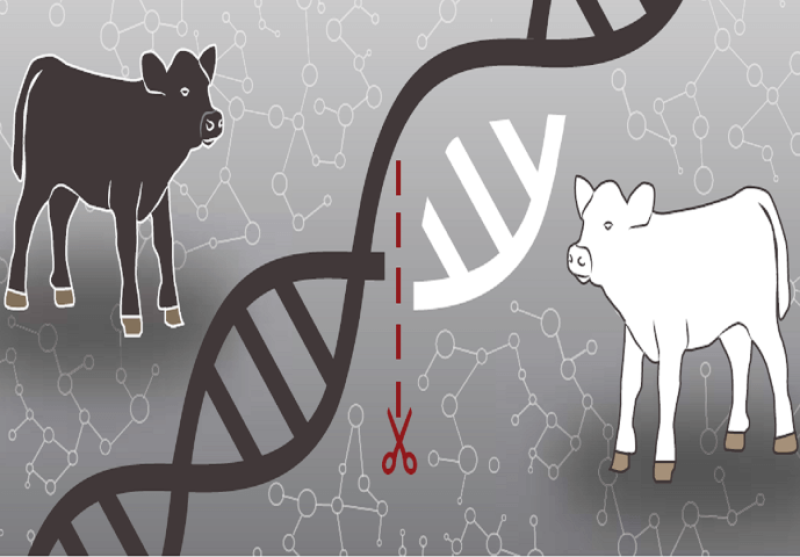
Many scientists and animal breeders are keenly interested in directly altering a portion of an organism’s genome to incorporate specific traits. For example, the company Recombinetics recently created two bulls by altering their genome to introduce the polled gene.

One of those bulls was subsequently mated to horned cows and the resulting offspring were all polled, indicating that the polled gene was successfully incorporated into the genome of what was once a horned bull.

The ability to make what is now known as intentional genomic alterations — or IGA — could speed many genetic selection efforts.

Scientists involved with the project had examined the genomes to make sure the polled mutation was incorporated properly but had overlooked the possibility that a bacterial gene could accidentally be introduced at the same time.

The presence of the bacterial DNA immediately changed the status of such animals from IGA to GMO. That change will mean more regulations in the U.S. and in those countries that previously had more relaxed regulations. …. The field of gene editing is advancing rapidly, but this latest development is likely to set efforts back to some degree.

Read full, original article: Setback slows pathway for gene-edited dairy cows

{{ reviewsTotal }}{{ options.labels.singularReviewCountLabel }}
{{ reviewsTotal }}{{ options.labels.pluralReviewCountLabel }}
{{ options.labels.newReviewButton }}
{{ userData.canReview.message }}

Related Articles

Infographic: Global regulatory and health research agencies on whether glyphosate causes cancer

Infographic: Global regulatory and health research agencies on whether glyphosate causes cancer

Does glyphosate—the world's most heavily-used herbicide—pose serious harm to humans? Is it carcinogenic? Those issues are of both legal and ...

Most Popular

ChatGPT-Image-May-1-2026-11_42_59-AM-2
Viewpoint: NAD is the wellness grifters latest evidence-lite longevity fad. At least the mice are impressed.
Screenshot-2026-04-22-at-12.21.32-PM
Viewpoint: Why the retracted Monsanto glyphosate study doesn’t change the science—the world’s most popular herbicide is safe 
Picture1
The FDA couldn’t find a vaccine safety crisis, so it buried its own research
ChatGPT-Image-Apr-16-2026-02_56_53-PM
Financial incentives, over diagnosis, and weak oversight: Autism claims are driving up Medicare costs
glp menu logo outlined

Get news on human & agricultural genetics and biotechnology delivered to your inbox.