Archaeologists revive ancient North American crops that may have fed thousands of people

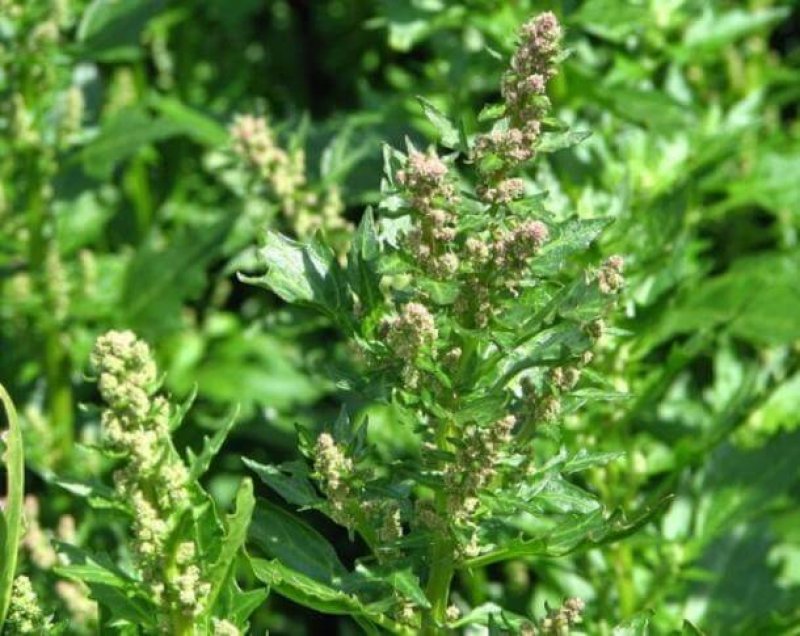
goosefoot
‘Goosefoot’ plant. Image: Evelyn Simak / CC BY-SA 2.0

The scientific cultivation of lost ancient seed crops has yielded much higher than expected growth rates, challenging assumptions about maize (corn) growth in prehistoric North America .

According to new research ‘lost crops’ might have fed as many people in prehistoric North America as traditionally grown maize. But the study was not without challenges as no written or oral histories exist about these lost crops, and the more modern domesticated forms are now extinct.

Natalie Mueller is assistant professor of archaeology in Arts & Sciences at Washington University in St. Louis, and writing in the  Journal of Ethnobiology  she describes how “painstakingly” she calculated yield estimates for two annual plants that were cultivated in eastern North America for thousands of years before being abandoned for maize production.

The researchers grew ‘goosefoot’ ( Chenopodium, sp.) and erect knotweed ( Polygonum erectum ), which when grown together were found to be “much more productive” than growing either species individually. According to a report in Eureka Alert , the researcher explained that when these two plants were grown along with the other known lost crops, they might have fed thousands of indigenous people.

Read full, original article: The Revival of Ancient Lost Crops Reveals Surprising Results

{{ reviewsTotal }}{{ options.labels.singularReviewCountLabel }}
{{ reviewsTotal }}{{ options.labels.pluralReviewCountLabel }}
{{ options.labels.newReviewButton }}
{{ userData.canReview.message }}

Related Articles

Infographic: Global regulatory and health research agencies on whether glyphosate causes cancer

Infographic: Global regulatory and health research agencies on whether glyphosate causes cancer

Does glyphosate—the world's most heavily-used herbicide—pose serious harm to humans? Is it carcinogenic? Those issues are of both legal and ...

Most Popular

ChatGPT Image May 10, 2026, 08_16_59 PM 2
Overmedicalization? RFK Jr.’s antidepressant crackdown raises conflict questions over his fee stake in Wisner Baum, the tort firm built on suing drug makers
Picture1-5
Science Disinformation Gap: The transatlantic battle over social media and censorship
Screenshot-2026-05-08-at-3.40.33-PM
Seeds of power: China turns to genetic engineering to become global superpower
Screenshot-2026-05-01-at-1.29.41-PM
Viewpoint: What happens when whole grains meet modern food manufacturing? Labels don’t tell the whole story.
ChatGPT-Image-Apr-13-2026-02_20_22-PM
Viewpoint: Misinformation infodemic? Why assessing evidence is so challenging 
S
As vaccine rejectionism spreads, measles may be taking a more dangerous turn
Picture1-14
When superbugs threaten vulnerable children: Can AI help solve antibiotic resistance?
Screenshot 2026-05-08 at 3.01
Transforming farming and nutrition with AI and robotics? Larry Ellison’s half-billion-dollar Hawaii greenhouse dream goes bust
Farmers can talk to plants
Farmers are a major source of misinformation—about farming

ChatGPT-Image-May-8-2026-01_41_33-PM-3
Viewpoint: Surge of climate misinformation traced to right wing and anti-wind activists 
Screenshot-2026-04-20-at-2.26.27-PM
Viewpoint — Food-fear world: The latest activist scientists campaign: Cancer-causing additives
Screenshot-2026-03-13-at-12.14.04-PM
The FDA wants to make many popular prescription drugs OTC—a great idea. Here’s why it’s unlikely to happen
ChatGPT-Image-Mar-27-2026-11_47_30-AM-2
FDA’s expedited drug reviews are hailed in some quarters but other approval practices are problematic
Screenshot-2026-04-12-135256
Bixonimania: The fake disease scam that AI swallowed whole
glp menu logo outlined

Get news on human & agricultural genetics and biotechnology delivered to your inbox.