Dicamba on trial: Peach farmer testifies Monsanto knew its drift-prone herbicide would damage his 1,000-acre operation

e be image
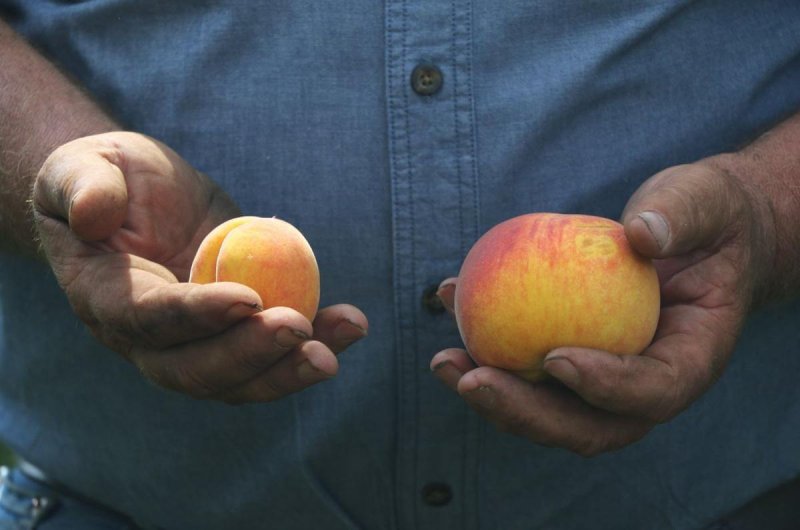
Peach farmer Bill Bader says dicamba damaged his 1,000-acre farm. Credit: St. Louis Post Dispatch

Since 1970, Bill Bader has worked on peach farms in Dunklin County, Missouri, just north of the Arkansas border. Bader started picking peaches at age 13, and in 1988, he established Bader Farms.

The farm grew to become the largest peach grower in Missouri, shipping fruit to grocery stores such as IGA and Walmart, as well as others across eight states in the Midwest and South.

“A peach we picked today will be in the grocery store tomorrow morning,” Bader testified in federal court in Cape Girardeau on [Feb. 4].

Bader took the stand a week and a half into a trial of a lawsuit he filed against German agribusiness giants Bayer and BASF. Bader alleges that drift from the herbicide dicamba …. made his 1,000-acre operation no longer sustainable.

His lawsuit alleges Monsanto, which was acquired by Bayer in 2018, and BASF released their dicamba-related products beginning in 2015, knowing they would cause damage to other farmers.

Monsanto attorney Jan Miller said the trial will show that Bader Farms has no proof that dicamba sprayed on dicamba-resistant cotton and soybean seeds killed the trees …. Instead, the farm’s trees were harmed by weather events, which Bader submitted insurance claims for, and disease, Miller said.


Read the original post

{{ reviewsTotal }}{{ options.labels.singularReviewCountLabel }}
{{ reviewsTotal }}{{ options.labels.pluralReviewCountLabel }}
{{ options.labels.newReviewButton }}
{{ userData.canReview.message }}

Related Articles

Infographic: Global regulatory and health research agencies on whether glyphosate causes cancer

Infographic: Global regulatory and health research agencies on whether glyphosate causes cancer

Does glyphosate—the world's most heavily-used herbicide—pose serious harm to humans? Is it carcinogenic? Those issues are of both legal and ...

Most Popular

Screenshot-2026-04-22-at-12.21.32-PM
Viewpoint: Why the retracted Monsanto glyphosate study doesn’t change the science—the world’s most popular herbicide is safe 
Picture1
The FDA couldn’t find a vaccine safety crisis, so it buried its own research
ChatGPT-Image-May-1-2026-11_42_59-AM-2
Viewpoint: NAD is the wellness grifters latest evidence-lite longevity fad. At least the mice are impressed.
global warming
‘Implausible’: Top climate scientists reject worst-case scenario—soaring temperatures and fast-rising sea levels
Screenshot-2026-05-21-at-12.15.17-PM
UK gene-editing milestone: Livestock barley that increases ruminant value and reduces methane emissions is first-approved CRISPR crop
ChatGPT-Image-Apr-16-2026-02_56_53-PM
Financial incentives, over diagnosis, and weak oversight: Autism claims are driving up Medicare costs
vax-misinformation-main
Facts & Fallacies Podcast: Limit free speech to blunt social media misinfo?
Screenshot-2026-05-21-at-3.15.53-PM
Chiropractors may no longer be modern-day snake oil salesmen, but the benefits of their therapy are limited–at best
ChatGPT-Image-May-12-2026-11_27_01-AM-2
AI likely to improve health care, research shows—but not for blacks and ethnic minorities
Screenshot-2026-05-20-at-5.11.17-PM
Viewpoint: No, sugar doesn’t ‘feed’ cancer — common cancer myths, debunked

Sorry. No data so far.

glp menu logo outlined

Get news on human & agricultural genetics and biotechnology delivered to your inbox.