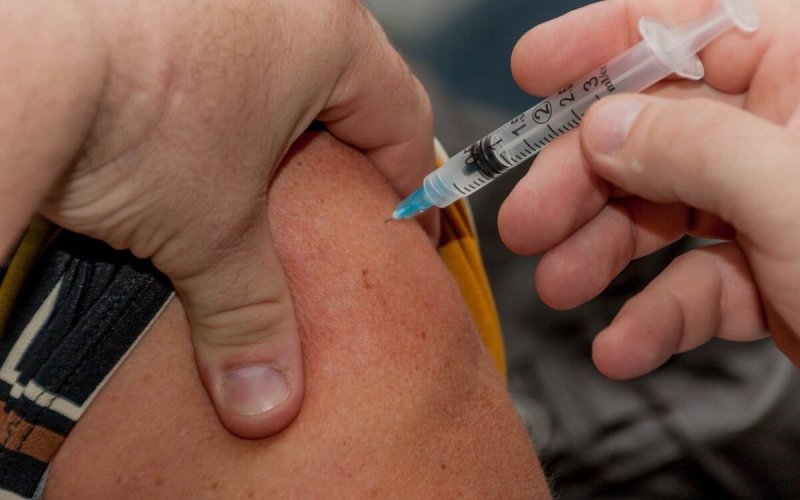
Those childhood vaccinations for tetanus and diphtheria should cover you for life, study says

vaccination needle ouch diabetes flu shot medical x
Credit: Max Pixel

People who got all their vaccinations against tetanus and diphtheria in childhood don’t need booster shots to remain protected against the two rare but dangerous diseases, researchers conclude in a new study that found no difference in disease rates between countries that recommend adult revaccination every 10 years and countries that say completing childhood vaccinations is enough.

As of 2017, the World Health Organization recommends vaccinating adults against tetanus and diphtheria only if they didn’t finish their childhood immunization series or don’t know whether they did. The guidelines make exceptions for pregnant women, some types of international travel, and tetanus-prone injuries. But in the U.S., the Advisory Committee on Immunization Practices, which makes recommendations to the Centers for Disease Control and Prevention, currently favors booster shots every 10 years for adults.

“What we had in 2016 was immunologic data. Now we have epidemiologic data that shows that the immunology is correct,” [microbiologist Mark] Slifka said in an interview. “What’s exciting about this is it’s a direct measure of whether there was more disease or less disease in [childhood] vaccination or revaccinating as adults.”

Slifka estimates the U.S. could save roughly $1 billion in health care costs every year if it dropped booster shots of these “legacy vaccines” for covered adults.


Read the original post

{{ reviewsTotal }}{{ options.labels.singularReviewCountLabel }}
{{ reviewsTotal }}{{ options.labels.pluralReviewCountLabel }}
{{ options.labels.newReviewButton }}
{{ userData.canReview.message }}

Related Articles

Infographic: Global regulatory and health research agencies on whether glyphosate causes cancer

Infographic: Global regulatory and health research agencies on whether glyphosate causes cancer

Does glyphosate—the world's most heavily-used herbicide—pose serious harm to humans? Is it carcinogenic? Those issues are of both legal and ...

Most Popular

ChatGPT-Image-May-7-2026-12_16_37-PM-2
Viewpoint: Are cancer rates ‘skyrocketing’ as RFK, Jr. and MAHA claims? The evidence says mostly the opposite
Screenshot-2026-04-22-at-10.46.29-AM
Viewpoint: How to counter science disinformation? Science journalist offers 12 practical tips
Screenshot-2026-04-13-at-1.39.26-PM
Viewpoint: ‘Safer for children?’ Stonyfield yogurt under fire for deceptive organic marketing
png-pill-omega-Supp-fish-oil
Millions take omega-3 fish oil for brain health. New research suggests it may do the opposite.
ChatGPT-Image-May-12-2026-08_39_41-PM
GLP podcast: Big Pharma, Big Ag, Big Food—health harming industries or life-saving innovators?
Screenshot-2026-04-23-at-11.00.36-AM
Regulators' dilemma: Thalidomide, Metformin, and the cost of getting drug approvals wrong
Picture1-5
Science Disinformation Gap: The transatlantic battle over social media and censorship
ChatGPT-Image-May-13-2026-11_56_08-AM
After slashing global health aid by $19 Billion, Trump moves to tap $2.1 billion more—to cover shutdown costs
Screenshot-2026-05-08-at-3.40.33-PM
Seeds of power: China turns to genetic engineering to become global superpower
Picture1-1
Cooling the planet with balloons: Could a geoengineering gamble slow global warming?
glp menu logo outlined

Get news on human & agricultural genetics and biotechnology delivered to your inbox.